
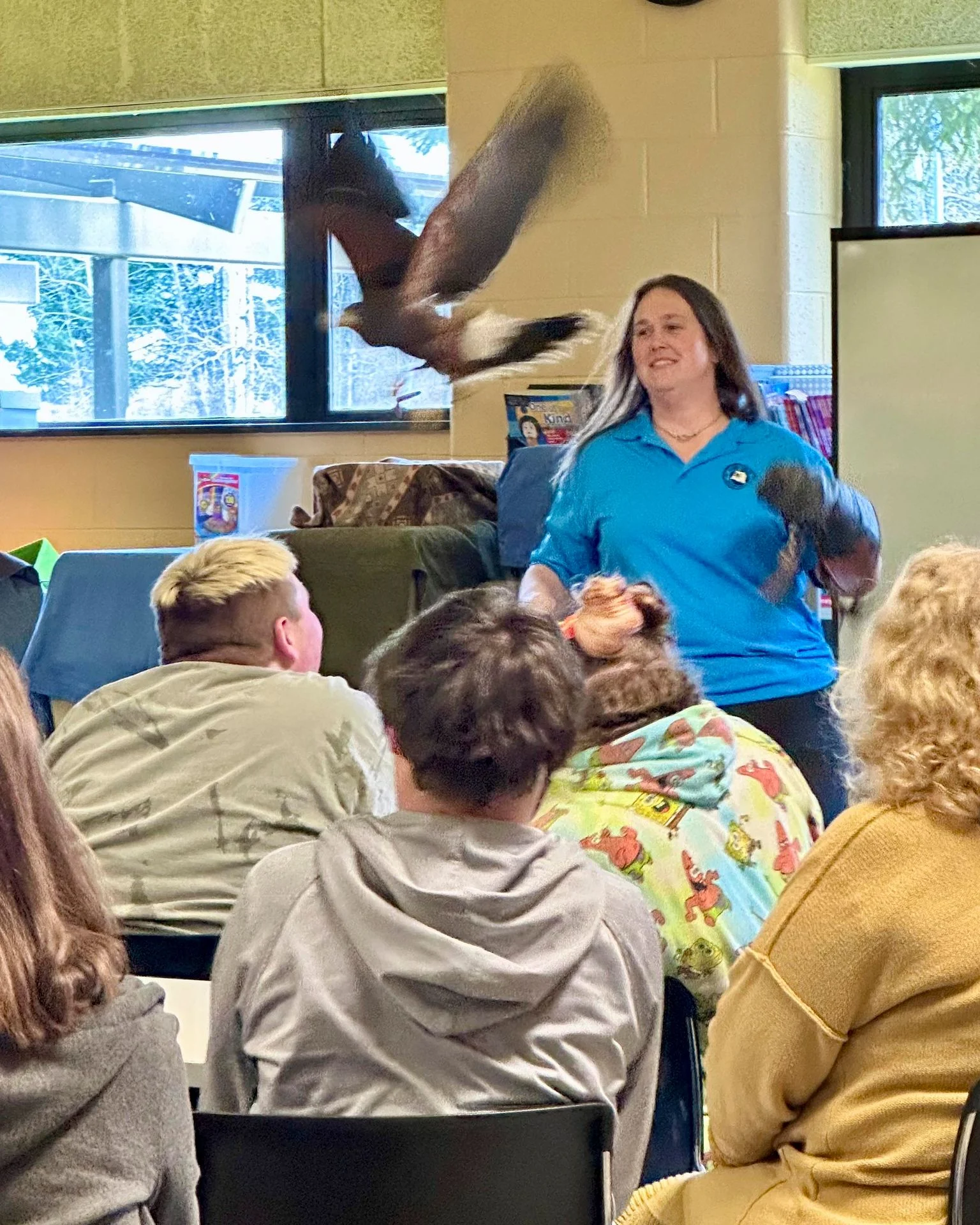
Students at the Hewes Educational Center recently experienced an unforgettable encounter with the natural world, thanks to an engaging educational program presented by the Hawk Creek Wildlife Center Inc. This initiative, part of the center’s broader mission to foster compassion, save species, and restore balance, brought a diverse array of wildlife directly to the students, transforming abstract concepts of biology and ecology into tangible, memorable lessons. The visit served as a powerful reminder of the importance of wildlife education in cultivating a generation of environmentally conscious citizens.
A Day of Discovery: Wildlife Naturalists Engage Hewes Students
The program, designed to bring the natural world to life for students of all ages, featured two skilled wildlife naturalists from Hawk Creek. These educators introduced the young learners to a captivating collection of animals, including majestic raptors, intriguing mammals, and fascinating snakes. The presentations were meticulously crafted to go beyond mere observation, delving into the crucial aspects of each species’ natural habitat and their unique behavioral patterns. This approach allowed students to develop a deeper understanding of the interconnectedness of ecosystems and the specific adaptations that enable these creatures to thrive in their environments.
A particularly exhilarating moment, as reported by the center, was when a raptor, a bird of prey known for its keen eyesight and aerial prowess, soared directly over the heads of the students. Such an immersive experience offers a visceral connection to wildlife that textbooks and classroom lectures cannot replicate. It is moments like these that can spark a lifelong passion for conservation and a profound respect for the animal kingdom. The palpable excitement and awe generated by such an event underscore the effectiveness of experiential learning in environmental education.
Background and Context: The Mission of Hawk Creek Wildlife Center
Founded with the core principles of fostering compassion, saving species, and restoring balance, Hawk Creek Wildlife Center has been a dedicated advocate for wildlife conservation and education for years. Their outreach programs, such as the one conducted at Hewes Educational Center, are a cornerstone of their commitment to public engagement. These programs are not merely entertainment; they are carefully designed educational experiences aimed at dispelling myths, promoting understanding, and inspiring action.
The center often works with animals that have been injured, orphaned, or are non-releasable due to various human-related causes. By showcasing these ambassador animals, Hawk Creek not only educates the public but also highlights the challenges faced by wildlife in human-dominated landscapes. This direct interaction provides students with a tangible connection to the animals and the conservation issues they represent, making the learning process more impactful and personal. The center’s philosophy emphasizes that understanding and empathy are the first steps towards effective conservation.
The Educational Impact: Beyond the Classroom Walls
The visit from Hawk Creek Wildlife Center to Hewes Educational Center exemplifies the power of bringing education out of the traditional classroom setting. Research consistently shows that hands-on, experiential learning significantly enhances student engagement and retention. For many of these students, this may have been their first close encounter with a raptor, a snake, or a wild mammal, transforming abstract concepts into vivid realities.

Such programs are particularly vital in urban and suburban environments where direct contact with wildlife is limited. They provide children with opportunities to develop a sense of wonder and curiosity about the natural world, which can be a powerful motivator for environmental stewardship. By learning about the natural habitats and behaviors of these animals, students gain a greater appreciation for the delicate balance of ecosystems and the importance of preserving biodiversity. The raptor’s flight over the students’ heads, for instance, is a powerful visual that can imprint the majesty and freedom of these creatures in a young person’s mind.
Supporting Data: The Broader Reach of Wildlife Education
The effectiveness of wildlife education programs is supported by numerous studies. For example, a 2018 report by the National Environmental Education Foundation found that students who participate in environmental education programs demonstrate higher levels of critical thinking skills and a greater understanding of scientific concepts. Furthermore, these programs have been linked to increased civic engagement and a stronger sense of personal responsibility towards environmental issues.
Hawk Creek Wildlife Center’s approach, which includes showcasing a variety of species, caters to different learning styles and interests. The inclusion of raptors, mammals, and reptiles ensures a broad spectrum of biological diversity is represented, allowing students to learn about different ecological niches and evolutionary adaptations. The center’s commitment to providing accurate, science-based information ensures that students receive a robust educational experience. The fact that the center often utilizes ambassador animals that have faced challenges in the wild also serves as a poignant lesson in conservation challenges and successes.
Timeline and Chronology of Such Visits
While the specific date of the Hewes Educational Center visit is not detailed in the provided content, such educational outreach programs are typically scheduled by wildlife centers throughout the academic year. They often coordinate with schools during periods that align with curriculum topics, such as units on animal adaptations, ecosystems, or conservation.
A typical visit might involve:
- Pre-visit preparation: Schools may receive educational materials in advance to introduce students to the types of animals they will encounter and the concepts that will be discussed.
- The Program: The wildlife naturalists arrive with their ambassador animals. Presentations usually involve introductions to each animal, discussions about their natural history, habitats, and the conservation challenges they face. Demonstrations of natural behaviors, such as flight patterns of raptors or the movement of snakes, are common.
- Interactive Q&A: Students are encouraged to ask questions, fostering engagement and addressing their curiosities.
- Post-visit reinforcement: Schools may follow up with classroom activities, research projects, or even field trips to local natural areas to reinforce the lessons learned.
The Hewes Educational Center visit, by all accounts, appears to have followed this successful model, creating a memorable and educational experience for its students.
Official Responses and Future Implications
The Hawk Creek Wildlife Center, through its website and public communications, consistently emphasizes the reciprocal relationship between human well-being and a healthy environment. Their outreach programs are a proactive step in ensuring that future generations are equipped with the knowledge and empathy needed to be responsible stewards of the planet. The direct engagement with wildlife, as experienced by the students at Hewes, is a powerful tool for fostering this stewardship.

The implications of such educational initiatives are far-reaching. By inspiring young minds, Hawk Creek contributes to a potential shift in public perception and behavior regarding wildlife and conservation. As these students grow, they are more likely to support conservation efforts, make environmentally conscious choices in their daily lives, and advocate for policies that protect natural habitats and species. The center’s mission of "Fostering Compassion, Saving Species, Restoring Balance" is directly advanced through these engaging educational encounters.
The presence of the Hawk Creek Wildlife Center logo, featuring a donate icon, on their website also highlights the financial aspect of their operations. Such educational programs, while invaluable, require resources. Schools and communities that benefit from these services are often encouraged to contribute through donations, ensuring the continuation and expansion of their vital work. This symbiotic relationship between educational outreach and financial support is crucial for the sustainability of non-profit conservation organizations.
Broader Impact and Analysis
The story of Hawk Creek’s visit to Hewes Educational Center is a microcosm of a larger, critical effort in environmental education. In an era marked by increasing environmental challenges, from climate change to habitat loss, the need for informed and engaged citizens has never been greater. Wildlife education, particularly when delivered through engaging and direct experiences, plays a pivotal role in cultivating this engagement.
The choice to highlight the "raptor soaring directly over the students’ heads" is a testament to the power of impactful moments. These are the experiences that resonate, that capture imagination, and that can lead to lasting change in perspective. This single event can be the spark that ignites a lifelong interest in ornithology, conservation biology, or simply a deeper appreciation for the natural world.
Furthermore, the inclusion of various animal types – raptors, mammals, and snakes – speaks to a holistic approach to biodiversity education. It moves beyond focusing on charismatic megafauna to encompass a wider range of species, each with its own ecological significance. This broadens the students’ understanding of the intricate web of life and the importance of protecting all components of an ecosystem.
The authorship by "Amanda" and the presence of a Gravatar profile suggest a dedicated team behind Hawk Creek’s communications. This professional approach to sharing their work, even in brief updates, underscores their commitment to transparency and public engagement. The "About the Author" section, though brief, humanizes the organization and connects the reader to the individuals who are actively involved in their mission.
In conclusion, the educational program delivered by Hawk Creek Wildlife Center at Hewes Educational Center serves as a powerful example of how wildlife education can inspire, inform, and ignite a passion for conservation. By bringing the wonders of the natural world directly to students, these programs are not just teaching about animals; they are cultivating the next generation of environmental stewards, essential for the long-term health of our planet and its diverse inhabitants. The success of such initiatives hinges on continued support, both in terms of educational partnerships with schools and financial contributions from the wider community, enabling organizations like Hawk Creek to continue their invaluable work.