
The vast and intricate network of the world’s migratory flyways represents an awe-inspiring testament to nature’s resilience, yet these aerial highways are increasingly threatened. A new series aims to illuminate the vital work of conservationists dedicated to protecting these global avian arteries. Central to this effort is an ambitious project focused on the African-Eurasian Flyway, a colossal route stretching from the icy reaches of the Arctic to the southernmost tip of Africa. This initiative, driven by BirdLife International in partnership with the UK’s Royal Society for the Protection of Birds (RSPB) and Iceland’s Fuglavernd (BirdLife Iceland), and generously supported by the Ecological Restoration Fund (ERF), highlights Iceland’s critical role in the survival of countless migratory bird species.
The African-Eurasian Flyway: A Global Artery for Avian Migration

Migratory birds are extraordinary connectors, linking disparate landscapes, nations, and even continents through their epic journeys. These journeys follow established routes known as "flyways," which are essential pathways encompassing breeding grounds, stopover sites for rest and refueling, and wintering areas. The African-Eurasian Flyway (AEF) is one of the most significant of these, traversing more than 100 countries and providing passage for over 2.5 billion individual birds annually, representing hundreds of species including waders, wildfowl, raptors, and passerines. Its immense scale underscores the profound interconnectedness of global ecosystems and the shared responsibility of nations along its path. The health of this flyway is not merely an ecological concern; it is a barometer for environmental well-being across three continents, influencing climate regulation, pest control, and nutrient cycling.
Iceland’s Strategic Position and Enduring Importance
Iceland’s geographical location, situated uniquely in the North Atlantic between Greenland and mainland Europe, renders it an indispensable stopover and breeding ground for numerous species utilizing the African-Eurasian Flyway. Birds making the perilous journey across the Atlantic find in Iceland a vital haven, offering crucial opportunities to rest, refuel, and, for many, to raise their young. The island’s lowland wetlands, shallow lakes, and intricate river deltas historically provided an abundance of invertebrates and plant matter, essential food sources for exhausted travelers and burgeoning broods. Furthermore, the extended daylight hours during the Arctic summer offer nearly 24-hour feeding opportunities, a significant advantage for breeding birds needing to gather ample resources for themselves and their offspring. The relatively low levels of human disturbance in many of these natural areas have historically added to Iceland’s appeal as a pristine breeding sanctuary.

A Legacy of Loss: Iceland’s Wetland Drainage Crisis
Despite its natural importance, Iceland’s wetlands have faced significant historical pressures. Between 1940 and 1990, a period of intensive agricultural development, the Icelandic government heavily subsidized extensive wetland drainage efforts. These policies, driven by a national push to expand arable land and increase food production, perceived wetlands as unproductive "wastelands" ripe for conversion. The ecological toll was catastrophic: an estimated 90% of Iceland’s lowland wetlands were affected, with only about 3% remaining undisturbed in the southwestern region, a critical area for migratory birds. This widespread drainage decimated vital habitats, leading to a dramatic decline in the populations of many wetland-dependent species.
Beyond historical drainage, contemporary threats continue to challenge Iceland’s remaining wetlands. The planting of alien tree species, often non-native conifers, transforms open wetland landscapes into dense forests, fundamentally altering habitat structure and rendering them unsuitable for wading birds that prefer open vistas for breeding and predator detection. Furthermore, increasing habitat fragmentation caused by new road construction and the development of wind energy projects poses additional risks. Roads can create barriers to movement and increase wildlife mortality through collisions, while wind farms introduce collision risks for birds and cause disturbance, displacing sensitive species from essential feeding and breeding areas. The cumulative impact of these historical and ongoing pressures has made the work of conservationists more urgent than ever.

A Collaborative Lifeline: The ERF Project and Fuglavernd’s Dedication
Responding to these profound challenges, BirdLife International, through its extensive global network of partners, has spearheaded collaborative conservation efforts. The RSPB, BirdLife’s UK partner, has played a pivotal role in initiating and supporting broad flyway conservation work, recognizing that the fate of migratory birds transcends national borders. In Iceland, the responsibility falls to Fuglavernd (BirdLife Iceland), the national BirdLife partner, an organization with deep local knowledge and a long-standing commitment to protecting Iceland’s avian heritage. This crucial partnership is further empowered by the support of the Ecological Restoration Fund (ERF), an organization dedicated to safeguarding biodiverse hotspots, rejuvenating degraded landscapes, and fostering local environmental activism. The ERF’s commitment extends beyond ecological restoration to promoting cultural, social, and economic opportunities for communities living within these vital landscapes, recognizing that sustainable conservation requires integrated approaches that benefit both nature and people.
The current ERF-supported project in Iceland specifically targets a large area in the southwest, a region historically hit hardest by wetland drainage but still vital for waterfowl and shorebirds. Hólmfríður Arnardóttir, Executive Director at Fuglavernd, provides invaluable insights into the ground-level efforts. "Because Iceland lies between Greenland and mainland Europe, it is a natural stopover for many migratory birds travelling along the African-Eurasian Flyway," Arnardóttir explains, emphasizing the country’s unique ecological responsibility. "Birds stop here to rest and refuel, and many species also breed in Iceland."

Restoration in Action: Flói and Oddi Important Bird Areas
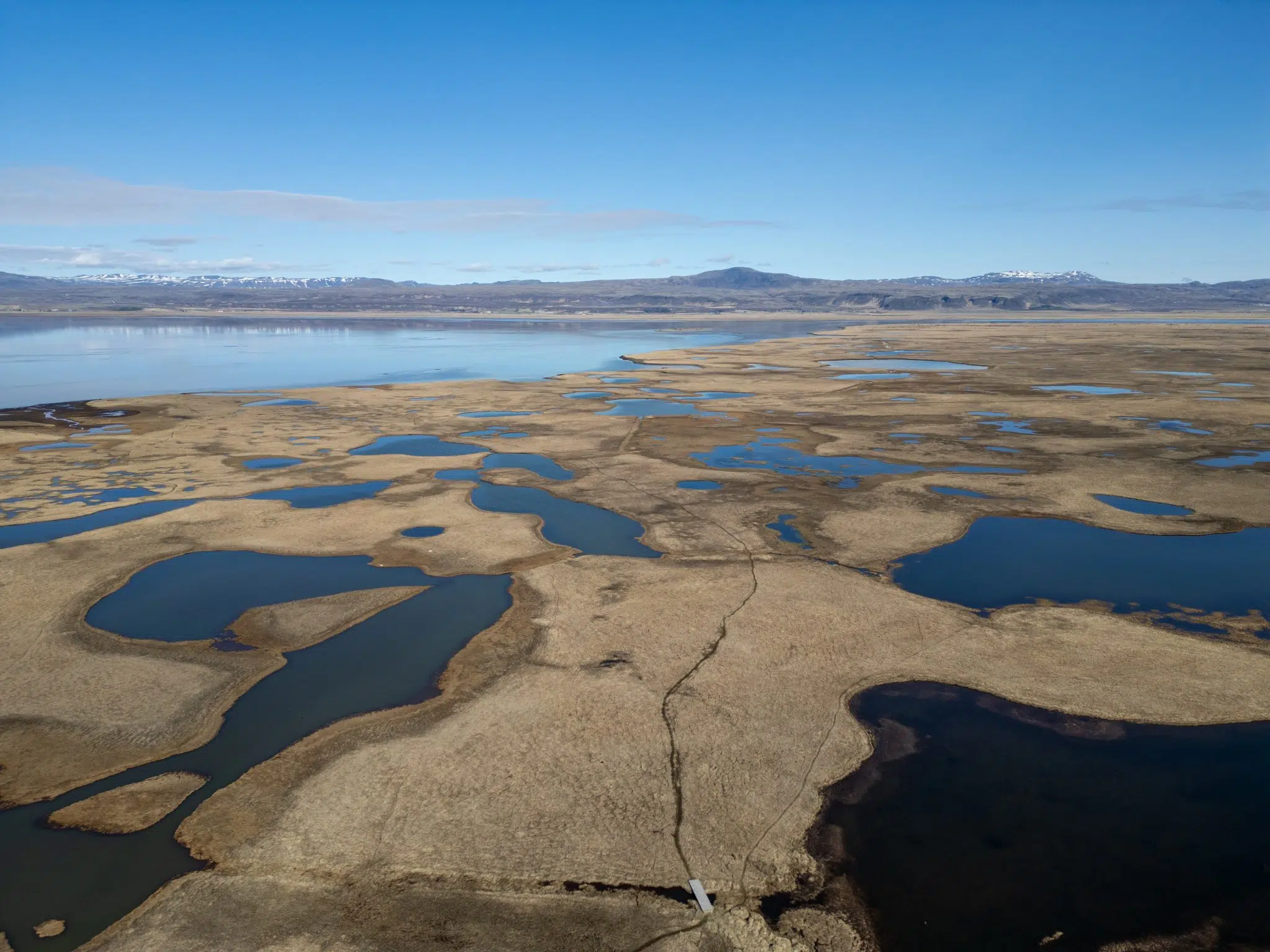
The project’s focus areas are two Important Bird Areas (IBAs) within this critical southwestern landscape: Flói and Oddi. The Flói Reserve, managed by Fuglavernd, has been a beacon of wetland restoration since 1997. Of its total 500 hectares, 170 hectares are actively undergoing restoration through rewetting measures, with the ultimate goal of benefiting 455 hectares of prime bird breeding habitat. This long-term commitment has yielded significant successes, supporting robust populations of key species. The Dunlin (Lóuþræll), a small wading bird, thrives here with approximately 1,000 breeding pairs. The iconic Black-tailed Godwit (Jaðrakan) sees up to 500 breeding pairs, and the Common Redshank (Stelkur) also benefits significantly from the restored wetlands. Rewetting techniques typically involve blocking existing drainage ditches and creating shallow scrapes and pools, re-establishing the hydrological conditions necessary for wetland ecosystems to flourish. These restored areas not only provide vital foraging and nesting grounds but also contribute to increased invertebrate populations, a critical food source for breeding birds and their chicks.
At the Oddi site, Fuglavernd is collaborating with the Icelandic Forest and Land Agency on government-owned land. Here, the project aims to restore 82.2 hectares, much of which was previously drained for agricultural use, featuring 10.8 kilometers of drainage ditches. The restoration activities are projected to improve 219.7 hectares of peatland habitat. Peatlands are globally significant ecosystems, acting as massive carbon sinks, storing vast amounts of carbon and playing a crucial role in climate regulation. Their restoration offers benefits far beyond bird habitat, contributing to global climate action and improved water quality. An integral part of the Oddi initiative is the creation of an educational trail, designed to raise public awareness about the importance of birds and wetland restoration, engaging local communities and demonstrating the tangible impacts of conservation efforts. This trail will serve as an outdoor classroom, fostering a deeper understanding and appreciation for these vital habitats.

A Vision for International Recognition: The "String of Pearls" UNESCO Initiative
Looking beyond immediate restoration, Fuglavernd is exploring an ambitious long-term vision: linking these Icelandic sites to a future UNESCO World Heritage site designation. This initiative envisions these restored wetlands as "pearls on a string" along the flyway, connecting them with other internationally recognized wetland sites, such as those on England’s east coast, which are already seeking UNESCO designation. The "string of pearls" metaphor elegantly captures the interconnectedness of these crucial habitats across the flyway. UNESCO World Heritage status would confer international recognition, enhance protection measures, unlock new funding opportunities, and potentially boost ecotourism, drawing attention to the global significance of these Icelandic wetlands and their role in supporting migratory bird populations. While acknowledging that this is a "long process," Arnardóttir emphasizes the strategic importance of initiating such discussions: "if no one starts it, it will never happen!" This forward-thinking approach underscores the need for proactive, long-term strategies in conservation.
Alongside direct habitat restoration, Fuglavernd has launched a broader campaign to increase public interest and awareness of migratory birds and flyways. This educational outreach is crucial for garnering public support and addressing common misconceptions about wetlands and conservation. The organization is also actively working to strengthen legal protections for the targeted areas and to continue scaling up wetland rewetting efforts. While new regulatory standards have, at times, slowed progress by requiring additional research and procedural steps, Arnardóttir notes that "the research they require has proven valuable, especially when engaging with people who are skeptical about wetland restoration," providing scientific evidence to support conservation arguments.

Hólmfríður Arnardóttir: Insights from the Frontlines of Conservation
Hólmfríður Arnardóttir’s perspective as a seasoned conservationist offers profound insights into the challenges and rewards of this vital work. She eloquently describes the incredible journeys undertaken by migratory birds, particularly those that brave the Atlantic Ocean. "Unless you’ve been out on the open sea, it’s hard to understand just how brutal it can be – relentless winds, towering storms, and freezing rain that cuts to the bone," she remarks. This highlights the immense resilience of these birds and, conversely, the extreme fragility of the flyways they depend on. Birds rely on specific habitats at precisely the right moments in their journey for survival. Protecting and restoring these places extends beyond wildlife; it safeguards entire ecosystems that people also depend on for clean water, flood control, and carbon sequestration.
Arnardóttir emphasizes a crucial ethical dimension: "These birds do not belong to one place or one nation. While they are here, they are in our care." This concept of shared stewardship underscores the international responsibility for migratory species, requiring coordinated efforts across borders. Nations like Iceland, hosting critical breeding grounds, bear a significant duty to ensure these sites are preserved.

However, the path of conservation is fraught with challenges. Arnardóttir identifies "time" as a major obstacle, noting that "Nature doesn’t change overnight, and meaningful restoration takes years, sometimes decades." Public "perception" is another hurdle, as many harbor misconceptions or suspicions about conservation work, necessitating extensive educational outreach to build understanding and support. Navigating government agencies and institutions can also be "tricky," with internal restrictions and bureaucratic delays often slowing projects. Finally, a persistent "lack of urgency or motivation" among some stakeholders can impede progress, demanding sustained effort and advocacy from conservationists.
Despite these formidable challenges, Arnardóttir finds strength and optimism in collaboration. "What helps me keep going is working with others in the same field," she states. "Having a shared purpose is extremely meaningful; you can borrow optimism from others, or lend it to them in return." She also draws inspiration from "small victories," recognizing that progress in conservation is rarely instantaneous but rather a cumulative effect of many incremental steps. This perspective underscores the importance of resilience in the face of long-term environmental battles.
The Emblematic Black-tailed Godwit: A Symbol of the Flyway

When asked to choose a single species to represent the African-Eurasian Flyway, Arnardóttir selects the Black-tailed Godwit (Jaðrakan). She describes it as a bird that "has it all," embodying the characteristics of a waterbird with its long neck and perfectly adapted long bill for probing in marshes, mudflats, and shallow ponds. Its striking appearance, with a rich red neck and distinctive black tail, makes it both "iconic and emblematic" of the flyway it relies upon. The Icelandic breeding population of Black-tailed Godwits undertakes an impressive migration, flying south to spend the winter months in the UK, Ireland, and other parts of Western Europe, further solidifying its role as a true ambassador for the interconnectedness of the flyway. While acknowledging the importance of other species like the Dunlin (Lóuþræll) and Common Snipe (Hrossagaukur), which are also of conservation concern on Icelandic and European Red Lists, the Godwit’s combination of physical adaptation, beauty, and migratory journey makes it a compelling choice.
Adventures in the Field: Tales from a Conservationist
Fieldwork, while scientifically rigorous, often comes with its share of memorable and sometimes humorous experiences. Arnardóttir recalls an unforgettable night spent ringing European Storm Petrels (Stormsvala) and Leach’s Petrels (Sjósvala) as a volunteer on Bjarnarey, an island in the Westman Islands archipelago. These incredibly small and delicate birds have a unique defense mechanism: they relentlessly "spew" stomach oil when handled, a potent and unpleasant smell. Adding to the eerie atmosphere were the calls of Manx Shearwaters (Skrofa) from their burrows in the surrounding hills, their ghost-like cries echoing in the August darkness.

Another adventure in the Westman Islands involved catching and ringing Puffins (Lundi). Arnardóttir admits to being so afraid of their powerful bites that she "nearly choked them from holding on too tightly," prompting the wise researcher to reassign her to a different role. These anecdotes not only provide a glimpse into the realities of fieldwork but also highlight the passion and dedication required to work directly with wildlife, often in challenging conditions.
Broader Implications and the Path Forward
The conservation efforts in Iceland, exemplified by Fuglavernd’s work, carry significant broader implications. On a policy level, they underscore the urgent need for integrated land-use planning that prioritizes ecological integrity alongside economic development. Stronger environmental regulations are essential to prevent further habitat degradation, and international agreements are crucial for harmonizing conservation strategies across the African-Eurasian Flyway. Economically, the preservation of these wetlands offers considerable potential for ecotourism, particularly birdwatching, which can provide sustainable income for local communities. The ecosystem services provided by healthy wetlands—such as water purification, flood mitigation, and carbon sequestration—also represent immense economic value, often underestimated in traditional development models. Socially, engaging local communities through educational initiatives like the Oddi trail fosters a stronger conservation ethic and builds local capacity for environmental stewardship.

The project in Iceland serves as a compelling microcosm of the global challenges and solutions facing migratory species. It demonstrates that effective conservation demands scientific rigor, dedicated local action, robust international collaboration, and sustained funding. The long-term vision, including the aspiration for UNESCO World Heritage designation, signifies a commitment to not just restore but to elevate the recognition and protection of these invaluable natural assets. As Hólmfríður Arnardóttir eloquently concludes, "Resilience is the key word in nature conservation." The continued dedication of conservationists, coupled with growing awareness and support, offers hope that the extraordinary journeys of migratory birds along the African-Eurasian Flyway will continue for generations to come.