
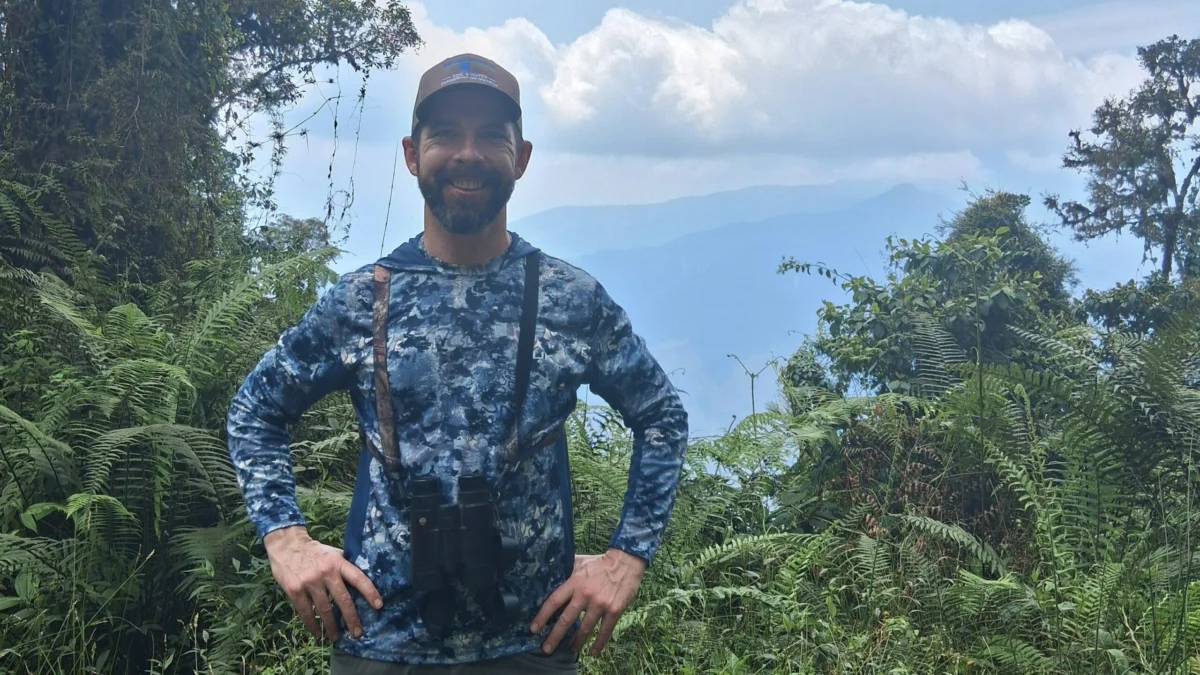
GARNER, NC – Audubon North Carolina has announced the appointment of John DeLuca as its new Director of Conservation, a strategic move poised to significantly bolster the organization’s efforts to protect bird populations and their essential habitats across the state and the wider hemisphere. DeLuca, a seasoned conservation professional with over two decades of dedicated service to avian and ecosystem protection, assumed his new role in March, bringing a wealth of experience spanning coastal habitat restoration, urban forestry initiatives, and intricate collaborations with state and federal agencies. His appointment signals a reinforced commitment by Audubon North Carolina to its overarching mission of reversing the alarming declines in bird populations through science-driven conservation programs.
DeLuca’s distinguished career is marked by an unwavering focus on safeguarding North Carolina’s diverse ecosystems and its most iconic avian species. From the barrier islands that host imperiled shorebirds to the sprawling longleaf pine savannas critical for endangered woodpeckers, and the unique grassy balds of the state’s national forests, his work has consistently aimed at comprehensive habitat protection. This extensive background positions him uniquely to lead Audubon North Carolina’s ambitious conservation agenda, which encompasses a broad spectrum of initiatives from on-the-ground habitat management to policy advocacy and community engagement.
A Deep Dive into DeLuca’s Extensive Background
John DeLuca’s professional journey in conservation is a testament to his deep commitment and broad expertise. For more than two decades, he has been at the forefront of protecting birds and the vital places they depend on, not only within North Carolina but also through projects with broader national implications. His initial foray into the field began at Cape Hatteras National Seashore, a globally recognized migratory bird hotspot. Here, DeLuca was instrumental in establishing foundational inventory, monitoring, and protection programs for at-risk species such as the Piping Plover and Black Skimmer. These shorebirds, facing immense pressure from habitat loss and human disturbance, benefited directly from his meticulous work in identifying critical nesting areas, implementing protective measures, and educating the public about their fragile existence. The Piping Plover, listed as federally threatened, relies heavily on undisturbed coastal habitats for breeding, and DeLuca’s early efforts at Hatteras were crucial in understanding and mitigating threats to its survival. Similarly, his work with Black Skimmers, known for their distinctive feeding behavior and colonial nesting habits, contributed to better management practices for their vulnerable coastal colonies.
Following his impactful tenure at Cape Hatteras, DeLuca transitioned to Camp Lejeune, a U.S. Marine Corps installation that also hosts significant natural resources. At Camp Lejeune, he spearheaded the establishment of monitoring programs for other at-risk species, including the Seaside Sparrow and Painted Bunting. The Seaside Sparrow, a secretive marsh bird, is an indicator of saltmarsh health, a critically threatened ecosystem. DeLuca’s efforts to monitor their populations were integral to understanding the impacts of habitat degradation and developing conservation strategies. The Painted Bunting, a strikingly colorful songbird, faces challenges from habitat loss and illegal trapping, making DeLuca’s monitoring programs vital for tracking their population trends and ensuring their protection within the installation’s diverse landscape. Furthermore, he played a pivotal role in restoring saltmarsh habitats at Camp Lejeune, an effort that not only benefited avian species but also enhanced coastal resilience against storms and erosion, underscoring his holistic approach to ecosystem health.
His career also saw him collaborate extensively with the U.S. Forest Service, where he was instrumental in incorporating ecosystem conservation principles into wildfire management plans. This work is particularly significant in the context of longleaf pine savannas, an ecosystem historically maintained by fire. DeLuca’s expertise helped ensure that prescribed burning, a vital tool for longleaf restoration, was implemented in a manner that supported biodiversity, including the endangered Red-cockaded Woodpecker, which relies on mature longleaf pines for nesting. His achievements extend to partnering with various organizations to establish statewide Motus tracking systems, a cutting-edge technology that uses automated radio telemetry to track the movements of small birds, bats, and insects. This system provides invaluable data on migratory patterns, stopover sites, and connectivity between breeding and wintering grounds, offering crucial insights for continent-wide conservation strategies.
Most recently, DeLuca has contributed his expertise to the North Carolina Wildlife Resources Commission, assisting in the development of comprehensive conservation plans for State Species of Greatest Conservation Need. This work is foundational to the state’s efforts to prevent species from becoming endangered by proactively addressing threats to their populations and habitats. Concurrently, he has worked with private firms to develop specialized habitat restoration plans, demonstrating his ability to bridge public and private sector efforts for conservation outcomes.
Audubon North Carolina’s Critical Mission and the State’s Ecological Significance
Audubon North Carolina, a state program of the National Audubon Society, operates with a clear mandate: to protect birds and the places they need, today and tomorrow. With offices strategically located in Durham, Boone, Corolla, and Wilmington, the organization’s reach extends across the state’s diverse ecological zones, from the Appalachian Mountains to the Outer Banks. North Carolina is a biodiversity hotspot, serving as a crucial migratory flyway for millions of birds traveling between North and South America. Its varied landscapes, including vast coastal wetlands, pristine barrier islands, ancient mountain forests, and unique longleaf pine ecosystems, provide essential breeding grounds, stopover sites, and wintering habitats for a remarkable array of avian species.
However, these vital ecosystems and the birds that depend on them face unprecedented threats. Habitat loss and fragmentation due to rapid development, the accelerating impacts of climate change leading to sea-level rise and extreme weather events, pollution, and the pervasive effects of invasive species are all contributing to significant declines in bird populations. Scientific reports, including Audubon’s own "Survival by Degrees" and the broader "State of the Birds" reports, paint a stark picture: nearly two-thirds of North American bird species are at risk of extinction if global warming continues unchecked. In North Carolina, coastal birds are particularly vulnerable to rising sea levels and more intense hurricanes, while forest birds face challenges from changing forest composition and development pressures. The mission of Audubon North Carolina, therefore, is not merely about preserving individual species but about safeguarding the intricate ecological balance that sustains all life.
Strategic Vision and Future Implications
Executive Director Curtis Smalling articulated the enthusiasm within Audubon North Carolina for DeLuca’s appointment, stating, "John has a long history working to protect North Carolina’s birds and habitats, including pre-existing partnerships with our coastal program and mountain chapters as well as deep experience with federal and state agency partners. We’re excited to have him join the flock." This sentiment underscores the strategic importance of DeLuca’s extensive network and collaborative approach.
DeLuca’s role as Director of Conservation will be pivotal in translating Audubon North Carolina’s scientific research into actionable conservation programs. His expertise in both coastal and inland ecosystems, combined with his experience in working with diverse stakeholders, will be instrumental in developing comprehensive strategies to address the complex challenges facing North Carolina’s birds. This includes advancing initiatives such as:
- Coastal Resilience: Protecting and restoring critical coastal habitats like saltmarshes, barrier islands, and estuaries, which are vital for species like American Oystercatchers, Piping Plovers, and various wading birds. These efforts also provide natural buffers against storm surges and sea-level rise, benefiting human communities.
- Forest and Mountain Conservation: Expanding efforts to protect and restore mature forests and unique mountain habitats, crucial for species like the Cerulean Warbler, Golden-winged Warbler, and various raptors. This includes promoting sustainable forestry practices and addressing threats from development in sensitive areas.
- Urban Bird Initiatives: Developing and implementing programs that enhance bird habitats in urban and suburban areas, recognizing that even small green spaces can provide vital resources for migratory and resident birds. This could involve promoting bird-friendly landscaping, reducing window collisions, and advocating for dark sky initiatives.
- Policy and Advocacy: Leveraging scientific data to inform policy decisions at local, state, and federal levels, advocating for stronger environmental protections, habitat conservation funding, and climate change mitigation strategies.
- Community Engagement and Education: Fostering a deeper connection between people and nature through educational programs, citizen science initiatives, and community-based conservation projects, inspiring broader public support for bird protection.
DeLuca himself expressed his enthusiasm for the new role, stating, "I’m honored and excited to join the outstanding team of conservation professionals at Audubon. I’m ready to put my knowledge and experience working with North Carolina birds to use at local and hemispheric scales." This statement highlights his understanding of the interconnectedness of local conservation efforts with broader hemispheric challenges. Many of the birds that breed in North Carolina migrate thousands of miles to Central and South America, making international collaboration and a "hemispheric scale" perspective essential for their long-term survival.
Broader Impact and Collaboration
The appointment of a conservation leader of DeLuca’s caliber is expected to have significant ripple effects. His established relationships with federal agencies like the U.S. Fish and Wildlife Service, National Park Service, and U.S. Forest Service, as well as state entities like the North Carolina Wildlife Resources Commission, will undoubtedly strengthen Audubon North Carolina’s ability to forge powerful partnerships. Collaborative conservation is increasingly recognized as the most effective approach to tackling large-scale environmental issues. By working hand-in-hand with government agencies, other non-profits, academic institutions, and private landowners, Audubon North Carolina can leverage resources, share expertise, and implement more impactful and far-reaching conservation projects.
For instance, DeLuca’s experience with the Motus tracking system underscores the importance of technological innovation in conservation. Data gathered from such systems can inform land-use planning, identify critical stopover sites for protection, and even help predict the impacts of climate change on migratory routes. His background in developing conservation plans for State Species of Greatest Conservation Need also means that Audubon North Carolina will be better positioned to contribute to statewide biodiversity strategies, ensuring that its efforts are aligned with broader governmental conservation priorities.
Furthermore, his work with private firms on specialized habitat restoration plans indicates an ability to engage with the private sector, identifying opportunities for corporate responsibility and private land conservation. With a significant portion of critical habitats existing on private lands, engaging landowners and businesses in conservation efforts is paramount. DeLuca’s proven track record suggests he can facilitate these vital collaborations, translating scientific understanding into practical, on-the-ground improvements.
The ultimate goal of reversing bird population declines is an ambitious one, but DeLuca’s comprehensive experience provides a strong foundation. The continued decline of many bird species serves as an ecological alarm bell, indicating broader environmental health issues that affect all species, including humans. By focusing on birds, Audubon North Carolina, under DeLuca’s leadership, aims to protect entire ecosystems, ensuring cleaner air and water, healthier forests, and more resilient coastal communities for generations to come.
About Audubon North Carolina
Audubon North Carolina, a state program of the National Audubon Society, has offices in Durham, Boone, Corolla, and Wilmington. The organization is dedicated to protecting birds and the places they need, today and tomorrow, through science, advocacy, education, and on-the-ground conservation. Learn more about their work at nc.audubon.org and connect with them on Twitter, Facebook, and Instagram.
The National Audubon Society, a nonprofit conservation organization established in 1905, works throughout the Americas. It employs science-based approaches, strong advocacy, comprehensive education programs, and direct conservation actions to protect birds and their habitats. Further information is available at www.audubon.org and via their social media channels @audubonsociety on Facebook, Twitter, and Instagram.
Media Contact: Brittany Salmons, [email protected]