
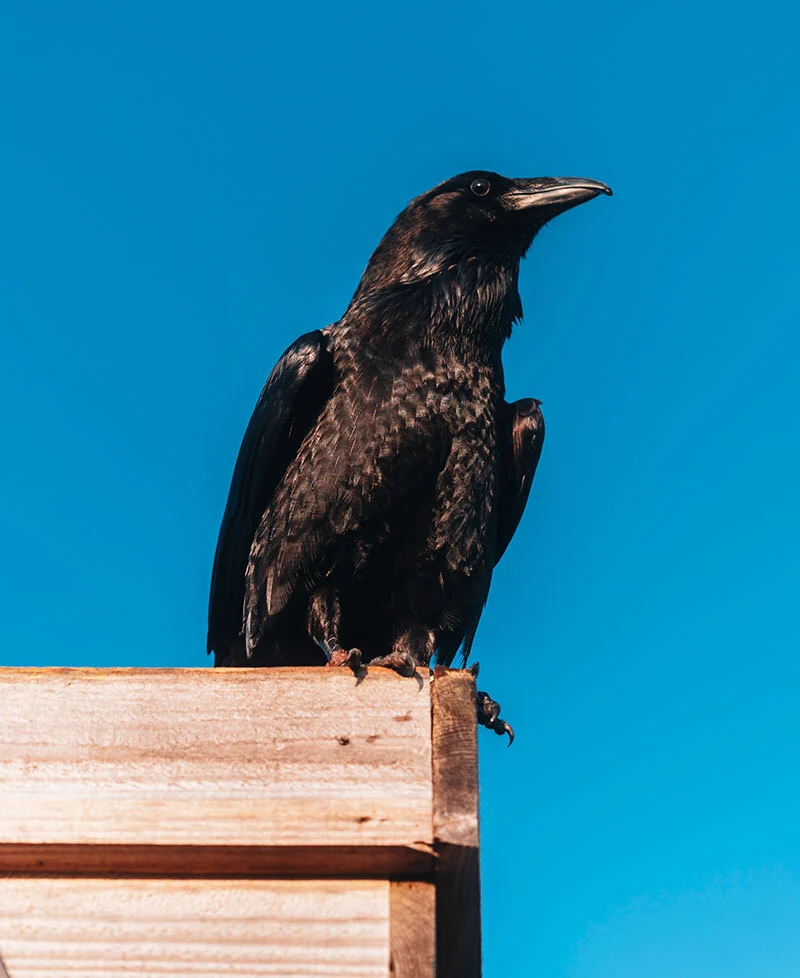
Ravens, often shrouded in myth and folklore, are in reality among the most intelligent and fascinating birds on Earth. As esteemed members of the Corvidae family, which also boasts crows, magpies, and jackdaws, these magnificent creatures are distinguished by their impressive cognitive abilities, complex social structures, and striking presence. Ravens are renowned for their deep, lifelong monogamous bonds, a testament to their capacity for strong attachments, though a portion of the population may remain unattached. As the largest members of the crow family, their intelligence and adaptability have long captivated human observers, and the extraordinary story of Loki the Raven serves as a compelling modern-day illustration of the species’ remarkable nature.
The narrative of Loki’s rise to prominence began in 2014 when he arrived at Coda Falconry, a dedicated bird of prey center situated in West London. This center operates with a dual mission: to provide unparalleled care for animals in distress and to serve as an educational platform for the public, fostering a deeper understanding and appreciation of avian wildlife. Loki’s arrival was not a voluntary donation or a rescue from the wild, but rather a rehoming case. Born in captivity, he had been acquired by an individual who, it became apparent, lacked the necessary knowledge and experience to properly care for such an intelligent and demanding bird. This initial environment proved detrimental, leading to Loki exhibiting aggressive behaviors towards his owner, a situation that ultimately prompted his relinquishment to Coda Falconry. The staff at the center quickly recognized that Loki had been ill-treated and was in dire need of comprehensive rehabilitation. The challenging task of helping Loki overcome his behavioral issues and regain his well-being was entrusted to Elliott Manarin, an avian educator and raptor specialist.
The rehabilitation process for Loki was arduous and fraught with challenges. Manarin recounts enduring more than a dozen hospitalizations during this period, a direct consequence of Loki’s persistent aggression. This physical toll, however, did not deter Manarin. Instead, it appeared to deepen his resolve and strengthen the bond forming between him and the raven. Manarin’s unwavering determination, coupled with his growing understanding of Loki’s complex psychology, fueled his commitment to working through the bird’s difficult behaviors. His ultimate goal was to foster a transformation in Loki, enabling him to transition from a state of distress and aggression to one of trust and well-being. Through consistent effort, patience, and a scientifically informed approach, Manarin gradually earned Loki’s trust. This hard-won trust became the bedrock upon which their collaborative efforts were built, allowing them to work together effectively towards achieving a high quality of life for the raven.
A Decade of Transformation: Loki’s Unprecedented Social Media Fame
A remarkable decade has passed since Loki’s arrival at Coda Falconry, and the raven has since transcended his challenging origins to become a bona fide social media celebrity. His engaging personality and captivating antics have garnered a massive following across multiple digital platforms, demonstrating the universal appeal of intelligent animals. As of early 2024, Loki’s Instagram account, @lokitheraven, boasts an impressive following of over 304,000 enthusiasts, who are treated to regular updates of his daily life and mischievous exploits. His YouTube channel, a hub for longer-form content showcasing his intelligence and personality, has amassed over 132,000 subscribers. The short-form video platform TikTok has also embraced Loki, with his account @lokitheraven attracting more than 302,000 followers. Beyond these social media channels, Loki even has his own dedicated website, lokitheraven.com, which serves as a central point for fans to connect with him and learn more about his remarkable story.
Loki’s burgeoning fame has extended beyond the digital realm, leading to unique opportunities and collaborations. Recently, he played a significant role in a music video for The Raven Age, a UK-based metal band. The band, whose mascot is an anthropomorphic raven, required Loki to perform a greenscreen segment. Demonstrating a professionalism that belied his avian nature, Loki aced the shoot with remarkable skill, proving his adaptability and inherent talent for performance. A clip of this impressive feat is available for viewing, offering a glimpse into his burgeoning entertainment career.
The profound impact of Loki’s journey has been chronicled in a book authored by Elliott Manarin himself, titled Raising Loki. This literary work offers readers an intimate and in-depth look at Loki’s transformation from a neglected one-year-old raven into a joyful and endearingly mischievous bird. The book has been met with overwhelmingly positive reviews from readers who have been captivated by Loki’s resilience and his seemingly innate love for entertaining through his clever trickery. Raising Loki provides a comprehensive narrative of his life, delving into his personality, his challenges, and the profound bond he shares with Manarin. The book is available for purchase, offering a deeper understanding of Loki’s remarkable life and the dedication that brought him to where he is today.
Elliott Manarin’s expertise and approach to Loki’s care are underpinned by a robust educational and scientific background. As an avian educator and a specialist in raptors, his knowledge is instrumental in his work with birds of prey. His significant contributions extend to the foundational development of Coda Falconry, where he serves as a bedrock of the organization’s operational and educational framework. Further information about Coda Falconry and their ongoing conservation and educational efforts can be found on their official website.
Understanding the Corvidae Family: Intelligence Beyond Measure
The exceptional intelligence exhibited by Loki is not an anomaly but rather a characteristic trait deeply ingrained within the Corvidae family. Ravens, along with their crow relatives, are consistently ranked among the most intelligent animals on the planet, often compared to primates in their problem-solving abilities and cognitive flexibility. Scientific research has consistently highlighted the remarkable capacities of these birds. Studies have demonstrated their ability to understand cause-and-effect relationships, use tools, plan for the future, and even engage in complex social learning.
For instance, experiments have shown ravens capable of solving multi-step puzzles to obtain food, a feat that requires foresight and an understanding of sequential actions. Their vocalizations are also incredibly sophisticated, with some species possessing hundreds of distinct calls, used for communication in a variety of social contexts. Furthermore, ravens have been observed engaging in playful behavior, a strong indicator of advanced cognitive function and emotional well-being. This innate intelligence, combined with their adaptability, allows them to thrive in diverse environments, from remote wildernesses to bustling urban landscapes.
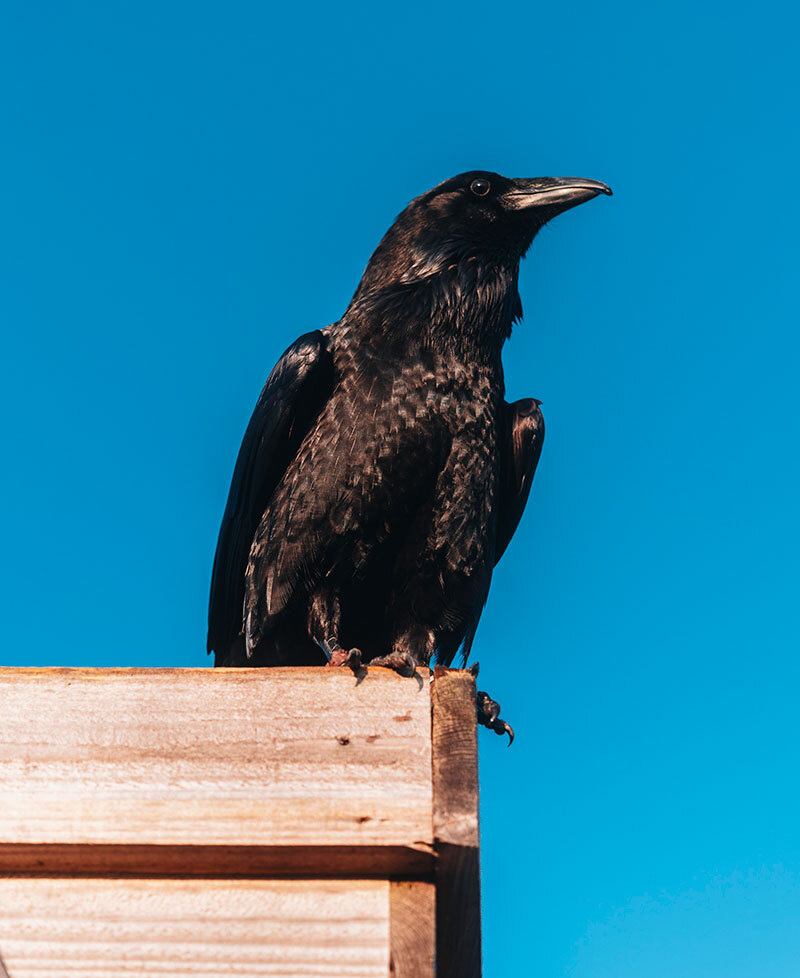
The social structure of ravens also plays a crucial role in their cognitive development. Living in family groups and forming lifelong pair bonds, they engage in intricate social interactions that foster learning and cooperation. Young ravens often learn foraging techniques and social behaviors by observing and imitating older birds. This social learning is a powerful mechanism for transmitting knowledge and skills across generations, contributing to the species’ evolutionary success.
The Ethical Imperative: Rehoming and Rehabilitation of Captive Birds
Loki’s story underscores a critical issue within the pet trade: the challenges and ethical considerations surrounding the ownership of exotic and highly intelligent animals. While the allure of owning a unique creature like a raven can be strong, the reality often involves a significant commitment that many unprepared individuals cannot meet. Birds like ravens require specialized diets, expansive living spaces, significant social interaction, and intellectual stimulation to thrive. When these needs are not met, it can lead to behavioral problems, stress, and ill health, as was the case with Loki.
The rehoming of captive-bred animals, particularly those with complex needs, is a vital aspect of responsible animal welfare. Organizations like Coda Falconry play an indispensable role in providing a sanctuary for these animals, offering them a second chance at a healthy and fulfilling life. The process of rehabilitation, as demonstrated by Elliott Manarin’s dedication, requires immense patience, expertise, and a deep understanding of animal behavior. It involves not only addressing immediate behavioral issues but also building trust and fostering an environment where the animal can express its natural behaviors.
The success of Loki’s rehabilitation and subsequent fame highlights the importance of specialized rescue and rehabilitation centers. These centers serve as crucial intermediaries, bridging the gap between unprepared owners and the well-being of the animals. Their work often involves educating the public about the responsibilities of exotic pet ownership, advocating for stronger regulations, and providing hands-on care for animals in need. The positive outcomes, like Loki’s transformation, serve as powerful testimonials to the efficacy of these dedicated efforts and the inherent resilience of animals when provided with the right care and understanding.
Broader Implications: The Power of Storytelling and Conservation Awareness
Loki’s journey from a neglected captive to a beloved social media personality has far-reaching implications, extending beyond his personal story to broader themes of animal welfare, education, and conservation. His immense popularity on platforms like Instagram, YouTube, and TikTok has created an unprecedented opportunity to raise awareness about the intelligence and complex needs of corvids and other often-misunderstood species.
The constant stream of engaging content featuring Loki’s playful antics, problem-solving skills, and interactions with Elliott Manarin serves as a compelling and accessible educational tool. For millions of followers, Loki has become a gateway to learning about the natural world and the fascinating lives of birds. This widespread exposure can foster empathy and a deeper appreciation for wildlife, potentially inspiring individuals to become more engaged in conservation efforts.
Furthermore, the narrative presented in Elliott Manarin’s book, Raising Loki, provides a profound insight into the challenges and rewards of rehabilitating an animal with complex behavioral issues. By sharing their story, Manarin not only educates but also humanizes the rehabilitation process, emphasizing the importance of patience, scientific understanding, and the profound bonds that can form between humans and animals. This storytelling approach is incredibly effective in reaching a broad audience and can encourage more compassionate and informed interactions with wildlife.
The success of Loki’s brand also demonstrates the potential for well-managed and ethically produced content to contribute to the sustainability of animal welfare organizations. Through merchandise, book sales, and potentially other ventures, Loki’s platform can generate revenue that directly supports Coda Falconry’s mission of rescuing, rehabilitating, and educating the public about birds of prey. This symbiotic relationship between online popularity and on-the-ground conservation efforts represents a modern and effective model for advocacy.
In conclusion, Loki the Raven’s story is a powerful testament to the intelligence and resilience of the Corvidae family, the dedication of animal welfare professionals, and the transformative power of connection in the digital age. His journey from a difficult past to a celebrated present underscores the critical importance of responsible animal care, specialized rehabilitation, and the profound impact that engaging storytelling can have on public awareness and appreciation for the natural world.