
The early March 2026 avian expedition across the Manitoba landscape has concluded with a significant catalog of sightings, highlighting the region’s critical role as a winter refugium for diverse raptor species and boreal specialists. Led by seasoned ornithological guides and featuring contributions from renowned owl researchers, the five-day excursion provided an intensive look at the health and distribution of owl populations in the Canadian Prairies and the Boreal transition zones. From the sighting of rare vagrants like the Townsend’s Solitaire to the documentation of resident Northern Hawk Owls and Snowy Owls, the expedition underscored the ecological importance of Manitoba’s protected marshlands and provincial parks during the harsh winter months.

Scientific Framework and Educational Foundation
The expedition commenced on March 3, 2026, with an emphasis on the intersection of field observation and academic research. The group, consisting of 14 international birding enthusiasts and conservationists, was joined by Dr. Jim Duncan, a preeminent authority on Great Grey Owls. Dr. Duncan’s presentation focused on the long-term population trends of owls in Manitoba, utilizing data from decades of banding and tracking efforts. A central figure in the evening’s educational component was Oska, an educational Great Grey Owl, who served as a biological representative for the species, allowing participants to observe the intricate feather adaptations required for silent flight and thermal regulation in sub-zero temperatures.
This educational groundwork is essential for modern citizen science initiatives. By understanding the specific habitat requirements of these apex predators, observers are better equipped to contribute high-quality data to global databases such as eBird and the Christmas Bird Count. The orientation emphasized the ethics of winter birding, particularly the importance of maintaining a non-intrusive distance from owls, which are often under significant metabolic stress during the late winter season.

Day Two: Prairie Corridors and Urban Nesting Sites
On March 4, the focus shifted to the open agricultural landscapes south of Winnipeg. The town of Oak Bluff has historically served as a reliable corridor for Snowy Owls (Bubo scandiacus), and the 2026 survey confirmed this trend. The team successfully located multiple specimens, including a young male identifiable by its heavy barring beginning to give way to the stark white plumage characteristic of adult males. These sightings are particularly relevant for researchers tracking the "irruption" cycles of Snowy Owls, which are often dictated by lemming populations in the Arctic tundra during the preceding breeding season.
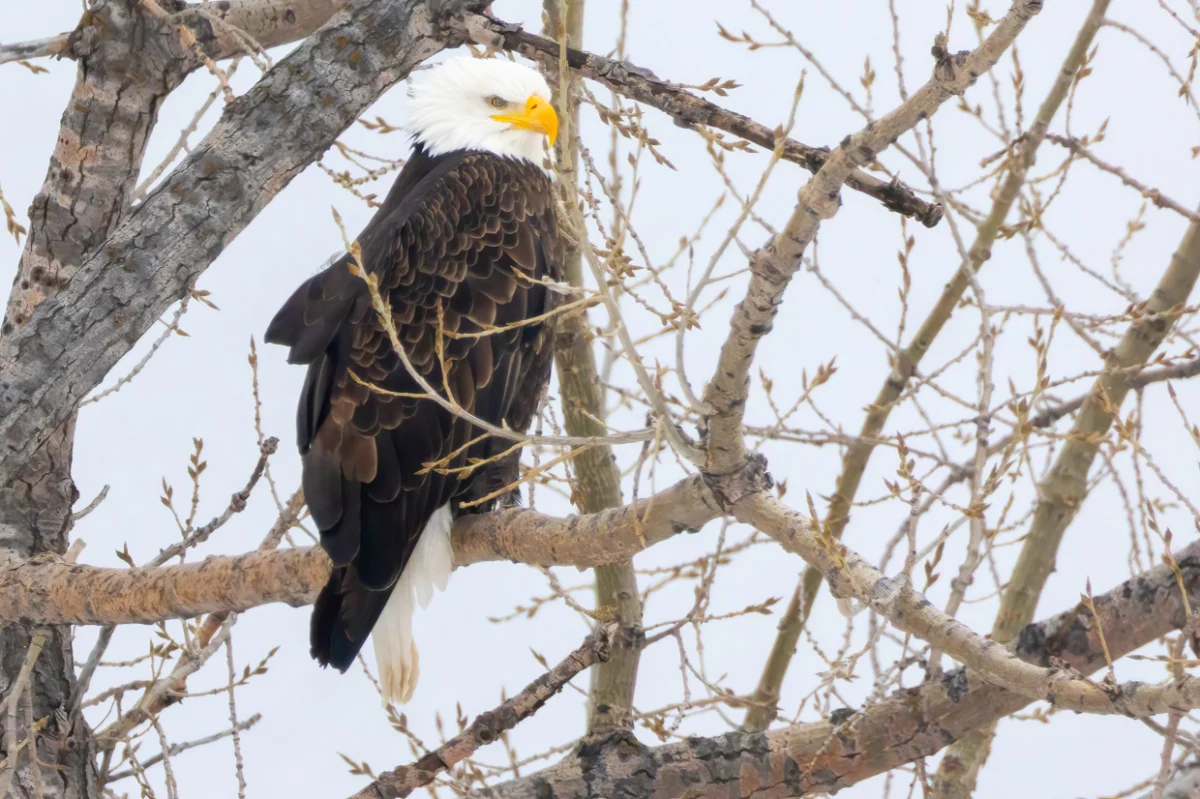
Following the prairie survey, the expedition moved into the suburban and parkland areas of Winnipeg, demonstrating how certain raptor species have adapted to anthropogenic environments. At Fort Whyte Alive, a reclaimed industrial site now serving as a 640-acre protected area, the team observed a nesting pair of Bald Eagles. The presence of these apex predators in semi-urban environments indicates a robust food web, supported by the bison herds and waterfowl that inhabit the marsh.

The afternoon focused on the "urban owl" phenomenon. Despite the failure to locate Eastern Screech-Owls at known roosting sites in St. Vital Park, the team was rewarded with a sighting of a Red-bellied Woodpecker at Harris Park—a species that has been gradually expanding its northern range due to shifting climatic conditions. The day concluded at Bunn’s Creek, where a resident pair of Great Horned Owls was observed. The female’s behavior suggested the presence of owlets, a notable observation as Great Horned Owls are among the earliest nesters in North America, often brooding eggs while snow is still on the ground.
Day Three: Rare Vagrants and Boreal Specialists
March 5 marked a pivotal moment for the expedition when the itinerary was adjusted to account for a rare bird alert. A Townsend’s Solitaire, a member of the thrush family typically found in the mountainous regions of Western North America, was reported in a Winnipeg backyard. The successful documentation of this bird highlights the phenomenon of "vagrancy," where individual birds deviate from their traditional migratory routes. Such sightings provide valuable data for ornithologists studying how weather patterns and wind currents influence avian dispersal.

The expedition then transitioned toward the boreal transition zone along Road 317. The highlight of this leg was the Northern Hawk Owl (Surnia ulula). Unlike most owls, the Northern Hawk Owl is diurnal, hunting by sight during the day. The specimen observed was hunting along a clear-cut area, a habitat preference that underscores the complex relationship between forestry practices and avian biodiversity. While clear-cuts can be detrimental to some species, they provide the open hunting grounds required by Hawk Owls and Great Grey Owls.
In Silver Falls, the team documented a high concentration of Evening Grosbeaks and Blue Jays at local feeders. These observations are crucial for the Great Backyard Bird Count and similar projects that track the winter movement of finches and other passerines. The day’s observations concluded with a North American River Otter sighting near Maskwa Road, providing a holistic view of the region’s winter ecology beyond avian species.

Day Four: Boreal Deep Dive and Conservation Success Stories
On March 6, the team traveled north to Grindstone Provincial Park and Hecla Island. These areas represent the true boreal forest, characterized by dense stands of black spruce and tamarack. Although the forest was quiet, the physical evidence of Black-backed and Three-toed Woodpeckers was abundant. The "scaling" of bark—a feeding technique where woodpeckers flake off large sections of bark to reach beetle larvae—serves as a primary indicator of forest health and the presence of these specialized birds.
Hecla Island provided a unique look at the interaction between wildlife and the frozen expanse of Lake Winnipeg. Common Ravens and Black-billed Magpies were observed scavenging on the ice, a behavior that demonstrates the importance of human-wildlife intersections, as they often follow ice fishers to claim discarded remains. The team also successfully located Boreal Chickadees, a shy species that remains in the dense coniferous canopy, making them significantly harder to document than the ubiquitous Black-capped Chickadee.

The final major stop of the expedition was Oak Hammock Marsh, a RAMSAR-recognized wetland of international importance. The facility, which also serves as the headquarters for Ducks Unlimited Canada, provided the group with an overview of the conservation efforts required to maintain these habitats. At the marsh’s feeders, the team observed dozens of Common Redpolls and two overwintering young male Red-winged Blackbirds. The presence of Red-winged Blackbirds in early March is a sign of the impending spring migration, as these birds are often the first "harbingers of spring" to return to the Canadian prairies.
Supporting Data and Population Trends
The 2026 expedition results contribute to a growing body of evidence regarding the stability of Manitoba’s winter raptor populations. Preliminary data from the trip report indicates a stable presence of Northern Hawk Owls and Great Horned Owls compared to the previous five-year average. However, the high visibility of Snowy Owls in the Oak Bluff area suggests a moderate irruption year, likely linked to successful breeding cycles in the high Arctic.

Furthermore, the sighting of the Red-bellied Woodpecker and the Townsend’s Solitaire reinforces the necessity of long-term monitoring. As average winter temperatures in the mid-continental regions show a gradual upward trend, southern species are increasingly documented further north, and western species are appearing with greater frequency in the eastern prairies.
Implications for Ecotourism and Regional Conservation
The success of the Manitoba Winter Avian Expedition has broader implications for the province’s ecotourism sector. Birding is one of the fastest-growing outdoor activities in North America, and Manitoba’s reputation as the "Owl Capital of the World" continues to draw international interest. The economic impact of such tours supports local hospitality industries in rural areas like Powerview and Pinawa during the traditional "off-season."

From a conservation standpoint, the documentation of species within provincial parks like Hecla-Grindstone and managed areas like Oak Hammock Marsh validates the investment in protected lands. These sites serve as critical "islands" of habitat in an increasingly fragmented landscape. The data collected by the 14 participants and their guides will be uploaded to the eBird Trip Report (480021), where it will be accessible to researchers worldwide, aiding in the development of more effective conservation strategies for North American owls.
Conclusion
The five-day survey concluded on March 7, 2026, leaving participants with a comprehensive understanding of the challenges and triumphs of avian life in the Canadian winter. The expedition was not merely a sightseeing tour but a rigorous exercise in field biology and environmental stewardship. By documenting 20+ species and engaging with the scientific community, the group has contributed to the ongoing narrative of Manitoba’s rich natural heritage, ensuring that these "ghosts of the north" continue to be monitored and protected for future generations.