
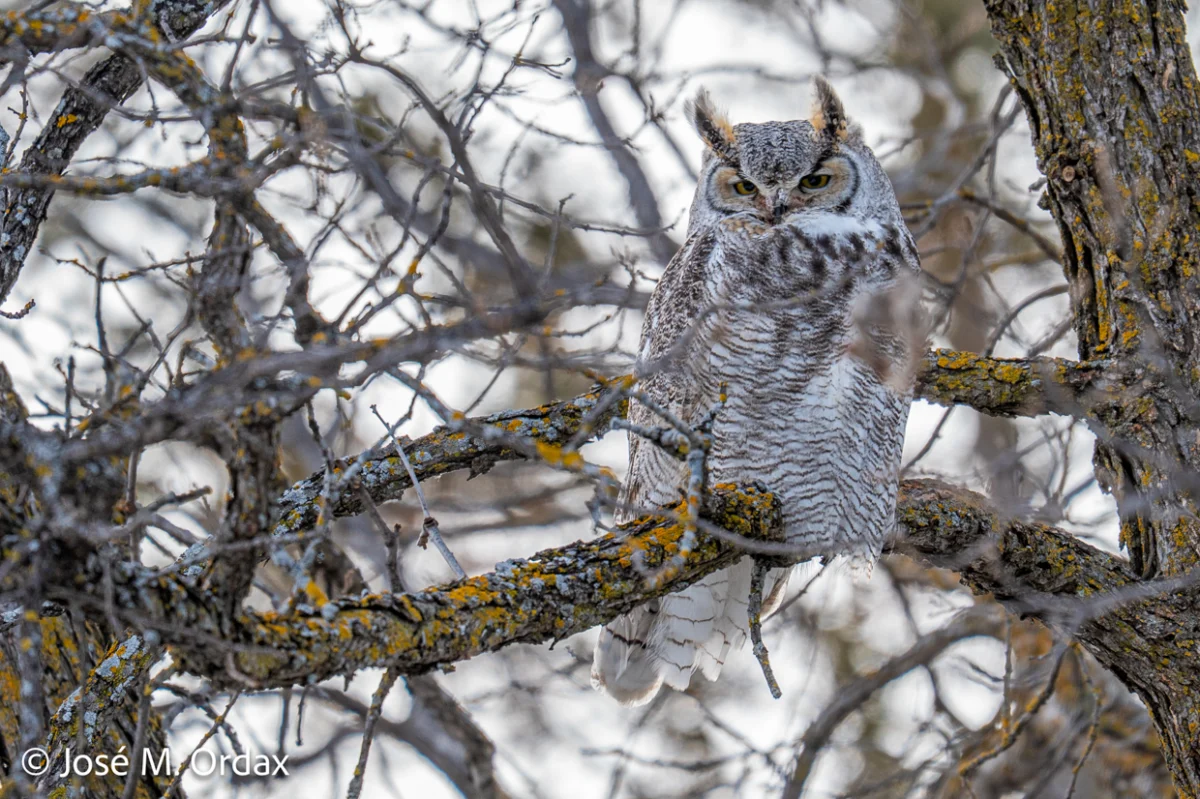
The 2026 winter avian survey and birding expedition across southern and central Manitoba, conducted from February 27 to March 3, has concluded with high-priority sightings of several elusive raptor species and boreal specialists. The five-day excursion, which spanned from the industrial corridors of South Winnipeg to the rugged boreal landscapes of Hecla Island and Silver Falls, provided critical data on the wintering habits of Snowy Owls, Northern Hawk Owls, and Great Horned Owls. Led by regional experts and supported by educational presentations from renowned biologists, the trip underscored Manitoba’s status as a premier destination for winter ornithology despite the challenging environmental conditions of the Canadian Prairies.

The expedition commenced on the evening of February 27 with a technical briefing and a keynote presentation by Dr. Jim Duncan, a leading authority on owl biology and conservation. Dr. Duncan’s work with the Great Grey Owl—Manitoba’s provincial bird—has been instrumental in understanding the population dynamics of northern raptors. Accompanied by an educational bird named Oska, Dr. Duncan detailed the physiological adaptations that allow these species to survive extreme sub-zero temperatures. This initial session established the scientific framework for the following days of field observation, emphasizing the importance of habitat preservation in the face of shifting climate patterns in the Boreal transition zones.
On February 28, the field component of the expedition began under frigid conditions typical of late February in the Red River Valley. Initial surveys focused on the agricultural lands south of Winnipeg, where the open prairie provides an ideal wintering habitat for several species. Almost immediately, the group recorded a significant number of Gray Partridges, a species that often huddles in coveys to conserve heat. This was followed shortly by the first major raptor sighting of the trip: a juvenile Snowy Owl perched on a hydro pole. These poles serve as critical vantage points for Snowy Owls, which migrate south from the Arctic tundra to the Canadian prairies in search of small mammals. The presence of a juvenile indicates a successful breeding season in the north, providing valuable data for researchers tracking "irruption" years—periods when large numbers of owls move south due to prey cycles.

The urban-wildlife interface was a recurring theme during the second day of the survey. In South Winnipeg, the expedition documented a pair of Bald Eagles maintaining a large nest within an industrial park. The proximity of this nest to human activity highlights the adaptability of these raptors to urban environments, provided that high-quality nesting sites and food sources remain available. Following a brief period of observation at the industrial site, the group transitioned to urban parks to assess the presence of roosting owls. While the Eastern Screech-Owl and Barred Owl remained elusive at their known roosting spots in Harris Park, the expedition recorded a Red-bellied Woodpecker and a sizable flock of Bohemian Waxwings. The latter species is a nomadic winter visitor to Manitoba, often found in large numbers where ornamental fruit trees are present. A Sharp-shinned Hawk was also noted nearby, likely drawn to the urban park by the concentration of songbirds.
The day concluded at Bunn’s Creek with a significant observation of a nesting pair of Great Horned Owls. Participants observed the male owl maintaining a vigilant watch over the nesting territory while the female remained on the nest, presumably brooding young owlets. This early nesting behavior is characteristic of Great Horned Owls, which are among the earliest breeders in North America. The sighting also provided an opportunity for community engagement, as local families joined the expedition to witness the raptors, fostering a greater public appreciation for urban biodiversity.

The focus shifted toward the Boreal forest on March 1, as the expedition traveled north toward Silver Falls and the Lac du Bonnet region. This transition zone, where the prairie meets the Canadian Shield, is a high-biodiversity area for wintering birds. Along the highway, the group documented a Northern Hawk Owl hunting in a cleared section of forest characterized by smoldering brush piles. Northern Hawk Owls are unique among North American owls for their diurnal (daytime) hunting habits and their preference for open, recently disturbed forest areas.
In the community of Silver Falls, the expedition monitored local bird feeders, which serve as vital supplementary food sources during the harsh winter months. Observations included Evening Grosbeaks, Black-capped Chickadees, and White-breasted Nuthatches. The presence of Evening Grosbeaks is of particular interest to conservationists, as the species has faced long-term population declines across parts of its range. Further surveys along Wendigo Road yielded an extraordinary count of five Northern Hawk Owls. One specific interaction was of high behavioral interest: a Black-backed Woodpecker was observed attempting to mob a Northern Hawk Owl perched on an exposed spruce. Despite the woodpecker’s aggressive aerial maneuvers, the owl remained stoic, a common response among apex predators toward smaller harassing species.

The expedition also recorded non-avian wildlife of note, including a North American River Otter hunting in the open water of a dam outflow near Powerview. This sighting confirms the importance of maintaining ice-free water corridors for semi-aquatic mammals during the winter freeze. The day ended with additional sightings of Pine Siskins, Redpolls, and Pine Grosbeaks in Lac du Bonnet, indicating a robust presence of winter finches in the region.
On March 2, the survey moved to the Oak Hammock Marsh region, a globally recognized RAMSAR site and a critical wetland complex. However, heavy snowdrifts rendered several secondary roads impassable, limiting access to certain sectors of the marsh. Despite these logistical hurdles, the group successfully located a dozen Sharp-tailed Grouse, a native prairie species known for its elaborate lekking displays in the spring. A Cottontail Rabbit was also noted in the vicinity, representing a primary prey source for the region’s larger raptors.

The final leg of the expedition took the group toward Gimli and Hecla Island Provincial Park. En route, the team scanned marshy habitats for Rough-legged Hawks and Northern Shrikes, though these species were not recorded during this specific window. Upon reaching Hecla Island, the biodiversity shifted toward boreal specialists. The group recorded several Bald Eagles and numerous Common Ravens, which are ubiquitous in the northern forests. The highlight of the Hecla survey was the observation of a Boreal Chickadee, a species that is often difficult to locate due to its preference for dense coniferous cover. The Boreal Chickadee was seen foraging alongside its more common relative, the Black-capped Chickadee, providing a clear comparison of the two species’ morphological and vocal differences.
The expedition concluded on March 3, with the successful documentation of 38 different species over the four-day period. This data has been uploaded to global citizen science platforms, such as eBird, where it will contribute to the long-term monitoring of Manitoba’s winter bird populations.

From a conservation perspective, the 2026 expedition highlights several key trends. The high frequency of Northern Hawk Owl sightings suggests that recent forest management practices or natural disturbances in the Lac du Bonnet area have created favorable hunting grounds for the species. Furthermore, the successful nesting of Great Horned Owls and Bald Eagles in and around Winnipeg demonstrates the resilience of these birds when provided with adequate nesting structures.
However, the expedition also noted the impact of weather on wildlife accessibility and survey accuracy. The impassable roads at Oak Hammock Marsh serve as a reminder of the volatile nature of Manitoba’s winters and the difficulties researchers face in collecting consistent field data. The presence of an Emu on a hobby farm near Gimli, while not a native species, served as a point of interest and a reminder of the various anthropogenic factors that influence the rural landscape.

The economic implications of such expeditions are also noteworthy. Birdwatching is a significant driver of ecotourism in Manitoba, particularly during the winter months when the province offers access to species that are rarely seen further south. The presence of international and regional birders supports local economies in towns like Gimli, Lac du Bonnet, and Powerview, underscoring the link between environmental conservation and sustainable economic development.
In conclusion, the February 27 – March 3 birding expedition provided a comprehensive snapshot of Manitoba’s winter avifauna. The combination of expert-led education and rigorous field observation has resulted in a valuable dataset that reinforces the importance of the Boreal-Prairie transition zone. As climate change continues to alter wintering ranges and prey availability, consistent monitoring through expeditions such as this remains essential for the protection of North America’s northern bird species. The findings from this trip will serve as a baseline for future surveys, helping to ensure that Manitoba remains a sanctuary for both resident and migratory birds in the years to come.