
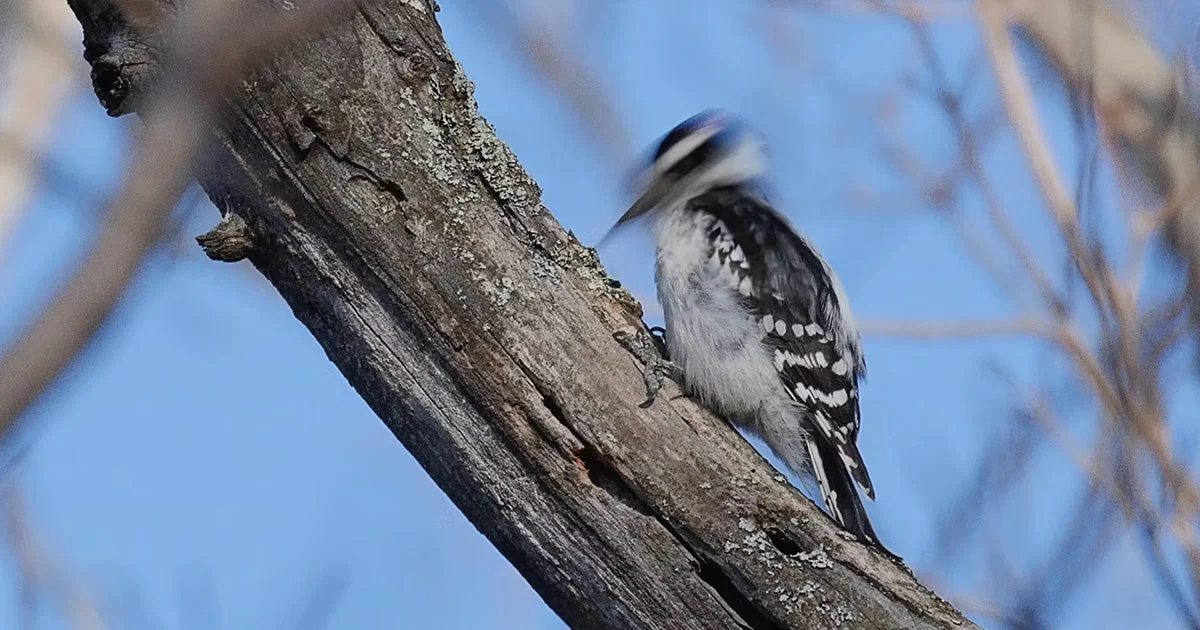
The resonant percussion echoing through North American forests is not merely a random sound but a sophisticated form of communication, a species-specific signature that allows discerning birders to identify woodpeckers even when the birds remain unseen. This profound insight into avian acoustics comes courtesy of Kenn Kaufman, a venerated birder, author, and conservationist, whose lifetime dedication to ornithology continues to enrich the birding community, notably through his role as field editor for Audubon magazine. His expertise underscores that distinguishing woodpecker species by their unique drumming patterns is not only possible but also adds an invaluable dimension to bird observation.
The Orchestral Role of Woodpecker Drumming in Forest Ecosystems
Woodpeckers, unlike many other forest inhabitants, possess a unique set of behaviors and anatomical adaptations that allow them to utilize wood as both a foraging ground and a communication medium. While various birds such as nuthatches and chickadees may tap on wood to unearth insects or prepare nesting cavities, the rapid, rhythmic drumrolls are unequivocally the hallmark of a woodpecker. This percussive display is distinct from the slower, more deliberate strikes associated with excavating for food or creating nest holes. Instead, drumming serves a primary function akin to a songbird’s vocalizations: it is a territorial declaration, a beacon for attracting mates, and a means of maintaining contact between paired individuals within a often dense and visually obstructed environment.
The selection of a drumming surface is critical to the effectiveness of this communication. Woodpeckers meticulously choose substrates that maximize sound amplification, ranging from hard, dead branches and hollow trunks to, surprisingly, man-made structures like metal pipes, utility poles, or even house siding. The goal is to produce a sound that travels farthest and most effectively conveys their presence and intentions within a competitive landscape where multiple woodpecker species may coexist. The evolutionary refinement of these species-specific drumming patterns highlights a fascinating aspect of avian biology, suggesting that each species has developed a distinct acoustic signature that is recognizable to its conspecifics, thereby minimizing interspecies confusion and facilitating successful reproduction and territorial defense.
Kenn Kaufman: A Pillar of Ornithological Knowledge
Kenn Kaufman’s stature in the ornithological world is unparalleled. As a national treasure, his journey began early, characterized by an insatiable curiosity and an unwavering commitment to understanding birds. From traversing continents to observe rare species to meticulously documenting his findings in acclaimed field guides and scholarly articles, Kaufman has consistently championed the accessibility of birding knowledge. His role at Audubon magazine as field editor exemplifies this commitment, positioning him as the ultimate arbiter of avian queries. The "Ask Kenn" segment, where readers can submit their most perplexing bird-related questions, epitomizes the generous spirit with which Kaufman shares his vast knowledge. His responses are celebrated not only for their thoroughness and factual accuracy but also for their thoughtful and often humorous delivery, making complex ornithological concepts understandable and engaging for a broad audience. This initiative, highlighted in the Spring 2026 issue, underscores the ongoing effort to demystify bird identification, particularly through auditory cues.
Deconstructing Drumming Patterns: A Species-Specific Symphony
The ability to differentiate woodpecker species by their drumming patterns requires focused listening and an understanding of key acoustic parameters: speed, duration, volume, and rhythm. These elements combine to create a unique sonic fingerprint for each species.
Hairy Woodpeckers vs. Downy Woodpeckers: A Classic Auditory Challenge
Perhaps one of the most common and instructive comparisons involves the Hairy Woodpecker ( Dryobates villosus) and the Downy Woodpecker (Dryobates pubescens). These two species, widespread across North America, are remarkably similar in appearance, often leading to visual misidentification. Both possess black and white plumage, with males displaying a patch of red on the nape. However, their size difference—the Hairy being significantly larger with a proportionally longer bill—is a crucial visual cue. Auditory identification offers another definitive method.
The Hairy Woodpecker’s drum is characterized by its rapid-fire intensity. A typical Hairy drum consists of approximately 26 beats delivered in a single, emphatic second. This produces a sound so fast and continuous that it often coalesces into an "angry buzz," a sustained, almost unbroken burst of sound. In contrast, the Downy Woodpecker’s drum is distinctly shorter and slower. It typically lasts less than one second, comprising about 12 to 17 beats. This reduced beat rate gives the Downy’s drum a gentler, more distinct individual strike quality, often described as a softer rattle. Learning to distinguish between these two patterns is a foundational step in auditory woodpecker identification and highlights how subtle variations in rhythm and speed can signify entirely different species.
The Powerful Resonances of the Pileated Woodpecker
The majestic Pileated Woodpecker (Dryocopus pileatus), North America’s largest woodpecker, produces a drum that matches its impressive size and powerful presence. Its drumming pattern is characterized by a slower pace, similar to the Downy’s in terms of beats per second (around 15 beats per second), but it is significantly louder and typically much longer, often exceeding one second in duration. A distinctive feature of the Pileated’s drum is its tendency to speed up slightly and then gradually decrease in volume and intensity towards the end, creating a "trailing off" effect. This deceleration and softening at the conclusion give the impression of a drumroll that fades into the forest ambiance, a unique and easily recognizable signature for this iconic forest dweller.
Sapsuckers: The Staccato Artists
Sapsuckers, a distinct genus (Sphyrapicus) within the woodpecker family, exhibit the most idiosyncratic drumming patterns. Their percussive displays are a staccato symphony, characterized by an initial rapid burst followed by a series of irregular single or double knocks. This creates a broken, uneven rhythm that is highly diagnostic.
- Yellow-bellied Sapsucker (Sphyrapicus varius), Red-naped Sapsucker (Sphyrapicus nuchalis), and Red-breasted Sapsucker (Sphyrapicus ruber): These closely related species share a common drumming style that can be audibly represented as TRRRRRR, TR TR TR, T-T, TT, T-T. The initial roll is followed by distinct pauses and varied single or double taps, creating a very "broken" sound. These species are known for drilling neat rows of sap wells in tree bark, a behavior that complements their unique drumming.
- Williamson’s Sapsucker (Sphyrapicus thyroideus): This species, found primarily in western montane forests, offers a variation on the sapsucker theme. While it begins with a similar rapid drumroll (TRRRRRR), the subsequent knocks are also multi-strike but become more widely spaced as the sequence progresses: TRRRRRR, TRRR TRRR TRRR, TRR, TRR, TR. This gives its drumming a more drawn-out, rhythmic, yet still broken quality compared to its relatives.
The Vocal Drummers: Integrating Calls and Percussion
Some woodpecker species enhance their drumming with distinct vocalizations, adding another layer to their identification. This integrated approach to communication provides additional cues for birders.
- Red-bellied Woodpecker (Melanerpes carolinus): This eastern North American species has a relatively slow drum, similar in beat rate to the Downy (13 to 17 beats in less than one second). However, a key identifier is its frequent interspersal of loud, distinctive "churr" or "kwirr" calls between drumrolls. These calls are a prominent feature of its vocal repertoire and serve the same territorial and mate-attracting purposes as its drumming.
- Golden-fronted Woodpecker (Melanerpes aurifrons) and Gila Woodpecker (Melanerpes uropygialis): These southwestern relatives of the Red-bellied Woodpecker exhibit similar behavior, combining their drumming with characteristic calls, providing auditory markers for their specific ranges and habitats.
- Northern Flicker (Colaptes auratus): The Northern Flicker’s drumming is moderately fast but often notably long, sometimes lasting almost two seconds and comprising up to 30 beats. This extended drumroll is frequently punctuated by a loud, yammering "song" or series of "wicka-wicka-wicka" calls. These distinctive vocalizations, alongside its drumming, are unmistakable and a common sound in suburban and open woodland environments.
Challenges and the Art of Auditory Birding
Identifying woodpecker drumming in the field presents unique challenges. Unlike visual identification, which relies on direct observation, auditory identification often occurs without a clear view of the bird. Environmental factors such as wind, ambient noise from other wildlife, human activities, and the physical characteristics of the forest itself (e.g., dense foliage, topography) can all affect sound transmission and perception. Furthermore, individual hearing acuity varies, and the subtleties of rhythmic patterns can be difficult to discern for untrained ears.
However, embracing auditory identification significantly enriches the birding experience. It allows birders to identify species that are hidden from view, active in low light conditions, or inhabiting dense habitats. It also sharpens observational skills, encouraging a deeper engagement with the natural soundscape. The process of learning to differentiate these patterns fosters a greater appreciation for the complexity of avian communication and the intricate ways in which species interact with their environment.
Leveraging Technology and Resources for Learning
The digital age has revolutionized the study of avian acoustics, providing invaluable tools for both learning and research. Kenn Kaufman and other experts strongly recommend utilizing online sound libraries to hone auditory identification skills.
- Macaulay Library at Cornell Laboratory of Ornithology: This extensive archive is a global repository of natural sounds, boasting millions of recordings from thousands of species. It serves as an unparalleled resource for comparing different drumming patterns, listening to variations within a species, and understanding the context of these sounds. Its scientific rigor and vast collection make it a gold standard for auditory reference.
- Xeno-canto: An independent, community-driven platform, Xeno-canto offers a vast collection of bird sounds contributed by birders and researchers worldwide. Its user-friendly interface and global scope provide a complementary resource to the Macaulay Library, offering diverse recordings that can help birders familiarize themselves with species variations and regional accents.
Beyond these primary resources, other technological aids include:
- Birding Apps: Many modern bird identification apps, such as Merlin Bird ID by Cornell Lab, incorporate extensive sound libraries and even real-time sound identification features, which can be immensely helpful for beginners.
- Sound Analysis Software: For advanced enthusiasts or researchers, software like Audacity allows for detailed spectral analysis of sound recordings, revealing nuances in frequency, duration, and amplitude that might be imperceptible to the human ear.
- Specialized Microphones: Parabolic microphones and sensitive recording equipment enable birders to capture high-quality soundscapes, facilitating later analysis and deeper study.
Broader Ecological Impact and Conservation Implications
Understanding and monitoring woodpecker drumming patterns extend beyond a mere identification challenge; it holds significant implications for ecological research and conservation. Woodpeckers are keystone species in many forest ecosystems. Their role as primary cavity nesters means they excavate tree holes that, once abandoned, provide vital nesting and roosting sites for a multitude of other wildlife, including owls, ducks, flying squirrels, and various passerines. By controlling insect populations, particularly wood-boring pests, they contribute to forest health.
The ability to identify species through their drumming allows researchers and citizen scientists to conduct non-invasive surveys, monitor population trends, and assess habitat health. Changes in drumming frequency or distribution could signal shifts in species populations due to habitat loss, climate change, or other environmental stressors. The work of conservationists like Kenn Kaufman and organizations like Audubon is crucial in advocating for the preservation of these vital forest habitats, ensuring that the rhythmic drumming of woodpeckers continues to resonate for generations to come.
In conclusion, the seemingly simple act of a woodpecker striking wood is, in fact, a complex and nuanced form of communication, offering a rich tapestry of acoustic information. Learning to decipher these drumming patterns, as championed by experts like Kenn Kaufman, transforms the birding experience, adding a profound auditory dimension to our understanding of the natural world. It is a rewarding challenge that deepens our connection to forest ecosystems and underscores the intricate beauty of avian life.