
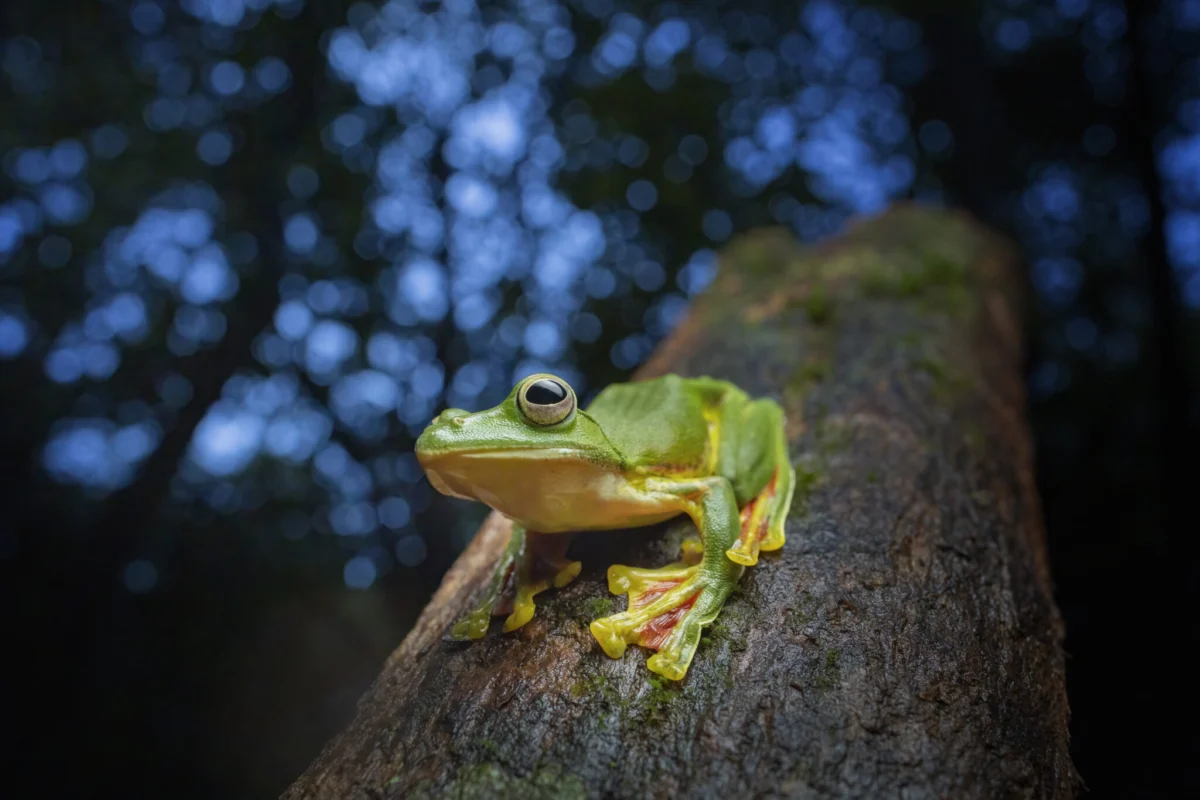
The field of nature photography is continuously evolving, with photographers seeking innovative ways to tell compelling stories about the natural world. Among these advancements, wide-angle macro photography has emerged as a particularly powerful technique, offering a unique perspective that transcends traditional close-up shots. By employing a wide-angle lens to frame small subjects within their broader environment, this method creates immersive, storytelling images that transport the viewer directly into the scene, fostering a profound connection with the subject’s world. This approach not only reveals intricate details of an organism but crucially places it within its ecological context, illuminating the delicate interplay between the creature and its ecosystem. The resulting photographs are not merely visually striking; they are invitations to experience nature from the subject’s unique vantage point, encouraging a deeper appreciation for biodiversity and habitat preservation.
The Art of Immersion: Defining Wide-Angle Macro

At its core, wide-angle macro photography is about contextualizing the minute. While conventional macro photography meticulously isolates and magnifies tiny subjects, often against a blurred background, the wide-angle variant expands the frame to include the surrounding habitat. This fundamental difference transforms a simple portrait into an environmental narrative. The technique involves using a wide-angle lens at extremely close focusing distances to achieve significant magnification. Although many wide-angle lenses do not technically meet the "true macro" definition of 1:1 reproduction ratio, the term "wide-angle macro" has become widely accepted to describe this distinctive style of imagery. This stylistic choice prioritizes the immersive experience, demonstrating how a small creature, be it an insect, amphibian, or reptile, interacts with and relies upon its specific environment. It moves beyond mere aesthetic appeal, serving as a vital tool for ecological storytelling and conservation communication, highlighting the vulnerability and interconnectedness of species within their habitats. This niche has gained significant traction, especially in a time where environmental awareness is paramount, with photographers increasingly acting as visual advocates for the planet.
Essential Toolkit: Equipping for the Field
Achieving these captivating images requires a specialized approach to gear, balancing magnification with a broad field of view. The right equipment is crucial for overcoming the inherent technical challenges of this genre.

Cameras: The Digital Foundation
The adage "the best camera is the one you already own" holds true for wide-angle macro, allowing beginners to start with any DSLR or mirrorless camera. However, modern mirrorless systems offer distinct advantages that significantly ease the complexities of macro photography. Features such as advanced autofocus systems with animal eye detection and sophisticated focus tracking capabilities can be game-changers, particularly when dealing with fast-moving or elusive subjects. Live view functionality combined with a tilt or vari-angle screen provides invaluable flexibility, enabling photographers to compose shots from challenging low angles without having to contort themselves uncomfortably. Furthermore, cameras boasting excellent dynamic range are essential for capturing detail in both brightly lit backgrounds and shaded subjects, especially in dense forest environments. Good weather sealing is non-negotiable for fieldwork in unpredictable conditions, and a high burst rate can be critical for capturing fleeting moments of animal behavior. While cutting-edge gear offers undeniable benefits, a photographer’s skill and understanding of light and composition remain paramount.
Lenses: The Eye to the Micro-World
The lens is arguably the most critical component. A standard wide-angle lens designed for landscape photography typically won’t suffice, as its minimum focusing distance (MFD) is too long to achieve the necessary magnification. For wide-angle macro, a lens with a very low MFD is imperative. Fortunately, several manufacturers, including specialized third-party brands like Laowa, have developed lenses specifically tailored for this purpose, offering true macro capabilities (1:1 or even greater reproduction ratios) combined with wide focal lengths (e.g., 15mm, 25mm). These lenses allow photographers to get incredibly close to their subject while still including a significant portion of the background. A short MFD ensures the subject can fill a substantial part of the frame, preventing it from being dwarfed by its surroundings and maintaining visual impact. Without such a lens, the subject would appear tiny and indistinct, losing its prominence within the environmental context.
Illumination: Mastering Light with Flash and Diffusers
Even when shooting in broad daylight or twilight, an external flash unit is often an indispensable tool in wide-angle macro photography. The need to use a narrow aperture (e.g., f/11 to f/22) to achieve sufficient depth of field for both the subject and its background often leads to underexposure of the ambient light. A flash compensates for this light loss, allowing for proper exposure while maintaining the desired aperture. Key features for a flash unit include ETTL (through-the-lens metering) for automatic exposure, manual mode for precise control, a fast recycle time to capture successive shots, a high guide number (typically above 60) for ample power, and high-speed sync (HSS) capability for shooting at faster shutter speeds to balance ambient light. Remote operation functionality is also highly beneficial for off-camera lighting setups.

However, a powerful flash alone can produce harsh, unflattering highlights, especially on wet or reflective subjects. This is where diffusers become essential. While standard diffusers for conventional macro lenses (around 90-100mm) exist, they often present challenges with wide-angle lenses. Their size or shape might cause vignetting or appear in the frame, and without adequate support, they can droop. Photographers often resort to custom-built solutions or smaller, specialized diffusers like dome diffusers or mini softboxes. The principle remains: the larger the effective diffusion surface relative to the subject, the softer and more even the light. Creative "hacks" include elevating the diffuser with triggers, using disc-style diffusers for top-lighting, or employing off-camera flash setups, though the latter can be cumbersome for solo photographers in the field. The ongoing challenge is to balance the need for broad, soft light with the physical constraints of working very close to a small subject in its natural environment.
Field Preparedness: Beyond the Camera
Beyond the core photographic equipment, proper field gear is crucial for safety, comfort, and success. This includes robust rain gear to protect both the photographer and sensitive electronics from moisture, particularly in rainforests or damp habitats. Sturdy, waterproof footwear is essential for navigating uneven, wet, or muddy terrain, and specialized leech guards offer vital protection against parasites common in many macro-rich environments. Additionally, effective mosquito and insect repellents are necessary to prevent distractions and potential health hazards, allowing the photographer to focus on capturing the shot without discomfort. A small headlamp for night shoots, a spare battery, and a microfiber cloth for lens cleaning complete the essential field kit.
Strategic Timing and Ethical Fieldwork

The timing of a shoot and a photographer’s ethical approach are as important as the gear itself.
Day vs. Night: Adapting to Subject Behavior
The primary goal of wide-angle macro is to showcase the subject within its habitat, which naturally lends itself to daytime photography when the environment is clearly visible. This allows for ambient light to define the background and provide a natural context. However, many fascinating macro subjects, such as various reptiles and amphibians, are nocturnal, coming alive only under the cover of darkness. This presents a significant challenge: how to capture their habitat when traditional flash photography often renders the background as a dark, featureless void.
Overcoming this requires strategic lighting. Instead of relying on a single on-camera flash, photographers can employ multiple off-camera flashes, triggered remotely, to illuminate both the subject and the background. This technique, often involving a "master" flash on the camera triggering "slave" flashes positioned strategically around the scene, allows for a more balanced exposure of the entire environment. Alternatively, continuous LED lights can be used to "paint" light onto the background during longer exposures at night, creating a more natural appearance. This method, while demanding, allows for the ecological context to be preserved even after dark.

Ethical Photography: Respecting the Habitat
A cornerstone of wide-angle macro photography, particularly when dealing with wildlife, is an unwavering commitment to ethical practices. This means prioritizing the well-being of the subject and its habitat above any photographic ambition. Extensive research into a location, its species, and their diurnal or nocturnal behaviors is indispensable. Collaborating with local naturalists or guides can provide invaluable insights, ensuring safe and respectful interactions. The practice of capturing or manipulating animals for photography, even if they are later released, is widely condemned within the ethical wildlife photography community. Images must be in situ—captured in their natural state, without disturbance or alteration of the environment. This commitment not only upholds journalistic integrity but also ensures that the photographs truly reflect the wildness and authenticity of the scene, contributing to genuine conservation efforts rather than inadvertently harming them.
Crafting the Narrative: Composition and Framing
The success of a wide-angle macro image hinges on its composition, which must serve the overarching goal of environmental storytelling. While fundamental compositional rules apply, their application takes on a specific nuance in this genre.

The delicate balance between the subject, foreground, and background is paramount. Incorporating multiple layers or elements of depth—a leading branch, a textured leaf, or distant foliage—adds visual interest and guides the viewer’s eye through the scene. Experimentation with angles is crucial; shooting from a very low perspective can include the overarching canopy or sky, imbuing the image with a sense of vastness, while a slightly higher angle might reveal the intricate patterns of the forest floor. Leading lines, whether a subtle blade of grass or a prominent root system, are powerful tools to direct attention towards the main subject. Natural elements like leaves, twigs, or flowers can also be strategically used to frame the subject, creating a sense of intimacy and drawing the viewer deeper into the miniature world. The challenge lies in ensuring that while the environment is prominent, the subject itself remains the clear focal point, distinct yet harmoniously integrated.
Navigating the Complexities: Overcoming Technical and Practical Hurdles
Wide-angle macro photography, despite its artistic rewards, is fraught with unique technical and practical challenges.

Perspective Distortion: A Creative Tool or a Challenge?
Wide-angle lenses inherently exaggerate perspective, making foreground subjects appear disproportionately large compared to background elements. This effect can be harnessed creatively to emphasize the subject’s dominance or vulnerability within its space. However, if not carefully composed, it can lead to an unnatural or unsettling appearance. Understanding lens characteristics and practicing deliberate framing are key to managing this distortion, using it to enhance the narrative rather than detract from it. Post-processing tools can also correct some lens distortions, but careful in-camera composition is always the first line of defense.
Depth of Field Management
At macro distances, depth of field becomes incredibly shallow, even with a wide-angle lens. Achieving acceptable sharpness across both the subject and its environment is a significant hurdle. Photographers typically use the narrowest possible aperture (e.g., f/16 or f/22) to maximize depth of field. However, stopping down too far can introduce diffraction, leading to a loss of overall sharpness. This necessitates a careful judgment call in the field. A common advanced technique to overcome this limitation is focus stacking, where multiple images are taken at different focus points and later merged in software to create a single image with extended depth of field. This allows for sharp detail from the closest foreground to the distant background, a hallmark of compelling wide-angle macro work.
Light Management and Flare Mitigation
Balancing the strong, close lighting required for a macro subject with the natural, often dimmer, exposure of a wide background is a consistent challenge. This often demands the use of diffusers, fill lights, or even blending multiple exposures (one for the subject, one for the background) in post-processing. Lens flare, caused by direct light hitting the front element, is also more prevalent with wide-angle optics. Using a lens hood, careful positioning relative to light sources, and even shading the lens with a hand can mitigate flare. Moreover, some wide-angle lenses, especially when combined with extension tubes or adapters for greater magnification, can exhibit reduced sharpness or softness towards the corners of the frame. While this can sometimes be an intentional artistic effect, avoiding extension tubes or adapters if crisp corner-to-corner sharpness is desired is often the best approach.

The Proximity Paradox: Working Distance and Stability
Wide-angle macro setups often demand extremely short minimum focusing distances, sometimes mere centimeters from the subject. This proximity makes it incredibly difficult to position the camera and lighting without disturbing the subject. Patience, slow movements, and a low-profile approach are crucial. Furthermore, shooting so close with a wide-angle lens magnifies any camera movement, making precise focus and steady positioning paramount. A sturdy tripod or beanbag is highly recommended for stability, especially when attempting focus stacking or longer exposures in low light. The inherent mobility of many macro subjects further complicates matters, requiring quick reflexes and the ability to anticipate movement.
Gear Size vs. Effectiveness
While larger diffusers generally produce softer, more appealing light, their physical size can be a detriment in wide-angle macro photography. An oversized setup can easily disturb skittish subjects or be impractical to maneuver in dense vegetation. In such situations, a smaller, more compact diffuser might be more effective, even if it offers a slightly less ideal diffusion quality. This represents a constant trade-off in the field, where the optimal choice depends heavily on the subject’s behavior, the specific environmental conditions, and the photographer’s ability to adapt.
The Broader Canvas: Impact and Future of Wide-Angle Macro

Wide-angle macro photography stands at a powerful intersection of intimacy and grand narrative. It allows photographers to reveal not just the exquisite details of tiny subjects but also the rich, complex environments they inhabit. This technique, while challenging, transforms photographic obstacles into creative opportunities, fostering a deeper engagement with the natural world.
Conservation Storytelling
The ability to contextualize subjects within their ecosystems makes wide-angle macro an invaluable tool for conservation. These images serve as visual arguments for habitat preservation, educating the public about the delicate balance of nature and the interconnectedness of species. By showing a creature in situ, the photographs transcend mere biological documentation, becoming powerful appeals for environmental stewardship.
Scientific Documentation
Beyond artistic merit, wide-angle macro imagery holds significant value for scientific research. By accurately depicting an organism within its microhabitat, these photographs can aid scientists in understanding species behavior, ecological niches, and environmental health indicators. They provide a tangible record that complements biological data, offering a more holistic view of the natural world.

Artistic Evolution
Within the broader photographic community, wide-angle macro has pushed the boundaries of what macro photography can achieve. It encourages innovation in lighting, composition, and technical execution, influencing other genres by demonstrating the power of contextual storytelling. Its unique aesthetic often garners significant attention in photographic competitions and publications, celebrated for its originality and depth.
Emerging Technologies
The future of wide-angle macro photography is likely to be shaped by ongoing technological advancements. Improved low-light performance in cameras, more sophisticated in-camera focus stacking capabilities, and lighter, more powerful, and intelligently designed lighting solutions will further reduce the technical hurdles. The integration of computational photography and perhaps even AI-assisted focusing and exposure could open new creative avenues, allowing photographers to focus even more on the artistic and narrative aspects of their work.
In conclusion, wide-angle macro photography is more than a technical pursuit; it is a philosophy of seeing and presenting nature. By mastering the delicate balance between subject and surroundings, photographers create images that are both personal and expansive, capturing not only what a creature looks like but, more importantly, where it belongs. It is a profound way of connecting the smallest wonders of nature with the larger, intricate world they thrive in, fostering empathy and understanding for the fragile ecosystems that sustain all life.