
In a compelling departure from the prevailing pursuit of technical perfection, Kuwaiti wildlife photographer and Canon EMEA Ambassador Mohammad Murad has carved a distinctive niche, presenting nature not merely as it appears, but as it profoundly feels. His celebrated work interprets, expresses, and invites viewers into the intricate stories woven by motion, the nuanced play of light, and raw emotion, transforming wildlife photography into a personal language that transcends mere documentation. Murad’s artistic philosophy emphasizes the dynamic pulse of life and the ethereal glow under nature’s ever-changing light, challenging observers to engage with the wild on a deeper, more evocative plane. His unique approach has garnered international recognition, positioning him as a leading voice in contemporary nature photography.

The Philosophy of Emotive Wildlife Photography: A Departure from Convention

Murad’s journey into this interpretive style began serendipitously, marking a pivotal moment in his artistic development. He recounts observing a flock of cormorants gliding across the water, an ordinary scene that became extraordinary with a simple adjustment. An experimental lowering of his camera’s shutter speed unexpectedly transformed the visual into a fluid, living painting, bursting with movement drawn by wings and ripples. This revelation shifted his perception: photography could be more than a static record; it could pulse with life, capturing the essence of movement rather than freezing a moment in time. This artistic awakening laid the groundwork for his signature style, a conscious choice to embrace techniques that imbue his images with energy and emotion. His work stands as a testament to the idea that true art in photography lies in interpretation and expression, rather than just objective capture. This approach resonates with a growing movement in nature photography that prioritizes artistic expression and emotional impact over pristine sharpness, aiming to foster a more profound, empathetic connection between humanity and the natural world.

Mastering Movement: Blurring Boundaries for Dynamic Storytelling

To convey the inherent dynamism and ceaseless energy of wildlife, Murad employs a suite of advanced photographic techniques that deliberately deviate from conventional sharpness. Central to his expressive vision are slow shutter speeds, panning, and Intentional Camera Movement (ICM). By extending the shutter’s exposure time, he allows moving subjects to blur into evocative streaks of color and form, effectively conveying speed, grace, and the passage of time. Panning involves tracking a moving subject with the camera, which blurs the background while keeping the subject relatively sharper, thereby emphasizing its trajectory and swiftness. ICM, a more abstract technique, entails deliberate camera movement during a long exposure, resulting in painterly effects that distill the raw energy of a scene into an abstract form.

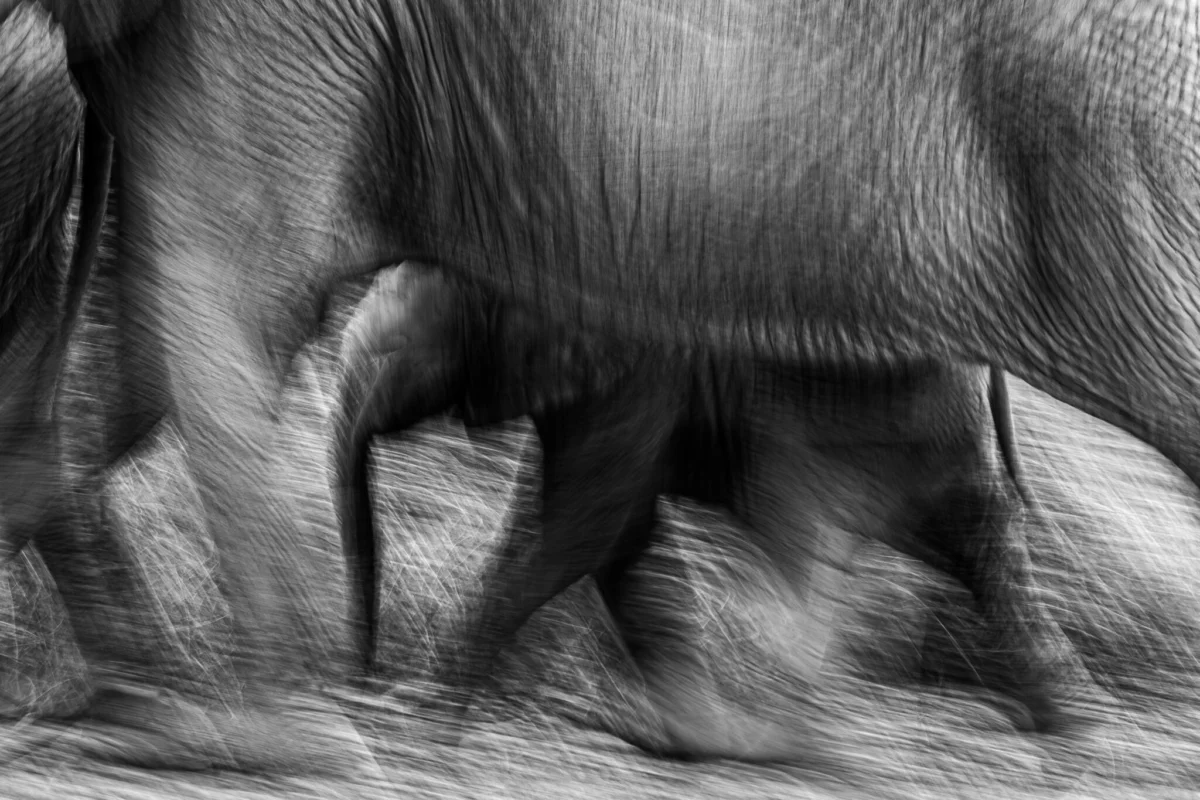
For instance, his photographs of zebras fleeing a cheetah or gazelles racing across the vast plains of the Mara are not sharply focused frames, but rather vibrant blurs that encapsulate the urgent scramble for survival, the rising dust, and the sheer velocity of their escape. The motion blur evokes the adrenaline and chaos of the hunt. Similarly, an image focusing solely on the powerful, pillar-like legs of an elephant, intentionally blurred, conveys the animal’s immense strength and rhythmic gait without resorting to a conventional, static portrait. These techniques transform the photographic canvas into a vibrant, impressionistic rendering, where the viewer feels the motion and intensity of the moment rather than merely observing a frozen snapshot. This deliberate choice to sacrifice minute detail for overarching emotional and sensory impact is a hallmark of Murad’s distinctive style, inviting a more subjective and interpretive engagement from his audience.

Light as the Ultimate Narrator: Crafting Mood and Emotion

Beyond capturing motion, light serves as Murad’s paramount storyteller, dictating the mood and emotional tenor of his compositions. He possesses a profound understanding of how ambient light can be manipulated to evoke specific feelings. He observes how the ephemeral golden hour can soften a rugged landscape, casting a warm, inviting glow; how deep shadows can introduce tension, mystery, or a sense of foreboding; and how strategic backlighting can elevate a common bird into a silhouette of poetic grace, transforming the ordinary into the extraordinary. His mastery lies in letting the available light guide his exposure settings and inform the emotional narrative, transforming familiar scenes into something sublime, enigmatic, or deeply moving. Murad often dedicates hours, patiently awaiting the precise quality of light to filter through a scene, not to achieve technical perfection in illumination, but to capture its authentic emotional resonance and transformative power.

His portfolio provides numerous examples of this meticulous attention to light. A White (Pied) Wagtail, silhouetted against a setting sun in one of Kuwait’s nature reserves, appears encircled by a shimmering halo of flying mosquitoes, the backlight creating a luminous, almost magical backdrop that highlights the fragility of the moment. The solitary figure of a full-bellied hyena wandering at sunset evokes a profound sense of quiet solitude and reflection at the close of day. In another instance, a herd of blue wildebeest, having just escaped predators, kicks up dust under a dramatic setting sun, which casts a warm, intense yellow glow across the scene, vividly highlighting their resilience and the harsh beauty of the African wilderness. These images collectively demonstrate how Murad harnesses light to shape not just what is visually perceived, but what is deeply felt, allowing the natural world to communicate its profound stories through its inherent luminosity and shadow play.

Urban Wilderness: The Arabian Red Foxes of Kuwait City

One of Murad’s most poignant and intimate photographic series captures the often-overlooked Arabian red foxes thriving within the bustling urban sprawl of Kuwait City. Specifically taken near the Doha shore, this project exemplifies his dedication, innovative techniques, and unique artistic vision. Framed by the vibrant, multi-colored glow of streetlights and car lights reflecting off the sea, Murad employed two small handheld flashlights to create a captivating rim light, artistically highlighting the foxes against the nocturnal urban backdrop. This innovative use of artificial light allowed him to capture the magical glow of the urban night, illuminating a rare and compelling glimpse into wildlife adapting to a human-dominated cityscape.

The narrative surrounding these urban foxes is deeply personal and speaks volumes about Murad’s commitment to his subjects. For over two months, he visited the den four days a week, spending countless hours after sunset in patient observation. His respectful distance and consistent presence slowly cultivated an extraordinary level of trust with the fox family. He recounts instances where the foxes, including curious kits, would approach his gear, even licking his camera and feet as he sat quietly. This profound personal connection, amplified by his own experience as a father to five children (mirroring the fox family’s size), instilled in him a strong sense of responsibility to protect these urban inhabitants. This series not only showcases exceptional artistic skill and innovative lighting but also serves as a powerful testament to the resilience of nature within developed landscapes. It implicitly highlights the critical importance of fostering coexistence and raising awareness about urban wildlife, subtly advocating for the preservation of even small natural pockets within bustling cities.

Global Expeditions and Profound Lessons: From Arctic to Altai

Murad’s artistic quests have led him across some of the most diverse and challenging global landscapes, from the arid deserts of his native Kuwait to the glacial expanses of Iceland and the formidable Altai Mountains of Mongolia. Each expedition has been a crucible, imparting invaluable lessons in patience, adaptability, and the embrace of serendipity. He recounts facing numerous logistical hurdles, including lost luggage in remote regions, enduring punishing arctic winds, and navigating extreme temperatures. Yet, he views these challenges not as obstacles but as integral teachers, shaping his understanding and approach. His philosophy dictates that nature adheres to no human schedule, and photographers, therefore, must learn to move with its rhythms, not against them, allowing profound images to emerge precisely when control is relinquished for genuine observation.

In the remote Hornstrandir Nature Reserve in Iceland, a pristine land untouched by infrastructure since the 1950s, Murad captured an intimate moment with an Arctic fox. The fox, nestled peacefully behind snow-covered dry plants, gazed directly into his lens while curled under its tail. This encounter in such a pristine wilderness underscores the delicate beauty of untamed environments and the quiet solitude they offer. Perhaps most remarkably, his pursuit of the elusive snow leopard in the Altai Mountains of Mongolia exemplifies his dedication and resilience. Enduring temperatures as low as -34°C and fierce winds for extended periods, he was ultimately rewarded with a rare glimpse of this magnificent predator, often dubbed "nature’s ghost." The snow leopard, perfectly camouflaged amidst fiery orange lichens and rugged rocks, became an awe-inspiring symbol of nature’s resilience and stealth. This experience, particularly given the snow leopard’s status as an endangered species (classified as Vulnerable by the IUCN), highlights the urgent global need for robust conservation efforts to protect these iconic, vulnerable creatures and their rapidly diminishing high-altitude habitats. Murad’s work, in these extreme settings, transcends mere aesthetics to become a poignant reminder of the fragility and majesty of the wild, subtly advocating for its preservation.

Beyond the Visible: Cultivating a Creative Voice and Conservation Ethos

At the very core of Mohammad Murad’s photographic practice is an unyielding desire to convey more than just visual information; he aims for his images to resonate emotionally, to be felt by the viewer on a visceral level. This ambition drives his experimental approach, consistently pushing beyond conventional boundaries to translate the inherent fragility of a bird in flight, the collective resilience of a migrating herd, or the silent, complex dialogue between predator and prey. His expansive body of work is not merely about showcasing wildlife; it is an artistic interpretation of life itself, seen through his unique, deeply personal lens.

Murad passionately advocates for fellow photographers to liberate themselves from the relentless pursuit of technical perfection, a common pitfall in the digital age. He encourages them to trust their instincts, to embrace their innate creative voices, and to allow their personal vision to shape their art authentically. His abstract slow shutter shots of seagulls along Kuwait’s seaside, transforming them into fiery-winged entities, or his impressionistic capture of a baby elephant and its mother in Tanzania, adding a layer of mystery and depth, exemplify this philosophy. He views photography as a personal melody, an intimate story shared, leaving much of the interpretation to the individual viewer, much like a violinist conveys profound emotion through music. Ultimately, Murad’s art implicitly carries a powerful conservation message, fostering a deep respect and empathy for the natural world and inspiring viewers to consider their crucial role in protecting these delicate ecosystems and their diverse inhabitants.

Conclusion: An Ongoing Dialogue with the Wild

For Mohammad Murad, photography is an perpetual journey, devoid of a finite destination. It is a harmonious and intricate dance between the interplay of light and shadow, the dynamism of motion and the quietude of stillness, the precision of technical execution and the serendipity of chance encounters. Through each meticulously crafted image, he endeavors to draw viewers into this profound dance, inviting them to perceive and feel the rhythmic heartbeat of the world. Every frame he captures is imbued with a piece of his own narrative—his challenges, his profound wonder, and his unwavering respect for the natural realm. It is his sincere hope that his work will inspire others to peer beyond the superficial, to discover their unique rhythm within the wild, and to embrace photography not merely as a technical craft, but as an enduring, ever-evolving conversation with the boundless beauty and intricate stories of nature.