
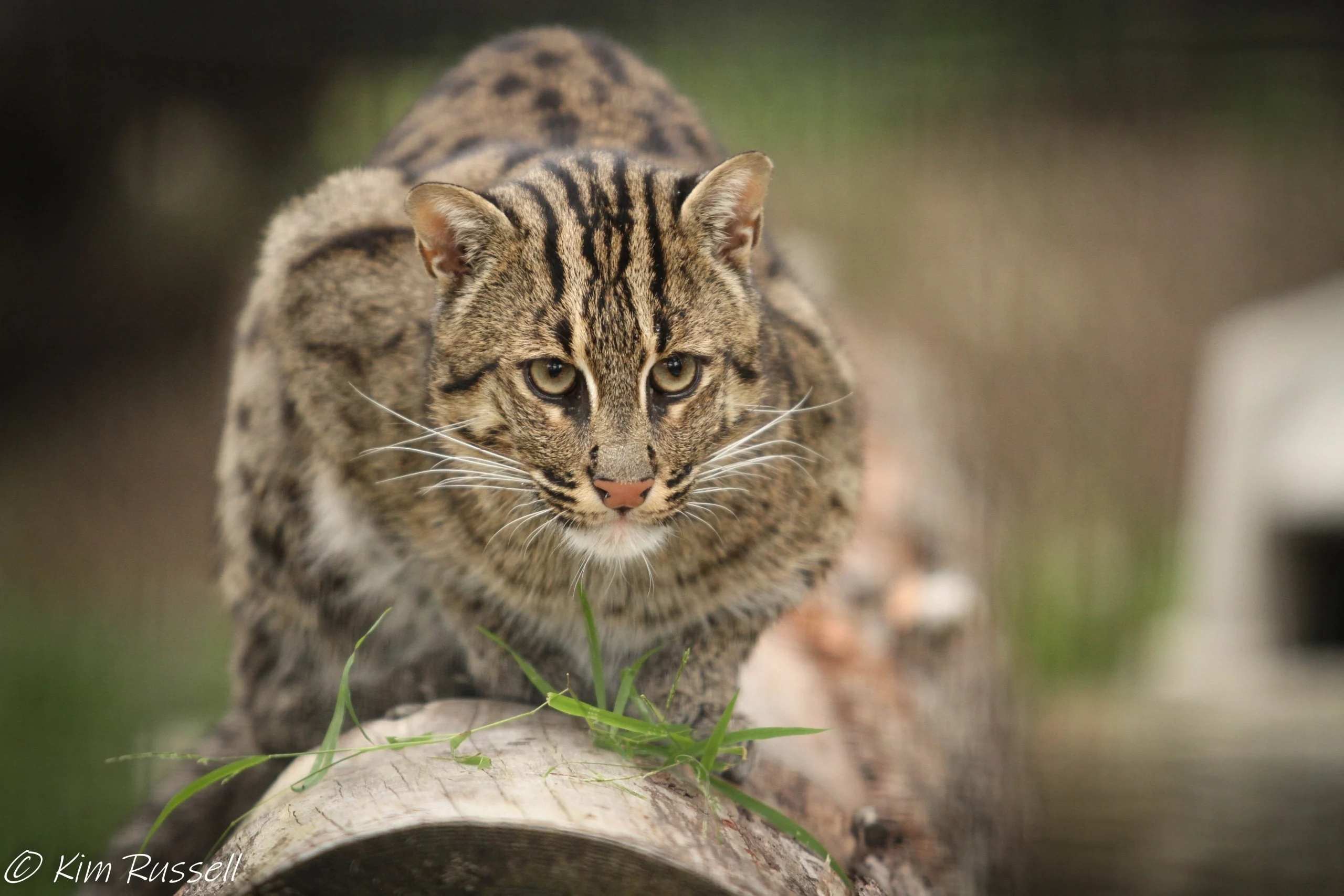
World Wildlife Day, observed annually on March 3rd, arrives this year under the resonant theme of "Partnerships for Wildlife Conservation." This global observance, established by the United Nations General Assembly in 2013, aims to celebrate and raise awareness of the world’s diverse fauna and flora, as well as the critical threats facing them. The chosen theme underscores a fundamental truth: the monumental task of safeguarding our planet’s biodiversity cannot be accomplished by any single entity. It necessitates collaboration, shared responsibility, and innovative alliances between governments, conservation organizations, local communities, scientific institutions, and even individual citizens.
At the heart of this year’s message is the compelling story of River, a vibrant six-year-old fishing cat residing at the Hawk Creek Wildlife Center. River is not just an inhabitant; she is an ambassador, a living testament to the plight and the potential for recovery of her species. Fishing cats, scientifically known as Prionailurus viverrinus, are a fascinating yet tragically underappreciated felid. Their presence on the International Union for Conservation of Nature (IUCN) Red List as "Vulnerable" signals a population in decline, a grim reality often obscured by their elusive nature and the fact that many people remain unaware of their existence. River’s role is therefore paramount: to bridge this knowledge gap, to capture the imagination of thousands, and to ignite a sense of urgency and empathy for the challenges her wild counterparts face.
The significance of World Wildlife Day extends beyond mere celebration; it serves as a crucial platform for action. This year’s theme, "Partnerships for Wildlife Conservation," is particularly pertinent given the escalating biodiversity crisis. Data from the Intergovernmental Science-Policy Platform on Biodiversity and Ecosystem Services (IPBES) has repeatedly warned that a million species are now threatened with extinction, many within decades, more than ever before in human history. These statistics paint a stark picture, emphasizing that traditional conservation approaches, while valuable, are insufficient on their own. The complexity of environmental degradation, habitat loss, climate change, and human-wildlife conflict demands a multifaceted, collaborative strategy.
The Vital Role of Ambassador Animals: River’s Contribution
River’s work as an ambassador animal at Hawk Creek Wildlife Center exemplifies the power of direct engagement in conservation efforts. Ambassador animals provide a tangible connection to the wild species they represent, allowing the public to witness firsthand the unique characteristics and needs of these creatures. This personal connection often fosters a deeper understanding and a greater willingness to support conservation initiatives. For River, this means educating visitors about the fishing cat’s specialized adaptations, such as their semi-aquatic lifestyle and their remarkable ability to hunt fish.
The vulnerability of fishing cats is largely attributed to the rapid degradation and loss of their wetland habitats across Asia, from the Indus River in Pakistan to the Mekong Delta in Southeast Asia. These areas are increasingly being converted for agriculture, aquaculture, and urban development, shrinking the territories available for fishing cats to hunt, breed, and thrive. Furthermore, they often face retaliatory killings due to perceived predation on domestic poultry and fishing nets. The lack of widespread awareness about their existence exacerbates these threats, as conservation efforts often prioritize more charismatic or well-known endangered species.
Scientific Insights Through Collaborative Research
The impact of ambassador animals like River extends to the scientific community as well. The article highlights a significant development: the founder of the Fishing Cat Conservancy traveled to Hawk Creek specifically to observe River. This visit underscores the critical need for partnerships between wildlife centers and specialized conservation organizations. Fishing cats are notoriously difficult to study in their natural environment due to their nocturnal habits, shy disposition, and extensive home ranges. However, by observing River in a controlled setting, researchers can gather invaluable data on their behavior, physiology, and ecological requirements.
The ability to study River’s movements and her specific fishing techniques, particularly how she utilizes her paws, provides crucial insights that are often unattainable in the wild. This observational data can then inform the development of more effective conservation strategies. For instance, understanding how fishing cats hunt and what prey they rely on can help conservationists work with local communities to mitigate human-wildlife conflict, perhaps by promoting alternative livelihoods or developing deterrents that do not harm the cats. It can also guide the design of protected areas, ensuring they encompass the necessary wetland habitats and prey species.
The Fishing Cat Conservancy’s mission, as described, is a testament to the collaborative approach advocated by this year’s World Wildlife Day theme. Their work encompasses several key areas:
- Creating Nature Preserves: This involves identifying and securing critical habitats for fishing cats, protecting them from further development and degradation. This often requires significant land acquisition, land-use agreements, and ongoing management.
- Forming Partnerships with Landowners: Recognizing that fishing cats often range beyond strictly protected areas, engaging private landowners is crucial. This involves educating landowners about the importance of fishing cats, providing technical assistance for habitat management, and potentially offering incentives for conservation efforts on their properties. These partnerships are vital for creating habitat corridors and ensuring connectivity between fragmented populations.
- Inspiring Change: This broader objective encompasses public awareness campaigns, educational programs, and advocacy efforts aimed at fostering a greater appreciation for fishing cats and their conservation needs. It also involves influencing policy decisions to better protect their habitats and mitigate threats.
The online presence at fishcat.org serves as a central hub for this information, providing resources for the public, researchers, and potential donors.
Chronology of Conservation Efforts and Partnerships
The evolution of conservation for species like the fishing cat often follows a pattern: initial recognition of a species’ plight, followed by scientific study, the establishment of conservation organizations, and the development of collaborative strategies. While a precise timeline for fishing cat conservation is not provided in the original text, it can be inferred that the establishment of organizations like the Fishing Cat Conservancy and wildlife centers like Hawk Creek represent significant milestones.
Early Stages: Awareness of fishing cat decline likely emerged from anecdotal reports and initial surveys by local researchers and naturalists. This period would have been characterized by a lack of comprehensive data and limited organized efforts.
Mid-2000s to Present: The formal listing of the fishing cat as Vulnerable on the IUCN Red List (most recently assessed in 2015) signified a more concerted international recognition of their endangered status. This spurred the creation of dedicated conservation groups and research projects. The establishment of organizations like the Fishing Cat Conservancy and the work of centers like Hawk Creek, which house ambassador animals, are products of this period. The increasing focus on partnerships, as emphasized by World Wildlife Day, indicates a maturation of conservation strategies, moving beyond isolated efforts to integrated, collaborative approaches. The visit by the founder of the Fishing Cat Conservancy to Hawk Creek is a concrete example of such a partnership in action, demonstrating a tangible effort to bridge the gap between captive ambassador programs and field research.
Supporting Data and Broader Implications
The population of fishing cats is estimated to be between 1,000 and 10,000 mature individuals, though precise figures are difficult to ascertain due to their elusive nature. Their habitat ranges across 16 countries in South and Southeast Asia, including Bangladesh, Cambodia, India, Indonesia, Laos, Malaysia, Myanmar, Nepal, Pakistan, Sri Lanka, Thailand, and Vietnam.
The implications of successful fishing cat conservation are far-reaching:
- Ecological Balance: Fishing cats play a vital role in their wetland ecosystems. As apex predators, they help regulate prey populations, contributing to the overall health and stability of these environments. The decline of fishing cats could lead to imbalances in prey species, potentially impacting vegetation and other wildlife.
- Wetland Health: The conservation of fishing cats inherently requires the protection of their wetland habitats. Wetlands are critical for flood control, water purification, carbon sequestration, and supporting a vast array of biodiversity. By advocating for fishing cat conservation, these initiatives also champion the preservation of these invaluable natural resources, which benefit human communities as well.
- Human-Wildlife Coexistence: The success of partnerships between conservationists and local communities, as advocated by the Fishing Cat Conservancy, offers a model for resolving human-wildlife conflict in other contexts. By finding ways for humans and wildlife to coexist, these efforts contribute to more sustainable development and a reduction in retaliatory killings of wildlife.
- Global Biodiversity: Every species, no matter how obscure, contributes to the rich tapestry of life on Earth. The extinction of any species represents an irreversible loss of unique genetic material and ecological function. The preservation of fishing cats is a component of the broader global effort to maintain biodiversity for its intrinsic value and for the essential ecosystem services it provides.
Official Responses and the Call to Action
World Wildlife Day is officially recognized by the UN and its member states, serving as an annual reminder of the global commitment to wildlife conservation. The theme "Partnerships for Wildlife Conservation" resonates with the mandates of various international bodies and national environmental agencies. While specific official statements from governments directly referencing River or Hawk Creek are unlikely, the overarching message of the day is one of unified action.
The call to action inherent in World Wildlife Day, and particularly in this year’s theme, is for increased engagement and support. Donating to organizations like Hawk Creek Wildlife Center on World Wildlife Day is a direct way for individuals to contribute to conservation efforts. Such donations can fund habitat protection, research, anti-poaching patrols, community outreach programs, and the care of ambassador animals like River.
The example of River, an ambassador animal whose presence allows for direct observation and public education, coupled with the strategic partnerships formed by organizations like the Fishing Cat Conservancy, highlights a progressive and effective model for conservation. It underscores that by working together – scientists with educators, wildlife centers with field organizations, and the public with conservationists – we can indeed forge a future where vulnerable species like the fishing cat can not only survive but thrive. The success of these partnerships is not just about saving a single species; it is about safeguarding the health of our planet for generations to come.