
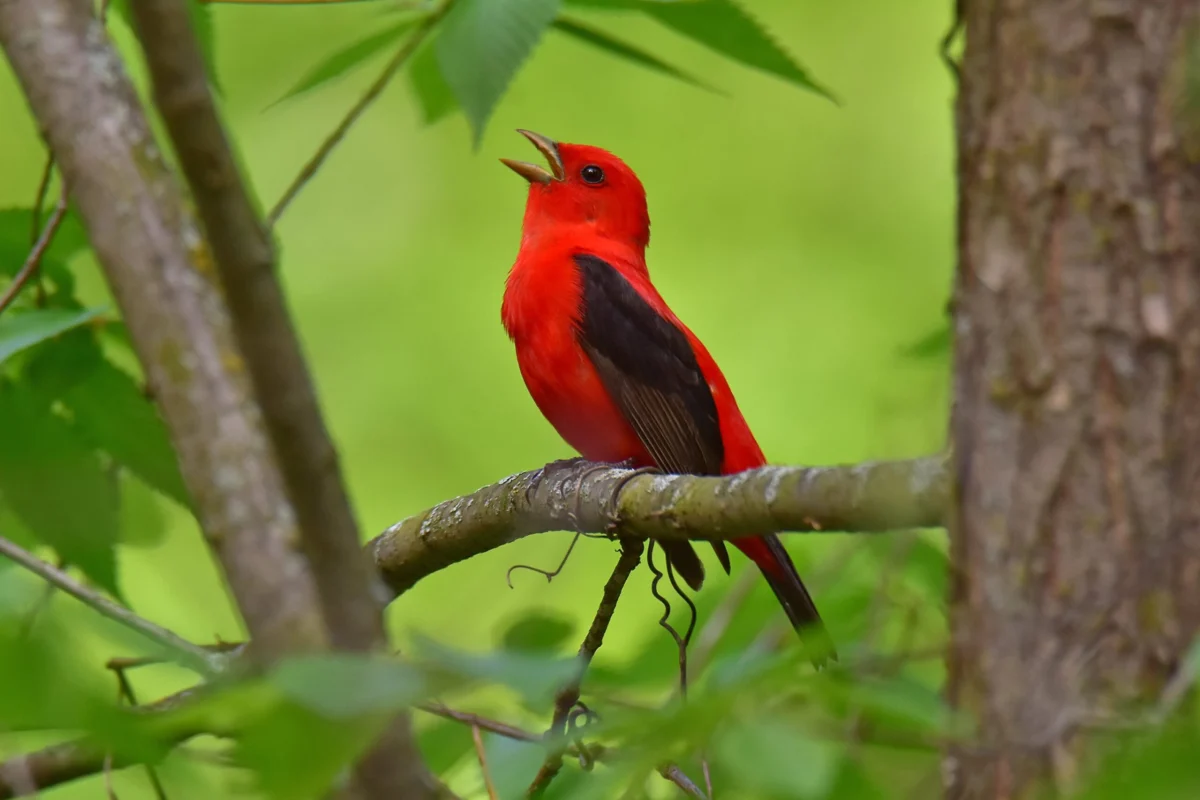
HARRISBURG, PA – A new legislative initiative is underway in the Pennsylvania General Assembly to officially designate the Scarlet Tanager as the Commonwealth’s state migratory bird. This proposed designation, embodied in House Bill 2316, seeks to celebrate the vibrant avian species and underscore Pennsylvania’s crucial role in its survival, while also drawing much-needed attention to the health of the state’s extensive hardwood forests. The Scarlet Tanager, a striking songbird known for its brilliant crimson plumage in males, is not merely a creature of beauty but serves as a vital indicator of ecological well-being, signaling the resilience or degradation of the forest ecosystems it inhabits.
The introduction of this bill marks a significant step in recognizing the intricate connection between Pennsylvania’s natural resources and the diverse wildlife that depends on them. While the Ruffed Grouse proudly holds the title of Pennsylvania’s official state bird, a migratory bird designation would carve out a unique category, acknowledging the dynamic journeys and international conservation responsibilities associated with species that traverse continents. This dual recognition approach is becoming increasingly common in states looking to highlight the broader ecological narratives embedded in their natural heritage.
The Scarlet Tanager: A Keystone Species and Avian Marvel
The Scarlet Tanager (Piranga olivacea) is a quintessential neotropical migratory songbird, embarking on an arduous annual journey that spans thousands of miles. Each spring, these remarkable birds depart from their wintering grounds in the tropical forests of South America, making their way north to breed across eastern North America. For an astounding 13 percent of the global Scarlet Tanager population, Pennsylvania’s mature hardwood forests represent the ultimate destination – a higher concentration than in any other state. This statistic alone solidifies Pennsylvania’s "outsized role," as Jim Brown, Policy Director at Audubon Mid-Atlantic, articulates, in the continued survival and prosperity of the species.
Males, particularly during the breeding season, are unmistakable with their intense scarlet bodies contrasting sharply with jet-black wings and tails. Females and immature males, by contrast, sport a more subdued yellowish-green plumage, blending seamlessly with the leafy canopy where they spend much of their time. Despite their striking coloration, Scarlet Tanagers are often elusive, preferring the dense cover of mature deciduous forests. They forage high in the canopy, primarily feeding on insects, including caterpillars, spiders, and occasionally berries, playing a critical role in forest insect control. Their distinctive, somewhat hoarse song, often described as sounding like a robin with a sore throat, is a characteristic sound of a healthy summer forest.
Legislative Momentum: House Bill 2316 and Its Path
House Bill 2316 was introduced by Representative Mandy Steele, who represents parts of Allegheny County. The bill’s introduction initiates a formal legislative process that typically involves committee review, floor debates, and votes in both the House and Senate before potentially reaching the Governor’s desk for signature. This legislative journey provides an opportunity for public engagement and education, allowing Pennsylvanians to learn more about the Scarlet Tanager and the ecological issues it represents.
Rep. Steele emphasized the multifaceted benefits of the proposed designation, stating, "Scarlet Tanagers are beautiful, remarkable birds that also highlight so much of what makes Pennsylvania special. Healthy forests that this bird depends on play vital roles in the state’s outdoor recreation economy and forestry industries. Highlighting this species is a chance to celebrate our natural heritage while inspiring the next generation to protect it." This perspective highlights the bill’s intent not just as a symbolic gesture but as a catalyst for increased awareness and proactive conservation.
The bill has garnered significant support from conservation organizations, notably the National Audubon Society through its Mid-Atlantic regional office. Audubon’s endorsement of HB 2316 is rooted in its mission to protect birds and the places they need, aligning perfectly with the tanager’s status as a barometer of forest health. Jim Brown further elaborated on this synergy: "Designating this species as our state migratory bird highlights how critical it is to care for those forests in ways that benefit birds, people, local hardwood economies, and the long-term strength of our natural resources."
Pennsylvania’s Pivotal Role in Conservation
Pennsylvania is renowned for its expansive forest cover, which blankets approximately 58% of the state’s land area, totaling over 16 million acres. These forests, predominantly hardwood stands, are not uniform; they encompass a mosaic of diverse ecosystems, from the rugged Allegheny Plateau to the rolling Appalachian ridges and the fertile valleys that crisscross the Commonwealth. This vast, interconnected woodland provides critical breeding habitat for a multitude of migratory birds, making Pennsylvania an indispensable hub in the larger North American migratory flyway system.
The sheer volume of mature hardwood forests in Pennsylvania provides the complex canopy structure and understory vegetation necessary for Scarlet Tanagers to successfully nest, forage, and raise their young. These forests are not only vital for the tanager but also support a rich biodiversity of other forest-dependent species, including other migratory songbirds like Wood Thrushes, Ovenbirds, and various warblers, as well as mammals, amphibians, and countless invertebrate species. The health of these forests directly correlates with the success of these populations, creating a cascading effect throughout the ecosystem.
The Broader Ecological Significance: Forests as Sentinels
The Scarlet Tanager’s role as a "key indicator of forest health" is perhaps its most profound ecological contribution. Where populations of Scarlet Tanagers are thriving, it suggests that the forest ecosystem is robust, resilient, and providing ample resources. This includes a healthy canopy, a diverse understory, and a rich insect population – all hallmarks of a functioning forest. Conversely, a decline in Scarlet Tanager numbers can signal fragmentation, habitat degradation, or other forms of ecological stress. Forest fragmentation, for example, often leads to increased nest predation and brood parasitism by species like the Brown-headed Cowbird, which thrive in edge habitats.
Ecological indicators like the Scarlet Tanager offer scientists and conservationists a natural, observable metric for assessing environmental quality. They provide an early warning system, allowing for interventions before problems become irreversible. The implications of declining forest health extend far beyond avian populations. Degraded forests lead to reduced water quality due as they lose their ability to filter runoff, increased soil erosion, diminished carbon sequestration capacity, and a decline in the overall ecological services that healthy forests provide to human communities, such as clean air and recreational opportunities.
Threats to Forest Ecosystems and Sustainable Solutions
Despite their apparent abundance, Pennsylvania’s forests face a myriad of threats that jeopardize their long-term health and, consequently, the species that rely on them. Invasive species, both plant and insect, pose significant challenges. The Emerald Ash Borer has decimated ash tree populations, altering forest composition, while invasive plants like Japanese knotweed and multiflora rose outcompete native vegetation, reducing biodiversity and habitat quality. Other emerging threats include the Spotted Lanternfly, which can severely stress trees, and various fungal diseases.
Poor forest management practices, or a lack thereof, also contribute to forest degradation. Over-browsing by white-tailed deer, for instance, can prevent forest regeneration by consuming tree seedlings and understory plants, creating an "ecological trap" where forests become less diverse and resilient over time. Climate change introduces another layer of complexity, leading to shifts in precipitation patterns, increased frequency of extreme weather events, and altered phenology (the timing of biological events), all of which can stress forest ecosystems and their inhabitants.
However, these challenges are not insurmountable. Sustainable forestry practices offer a pathway to protect both birds and people. These practices focus on long-term ecological health and economic viability, encompassing strategies such as selective logging, promoting diverse tree species and age classes, controlling invasive species, and managing deer populations. By mimicking natural disturbance patterns and prioritizing ecological integrity, sustainable forestry helps maintain complex forest structures that are essential for species like the Scarlet Tanager. These efforts also support crucial ecosystem services, including clean water provision, robust wildlife habitat, and the sustained productivity of the hardwood economy.
Audubon’s Ongoing Conservation Efforts
Organizations like Audubon Mid-Atlantic are at the forefront of implementing and promoting these sustainable solutions. Through initiatives such as Audubon’s Forester Training and Endorsement program, land managers across Pennsylvania are being equipped with the knowledge and tools to put bird-friendly forestry practices into action. This program educates foresters on how to manage woodlands to enhance habitat for forest birds while also meeting economic objectives.
To date, this program has contributed to the healthier management of over 10,000 acres of privately owned forest land across Pennsylvania. These improved practices have resulted in more diverse tree species, a wider span of tree ages, and ultimately, significantly enhanced bird habitat on more than 7,000 acres. This tangible impact demonstrates that conservation and economic activity can, and indeed must, go hand-in-hand. Audubon Mid-Atlantic’s broader vision is to foster a region of healthy and resilient ecosystems where birds thrive, and where all people have access to nature and a voice in environmental stewardship. Their work directly addresses the impacts of climate change and habitat loss on the wide range of bird species that depend on the Mid-Atlantic region.
Economic and Educational Implications
The potential designation of the Scarlet Tanager as Pennsylvania’s official migratory bird carries significant economic and educational implications. Economically, healthy forests and thriving bird populations are integral to the state’s outdoor recreation and ecotourism industries. Birdwatching alone is a multi-billion dollar industry nationally, attracting tourists and enthusiasts who contribute to local economies through lodging, dining, and retail purchases. A state migratory bird designation could elevate Pennsylvania’s profile as a prime birding destination, further boosting these sectors. Moreover, sustainable forestry practices, while benefiting wildlife, also ensure the long-term viability of Pennsylvania’s robust hardwood industry, supporting jobs and local economies.
Educationally, the Scarlet Tanager offers a compelling narrative for engaging the public, especially younger generations, in conservation. Its vivid appearance and remarkable migratory journey make it an ideal ambassador for teaching about biodiversity, migration ecology, and the importance of forest stewardship. Schools, nature centers, and state parks can leverage this designation to develop curricula and programs that foster an appreciation for nature and inspire future conservationists. It provides a tangible link between the local environment and global ecological systems, illustrating how actions taken in Pennsylvania can have far-reaching impacts on species that span continents.
A Call for Stewardship: Looking Ahead
The movement to designate the Scarlet Tanager as Pennsylvania’s official migratory bird is more than a legislative formality; it is a profound declaration of the Commonwealth’s commitment to its natural heritage. It recognizes that the beauty and ecological importance of species like the Scarlet Tanager are inextricably linked to the health of Pennsylvania’s forests. As House Bill 2316 progresses through the legislative process, it serves as a powerful reminder of the continuous need for informed stewardship, sustainable practices, and collaborative efforts to protect the vital ecosystems that sustain both wildlife and human communities. The future of the Scarlet Tanager, and indeed the future of Pennsylvania’s forests, rests on the collective actions taken today to ensure their long-term health and resilience.