
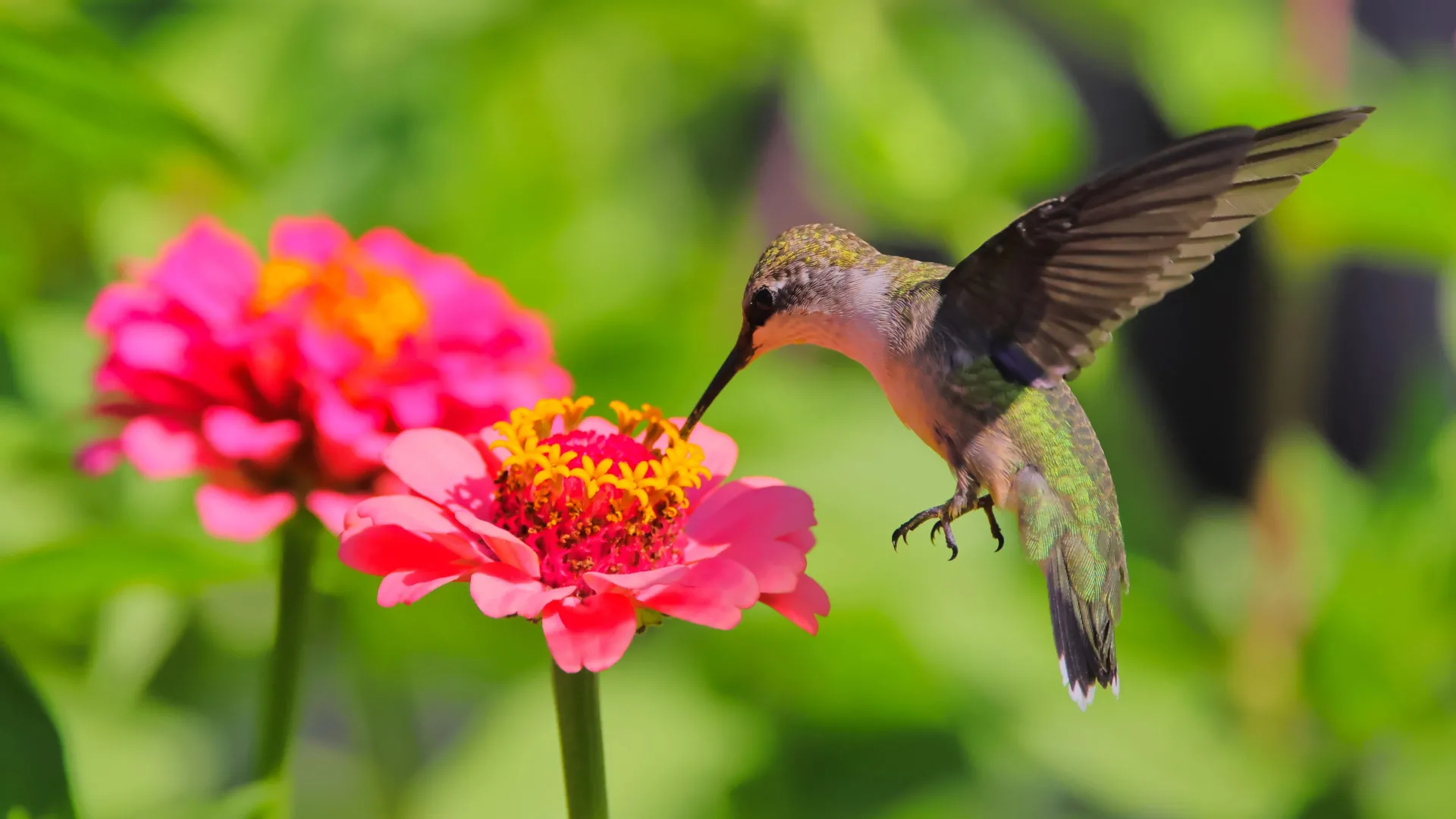
As bees and hummingbirds flit between blossoms, performing their vital dance of pollination, they are unknowingly partaking in a botanical secret: the consumption of small, yet regular, amounts of alcohol. This unexpected discovery, brought to light by a comprehensive study from the University of California, Berkeley, unveils a previously overlooked aspect of the intricate relationship between flowering plants and their animal partners, suggesting profound implications for pollinator behavior, metabolism, and evolution.
Unveiling Nature’s Hidden Distillery: The Berkeley Study’s Genesis
The concept of alcohol in natural environments is not entirely new. Fermentation, the metabolic process that converts sugar to acids, gases, or alcohol, is a ubiquitous phenomenon in decaying fruits and plant matter. Animals across various species, from fruit bats to chimpanzees, have long been known to consume naturally fermented produce, often exhibiting physiological adaptations to process ethanol. However, the presence and widespread consumption of alcohol directly from floral nectar, a primary energy source for many specialized pollinators, remained largely unexamined.
The latest findings, published on March 25 in Royal Society Open Science, mark the first large-scale survey of alcohol in floral nectar. Biologists at UC Berkeley systematically investigated nectar samples from numerous plant species, driven by a curiosity about the full chemical complexity of this critical resource. Prior work by the same research team had already hinted at the interaction between pollinators and alcohol. Earlier experiments, for instance, demonstrated that hummingbirds, while capable of consuming sugar water with low alcohol concentrations, would actively avoid it once concentrations exceeded a certain threshold. Furthermore, a separate study led by former graduate student Cynthia Wang-Claypool had identified ethyl glucuronide – a byproduct of ethanol metabolism – in the feathers of birds, including Anna’s hummingbirds. This groundbreaking discovery provided concrete evidence that these birds were not merely ingesting alcohol but actively metabolizing it, much like mammals. These preliminary insights laid the groundwork for the current, broader investigation into the prevalence of ethanol in natural nectar.
The Science of Sips: Quantifying Ethanol in Floral Nectar
In their meticulous analysis, the UC Berkeley team detected ethanol in at least one sample from an astonishing 26 of the 29 plant species examined. This near-ubiquity underscores that alcohol is not an anomaly but a consistent, albeit minor, component of the floral nectar diet for many pollinators. While most nectar samples contained only trace amounts of ethanol, likely a byproduct of yeast fermenting the abundant sugars, some samples registered concentrations that were surprisingly significant. One particular sample reached an ethanol concentration of 0.056% by weight. To put this into perspective for the average reader, this concentration is approximately one-tenth of a proof, far lower than typical alcoholic beverages (which often range from 4% alcohol by volume for beer to 40% for spirits). Yet, for creatures whose entire daily caloric intake is derived from this liquid, even small percentages can accumulate.
The researchers employed a precise enzymatic assay to measure ethanol levels in the nectar samples. This method allowed for accurate quantification, providing the robust data necessary to assess both the prevalence and concentration of alcohol across a diverse range of flowering plants. The consistent detection across so many species strongly suggests that the production of ethanol in nectar is a widespread natural phenomenon, possibly influenced by environmental factors, microbial activity, and even the plant’s own physiological processes.
Pollinators’ Daily Dose: How Much Alcohol Do They Consume?
While the individual concentrations might seem negligible, the cumulative effect of constant consumption becomes apparent when considering the prodigious feeding habits of many pollinators. Nectar is not just a treat; it is the primary and often sole energy source for species like hummingbirds. These avian dynamos are known for their incredibly high metabolic rates, requiring continuous energy replenishment. Hummingbirds, for example, consume an extraordinary amount of nectar each day, typically ranging between 50% and 150% of their own body weight.
Based on these intensive feeding patterns and the detected ethanol levels, the researchers were able to estimate the daily alcohol intake for various nectar-feeding species. An Anna’s hummingbird (Calypte anna), a common sight along the Pacific coast of North America, was estimated to consume roughly 0.2 grams of ethanol per kilogram of body weight daily. To provide a relatable comparison, this intake is considered comparable to a human having approximately one standard alcoholic drink over the course of a day, which is generally defined as about 0.14 grams of ethanol per kilogram of body weight.
The study extended its comparative analysis to a broader spectrum of animals to contextualize these findings. The European honeybee, a ubiquitous and economically vital pollinator, had the lowest estimated intake at 0.05 grams/kg/day. In contrast, the pen-tailed tree shrew, known for its consumption of fermented nectar from the Malaysian bertam palm, exhibited the highest intake at a staggering 1.4 grams/kg/day. Fruit-eating chimpanzees also consume varying amounts of alcohol from ripe, fermented fruits. Nectar-feeding birds, including the studied hummingbirds and sunbirds (which occupy a similar ecological niche in Africa, feeding on plants like honeybush), fell within a comparable range, consuming about 0.19 to 0.27 grams/kg/day when feeding on native flowers. Interestingly, feeder experiments suggested that Anna’s hummingbirds might even ingest slightly more alcohol from fermented sugar water offered in human-made feeders (0.30 grams/kg/day) than from natural nectar, perhaps due to different fermentation dynamics or availability.
A Delicate Balance: Tolerance, Avoidance, and Metabolism
Despite this regular intake of ethanol, the visual evidence suggests that bees and birds do not typically display overt signs of intoxication. The researchers attribute this to the gradual nature of their consumption, spread out throughout the day, and their remarkably efficient metabolisms. Hummingbirds, as doctoral student Aleksey Maro aptly put it, "are like little furnaces. They burn through everything really quick, so you don’t expect anything to accumulate in their bloodstream." This high metabolic rate likely allows them to process and eliminate ethanol rapidly, preventing accumulation to intoxicating levels.
Earlier experiments conducted at a feeder outside UC Berkeley professor Robert Dudley’s office provided crucial insights into hummingbirds’ alcohol tolerance and preferences. Anna’s hummingbirds showed remarkable indifference to low alcohol concentrations in sugar water, specifically below 1% by volume. However, their behavior shifted noticeably when concentrations rose. At 2% alcohol, they visited the feeder approximately half as often, indicating a clear aversion to higher ethanol levels. "Somehow they are metering their intake, so maybe zero to 1% is a more likely concentration that they would find in the wild than anything higher," Dudley noted, suggesting a sophisticated mechanism for regulating their alcohol consumption in natural settings.
The metabolic evidence further strengthens the understanding of pollinators’ interaction with ethanol. The discovery of ethyl glucuronide in the feathers of Anna’s hummingbirds, as revealed by Wang-Claypool’s earlier study, is a definitive indicator of alcohol metabolism. Ethyl glucuronide is a non-oxidative metabolite of ethanol, meaning it is produced when the body processes alcohol but does not break it down into acetaldehyde. Its presence confirms that these birds not only ingest alcohol but possess the biochemical machinery to process it in a manner similar to mammals, highlighting a conserved evolutionary pathway for alcohol detoxification. This convergence of findings – the widespread presence of ethanol in nectar, the birds’ demonstrated tolerance and avoidance mechanisms, and the physiological evidence of metabolism – paints a comprehensive picture of a long-standing evolutionary relationship.
Beyond the Buzz: Subtle Effects and Evolutionary Pathways
The absence of overt intoxication does not necessarily imply a lack of effect. Nectar, as researchers pointed out, is not a simple sugar solution but a complex cocktail of various compounds. Beyond sugars and now ethanol, nectar can contain other bioactive substances like nicotine and caffeine, which are known to subtly influence animal behavior. It is plausible that ethanol, even in trace amounts, could exert similar subtle effects on pollinators, influencing their foraging efficiency, memory, energy allocation, or even social interactions, without inducing a "buzz."
Professor Robert Dudley elaborated on this, suggesting that while inebriating effects might be minimal due to rapid metabolism, "it may also have other consequences for their behavior." Maro added, "We don’t know what kind of signaling or appetitive properties the alcohol has. There are other things that the ethanol could be doing aside from creating a buzz, like with humans." These "other things" could range from altering their perception of floral rewards to influencing their decision-making processes regarding which flowers to visit or how long to stay.
The consistent, lifelong exposure to dietary ethanol raises significant evolutionary questions. The research team, which also included Berkeley colleagues Rauri Bowie and Jimmy McGuire, both professors of integrative biology and curators at the campus’s Museum of Vertebrate Zoology, suggests that animals, including human ancestors, may have evolved a tolerance for, and sometimes even a preference for, alcohol. This adaptation could have been driven by the nutritional benefits of fermented foods, or simply as a necessary adaptation to consuming ubiquitous, naturally occurring ethanol.
An Ancient Relationship: Co-evolution with Dietary Ethanol
This research is an integral part of a broader, five-year project funded by the National Science Foundation. This ambitious initiative aims to collect extensive genetic data from hummingbirds and sunbirds to unravel the mysteries of their physiological and behavioral adaptations to diverse environments and specialized food sources. This includes understanding their resilience to high altitudes, their ability to thrive on sugar-rich diets, and now, their interaction with frequently fermented nectar.
The findings resonate with a broader understanding of evolutionary biology, where organisms adapt to their environment’s chemical landscape. "These studies suggest that there may be a broad range of physiological adaptations across the animal kingdom to the ubiquity of dietary ethanol, and that the responses we see in humans may not be representative of all primates or of all animals generally," Dudley emphasized. The human experience with alcohol, often characterized by distinct intoxicating effects, might be an outlier rather than the norm across the animal kingdom. Other species may possess unique detoxification pathways or derive different nutritional benefits from ethanol that are yet to be understood.
The concept of chronic exposure is particularly intriguing. For many pollinators, nectar consumption is not an occasional indulgence but a continuous, daily requirement throughout their adult lives. This chronic, low-level exposure could drive distinct physiological and genetic adaptations that are fundamentally different from acute, high-level exposure. "That’s the interesting thing — this is chronic through the course of the day, but that’s a lifetime exposure post-weaning. It just means that the comparative biology of ethanol ingestion deserves further study," Dudley concluded, highlighting the vast potential for future research in this emerging field.
The Road Ahead: Future Research and Ecological Significance
The UC Berkeley study has opened a new frontier in pollinator ecology and evolutionary biology. Future research will undoubtedly delve deeper into the specific behavioral effects of nectar alcohol, even in sub-intoxicating doses. How does it influence a bee’s navigation or a hummingbird’s territorial aggression? Does it alter their memory of rewarding flowers or their ability to evade predators? Are there subtle impacts on reproduction or lifespan?
Genomic studies, particularly those supported by the NSF project, will be crucial in identifying the specific genes and molecular pathways responsible for alcohol metabolism and tolerance in these pollinators. Understanding these genetic underpinnings could shed light on the evolutionary history of alcohol consumption and adaptation across different animal lineages. Furthermore, investigating the factors that influence ethanol production in nectar – such as specific yeast strains, environmental temperature, and plant species – will add another layer of complexity to this fascinating interaction.
The ecological significance of these findings cannot be overstated. Pollinators are essential for global food security and ecosystem health. Any factor that subtly influences their behavior or physiology could have cascading effects on plant reproduction, biodiversity, and agricultural yields. This study encourages a more holistic view of nectar as a bioactive substance, not just a simple sugar reward, and prompts a re-evaluation of the co-evolutionary arms race (or perhaps, partnership) between plants and their animal visitors.
Conclusion: A New Lens on Pollinator Ecology
The revelation that pollinators routinely consume alcohol from floral nectar is a testament to the endless surprises hidden within the natural world. The UC Berkeley study, led by Aleksey Maro, Ammon Corl, and Robert Dudley, provides robust evidence for the widespread presence of ethanol in nectar and quantifies the daily intake for various species. While not leading to obvious intoxication, this chronic, low-level exposure suggests a complex interplay between ethanol, pollinator physiology, and behavior. The findings challenge conventional understandings of plant-pollinator interactions and underscore the need for further investigation into the subtle, yet potentially profound, impacts of dietary ethanol on the ecology and evolution of some of Earth’s most vital creatures. This new lens on pollinator ecology promises to uncover even more secrets about the delicate balance of life in our ecosystems.