
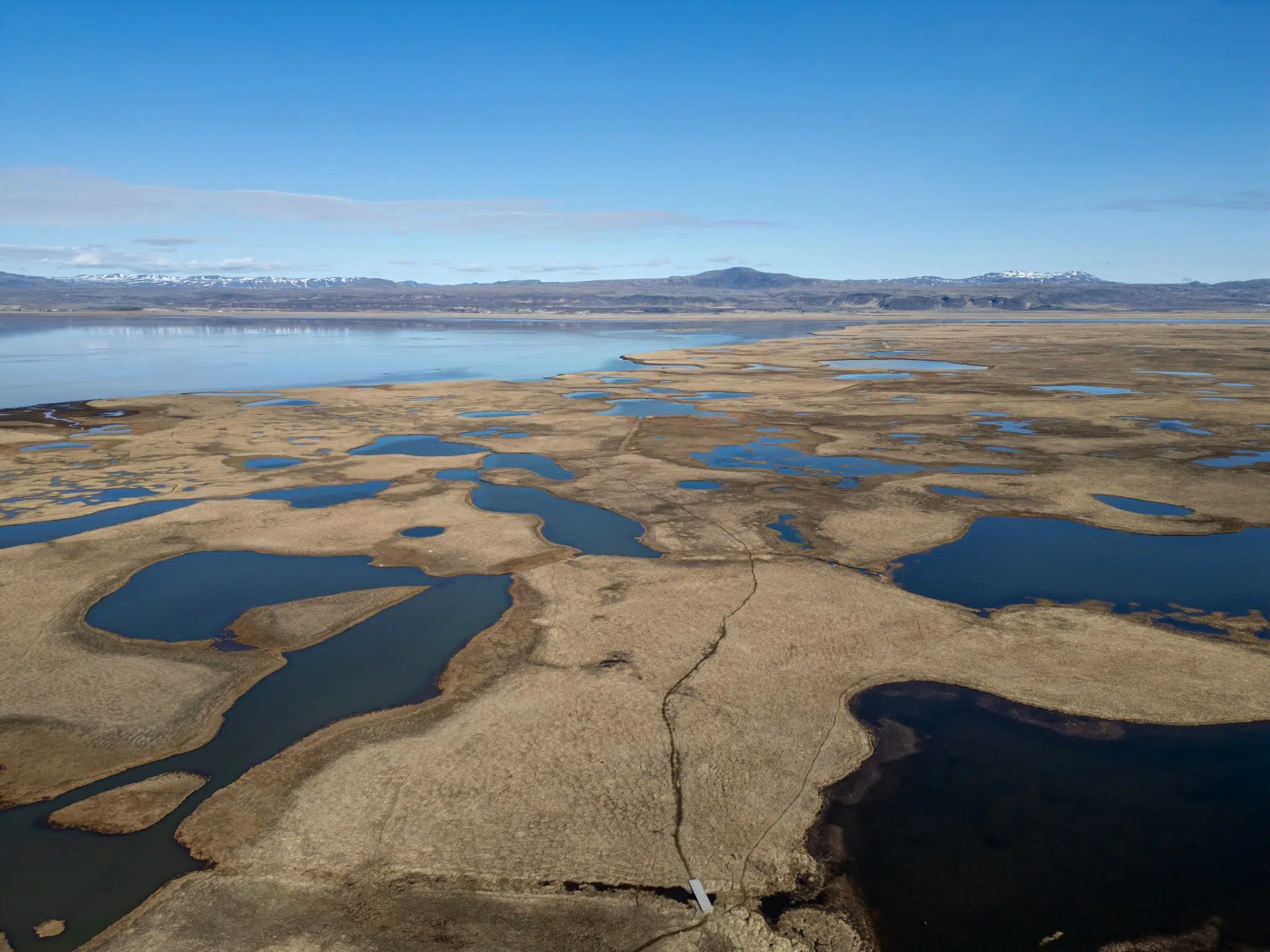
In a new series dedicated to the unsung heroes of avian conservation, the spotlight falls on the vital work being conducted along the world’s migratory flyways. These incredible aerial highways connect continents, countries, and diverse landscapes, facilitating some of the most awe-inspiring long-distance journeys undertaken by birds. A collaborative effort between BirdLife International, its UK Partner the RSPB, and supported by the Ecological Restoration Fund (ERF), is currently underway to safeguard these crucial routes, with particular attention paid to the African-Eurasian Flyway. This immense migratory corridor stretches from the icy reaches of the Arctic to the southernmost tip of Africa, encompassing a vast array of ecosystems and supporting countless avian species. The project aims to protect migratory birds and their habitats, a complex undertaking that requires dedicated conservationists working tirelessly on the ground.
Iceland’s Crucial Position on the African-Eurasian Flyway
Iceland, a land of fire and ice, occupies a uniquely strategic position in the North Atlantic. Situated between Greenland and mainland Europe, it serves as an indispensable stopover for a myriad of migratory birds traversing the African-Eurasian Flyway. For thousands of wading birds and wildfowl, the island’s lowland wetlands are not merely a place of respite but a vital breeding ground. Hólmfríður Arnardóttir, Executive Director at Fuglavernd, BirdLife’s Partner in Iceland, underscores the island’s importance. "Because Iceland lies between Greenland and mainland Europe, it is a natural stopover for many migratory birds travelling along the African-Eurasian Flyway," Arnardóttir explains. "Birds stop here to rest and refuel, and many species also breed in Iceland."

The Legacy of Drainage: A Century of Transformation
Historically, Iceland’s lowlands were characterized by expansive, thriving wetlands. These biodiverse ecosystems provided rich feeding grounds and secure breeding sites for a diverse range of bird species. However, the mid-20th century brought a dramatic shift. Between 1940 and 1990, driven by government-subsidized initiatives, Iceland undertook extensive wetland drainage efforts. The primary motivation behind these projects was to convert land for agricultural use, increase arable acreage, and improve perceived economic productivity. The scale of this transformation was staggering, with approximately 90% of Iceland’s lowland wetlands being affected. This widespread alteration of the landscape had profound and often irreversible impacts on biodiversity, drastically reducing the available habitat for wetland-dependent species. The consequences extended beyond avian populations, affecting hydrological cycles, carbon storage in peatlands, and the overall ecological resilience of the region.
Today, the footprint of this historical drainage remains stark. In southwest Iceland, a critical area for migratory birds, only about 3% of the original wetlands remain undisturbed. This fragmentation and loss of natural habitat represent a significant challenge for conservation efforts, as fragmented ecosystems are less resilient and can support fewer species.
Modern Challenges: Beyond Drainage
While historical drainage casts a long shadow, contemporary threats continue to imperil Iceland’s remaining wetlands and the migratory birds that rely on them. The planting of alien tree species, often non-native conifers, disrupts the natural ecosystem, altering soil composition, water retention, and outcompeting native flora essential for insect life and bird foraging. Furthermore, infrastructure development, including new road networks and the burgeoning wind energy sector, contributes to habitat fragmentation. Roads dissect natural areas, creating barriers and increasing disturbance, while wind turbines pose collision risks for birds, particularly during migration. These cumulative pressures underscore the fragility of these crucial habitats and highlight the urgent need for comprehensive conservation strategies.

Despite these significant losses and ongoing threats, Iceland’s lowland wetlands, shallow lakes, and intricate river deltas retain their international importance for migratory birds, especially waders and wildfowl. The island’s unique geographical advantages, such as nearly 24-hour daylight during the breeding season and relatively low levels of human disturbance in many remote areas, continue to make it an exceptionally valuable haven for breeding avian populations.
Fuglavernd’s Ambitious Restoration Efforts
Under the umbrella of the Ecological Restoration Fund (ERF) project, Fuglavernd is spearheading ambitious restoration initiatives to reverse decades of habitat degradation and bolster migratory bird populations. The focus of their work is a large agricultural area in southwest Iceland, a region where wetland drainage has had the most severe impact, yet paradoxically remains a vital breeding site for waterfowl and shorebirds.
Rewilding the Wetlands: Sites of Hope
Fuglavernd’s efforts are concentrated on two specific sites within this landscape: Flói and Oddi. Both areas are recognized as Important Bird Areas (IBAs), a designation by BirdLife International signifying their global importance for bird conservation.

The Flói Reserve, managed directly by Fuglavernd, has been a beacon of wetland rewetting since 1997, with restoration efforts continuing and expanding under the current ERF project. Of the reserve’s total 500 hectares, an impressive 170 hectares are actively undergoing rewetting measures. The restoration design is carefully crafted to benefit a broader 455 hectares of bird breeding habitat. These efforts are yielding significant positive results, supporting robust populations of key species. For instance, the Dunlin ( Lóuþræll ) thrives here, with approximately 1,000 breeding pairs recorded. The Black-tailed Godwit ( Jaðrakan ), an emblematic species of the flyway, finds suitable breeding conditions for up to 500 pairs, while the Common Redshank ( Stelkur ) also benefits substantially. The rewetting process involves blocking drainage ditches, restoring natural hydrological regimes, and allowing peatlands to recover, which in turn enhances biodiversity and ecosystem services.
At Oddi, Fuglavernd collaborates with the Icelandic Forest and Land Agency on government-owned land. Here, the project is not only focused on direct habitat restoration but also on public engagement and education. An educational trail is being developed to highlight birds and the critical importance of wetland restoration. The direct restoration area at Oddi spans 82.2 hectares, much of which was previously drained for agriculture and crisscrossed by 10.8 kilometers of drainage ditches. Restoration activities are projected to improve an impressive 219.7 hectares of peatland habitat, contributing significantly to carbon sequestration and overall ecological health.
The "Pearls on a String" Vision: A Transnational Dream
Beyond immediate site-specific restoration, Fuglavernd is pursuing a visionary long-term goal: the possibility of linking these Icelandic sites to a future UNESCO World Heritage site. This ambitious proposal envisions connecting the Icelandic wetlands with existing or aspiring UNESCO wetland sites on England’s east coast, forming a metaphorical "string of pearls" along the African-Eurasian Flyway. Arnardóttir acknowledges the enormity of this undertaking, stating, "That would be a long process but if no one starts it, it will never happen!" Such a designation would not only elevate the international recognition and protection of these critical habitats but also foster greater cross-border collaboration and awareness of the interconnectedness of migratory bird conservation.

Complementing these on-the-ground efforts, Fuglavernd has launched a public awareness campaign to educate the Icelandic populace about migratory birds and the significance of flyways. These campaigns are crucial for garnering public support, influencing policy, and fostering a sense of shared responsibility for these global travelers. Despite new regulatory standards that have, at times, slowed progress, the research necessitated by these standards has proven invaluable, especially in engaging and convincing skeptical stakeholders about the benefits of wetland restoration.
The Unseen Journeys: Why Flyways Matter
The concept of flyways extends far beyond mere geographic routes; they represent intricate ecological networks vital for the survival of millions of birds. Migratory birds embark on some of the most extraordinary journeys on Earth, defying immense odds to travel between their breeding and non-breeding grounds. These journeys are not random; they are guided by millennia of evolutionary adaptation, relying on a precise sequence of habitats for resting, refueling, and breeding.
Hólmfríður Arnardóttir powerfully articulates the fragility of these systems: "Birds make some of the most extraordinary journeys on Earth. For those that come to Iceland, that journey means flying over the Atlantic Ocean. And unless you’ve been out on the open sea, it’s hard to understand just how brutal it can be — relentless winds, towering storms, and freezing rain that cuts to the bone." This emphasizes the critical dependence of these birds on specific, healthy habitats at exactly the right moments in their arduous travels. When these vital stopovers or breeding grounds are degraded or destroyed, the entire migratory cycle is disrupted, often with devastating consequences for populations.

Protecting these flyways is not solely about safeguarding bird species; it is about preserving entire ecosystems and the invaluable services they provide to humanity. Healthy wetlands, for example, act as natural filters for water, mitigate floods, sequester carbon, and support a rich tapestry of biodiversity that forms the foundation of healthy environments. The global nature of flyways also underscores a profound shared responsibility. As Arnardóttir eloquently states, "These birds do not belong to one place or one nation. While they are here, they are in our care. We must welcome them to their breeding grounds, protect the sites they rely on, and make sure that these places — which they have defied such incredible odds to reach — are not destroyed." This call for global stewardship highlights the moral and ecological imperative to protect these transboundary natural wonders.
An Emblem of Migration: The Black-tailed Godwit
When asked to choose a single species to represent the African-Eurasian Flyway, Hólmfríður Arnardóttir immediately points to the Black-tailed Godwit (Limosa limosa, Jaðrakan). While acknowledging the importance of other species on the Icelandic and European Red Lists, such as the Common Snipe (Gallinago gallinago, Hrossagaukur) and the Dunlin (Calidris alpina, Lóuþræll), she finds the Godwit truly emblematic. "The Black-tailed Godwit has it all," she asserts. "It truly embodies what characterizes a waterbird: a long neck and a long bill perfectly adapted for probing for food in marshes, mudflats, and shallow ponds. On top of that, it is a strikingly beautiful bird, with its rich red neck and distinctive black tail. It is both iconic and emblematic of the flyway it depends on."
The Black-tailed Godwit is a medium-sized wading bird with long legs and a distinctive long, straight bill. The Icelandic breeding population of Black-tailed Godwits ( Limosa limosa islandica ) undertakes an epic migration, flying south from Iceland to spend the winter months in coastal wetlands and estuaries across the UK, Ireland, France, Portugal, and Spain. This subspecies is considered of particular conservation concern, listed as "Near Threatened" on the IUCN Red List due to population declines, largely attributable to habitat loss and degradation both on their breeding grounds and along their migratory route. The success of conservation efforts in Iceland directly impacts the survival of these birds in their wintering grounds, demonstrating the interconnectedness of flyway conservation.

Iceland’s Other Avian Treasures
Beyond the Godwit, Iceland’s wetlands host a diverse array of other breeding waders that also rely on the African-Eurasian Flyway. The Dunlin, with its distinctive downcurved bill, is a common sight in Icelandic marshes, migrating to coastal areas further south in Europe for winter. The Common Redshank, known for its vibrant red legs and loud alarm calls, is another key species benefiting from wetland restoration. Other notable species include the Whimbrel (Numenius phaeopus, Spói), a large wader with a distinctive striped head, and the Golden Plover (Pluvialis apricaria, Heiðlóa), a charismatic bird whose return in spring is celebrated as a harbinger of warmer weather. Even smaller, more elusive birds like the Red-necked Phalarope (Phalaropus lobatus, Óðinshani) utilize Iceland’s rich aquatic environments. These species, each with their unique migratory patterns and ecological requirements, collectively highlight the immense biodiversity value of Iceland’s wetlands and the critical need for their protection.
Navigating the Hurdles: The Realities of Conservation
Conservation work, while deeply rewarding, is fraught with challenges. Hólmfríður Arnardóttir openly discusses the significant obstacles faced by Fuglavernd. "One of the biggest challenges is time. Nature doesn’t change overnight, and meaningful restoration takes years, sometimes decades." This long-term commitment often clashes with short-term political cycles or funding timelines, making sustained progress difficult.
Strategies for Success: Engagement and Resilience
Another major hurdle is public perception. Many individuals harbor misconceptions or skepticism about conservation work, particularly regarding wetland restoration, which can sometimes be seen as ‘wasting’ land that could otherwise be used for agriculture or development. "A lot of effort goes into helping others understand why restoring wetlands and protecting habitats is important," Arnardóttir notes. This often involves demonstrating the tangible benefits of healthy wetlands, such as improved water quality, flood control, carbon sequestration, and potential for eco-tourism, alongside the intrinsic value of biodiversity. Engaging local communities, listening to their concerns, and involving them in the restoration process are crucial for building trust and support.

Working with government agencies and institutions presents its own set of complexities. While bureaucracy in Iceland may not be as overwhelming as in some other nations, internal restrictions, administrative delays, and differing departmental priorities can significantly slow down project implementation. Navigating these institutional landscapes requires patience, persistence, and strong advocacy. Finally, a pervasive challenge is a "lack of urgency or motivation" that can sometimes be encountered. Conservation demands sustained passion and energy. Arnardóttir finds strength in collaboration: "What helps me keep going is working with others in the same field. Having a shared purpose is extremely meaningful; you can borrow optimism from others, or lend it to them in return." This emphasis on collective effort and mutual support underscores the resilience required to drive conservation forward against often formidable odds. Progress, she reminds us, rarely comes all at once; it happens "step by step," demanding consistent effort and unwavering advocacy.
Broader Impact and a Shared Future
The work undertaken by Fuglavernd in Iceland, supported by partners like RSPB and the Ecological Restoration Fund, extends far beyond the immediate confines of the Flói and Oddi reserves. It represents a critical piece in the global puzzle of biodiversity conservation. By protecting and restoring key sites along the African-Eurasian Flyway, these efforts contribute directly to international conservation targets, such as those outlined in the Convention on Biological Diversity’s Post-2020 Global Biodiversity Framework. Healthy wetlands, in particular, play a crucial role in mitigating the impacts of climate change through carbon sequestration in peatlands and providing natural buffers against extreme weather events.
The long-term vision of a UNESCO World Heritage designation for a "string of pearls" of wetland sites is a testament to the ambition and foresight of these conservationists. Such initiatives not only elevate the profile of these invaluable ecosystems but also foster greater international cooperation, essential for safeguarding species that know no political boundaries. The journey of a migratory bird is a powerful metaphor for our shared global environment. Their survival depends on a network of healthy habitats across diverse nations, underscoring the interconnectedness of nature and the universal responsibility we bear. The resilience demonstrated by conservationists like Hólmfríður Arnardóttir, coupled with growing awareness and collaborative action, offers a beacon of hope for the future of these incredible avian travelers and the vital flyways they traverse.

Acknowledgements:
The Ecological Restoration Fund supports work that protects biodiverse hotspots, rejuvenates degraded landscapes, and promotes local environmental activism. It is committed to re-establishing nature’s essential interconnections while fostering cultural, social, and economic opportunities for the communities inhabiting those landscapes.