
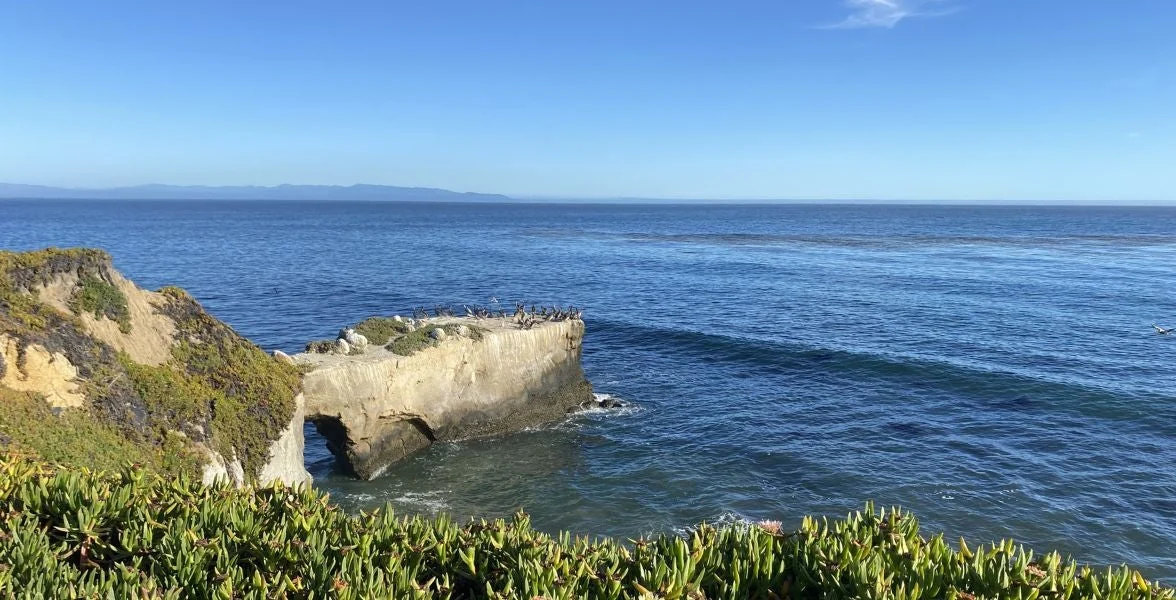
Every year, birds undertake extraordinary journeys, traversing vast oceans and continents to reach the productive coastal waters of California, where their survival hinges on critical marine and coastal habitats designated as Important Bird Areas (IBAs). These designated zones are far more than mere geographical markers; they represent the culmination of intricate ecological processes and offer vital havens for species undertaking some of Earth’s most challenging migrations. As California aggressively pursues its clean energy goals, particularly through offshore wind development, the role of these scientifically identified IBAs has become increasingly central to ensuring that progress in renewable energy does not come at the expense of fragile marine ecosystems and the avian populations that depend on them.
The Global Lifeline: Understanding Important Bird Areas
Important Bird Areas (IBAs) are globally recognized sites identified using a standardized, science-based set of criteria established by BirdLife International in 1979. This pioneering program was conceived to pinpoint and protect places essential for bird populations throughout their annual cycles, encompassing critical breeding grounds, migratory stopover sites, and vital wintering areas. In the United States, the National Audubon Society has managed the IBA program since the early 1990s, translating global conservation objectives into actionable local and regional strategies. To date, over 14,000 IBAs have been recognized across more than 200 countries worldwide, with Audubon spearheading the identification and designation of approximately 2,800 within the U.S. alone. These designations are not arbitrary; they are the result of rigorous scientific assessment, focusing on sites that support significant populations of threatened species, species with restricted ranges, or large concentrations of migratory birds, including at least 1% of a species’ global population or 1% of a flyway population for colonial seabirds.
IBAs serve as a powerful, data-driven framework for conservation efforts. They are utilized by a diverse array of stakeholders, including Audubon conservation teams, independent scientists, policy experts, local chapters, federal agencies such as the U.S. Fish and Wildlife Service, and numerous non-governmental organizations. This widespread adoption underscores their utility as a guiding tool for prioritizing conservation actions on scales ranging from local community initiatives to hemispheric-level strategic planning. The influence of IBAs extends into significant policy and regulatory frameworks, informing the establishment of Marine Protected Areas (MPAs), shaping fishery regulations, and even influencing national monument designations, such as the proposed Chuckwalla National Monument in California, which recognizes key terrestrial bird habitats. The integrity of these areas is paramount, safeguarding biodiversity and ensuring the continued health of ecosystems that support not only birds but a multitude of other species.
California’s Marine Ecosystem: A Critical Hub for Avian Life
California’s extensive coastline and its adjacent offshore waters are renowned as one of the world’s most biologically rich marine ecosystems. This exceptional productivity is largely attributable to a unique confluence of oceanographic conditions. A prime example is Monterey Bay, which features a deep submarine canyon that funnels nutrient-rich waters into shallower areas. Coupled with seasonal upwelling events and the southward-flowing California Current, these dynamics bring cold, nutrient-dense waters from the ocean depths to the surface. This phenomenon triggers explosive plankton blooms, forming the base of a robust food web that supports spectacular schools of forage fish, krill, and other marine life. Such an abundant larder acts as an irresistible magnet for a vast array of seabirds and marine mammals.
Species like the Ashy Storm-Petrel, a species of conservation concern, along with the majestic Black-footed Albatross, the graceful Laysan Albatross, and the highly migratory Pink-footed Shearwater, converge in these rich feeding grounds. For these species, California’s waters are not merely a transient stop but a critical feeding aggregation point during their non-breeding seasons or migratory passages. The 18 designated Marine IBAs along California’s coast and offshore waters, including prominent sites like the Monterey Bay and San Mateo Coast IBA, are crucial in recognizing and spotlighting these "habitat hotspots." These areas are characterized by consistently high concentrations of seabirds and other marine wildlife, making them indispensable for the survival of numerous species. By providing an easily understandable, scientifically backed framework, IBAs empower decision-makers and various conservation partners to thoroughly assess and mitigate the potential impacts of human activities, both onshore and offshore, on these invaluable ecosystems.
Long-Distance Travelers: A Species Spotlight
The incredible journeys undertaken by birds highlight the interconnectedness of global ecosystems and the critical importance of localized protection efforts. The Sooty Shearwater (Ardenna grisea) exemplifies this marvel, embarking on one of the longest migrations of any animal on Earth. These robust seabirds breed in the Southern Hemisphere, primarily on islands off New Zealand and Chile, before undertaking an epic trans-Pacific journey. Flying thousands of miles, often in immense flocks, they cross the vast expanse of the Pacific Ocean to feed in the highly productive waters of the Northern Hemisphere, including the nutrient-rich upwelling zones off California. Monterey Bay, with its abundant forage, is a vital feeding ground, and specifically, the waters offshore within the Piedras Blancas Marine IBA near Cambria provide crucial sustenance for these weary travelers. Their migration is a testament to their resilience, but also underscores their absolute reliance on predictable, rich feeding grounds.
Similarly, the Elegant Tern (Thalasseus elegans) undertakes extensive migrations, traveling as far south as Chile for its non-breeding season. However, before or after their southern sojourn, some populations make critical stops in places like Aramburu Island in Richardson Bay, a protected sanctuary managed by Audubon California. Here, they feast on abundant schooling fish, building up reserves necessary for their long flights or subsequent nesting efforts. They also nest and forage within the Palos Verdes Marine IBA, an area that is estimated to support an impressive two percent of the global Elegant Tern population. Such concentrations of a global population within a specific IBA underscore the disproportionate importance of these sites for species survival. For both the Sooty Shearwater and the Elegant Tern, IBAs are not abstract lines on a map; they are the literal lifelines that sustain their remarkable migration cycles, providing food, rest, and breeding opportunities across immense geographical scales.
The Green Energy Imperative: Offshore Wind Development
As the world grapples with the urgent need to transition away from fossil fuels and combat climate change, renewable energy sources have become a global priority. Offshore wind energy has emerged as a particularly promising solution, offering the potential to generate vast amounts of clean electricity. The sheer scale of this potential is staggering; estimates suggest that the capacity for offshore wind generation globally could exceed triple the combined generating capacity of all U.S. power plants currently in operation. This monumental potential positions offshore wind as a cornerstone of future energy grids, offering a pathway to significantly reduce carbon emissions and achieve energy independence.
California, a leader in environmental policy and renewable energy adoption, is at the forefront of this transition. The state has set ambitious clean energy targets, aiming for 100% clean electricity by 2045. Offshore wind is seen as a crucial component in achieving these goals, especially given the state’s long coastline and favorable wind resources in deeper waters, necessitating floating turbine technology. Recognizing both the immense promise and the potential environmental challenges, organizations like the National Audubon Society are actively engaging with governmental agencies, such as the Bureau of Ocean Energy Management (BOEM), and renewable energy developers. Audubon’s advocacy centers on ensuring that offshore wind is deployed responsibly, with policies and practices that prioritize wildlife protection and minimize adverse impacts on birds and their habitats. This involves comprehensive planning, strategic siting, and the implementation of robust mitigation measures.
Navigating the Future: IBAs and Responsible Offshore Wind Siting
The push for offshore wind in California has brought the importance of Marine IBAs into sharper focus. BOEM has already designated two primary Wind Energy Areas (WEAs) off the California coast: one off the north coast near Humboldt and another off the central coast near Morro Bay. These areas, while promising for energy generation, often overlap with or are in close proximity to the very marine environments that seabirds rely upon. This convergence creates a critical need for meticulous planning and data-driven decision-making.
Marine IBAs become more relevant than ever in this context, serving as essential tools for Audubon and other conservation groups to evaluate how proposed offshore wind energy developments may affect critical bird habitats. They provide a scientific baseline against which potential impacts can be measured, allowing conservationists to advocate for policies that ensure clean energy development avoids and reduces harm to seabirds and the broader marine ecosystems they inhabit. The challenge lies in balancing the urgent need for renewable energy with the imperative to protect biodiversity. This necessitates a collaborative approach where ecological data, such as that provided by IBAs, guides every stage of project development, from initial site selection to turbine design and operational protocols.
Precision in Conservation: The Updated IBA Maps
To support responsible offshore wind siting and enhance conservation efforts, the National Audubon Society undertook a comprehensive update of California’s IBA maps. The original maps, while groundbreaking for their time, presented certain limitations. They sometimes featured overlapping boundaries that made interpretation challenging and relied on species population estimates that likely underestimated the true extent of seabird use in these vast offshore regions. These earlier estimates were often based on more limited survey data.
The update leveraged significant advancements in marine science and data modeling. Since the original IBA estimates were quantified, the National Oceanic and Atmospheric Administration (NOAA) and its partners developed sophisticated models based on extensive long-term predicted seabird density data. This rich dataset was compiled from 21 distinct survey datasets, including both aerial and ship-based at-sea bird counts, collected meticulously between 1980 and 2017. By integrating these NOAA models, Audubon was able to calculate far more accurate and robust estimates of seabird populations within the Marine IBAs. The refinement process involved not only updating species population figures but also meticulously adjusting IBA boundaries to reflect a more precise understanding of seabird distribution and habitat use. This rigorous, data-intensive approach ensures that the updated IBAs provide the most accurate and current picture of seabird activity across California’s marine environment.
Case Study: Morro Bay and the Sooty Shearwater
The practical application of these updated IBA maps is immediately evident in ongoing discussions regarding offshore wind development. When evaluating the potential impacts within the Morro Bay Wind Energy Area, the updated data revealed a critical overlap: the "Even Keel Wind lease area," a specific section designated for development, now clearly shows an intersection with the Piedras Blancas Marine IBA. This particular IBA is known to support an estimated population of 10,550 Sooty Shearwaters, a species already identified as undertaking one of the world’s longest migrations and heavily reliant on California’s waters.
This newfound understanding of the overlap is invaluable. It allows conservationists and developers to move beyond general concerns to identify specific, targeted strategies to minimize potential impacts on this vulnerable species. For instance, detailed research can be initiated to determine the precise timing and typical flight heights of Sooty Shearwaters throughout the year within the lease area. This information is crucial for understanding collision risks. Furthermore, investigations into the effectiveness of turbine lighting schemes, such as specific light wavelengths or patterns, can be undertaken to ascertain whether they can enhance bird detection and avoidance of these massive structures. These granular insights are pivotal, informing how the lease area is ultimately designed, how turbines are configured, and how they are operated to reduce risks to birds. Such updated, quantitative, and science-backed estimates provide an indispensable foundation for advocacy efforts and guide the responsible development of offshore wind energy, striking a balance between energy needs and ecological preservation.
Broader Implications and Collaborative Pathways
The significance of California’s Marine IBAs extends far beyond their immediate utility in offshore wind siting. They represent a fundamental shift towards ecosystem-based management and data-driven conservation. The ongoing updates and the collaborative efforts between conservation organizations, government agencies, and industry stakeholders set a precedent for how large-scale infrastructure projects can be developed with a profound consideration for environmental stewardship.
The implications for policy are significant. Updated IBA data strengthens the arguments for more stringent environmental impact assessments, informs adaptive management strategies for operational wind farms, and can influence future lease area designations to steer development away from the most sensitive ecological zones. Moreover, the detailed scientific work behind these updates highlights the need for continuous monitoring and research, ensuring that conservation strategies evolve with our understanding of avian ecology and climate change impacts.
This process also underscores the critical role of interdisciplinary collaboration. Scientists, engineers, policy makers, and conservation advocates must work in concert, sharing data and expertise, to navigate the complexities of climate change mitigation and biodiversity protection. The dialogue surrounding offshore wind and IBAs is a microcosm of a larger global challenge: how to transition to a sustainable future without inadvertently harming the very natural systems that sustain us. The success of California’s approach will provide valuable lessons for other regions grappling with similar development pressures.
Engagement and Advocacy: A Call to Action
Ultimately, Marine IBAs are a powerful, accessible tool for understanding and protecting the places birds depend on most. The National Audubon Society actively encourages the public, local communities, and decision-makers to engage with this information. The Audubon IBA Hub, an interactive online platform, allows anyone to explore Important Bird Areas near them, delving into the specific seabird species and habitats these regions support.
By sharing this information widely within communities, with local partners, and with elected officials, individuals can play a vital role in ensuring that IBAs are consistently integrated into conservation efforts and guide responsible ocean planning. This collective advocacy is essential for shaping policies that prioritize the long-term protection of birds and the habitats they rely on, not just for today but for future generations. The balance between meeting energy demands and safeguarding biodiversity is delicate, and informed public engagement is key to tilting that balance towards a sustainable coexistence.
For more detailed information about California’s Marine IBAs or specific questions about their application in ongoing projects, interested parties are encouraged to contact Keilani Bonis-Ericksen at [email protected], leveraging the expertise available to foster informed decision-making and robust conservation outcomes.