
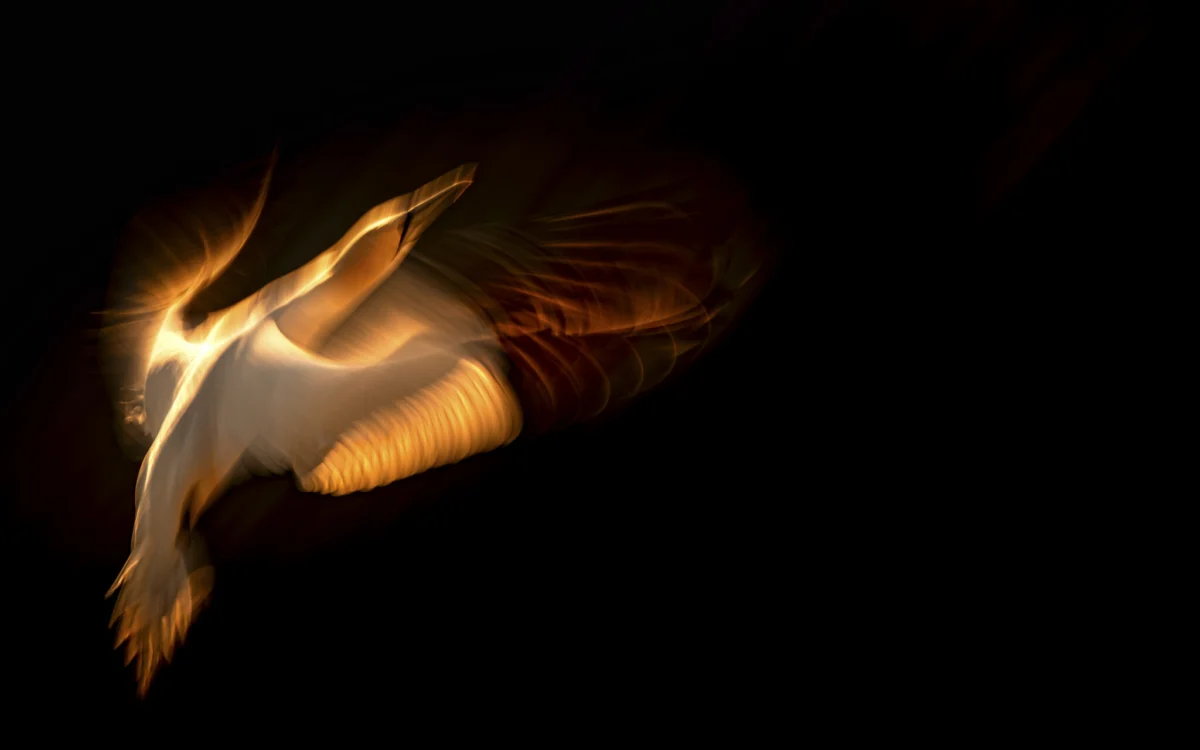
Photographer Rachel Bigsby is redefining the landscape of wildlife photography, championing a philosophy she terms "natural artistry." Moving beyond the conventional pursuit of technically flawless images, Bigsby emphasizes capturing the profound emotional essence and intrinsic beauty of the natural world, particularly seabirds, through a lens of witnessing, patience, and deep environmental understanding. Her approach seeks to translate the raw, unfiltered experience of being present in nature into images that resonate with feeling, inviting viewers to connect with wildlife on a more visceral level.
Bigsby’s philosophy centers on the idea that true artistry in wildlife photography is not imposed but rather revealed. "Natural artistry is not something we add," Bigsby states. "It is already there, waiting to be seen." This perspective challenges the prevailing focus on sharp focus, clean backgrounds, and textbook compositions, instead advocating for an appreciation of the inherent drama, movement, and complexity that characterize wild ecosystems. For Bigsby, the fleeting tilt of a seabird into the wind, the delicate interplay of light on feathers, or the profound stillness before a dive are not merely photographic opportunities but "sentences being written in a language older than any of us."
The Genesis of a Deep Connection to the Wild

Bigsby’s profound connection to the natural world predates her photographic career, tracing back to formative childhood experiences. Her late grandfather, a dedicated naturalist and fisherman, instilled in her a foundational reverence for nature, teaching her "not just to look, but to truly see." This early mentorship emphasized attention and observation over mere factual accumulation, fostering a deeply personal engagement with the environment.
At the age of six, Bigsby joined the Scout Association, an involvement that further cemented her bond with the outdoors. Weekends spent on rugged trails, navigating with weathered maps, cultivated a practical intimacy with the land. Nature became her primary classroom, transforming from mere "scenery" into a living companion. This prolonged immersion in wild spaces allowed her to grasp the intricate rhythms and subtle communications of the natural world, an understanding that would later become the bedrock of her photographic vision.
Photography entered Bigsby’s life more subtly. Initially introduced to the medium by a childhood friend, her early experiments involved an iPod camera, capturing details like morning dew or the silhouette of a dandelion. While her friend’s interest waned, Bigsby’s deepened. The pivotal moment arrived when she observed a Northern Fulmar gliding effortlessly along cliffs near her home. The bird’s "oceanic mastery" and defiance of gravity ignited a fervent curiosity. Researching the Fulmar’s connection to the Albatross, a bird of legend and her childhood fascination, solidified her path. "From that point, seabirds weren’t my subject. They were my world," Bigsby recalls.
Immersion and Ethical Engagement: Beyond the Lens

The transition from observer to dedicated wildlife photographer was marked by significant commitment and hands-on experience. Bigsby saved diligently for her first DSLR camera, which opened up new opportunities to explore diverse species and colonies. Recognizing that authentic wildlife photography demanded more than just technical skill, she actively sought opportunities to volunteer in remote seabird habitats. These experiences, often involving arduous tasks like cleaning compost toilets, scything bracken, or repairing weather-battered structures, were undertaken in exchange for invaluable access and proximity to the birds.
This period of deep immersion, often involving working by day and observing colonies at dusk, proved instrumental in shaping her understanding. "If my work has any credibility, it’s because of that time – time spent not photographing, but understanding behaviours, biology, and ecology," she asserts. This hands-on, ethical engagement highlights a crucial aspect of responsible wildlife photography, where respect for the subject and its environment takes precedence. Many conservation organizations and ethical photography guidelines advocate for such immersive learning, emphasizing that minimizing disturbance and prioritizing animal welfare are paramount. This dedication contrasts sharply with opportunistic photography, underscoring the depth of Bigsby’s commitment to her subjects.
Challenging Photographic Conventions: The Power of Imperfection
Bigsby’s "natural artistry" philosophy consciously diverges from the conventional pursuit of technical perfection often lauded in wildlife photography. While sharp focus, ideal lighting, and clean backgrounds are often the benchmarks, Bigsby argues that an overly rigid adherence to these rules can lead to competent but ultimately forgettable images—pictures that show what a bird looks like but fail to convey what it is.

A significant turning point in her artistic development was a photograph of an Atlantic Puffin in flight. By traditional standards, the image was "imperfect": soft focus, a slow shutter speed resulting in blur, and a cluttered background. Yet, the golden light piercing the puffin’s delicate wings transformed its movement into a "whisper of motion," dissolving into the atmosphere. This image, Bigsby notes, "stayed with me precisely because it didn’t look like a checklist. It looked like a feeling."
This revelation led Bigsby to embrace the inherent imperfection of the wild. Seabirds, she contends, are not static objects waiting for a perfect shot; their lives are a chaotic, fluid interplay of weather, tide, hunger, fear, and instinct. To impose an artificial sense of order or perfection on such a dynamic reality would be disingenuous. Her work, therefore, actively incorporates elements often considered "flaws," such as motion blur, atmospheric conditions, and natural clutter, to tell a more honest and evocative story.
Embracing Environment and Atmosphere: The "Problem" as Opportunity
Bigsby’s approach extends to her relationship with environmental conditions. Initially, like many photographers, she sought calm air, soft light, and clear sight-lines. However, a week volunteering on a fog- and mist-shrouded island forced a profound shift in perspective. What she initially perceived as "bad weather" and a ruined opportunity, she eventually recognized as the birds’ lived reality. This realization led her to stop "resisting and began collaborating with what the island gave me." The fog became a blank page, the whiteness a canvas, inadvertently leading her to develop a signature high-key imagery style. This experience taught her that "the most meaningful images often come when we stop demanding what we want and start noticing what is already there."

This philosophy resonates with contemporary discussions in nature photography about moving beyond purely aesthetic representations to convey the true conditions and challenges faced by wildlife. Increasingly, photographers are encouraged to document the impact of climate change, pollution, and habitat loss, and Bigsby’s method provides an artistic framework for doing so without resorting to purely documentary or exploitative imagery. By integrating challenging weather and environmental elements, she imbues her photographs with a deeper sense of place and the inherent struggles and resilience of her subjects.
The Elements of Natural Artistry: Light, Shape, Texture, Environment
Bigsby meticulously employs various photographic elements to achieve her "natural artistry":
- Light as Emotion: For Bigsby, light transcends its technical function, becoming "the emotional spine of an image." She recalls a Shetland morning where the first light illuminated a single Northern Gannet lifting from shadow into illumination, transforming the scene into "drama" and "mood made visible." This underscores light’s capacity to evoke powerful feelings and shape narrative.
- Intentional Color and Monochrome: While Bigsby doesn’t pursue bold colors for their own sake, she considers their emotional impact. She notes that the subtle, stormy tones of Northern Fulmars are best complemented by chalk-white cliffs or dark grey rocks, allowing their natural "mood to speak." When color becomes a distraction, she intentionally uses monochrome, not as a shortcut to seriousness, but to direct attention to the "bones of the image"—shape, light, and texture. This deliberate choice emphasizes compositional strength and emotional depth over chromatic spectacle.
- Tangible Texture and Intentional Shape: Texture, for Bigsby, makes a photograph tangible, allowing viewers to "feel salt in the air." Shape, conversely, makes an image intentional, transforming wildlife into design through "curves, arcs, symmetry, contrast." Together, these elements elevate the image beyond mere representation, inviting a deeper, sensory engagement.
- Environment as Character: A cornerstone of her philosophy is viewing the environment not as a mere background but as an integral "character" that imbues the subject with context and story. "A bird without context is ‘just’ an animal. A bird placed honestly in its world becomes a story: scale, struggle, intimacy, resilience, fragility," Bigsby explains. This holistic view allows her to capture the complex truths of the natural world, including the "beauty braided with grief, life alongside loss," without exploitation. This approach is vital in an era where environmental degradation is increasingly visible, allowing photography to truthfully reflect these realities.
Patience, Presence, and Learning the Language of Birds

Central to Bigsby’s practice is an unwavering commitment to patience and presence. She describes patience not merely as waiting, but as "knowing what you are waiting for." This knowledge stems from a deep understanding of seabird behavior, akin to learning a new language. By recognizing patterns, cues, and subtle shifts in posture or gaze, she anticipates rather than reacts, transforming photography into an act of intention rather than luck.
Bigsby has dedicated countless hours to observing seemingly ordinary behaviors—preening, shifting, calling. Yet, she emphasizes that the smallest gestures often signal significant events: "a reunion ritual, a courtship exchange, a synchronised movement between bonded birds, a sudden softness amid colony chaos." These are not just behaviors but "stories of devotion, endurance, and survival played out on cliff edges where wind never truly rests." This profound observational practice fosters a reciprocal relationship between photographer and subject, moving beyond "taking" to "listening."
The species Bigsby photographs, such as King Penguins on Macquarie Island, Northern Gannets at Noss NNR in Shetland and Bempton Cliffs, Australasian Gannets at Muriwai in New Zealand, Northern Fulmars, and Razorbills on Skomer Island, each present unique behavioral patterns that demand this level of patient observation. King Penguins, for instance, exhibit complex courtship rituals and colonial dynamics, while Gannets are known for their spectacular plunge-diving, requiring keen anticipation to capture their raw power. Understanding these nuances is crucial for ethical photography and for capturing images that truly convey the birds’ lives.
Broader Implications: Conservation and Redefining the Craft

Rachel Bigsby’s "natural artistry" offers significant implications for both the field of wildlife photography and broader conservation efforts. By prioritizing emotional resonance and authenticity over technical perfection, her work encourages viewers to develop a deeper, more empathetic connection with the subjects. This emotional engagement can be a powerful tool for conservation, inspiring action and fostering a sense of stewardship for vulnerable ecosystems and species.
Seabirds, her primary muses, face unprecedented threats globally. According to studies by organizations like BirdLife International, seabird populations have declined by nearly 70% since the mid-20th century, making them one of the most threatened groups of birds. Key threats include climate change leading to shifts in food availability, plastic pollution (which an estimated 90% of seabirds ingest), bycatch in fisheries, and habitat loss. Bigsby’s evocative portrayal of these birds in their wild, often challenging, environments serves as an artistic call to attention, reminding audiences of the beauty and fragility that stand to be lost. Her images can humanize (or "bird-ify") these statistics, translating abstract threats into tangible, emotional narratives.
Furthermore, Bigsby’s philosophy invites a re-evaluation of what constitutes "good" wildlife photography. In a world saturated with technically perfect, yet often sterile, images, her work champions individuality and emotional truth. She offers "permission to make photographs that matter to you, even if they don’t match what is expected." This emphasis on personal vision and "photographs made by heart" can empower emerging photographers to explore their unique artistic voices, fostering a more diverse and impactful body of work within the genre.
Ultimately, Rachel Bigsby’s "natural artistry" is more than just a photographic style; it is a profound philosophy that marries deep ecological understanding with artistic expression. Her work challenges the technical dogma of wildlife photography, asserting that the most memorable images are those that carry honesty and evoke feeling. By encouraging photographers to "go gently, look closely, wait longer than you think you should," and to "photograph the world not only as it is, but as it feels," she advocates for a more soulful, impactful, and ultimately, more truthful representation of the wild. Her vision reminds us that in a world increasingly disconnected from nature, the unique way each individual sees can be the most potent force for connection and conservation.