
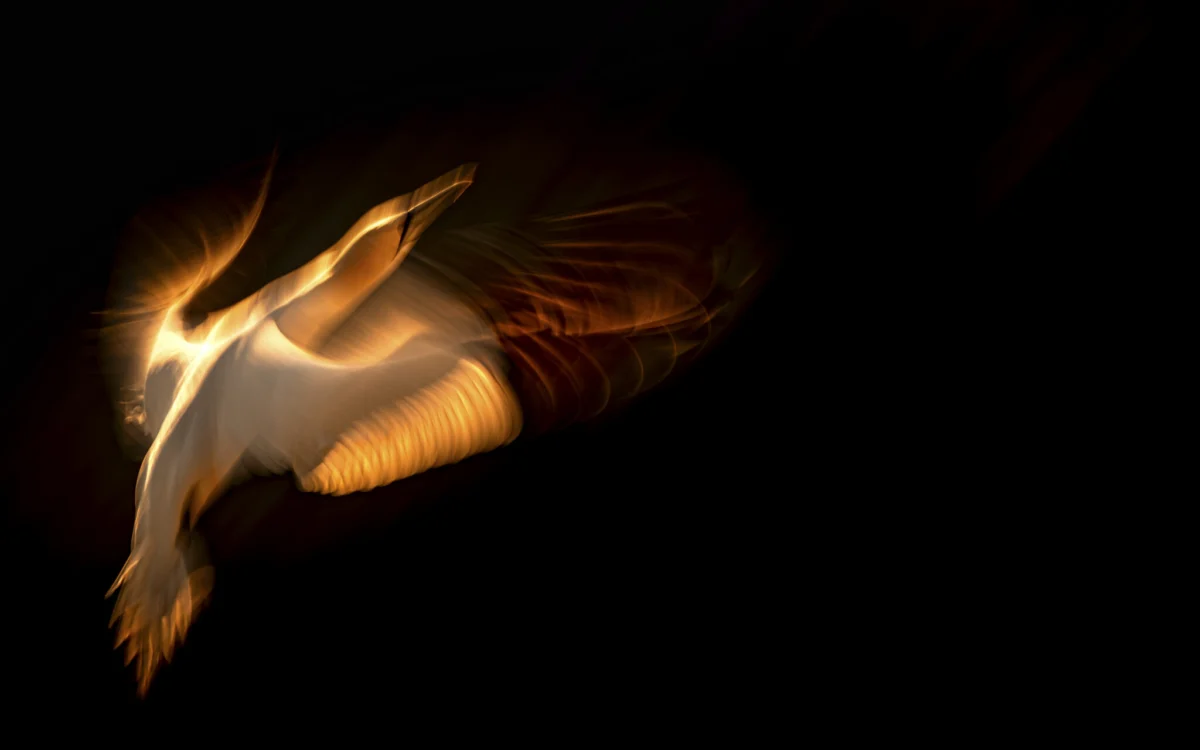
In a field often dominated by pursuits of technical precision and textbook compositions, Rachel Bigsby stands as a proponent of a more profound approach to wildlife photography, which she terms "natural artistry." Her philosophy transcends the mere capture of an image, positing photography as an act of profound witnessing, a translation of nature’s inherent grammar into a visceral experience for the viewer. This perspective, particularly honed through her dedication to seabirds, emphasizes emotional resonance, environmental context, and the inherent beauty found in the wild’s raw, often imperfect, realities.
The Philosophy of "Natural Artistry"
At the core of Bigsby’s work is the belief that "natural artistry" is not something imposed upon a subject, but rather an intrinsic quality of the natural world awaiting discovery. She describes a pivotal moment before pressing the shutter when the world seems to pause, allowing for a deep connection with the subject – a seabird tilting into the airflow, the light shifting across its feathers. For Bigsby, this instant transforms "wildlife photography" into a deeper narrative, akin to "a sentence being written in a language older than any of us." This philosophy challenges conventional notions, suggesting that true artistry lies in perceiving and conveying the essence of a species—its deeper story—through elements like light, movement, texture, colour, behaviour, environment, and perspective.

Bigsby aims to photograph what it feels like to be near her subjects, rather than simply documenting them as objects. This involves a meticulous study of their lives, understanding the interplay of wind, sea, and light that shapes their existence. Her focus on seabirds, creatures intrinsically linked to dramatic, often harsh, environments, provides a perfect canvas for this approach. Their fluid grace, the interplay of light on their feathers, the stillness before a dive, or the sheer chaos of a storm-tossed colony all become components of this natural artistry.
A Deep-Rooted Connection to the Wild: A Chronology
Bigsby’s journey into the heart of wildlife photography is not merely a professional trajectory but a deeply personal evolution, rooted in a lifelong reverence for the natural world.
- Early Influences (Childhood): Her connection began long before she held a camera, guided by her late grandfather, a naturalist and fisherman. He instilled in her a habit of "truly seeing," emphasizing attention and reverence over mere factual collection.
- Formative Years (Age Six onwards): Joining the Scout Association further cemented her bond with nature. Weekends spent on rugged trails, navigating with weathered maps, fostered an intimate understanding of the land, transforming "scenery" into a living companion. This period served as an informal classroom where she became an eager student of the wild.
- Introduction to Photography (Later Childhood/Adolescence): Photography entered her life more quietly. A childhood friend introduced her to image-making, initially with an iPod camera. These early "experiments" – capturing dewdrop light or a dandelion’s silhouette – hinted at her innate artistic eye. While her friend’s interest waned, Bigsby’s deepened.
- The Defining Moment (Northern Fulmar): A turning point arrived when she witnessed a Northern Fulmar gliding along cliffs near her home. Its mastery of the oceanic air, a defiance of gravity, captivated her. Researching its connection to the legendary albatross solidified her passion, making seabirds not just a subject, but "her world."
- Embracing the Craft (First DSLR and Volunteering): Saving for her first DSLR marked a commitment. She sought opportunities to gain access to remote colonies, often volunteering for conservation efforts. This involved practical, sometimes arduous, tasks like scrubbing compost toilets, scything bracken, and repairing weathered structures on remote islands. This hands-on involvement allowed her to spend extensive time observing seabird behaviours, biology, and ecology without the immediate pressure of photography.
- Gaining Credibility (Dusk Observations): Crucially, her time volunteering was spent "not photographing, but understanding." By dusk, when the colonies returned to their natural rhythm, Bigsby remained, "watching, listening, learning." This immersive experience, she asserts, is the foundation of her work’s credibility, enabling her to anticipate and interpret the subtle nuances of seabird life.
This chronology highlights how Bigsby’s photographic skill is inextricably linked to her deep ecological understanding and profound respect for her subjects, developed over years of patient observation and direct engagement with their environments.

Challenging the Orthodoxy: Beyond the "Perfect" Wildlife Shot
Bigsby actively challenges the conventional standards of wildlife photography, which often prioritize technical perfection: razor-sharp focus, pristine backgrounds, and adherence to established compositional rules. While these elements undoubtedly demonstrate technical skill, Bigsby argues that an overemphasis can lead to "competent and forgettable" images that show what a bird looks like, but fail to convey what it is.
She recounts a pivotal experience with a photograph of an Atlantic Puffin. Despite being technically "imperfect" with soft focus, a slow shutter speed, and a cluttered background, the image, bathed in golden light piercing through the bird’s delicate wings, captured a "whisper of motion" that resonated deeply. This image, she states, "looked like a feeling," rather than a checklist, marking a crucial realization: wildlife photography is about storytelling, emotion, and artistry, not just documentation.
This perspective aligns with a broader contemporary shift within nature photography, where artists are increasingly exploring more expressive and interpretive styles. While traditional wildlife photography remains vital for scientific documentation and accessible aesthetics, there is a growing appreciation for images that evoke a deeper emotional response and highlight the complex relationship between humans and the natural world.

Embracing Imperfection: The Weather as a Collaborator
A significant aspect of Bigsby’s "natural artistry" is her willingness to embrace environmental conditions often deemed "bad weather" by other photographers. Initially, she too sought calm air, soft light, and clear sight-lines. However, a week volunteering on a fog-bound island, devoid of "cinematic sunsets" or "glowing sunrises," forced a re-evaluation. She realized that for the birds, these were not adverse conditions, but simply "life."
This led her to stop "resisting" and start "collaborating" with the environment. The fog became a "blank page," the whiteness a "canvas," inadvertently leading her to develop a distinctive high-key visual signature. This experience taught her that "the most meaningful images often come when we stop demanding what we want and start noticing what is already there." It underscored her belief that "imperfection is artistry." A seabird battered by wind, its feathers wild and ruffled, tells a more compelling story of resilience and endurance than one captured in static perfection. Mist and rain, rather than obstructions, become integral elements of the atmosphere, conveying the emotional reality of a seabird’s existence.
The Elements of Natural Artistry: Light, Shape, Texture, Environment

Bigsby meticulously utilizes fundamental photographic elements to achieve her artistic vision:
- Light as Emotion: For Bigsby, light transcends a mere technical setting; it is "the emotional spine of an image." She recalls a morning in Shetland where the first light illuminated a single Gannet lifting from shadow into illumination, transforming it into "a brushstroke." This experience revealed that light is not solely about clarity but about "drama" and "mood made visible."
- Intentional Colour and Monochrome: Colour is approached with intention, always serving the emotional tone. She observes that the subtle, stormy tones of Northern Fulmars are best complemented by chalk-white cliffs or dark grey rock, allowing their "mood to speak," rather than being overwhelmed by bright backgrounds. When colour distracts, she employs monochrome, not as a shortcut to seriousness, but as a deliberate choice to direct attention to "shape, light, and texture—toward the bones of the image."
- Tangible Texture and Intentional Shape: Texture is crucial for making a photograph "tangible," allowing the viewer to "feel salt in the air." Shape provides intentionality, transforming wildlife into "design"—curves, arcs, symmetry, contrast. These elements, when observed and composed thoughtfully, reveal nature as an abstract and expressive masterpiece.
- Environment as Character: Critically, Bigsby views the environment not as a mere background but as a "character" in the narrative. A bird without context is "just an animal"; a bird honestly placed in its world becomes a story of "scale, struggle, intimacy, resilience, fragility." She acknowledges that the environment can also convey difficult truths, "beauty braided with grief, life alongside loss." This nuanced approach ensures her photography remains truthful, respectful, and intentional, reflecting the natural world’s complex reality, not a romanticized postcard image.
Patience, Presence, and the Language of Birds
Central to Bigsby’s methodology is the cultivation of profound patience and presence. She defines patience not as passive waiting, but as "knowing what you are waiting for." This knowledge stems from learning "the language of birds"—understanding their behaviours, patterns, and cues. Countless hours spent observing seemingly ordinary actions—preening, shifting, calling, settling—allow her to anticipate significant moments. Subtle changes in posture, a lifted glance, or a repeated gesture often signal what is to come.
This deep observational practice transforms the relationship between photographer and subject from one of "taking" to one of "listening." This reciprocity, Bigsby explains, yields "gifts": reunion rituals, courtship exchanges, synchronized movements, or moments of unexpected tenderness amidst colony chaos. These are not just behaviours but "stories of devotion, endurance, and survival played out on cliff edges where wind never truly rests." For Bigsby, seabirds, as "freedom and resilience given form," remain her constant muse, their presence offering her a sense of liberation.

Implications for Wildlife Photography and Conservation
Rachel Bigsby’s "natural artistry" offers significant implications for the broader field of wildlife photography and its role in conservation.
- Elevating the Art Form: By advocating for emotional depth and artistic expression over strict technical adherence, Bigsby contributes to the evolution of wildlife photography as a fine art. Her work encourages photographers to develop a unique vision and to prioritize narrative and feeling, potentially inspiring a new generation to explore more interpretive approaches. This can lead to images that are not only aesthetically pleasing but also deeply moving and thought-provoking.
- Fostering Deeper Connection: In an increasingly urbanized world, many people are disconnected from nature. Bigsby’s approach aims to bridge this gap by creating images that evoke the experience of being in the wild. By allowing viewers to "feel" the salt in the air or the struggle against the elements, her photographs can foster a stronger emotional connection and empathy for wildlife and their habitats. This is crucial for building public support for conservation efforts.
- Conservation Through Empathy: While not overtly documentary in style, Bigsby’s work implicitly serves conservation. By presenting seabirds and their environments with honesty and profound artistry, she highlights their inherent value and the challenges they face. For example, her emphasis on harsh weather conditions or the vastness of their environment subtly underscores their resilience in the face of environmental pressures like climate change, pollution, and habitat degradation—issues that critically impact seabird populations globally. According to reports from organizations like BirdLife International, seabird populations have declined by nearly 70% since the 1950s, making evocative imagery all the more vital in raising awareness and inspiring action.
- Expanding the Definition of "Successful" Photography: Bigsby challenges the notion that only technically flawless images are successful. This liberates photographers from rigid rules, encouraging experimentation with techniques like slow shutter speeds or unusual compositions to convey motion and atmosphere. This expanded definition can make the field more inclusive and diverse, allowing for a broader range of creative voices.
- Ethical Considerations: Her emphasis on "listening" rather than "taking" from her subjects underscores an ethical approach to wildlife photography. By prioritizing understanding and respecting animal behaviour, Bigsby promotes practices that minimize disturbance to wildlife, a critical consideration in an era of increasing access to remote natural areas.
In conclusion, Rachel Bigsby’s philosophy of "natural artistry" serves as a powerful invitation rather than a rigid rulebook. It is a call for photographers to look closely, wait patiently, and allow the wild to shape their vision. Her work exemplifies how photography, when approached with heart and honesty, can transcend mere depiction to educate, inspire, and deeply honour the natural world, reminding us that "the world does not need more wildlife photographs made by formula. It needs photographs made by heart, images that educate through beauty, and honour the wild by telling the truth of it."