
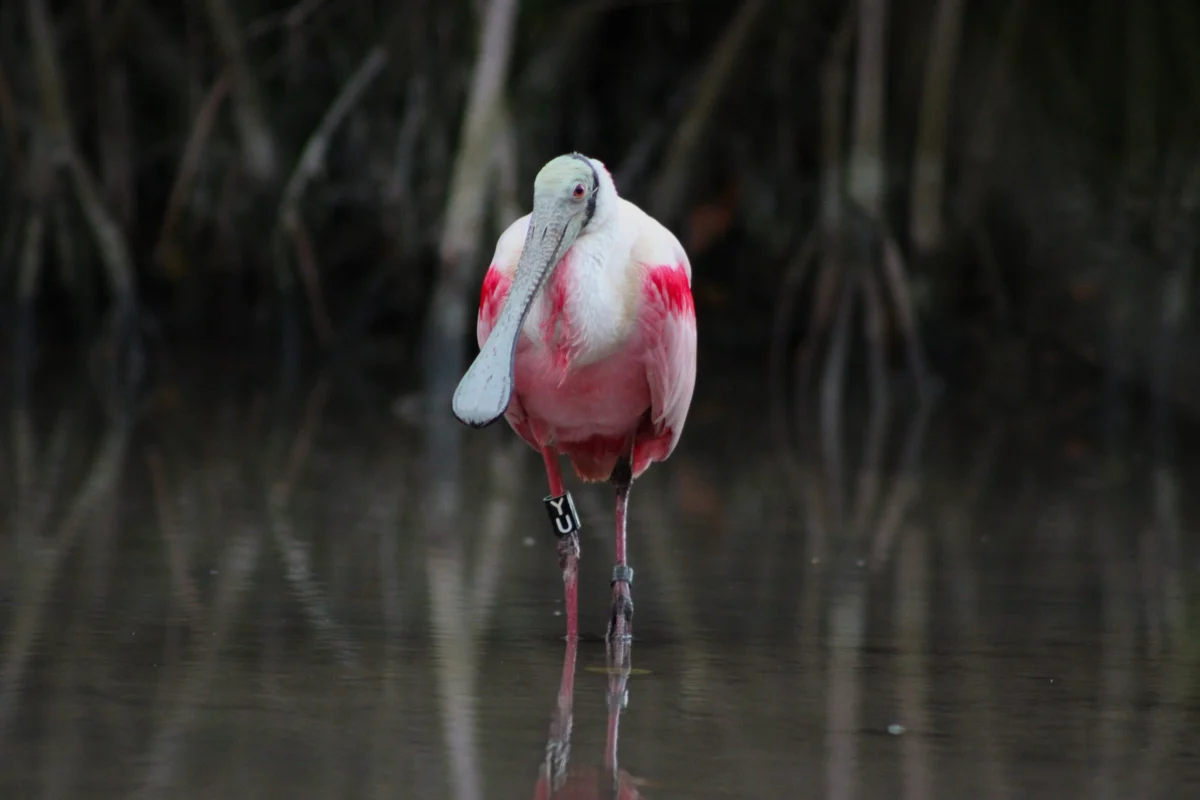
The observation of a banded Roseate Spoonbill in January by Shauna Sayers, a Wading Bird Research Specialist, has delivered a vital piece of information to ongoing scientific efforts to understand the movements, behaviors, and population dynamics of this iconic Florida species. Sayers, conducting her research at the Florida Keys Wild Bird Sanctuary during a particularly scenic sunset, identified a band on the leg of a male spoonbill, tracing its origin back to Pigeon Key in 2021. This resight confirms the bird’s survival for at least six years and provides tangible evidence of its post-banding dispersal, directly contributing to a comprehensive dataset meticulously compiled by Audubon scientists over several decades. The data gleaned from such sightings is indispensable for conservationists, offering a window into the health of the broader Everglades ecosystem, for which the Roseate Spoonbill serves as a crucial indicator species.
The Science of Avian Tracking: Unveiling Spoonbill Secrets
Bird banding, a technique employed globally for avian research, involves the attachment of small, lightweight, uniquely coded metal or plastic bands to a bird’s leg. These bands are non-invasive and designed to withstand environmental conditions without hindering the bird’s natural behavior. Each band carries a distinct alphanumeric code, allowing individual identification upon resight. When a banded bird is observed and its code reported, researchers gain critical insights into its life history. This includes tracking migratory routes, understanding dispersal patterns of juveniles, estimating longevity, monitoring reproductive success, and assessing population demographics. For the Roseate Spoonbill, a species with complex post-nesting movements, banding is the most reliable method to gather empirical data on these aspects, which are otherwise challenging to observe directly across vast wetland landscapes. The information accumulated from thousands of banded birds over many years forms the bedrock of conservation strategies, guiding habitat protection, restoration efforts, and policy decisions aimed at safeguarding these magnificent birds and their habitats.
A Legacy of Observation: Three Decades in Florida Bay
The Audubon Everglades Research Station has maintained an unwavering commitment to understanding Roseate Spoonbill populations, with weekly surveys of their colonies in Florida Bay conducted for an impressive 30 years. These surveys, primarily focused during the nesting season, are fundamental for collecting baseline data on nesting success, colony size, and overall population trends. Florida Bay, a vast estuary at the southern tip of the Florida peninsula, is a critical breeding ground for numerous wading bird species, including the spoonbill. Its delicate ecological balance, influenced by freshwater flow from the Everglades and tidal exchanges with the Gulf of Mexico and Atlantic Ocean, makes it a dynamic yet vulnerable environment. Long-term monitoring, such as that undertaken by Audubon, is essential for detecting subtle shifts in population dynamics that might indicate broader environmental changes, providing early warnings for conservation action. Two specific colonies within Florida Bay have been under continuous observation for the entirety of this three-decade period, creating an invaluable longitudinal dataset that tracks generational changes and environmental responses.
Chronology of a Crucial Conservation Program
The systematic banding program for Roseate Spoonbills initiated by Audubon scientists has evolved significantly over time, expanding its geographic scope to encompass key breeding and foraging areas across Florida.
- 2003: The program officially commenced with the first application of leg bands to Roseate Spoonbill chicks. This initial phase focused on nests within Florida Bay, recognizing its importance as a primary breeding ground. Simultaneously, banding efforts were extended to the Richard T. Paul Alafia Bank Bird Sanctuary in Tampa Bay. Alafia Bank, an island sanctuary, represents a critical breeding site on Florida’s west coast, offering insights into spoonbill populations in a different estuarine environment. This dual-location approach from the outset underscored the program’s commitment to understanding regional variations in spoonbill ecology.
- 2013: A decade after its inception, the banding program expanded further north to include birds hatching from nests at the St. Augustine Alligator Farm. This expansion was strategic, incorporating a breeding population at the northern extent of the species’ range in Florida. Data from this site provides crucial comparative information, allowing researchers to assess potential differences in dispersal, survival, and behavioral patterns influenced by varying climatic conditions and habitat characteristics found along Florida’s Atlantic coast.
- To Date: Cumulatively, Audubon has banded approximately 3,000 Roseate Spoonbills across these diverse locations. This substantial number of banded individuals significantly increases the probability of resights and thus the quantity and quality of data collected. The ongoing commitment to this extensive banding effort highlights its perceived value in generating robust scientific information vital for the species’ long-term conservation.
The Roseate Spoonbill: An Iconic Indicator of Ecosystem Health
The Roseate Spoonbill (Platalea ajaja) is not merely a visually striking wading bird; it is recognized as a powerful indicator species for the health of the Everglades ecosystem. Its vibrant pink plumage, spatulate bill, and preference for shallow, estuarine waters make it a sentinel of environmental quality. The reasons for its designation as an indicator species are multifaceted:
- Dietary Specificity: Spoonbills primarily feed on small fish, crustaceans, and aquatic insects found in brackish and freshwater habitats. Fluctuations in their populations or reproductive success can signal changes in the abundance of these prey items, which in turn reflects the health of the underlying aquatic food web. A decline in spoonbill numbers or breeding success could indicate issues such as altered salinity regimes, nutrient pollution leading to algal blooms, or habitat degradation impacting their food sources.
- Habitat Requirements: Spoonbills require specific habitat conditions for foraging, nesting, and roosting. They depend on expansive, shallow mudflats, mangrove fringes, and isolated islands for breeding. The availability and quality of these habitats are directly linked to hydrological patterns, freshwater inflows, and the overall integrity of coastal wetlands. Changes in sea level, altered water management practices, or coastal development can directly impact their preferred habitats, making their presence and health a gauge of these environmental stressors.
- Sensitivity to Contaminants: As top predators in their specific niches, spoonbills can accumulate environmental contaminants from their food sources. Studies on their eggs and tissues can reveal the presence and levels of pollutants like mercury or pesticides in the ecosystem, providing insights into broader environmental contamination issues that may affect other wildlife and even human health.
- Historical Context: Roseate Spoonbills faced near extinction in the late 19th and early 20th centuries due to the plume trade, which decimated wading bird populations for fashion. Their subsequent recovery, largely attributed to early conservation efforts and legal protections, serves as a testament to the effectiveness of conservation. However, they continue to face modern threats, including habitat loss due to coastal development, alterations in freshwater flow, and the impacts of climate change, such as sea-level rise and increased frequency of severe storms. Monitoring their populations today provides a critical benchmark against historical trends and helps assess the efficacy of current restoration and protection efforts, particularly the Comprehensive Everglades Restoration Plan (CERP).
Insights into Dispersal and Behavior
The data collected from banded spoonbills has been instrumental in generating a greater understanding of their post-nesting dispersal rates and behavioral structures. "Dispersal rates" refer to the patterns and distances that young birds travel from their natal colonies after fledging. This information is crucial for understanding gene flow between populations, identifying critical stopover and wintering grounds, and assessing the connectivity of different habitats across their range. For instance, data has shown that juvenile spoonbills often undertake extensive post-breeding movements, sometimes traveling hundreds of miles from their natal sites before settling into new foraging areas or eventually returning to breed.
"Behavioral structures" encompass a range of observations, including foraging strategies, flocking dynamics, and site fidelity. Do birds from certain colonies preferentially forage in specific areas? Do they form mixed-species flocks? How do they adapt to changing environmental conditions? The resight of the male spoonbill banded on Pigeon Key in 2021, later spotted in the Florida Keys Wild Bird Sanctuary, exemplifies this. It confirms the bird’s survival for several years and demonstrates its movement within the Florida Keys archipelago. This particular sighting adds to the growing body of evidence about the resilience and adaptability of these birds, providing crucial information on how individuals utilize the complex network of habitats available to them after the demanding nesting season in Florida Bay concludes. Such data directly informs decisions about which habitats are most critical to protect for all life stages of the spoonbill.
A Tapestry of Habitats: Florida Bay, Tampa Bay, and St. Augustine
The strategic choice of banding locations—Florida Bay, Tampa Bay’s Richard T. Paul Alafia Bank Bird Sanctuary, and the St. Augustine Alligator Farm—reflects an understanding of the diverse ecological pressures and habitat types that influence Roseate Spoonbill populations across Florida.
- Florida Bay: As the program’s cornerstone, Florida Bay represents a vast, shallow, and highly productive estuarine environment. However, it is profoundly impacted by freshwater management practices from the Everglades, leading to salinity imbalances that can affect prey availability. Research here focuses on the effects of Everglades restoration on spoonbill populations.
- Tampa Bay (Richard T. Paul Alafia Bank Bird Sanctuary): This sanctuary is a significant nesting island in a highly urbanized estuary. Banding here allows researchers to study spoonbill populations interacting with significant human presence and industrial activity, providing insights into how these birds adapt to and are affected by anthropogenic pressures. The success of colonies in Tampa Bay highlights the importance of protected refugia amidst developed landscapes.
- St. Augustine Alligator Farm: Situated on Florida’s northeast coast, this site represents the northernmost breeding location included in the banding program. Spoonbills here experience slightly different climatic conditions and face a distinct set of ecological challenges compared to their southern counterparts. Data from St. Augustine helps to understand the species’ range limits, potential northward expansion due to climate change, and regional variations in survival and dispersal.
By banding birds across these varied landscapes, Audubon scientists can conduct comparative studies, identifying common trends and unique regional adaptations, thereby building a more comprehensive picture of the species’ ecology statewide.
Voices from the Field: Dedication to Conservation
The dedication of field researchers like Shauna Sayers is the lifeblood of long-term conservation initiatives. Upon her discovery, Sayers likely felt a profound sense of accomplishment and connection. "Every resight is a moment of profound connection, a validation of years of effort, and a renewed sense of purpose," Sayers might have expressed, underscoring the intrinsic reward of such work. "Seeing this particular bird thrive, years after it was banded, tells us a story of survival and resilience that is critical for understanding the species as a whole."
From a broader organizational perspective, Audubon officials emphasize the critical role of these long-term programs. Dr. John T. Smith, Director of Research for Audubon Florida (an inferred position), could articulate: "Our long-term banding program is the backbone of our understanding of Roseate Spoonbill ecology. These birds tell us a story about the health of our most vital ecosystems, particularly the Everglades. Each piece of data, whether from a dedicated researcher or a citizen scientist, builds upon decades of knowledge, allowing us to advocate for effective conservation policies with greater scientific rigor." This sentiment highlights the arduous, often challenging nature of fieldwork in Florida’s wetlands, requiring perseverance, keen observational skills, and an unwavering commitment to the species and its habitat.
Citizen Science: Empowering the Public in Conservation
A cornerstone of Audubon’s spoonbill research is its robust citizen science component, which actively engages birders and naturalists in data collection. Every band resight, regardless of who spots it, contributes to the critical population data for this iconic Florida species. To encourage participation, each spotter earns a special sticker, a small token of appreciation for their valuable contribution.
The process for reporting a banded spoonbill is streamlined and accessible via an online form available at audubon.org/florida/spoonbills. This platform allows individuals from all walks of life to contribute directly to scientific research, expanding the geographical and temporal reach of data collection far beyond what a small team of dedicated researchers could achieve alone. Citizen science not only provides a wealth of observational data but also fosters a deeper connection between the public and the natural world, raising awareness about the challenges faced by wildlife and ecosystems. As an added incentive, anyone who submits a report in 2026 will receive a limited-edition sticker, further encouraging widespread participation and long-term engagement.
Crucially, Audubon provides a vital ethical guideline for all aspiring citizen scientists: "Give birds their space when trying to read a bird band. Use binoculars or a long zoom lens to avoid spooking or flushing the birds." This instruction underscores the paramount importance of prioritizing the birds’ welfare, ensuring that the pursuit of data does not inadvertently cause stress or harm to the subjects of study. This responsible approach ensures that citizen science remains a positive force for conservation.
Broader Implications: Informing Everglades Restoration and Future Policy
The insights derived from the Roseate Spoonbill banding program have far-reaching implications, directly informing conservation strategies, habitat management, and broader policy decisions, particularly concerning the monumental Comprehensive Everglades Restoration Plan (CERP). The data on spoonbill dispersal, nesting success, and survival rates serve as critical metrics for evaluating the success of restoration efforts designed to restore historical freshwater flows and improve water quality within the Everglades. If spoonbill populations are thriving, it suggests that restoration efforts are positively impacting the food web and habitat availability; conversely, declines can indicate areas where restoration may be falling short or where new threats are emerging.
Furthermore, understanding the connectivity between different spoonbill populations across Florida helps to identify essential corridors and stopover sites that require enhanced protection. This information can guide land acquisition, zoning regulations, and the establishment of new protected areas. The program’s findings also contribute to climate change adaptation strategies, as researchers can track how spoonbills respond to changes in sea level, hurricane frequency, and temperature shifts. The long-term nature of this research provides the necessary baseline data to detect subtle, cumulative impacts of environmental change over decades. In the future, this foundational banding data could be integrated with advanced technologies such as satellite tagging or genetic studies to provide an even more granular understanding of spoonbill movements and population structures, further enhancing conservation efficacy.
Challenges and the Path Forward
Despite the successes of the banding program and the recovery of Roseate Spoonbill populations from historical lows, significant challenges persist. Habitat loss due to relentless coastal development, the pervasive threat of climate change manifesting as sea-level rise and intensified storm events, and ongoing alterations to freshwater flow regimes continue to exert pressure on spoonbill populations and the broader Everglades ecosystem. Pollution from agricultural runoff and urban areas also poses a continuous threat to water quality and prey availability.
The Audubon banding program and the citizen science initiatives are crucial tools in navigating these challenges. By continuously monitoring the spoonbills, scientists can detect shifts and adapt conservation strategies, providing timely information to policymakers and land managers. The long-term commitment required for such programs underscores the understanding that effective conservation is not a short-term fix but an ongoing process of observation, adaptation, and advocacy. Ultimately, the future of the Roseate Spoonbill, with its vibrant plumage and unique bill, remains inextricably linked to the fate of the Everglades—a testament to the interconnectedness of all life and a powerful symbol rallying support for broader environmental protection. The continued engagement of both dedicated researchers and an enthusiastic public will be vital in safeguarding this magnificent species for generations to come.