
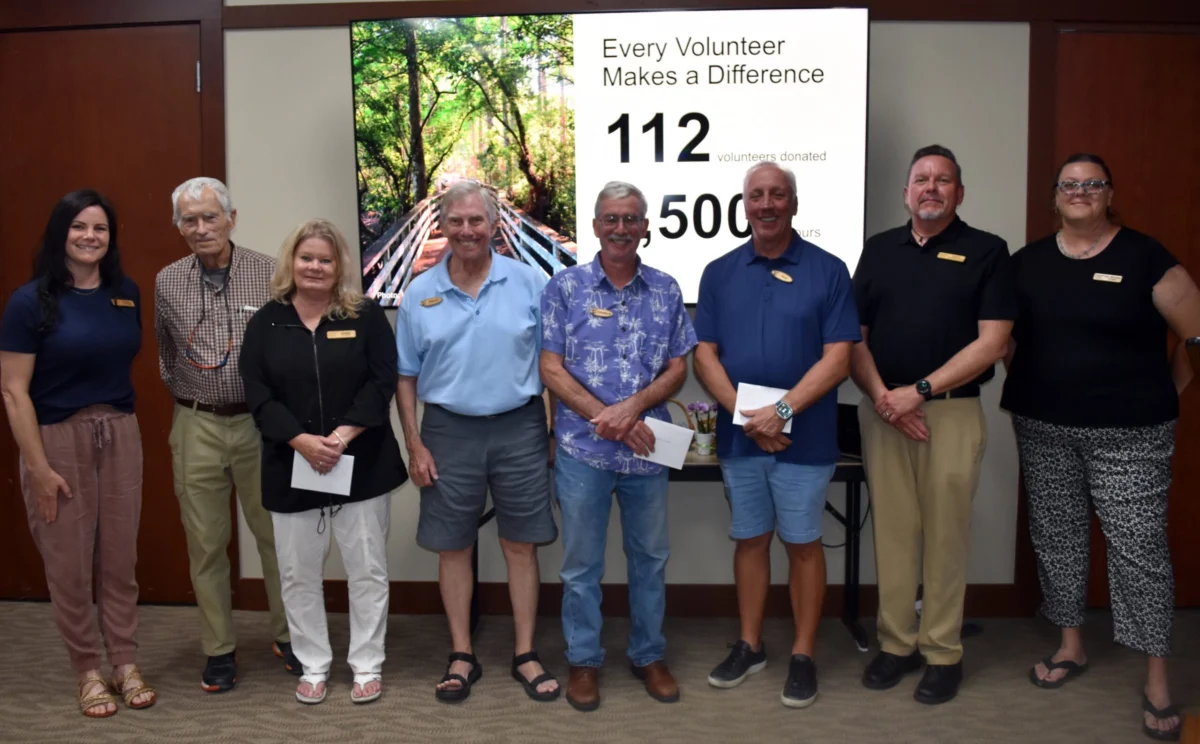
Corkscrew Swamp Sanctuary, a flagship conservation area within the National Audubon Society network, recently hosted its annual volunteer recognition event, "Fueling Our Future," on March 24. This significant gathering celebrated the profound dedication of 112 volunteers who collectively contributed more than 7,500 service hours during the 2025-26 season. The event served not only as a gesture of gratitude but also as a powerful affirmation of the indispensable role volunteers play in maintaining the ecological integrity and educational outreach of one of Florida’s most vital wetlands. The cumulative impact of these hours, equivalent to more than four full-time employees, highlights the economic and operational value of volunteerism in conservation, enabling the Sanctuary to pursue its mission with enhanced capacity and community engagement.
A Legacy of Dedication: The Heart of Corkscrew Swamp Sanctuary
The tradition of recognizing volunteers at Corkscrew Swamp Sanctuary is deeply embedded in its operational ethos, reflecting a long-standing understanding that community involvement is paramount to successful conservation. Established in 1954, Corkscrew Swamp Sanctuary protects the largest remaining old-growth bald cypress forest in North America, a critical habitat for a diverse array of flora and fauna, including the endangered Florida panther, the threatened wood stork, and countless migratory bird species. Its boardwalk offers visitors unparalleled access to this pristine wilderness, providing educational opportunities and fostering a deeper appreciation for natural ecosystems. The Sanctuary’s mission extends beyond mere preservation; it encompasses habitat restoration, scientific research, environmental education, and advocacy, all of which rely heavily on the consistent and passionate efforts of its volunteer force.
Volunteers at Corkscrew are involved in virtually every facet of the Sanctuary’s operations. Their duties range from guiding visitors along the boardwalk, staffing the Blair Visitor Center, and assisting with administrative tasks, to participating in crucial fieldwork such as invasive species removal, trail maintenance, water quality monitoring, and even contributing to scientific data collection. This diverse array of roles ensures that the Sanctuary can operate efficiently, enhance visitor experience, and make tangible progress on its conservation goals, often with limited paid staff resources. The annual recognition event, therefore, is more than a social gathering; it is a vital mechanism for fostering community, reinforcing commitment, and publicly acknowledging the immense contributions that often go unseen by the casual visitor.
"Fueling Our Future": An Evening of Celebration and Enlightenment
The "Fueling Our Future" theme resonated throughout the evening’s program, emphasizing the forward-looking nature of conservation work and the volunteers’ role in shaping a sustainable tomorrow. Held within the Sanctuary’s inviting facilities, the event provided a relaxed atmosphere for volunteers and staff to connect, share experiences, and reinforce the bonds that are crucial for a cohesive conservation community. Live music, thoughtfully curated by Jovens Sax, set an ambient tone, complementing the spread of beverages and an appetizer buffet prepared by Artichoke & Company. These elements contributed to an atmosphere of genuine appreciation and camaraderie, allowing individuals to celebrate their collective achievements in a convivial setting.
A central highlight of the evening was the educational presentation by Florida Gulf Coast University Professor Win Everham. Professor Everham, a renowned expert in environmental science and ecology, delivered a heartfelt and informative address focusing on the complexities and challenges of "our changing world." His presentation likely delved into critical environmental issues pertinent to the region and beyond, such as the impacts of climate change on wetland ecosystems, the urgency of biodiversity protection, sustainable land management practices, and the role of scientific research in informing conservation strategies. By integrating an educational component, the event not only recognized past efforts but also equipped volunteers with deeper knowledge and inspiration for future endeavors, aligning with the Sanctuary’s commitment to continuous learning and advocacy. Such presentations serve to underscore the scientific basis of conservation work and the critical need for informed action, empowering volunteers to be even more effective stewards and advocates.
Milestones of Service: Honoring Enduring Commitment
A poignant moment of the evening was the commemoration of volunteers who reached significant milestones in their service hours. A brand new volunteer recognition board, prominently displayed in the Blair Visitor Center, now permanently honors individuals who have dedicated between 500 and an extraordinary 10,000 hours to the Sanctuary. This physical tribute serves as a lasting testament to enduring commitment, inspiring both current volunteers and prospective new recruits. The establishment of this board signifies an elevated level of recognition, transforming a temporary acknowledgement into a permanent fixture within the Sanctuary’s public spaces, allowing visitors to appreciate the human effort behind the natural beauty they experience.
Among those celebrated for their substantial contributions:
- 500 Service Hours: Dan Carpenter, Charlie Rocks, Brent Smith, and Robin Stark were recognized for surpassing the 500-hour mark. This level of dedication typically signifies consistent involvement over several years, often encompassing diverse tasks such as visitor engagement, assisting with educational programs, or contributing to various maintenance projects. Their commitment ensures the smooth daily operation of the Sanctuary.
- 1,000 Service Hours: Lisa Schroder and Jack Shine were honored for exceeding 1,000 hours. Volunteers reaching this milestone often take on more specialized or leadership roles, perhaps training new volunteers, managing specific projects, or developing particular expertise in areas like bird identification or plant ecology. Their prolonged service provides invaluable institutional knowledge and continuity.
- 2,500 Service Hours: Murray Yost achieved the remarkable feat of surpassing 2,500 hours. This level of dedication represents an extraordinary commitment, often spanning a decade or more of regular service. Volunteers at this tier frequently become integral to specific programs, acting as mentors, contributing to long-term research initiatives, or serving on advisory committees, demonstrating a profound personal investment in the Sanctuary’s mission. The cumulative experience and expertise of such individuals are irreplaceable assets, contributing significantly to the Sanctuary’s operational effectiveness and strategic planning.
The Volunteer Impact Award: Charlie Rocks’ Exemplary Dedication
The pinnacle of the evening’s recognition was the presentation of the Volunteer Impact Award to Charlie Rocks. This prestigious award is bestowed upon an individual who has demonstrated exceptional dedication and made a profound difference across multiple facets of the Sanctuary’s operations. Charlie Rocks was specifically commended for the breadth and depth of his commitment, his passion evident in the diverse areas he supported. While specific examples of his contributions were not detailed in the summary, such an award typically recognizes volunteers who go above and beyond, perhaps leading major projects, consistently taking on challenging assignments, or demonstrating an unwavering willingness to assist wherever needed. His impact likely spanned areas from habitat restoration and species monitoring to visitor services and educational programming, embodying the spirit of comprehensive volunteerism. This award not only honors Charlie’s individual efforts but also sets a benchmark for the profound positive influence a single dedicated volunteer can have on a large-scale conservation effort.
Organizational Perspectives and the Power of Connection
Kristina O’Hern, the Volunteer and Membership Manager who meticulously organized the event, articulated the core philosophy underpinning Corkscrew’s reliance on its volunteer community. "Conservation isn’t only about protecting land or species—it’s about connection," O’Hern stated. She elaborated on this theme, emphasizing the multifaceted nature of these connections: "The connections between people and place, between effort and impact, and between today and tomorrow thrive because of volunteers." This powerful statement encapsulates the holistic view of conservation held by Audubon, recognizing that environmental protection is intrinsically linked to human engagement, education, and the fostering of a stewardship ethic.
O’Hern’s perspective highlights that volunteers are not merely providers of labor; they are vital conduits for community building, fostering a sense of shared responsibility for the natural world. Their efforts bridge the gap between abstract conservation goals and tangible, on-the-ground action. The connection between effort and impact is evident in every hour volunteered, from a cleaner trail to a better-informed visitor. Furthermore, the intergenerational aspect of "today and tomorrow" underscores the legacy volunteers create, ensuring that the natural wonders of Corkscrew Swamp Sanctuary will be preserved for future generations. The National Audubon Society, the parent organization of Corkscrew Swamp Sanctuary, deeply values these contributions, reiterating its profound gratitude for their service and expressing pride in the continuous difference volunteers make every single day. Audubon’s broader mission to protect birds and the places they need, today and tomorrow, is significantly bolstered by the localized, dedicated efforts of volunteers like those at Corkscrew.
Community Partnerships and Future Outlook
The success of the volunteer recognition event, and indeed many of the Sanctuary’s initiatives, relies heavily on the support of community partners and sponsors. Panther Island Mitigation Bank was recognized for its continued sponsorship of this special event, demonstrating a corporate commitment to environmental stewardship and community engagement. Such sponsorships are crucial, as they provide the financial and logistical resources necessary to host events of this scale, allowing the Sanctuary to dedicate its core operational budget to direct conservation activities. The involvement of local businesses like Jovens Sax (live music), Artichoke & Company (catering), C Liston Communications (likely event coordination or public relations), and Naples Engraving (recognition board services) further underscores the community-wide effort to support Corkscrew Swamp Sanctuary. These partnerships exemplify how diverse sectors of society can converge to champion a common cause, strengthening the fabric of local conservation efforts.
Looking ahead, the commitment of volunteers remains foundational to Corkscrew Swamp Sanctuary’s ability to navigate future challenges and expand its impact. As environmental pressures intensify, from habitat loss to the ongoing threats of climate change, the role of an engaged and active volunteer base becomes even more critical. The 7,500 service hours contributed in the 2025-26 season represent not just past labor, but a significant investment in the future resilience of this irreplaceable ecosystem. The dedication celebrated at the "Fueling Our Future" event ensures that Corkscrew Swamp Sanctuary will continue to thrive as a haven for wildlife, a living laboratory for scientific research, and an invaluable educational resource for generations to come, embodying the powerful synergy between human passion and environmental preservation. The ongoing efforts of these individuals contribute directly to building a stronger, more connected, and more hopeful future for birds, other wildlife, and people alike, reaffirming the indispensable value of community-driven conservation.