
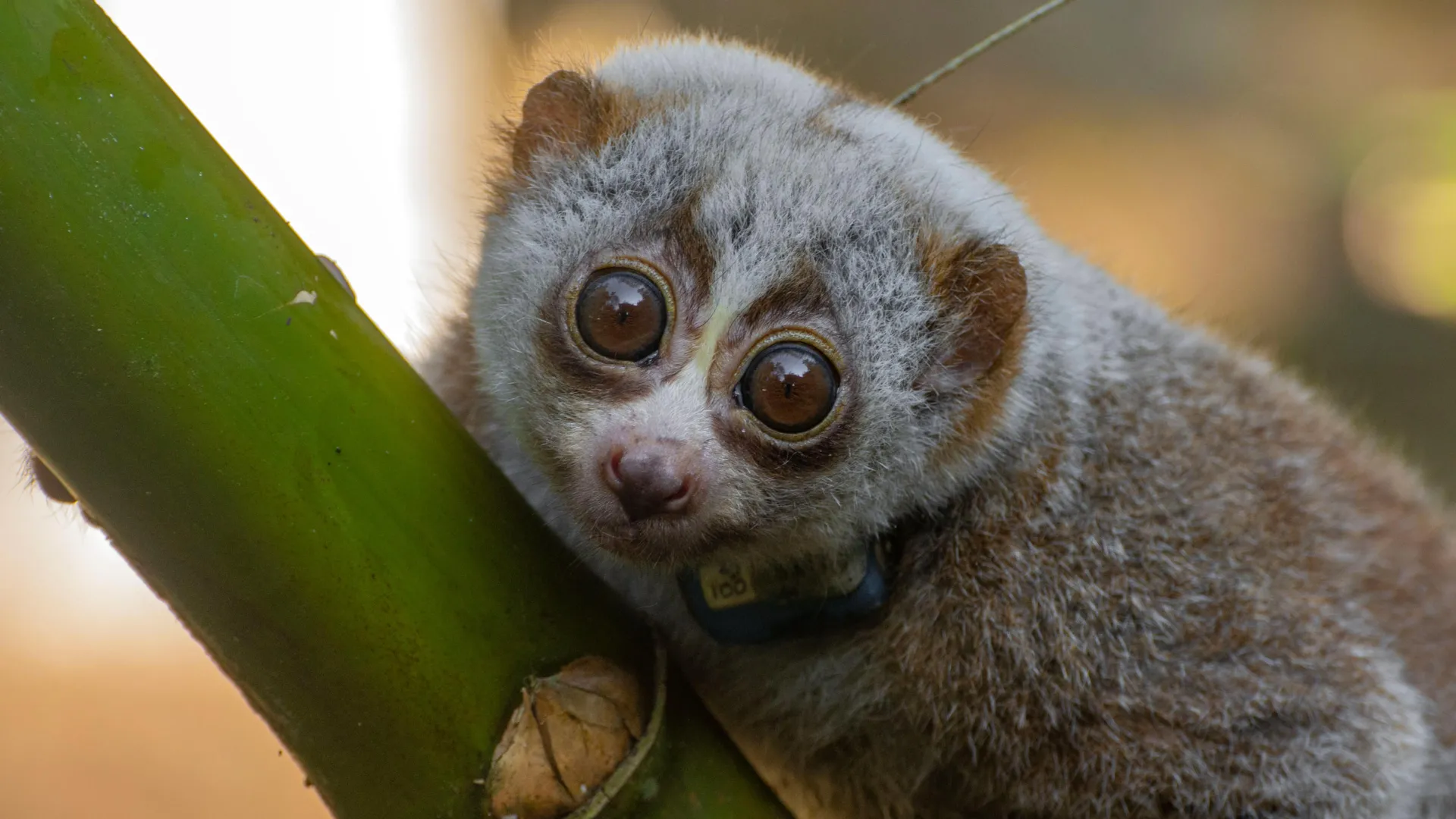
A new scientific study has delivered a stark warning to conservationists and the public alike, suggesting that the seemingly benevolent act of returning rescued wildlife to natural habitats does not always culminate in success. For certain species, animals released after a period in captivity face serious, often fatal, risks, transforming the wild into what researchers describe as a "death trap." This alarming revelation challenges long-held assumptions about the efficacy of current wildlife reintroduction protocols and calls for a profound re-evaluation of conservation strategies, particularly for vulnerable, territorial species.
The groundbreaking findings, which carry significant implications for global wildlife conservation, were published in the esteemed journal Global Ecology and Conservation. The comprehensive research was spearheaded by the renowned primatologist Professor Anna Nekaris OBE of Anglia Ruskin University, working in close collaboration with experts from the conservation group Plumploris e.V. and the University of Western Australia. Their meticulous work focused on the critical examination of the post-release fate of Bengal slow lorises (Nycticebus bengalensis) that had been liberated in Bangladesh, unveiling a disturbing pattern of high mortality and territorial conflict.
The Silent Crisis: Slow Lorises and the Illegal Wildlife Trade
Slow lorises, with their distinctive large, soulful eyes and seemingly gentle demeanor, possess features that have, tragically, rendered them exceptionally vulnerable to the illegal wildlife trade. This unfortunate allure has propelled them to the forefront of the illicit global market, establishing them as among the most heavily trafficked primates worldwide. The demand for these nocturnal creatures as exotic pets, often fueled by misinformation and the allure of their unique appearance, drives a brutal trade that sees thousands poached from their natural environments each year. They are frequently subjected to horrific conditions, including having their venomous teeth crudely removed to make them "safe" for human interaction, a process that often leads to infection, pain, and a severely compromised ability to survive in the wild.
The International Union for Conservation of Nature (IUCN) lists all slow loris species across its various categories of threat: Critically Endangered, Endangered, or Vulnerable. For instance, the Javan slow loris (Nycticebus javanicus) is classified as Critically Endangered, facing an extremely high risk of extinction in the wild, while the Sunda slow loris (Nycticebus coucang) is Endangered. The Bengal slow loris, the focus of this study, is listed as Vulnerable, though its populations are experiencing severe declines across its range due to habitat loss and the relentless pressure from illegal trade. This imperiled status means that slow lorises are frequently the beneficiaries of rescue operations, confiscated from traders or found abandoned. Subsequently, they are often released back into what are intended to be safe, natural habitats, as part of broader conservation efforts aimed at bolstering and rebuilding their dwindling wild populations.
Unmasking the Post-Release Reality: A Detailed Study in Bangladesh
Despite the noble intentions underpinning these rescue and release programs, the new research illuminates a darker, more tragic reality. The scientists employed state-of-the-art radio-collaring technology to track nine Bengal slow lorises following their release into a national park located in northeastern Bangladesh. This particular park had been historically utilized for previous wildlife releases, presumed to be a suitable sanctuary. The radio collars, carefully fitted to minimize interference with the animals’ natural behaviors, allowed researchers to monitor their movements, activity patterns, and ultimately, their survival rates in the challenging post-release environment.
The findings derived from this meticulous tracking were stark and unequivocal. A harrowing mere two of the nine released animals managed to survive their return to the forest, painting a grim picture of post-release mortality. Three individuals perished within an alarming 10 days of their release, succumbing rapidly to the pressures of their new-found "freedom." A further four slow lorises died within six months, extending the period of vulnerability for these reintroduced primates. The research team was able to recover four of the seven deceased animals, and the subsequent forensic examination of these bodies yielded crucial, chilling evidence: all four showed irrefutable signs of having been killed by other slow lorises.
Territorial Battles and the Primate’s Potent Venom
The specific cause of death uncovered by the study points directly to the intrinsic nature of slow lorises. These primates are known to be intensely territorial animals, fiercely defending their established home ranges against intruders. What makes their territorial disputes particularly lethal is a unique biological adaptation: slow lorises are the only venomous primates in the world. Their venom is produced by glands located on their brachial (upper arm) regions. When threatened, they lick these glands, mixing the oily secretions with their saliva. This toxic cocktail is then delivered through specialized comb-like teeth, capable of inflicting a painful and often deadly bite. The animals recovered during the study exhibited clear, unmistakable bite wounds, predominantly on the head, face, and digits – tell-tale signs indicative of deadly territorial encounters with resident slow lorises. These findings underscore the critical importance of understanding a species’ ecology and social structure when planning reintroductions.
Beyond the immediate cause of death, the research also yielded significant behavioral insights. It revealed a strong correlation between the duration of an animal’s captivity and its post-release survival prospects: animals kept in captivity for longer periods tended to survive for fewer days after release. This suggests that prolonged captivity may diminish essential survival skills, reduce physical fitness, or increase stress levels, rendering them less equipped for the rigors of wild life. Furthermore, the released lorises exhibited heightened activity levels, moving around more extensively and appearing significantly more alert than their wild Bengal slow loris counterparts typically do. This could be interpreted as a frantic, desperate search for suitable, unoccupied territory, or an elevated state of stress and vigilance in an unfamiliar and hostile environment.
Intriguingly, the two animals that defied the odds and survived traveled across substantially larger areas than those that succumbed. This pattern strongly suggests that survival was contingent upon their ability to vacate established territories and, critically, to avoid direct, potentially lethal confrontations with resident slow lorises already occupying those spaces. Their extensive movements likely represented an attempt to find a vacant niche, free from the territorial aggression of their wild counterparts.
A Broader Lens: Rethinking Wildlife Rescue and Release Protocols
The study’s findings resonate beyond the plight of slow lorises, highlighting systemic challenges within broader wildlife conservation practices. While large and charismatic animals, such as big cats (e.g., tigers, leopards) or rhinos, often benefit from intensive and costly monitoring programs following their release, the same cannot be said for many smaller species. Due to logistical complexities, financial constraints, and often a lower profile in public perception, countless smaller species are not closely tracked post-release. This glaring disparity means that the true outcomes of their reintroductions frequently remain unknown, creating a dangerous knowledge gap in conservation science. Without robust monitoring, failures can go unnoticed, perpetuating ineffective or even harmful practices.
The researchers emphatically stress that successful wildlife releases are not a matter of good intentions alone but demand meticulous, scientifically informed planning. A thorough evaluation of the suitability of the proposed release site, coupled with a comprehensive assessment of the individual condition of each animal, is absolutely essential. This includes detailed habitat assessments to ascertain food availability, predator presence, and crucially, the density of existing populations of the target species. Furthermore, long-term monitoring is paramount to gauge true success, and species-specific rehabilitation guidelines, tailored to the unique ecological and behavioral needs of each animal, can significantly improve their chances of survival. Such guidelines might involve "soft release" techniques, where animals are gradually acclimatized to the wild within secure enclosures before full liberation, or training to enhance foraging and predator avoidance skills.
Professor Anna Nekaris OBE, a senior author of the study, Professor of Ecology, Conservation and Environment at Anglia Ruskin University in Cambridge, England, and the driving force behind the renowned Little Fireface Project, articulated the core dilemma: "It’s a common assumption that returning confiscated or rescued animals to the wild is invariably a positive conservation story. Our research, however, provides compelling evidence that for highly territorial species like slow lorises, releasing them into areas that are already densely populated can, tragically, become a death trap."
Professor Nekaris further elaborated on the societal pressures influencing these decisions: "Many rescued endangered species are often released primarily because the public expects it, and it feels like the ‘right’ thing to do. However, for animals such as the Bengal slow loris, this is not always the optimal course of action for their welfare or for genuine conservation success. Without fully understanding the animal’s behavior, the duration and nature of its time spent in captivity, and critically, the density of resident populations at the proposed release site, reintroductions may inadvertently do more harm than good, leading to unnecessary suffering and mortality."
Hassan Al-Razi, the lead author of the study and the dedicated team leader of Plumploris e.V. Bangladesh, underscored the specific challenges faced in his region, echoing a global concern. "Rescue and release programs have become an increasingly common practice in Bangladesh, driven by a commendable desire to protect wildlife. Many wild animals, including slow lorises, are rescued and subsequently released back into the wild. However, in far too many cases, these releases are conducted inappropriately, lacking the scientific rigor and planning required for success."
Al-Razi highlighted a critical flaw in current practices: "For forest-dwelling species, release sites are often selected based on logistical convenience rather than ecological suitability. This often means choosing easily accessible locations rather than those that offer the best chance of survival for the animals. As a direct consequence, certain forests have effectively become dumping grounds for rescued animals and are no longer appropriate release sites, leading to overcrowding and increased conflict." He concluded with a poignant observation, "Although our research has specifically focused on the Bengal slow loris and vividly demonstrated the dire consequences of such practices, we firmly believe that similar patterns of high mortality and ineffective reintroduction likely affect many other species, necessitating a broader re-evaluation."
Broader Implications and a Call for a Paradigm Shift
The findings of this study carry profound implications for the future of wildlife conservation, particularly for species impacted by the illegal pet trade. It necessitates a critical re-evaluation of national and international guidelines for rescue, rehabilitation, and release programs.
- Policy and Ethical Considerations: Conservation organizations and governmental wildlife agencies must confront the ethical dilemma presented by well-intentioned but potentially harmful release practices. The study calls for a shift from a "release at all costs" mentality to one centered on evidence-based decision-making and animal welfare. This includes acknowledging that for some individuals, particularly those with prolonged exposure to captivity, a life in a managed sanctuary or a well-resourced breeding program might be a more humane and effective conservation outcome than a premature, unmonitored release into a hostile wild environment.
- Enhanced Rehabilitation Protocols: The link between longer captivity and reduced survival highlights the need for sophisticated, species-specific rehabilitation programs. These programs should focus on re-wilding skills, such as foraging for natural foods, recognizing and avoiding predators, and navigating complex social dynamics within their species. This is particularly challenging for slow lorises, which are nocturnal and arboreal, requiring specialized enclosures and expert care to mimic their natural habitat.
- Investment in Monitoring and Research: The study underscores the critical importance of long-term post-release monitoring. This requires significant financial investment in technologies like advanced GPS tracking, camera traps, and acoustic monitoring, as well as trained personnel. Understanding the success and failure rates of releases is fundamental to refining methodologies and ensuring resources are allocated effectively. Without such data, conservation efforts risk being blind to their actual impact.
- Public Education and Awareness: There is a clear need for increased public education regarding the complexities of wildlife conservation. While the public’s desire to see rescued animals returned to the wild is understandable, this study demonstrates that the reality is far more nuanced. Educating the public about the challenges faced by reintroduced animals and the scientific rigor required for successful reintroduction can foster support for more effective, albeit sometimes less emotionally gratifying, conservation strategies.
- Combatting the Illegal Wildlife Trade at its Source: Ultimately, reducing the need for rescues in the first place remains the most effective conservation strategy. Strengthening law enforcement efforts, dismantling trafficking networks, and reducing consumer demand for exotic pets are crucial steps. This includes international cooperation to intercept shipments, prosecute traffickers, and raise awareness about the cruelty and ecological damage caused by the illegal wildlife trade.
In conclusion, the research by Professor Nekaris, Hassan Al-Razi, and their collaborators serves as a crucial wake-up call. While the impulse to return rescued animals to their natural homes is noble and deeply rooted in conservation ethics, this study provides undeniable evidence that such actions, when executed without rigorous scientific planning and comprehensive understanding of species-specific needs and environmental conditions, can lead to tragic and counterproductive outcomes. For species like the slow loris, complex, venomous, and fiercely territorial, an unthinking release into an already populated habitat is not an act of liberation, but an unwitting sentence to a "death trap." The path forward for conservation must be paved with scientific evidence, ethical scrutiny, and a commitment to ensuring that every intervention truly serves the best interests of the animals and the long-term health of their populations.