
An ambitious conservation initiative spearheaded by the Ghana Wildlife Society (GWS), in partnership with the UK’s Royal Society for the Protection of Birds (RSPB) and supported by the Ecological Restoration Fund (ERF), is making significant strides in protecting migratory birds and their critical habitats within Ghana’s Mole Ecological Landscape. This collaborative project focuses on a vital segment of the African-Eurasian Flyway, a globe-spanning route stretching from the Arctic to the southern tip of Africa, where millions of birds undertake arduous annual journeys connecting continents and ecosystems. By integrating community empowerment, habitat restoration, and sustainable livelihood development, the program offers a compelling model for addressing the complex challenges of biodiversity conservation in a rapidly changing world.
The African-Eurasian Flyway: A Global Artery of Avian Life
Migratory birds are extraordinary ambassadors of the natural world, linking diverse landscapes, countries, and even continents through their epic long-distance flights. These incredible journeys follow established aerial highways known as "flyways." The African-Eurasian Flyway is one of the world’s most extensive and biologically significant, traversed by over 200 species of migratory birds, including ducks, geese, waders, raptors, and passerines. Each year, an estimated 50 million to 100 million birds navigate this route, facing myriad threats from climate change, habitat degradation, illegal hunting, and agricultural intensification across dozens of nations. The health of this flyway is a critical indicator of the planet’s ecological well-being, underscoring the urgency of coordinated international conservation efforts. Without suitable stopover sites for rest and refueling, and safe overwintering grounds, these species cannot complete their life cycles, leading to precipitous population declines observed in many migratory bird populations globally.
Ghana’s Mole Ecological Landscape: A Critical Sanctuary

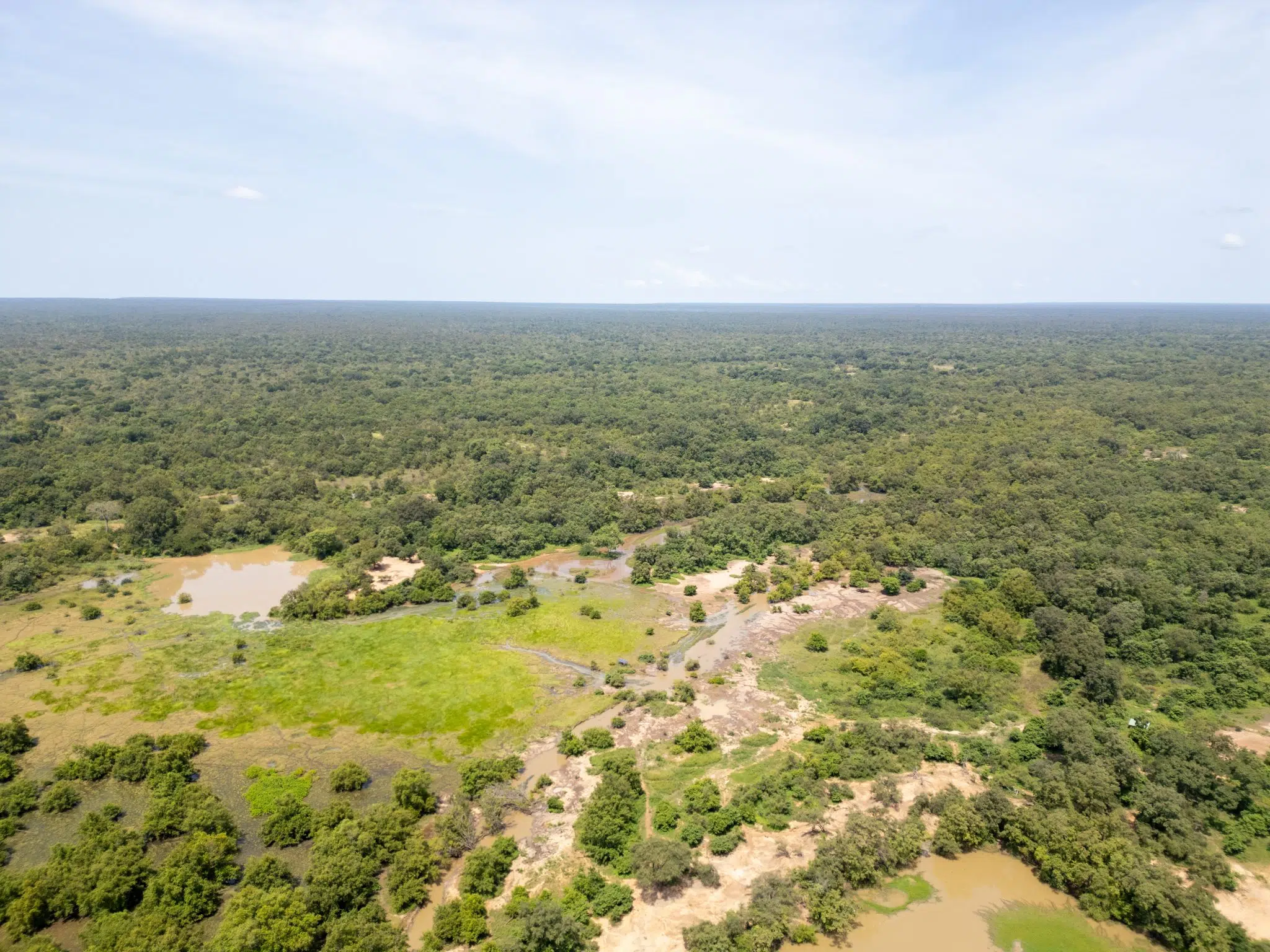
At the heart of Ghana’s contribution to this global conservation effort lies the Mole Ecological Landscape in the country’s north-western region. This expansive area encompasses a mosaic of savannah woodland, grassland, riverine, and close canopy forest habitats, making it an indispensable refuge for both resident and migratory species. Central to this landscape is the Mole National Park, Ghana’s largest protected area, which serves as a crucial stopover and overwintering site for thousands of migratory landbirds after their perilous crossing of the Sahara Desert.
Kwame Boafo, Programme Manager for the Research & Conservation Unit at the Ghana Wildlife Society, vividly describes Mole as "a place of refreshment" for these weary travelers. Annually, the park welcomes a diverse array of migratory visitors, including iconic species like the European Pied Flycatcher, Willow Warblers, and Tree Pipits. Raptors such as Osprey, European Honey-buzzard, and Montagu’s Harrier also grace its skies. Beyond its importance for migrants, Mole National Park is also a critical stronghold for several of Ghana’s Critically Endangered vultures, including species like the Hooded Vulture and White-backed Vulture, whose populations have suffered catastrophic declines across Africa due to poisoning and habitat loss.
The landscape itself is a testament to resilience, undergoing dramatic transformations between seasons. The prolonged dry season is often followed by extensive burning, both accidental and deliberate, driven by livestock grazers and attempts to manage wider fire risks. This cyclical pattern shapes the environment, requiring both biodiversity and human communities to adapt. "It is a landscape that tells a story of resilience and transformation," Boafo explains, highlighting the delicate balance between natural processes and human interaction.
Conservation in Action: A Partnership for the Future
The project, a collaborative endeavor between BirdLife International’s partner in Ghana, the Ghana Wildlife Society, and the UK’s RSPB, with substantial backing from the Ecological Restoration Fund (ERF), exemplifies an integrated approach to conservation. The RSPB’s long-standing commitment to flyway conservation, detailed on their dedicated platforms, provides a crucial framework for understanding the transnational nature of this work. The project’s core strategy recognizes that effective conservation cannot operate in isolation from human needs, particularly in regions where communities directly depend on natural resources for their livelihoods.

A significant achievement of this partnership has been the establishment and official inscription of a new Community Resource Management Area (CREMA) for the communities of Kananto and Kabampe. These communities, located strategically between two protected areas, represent a crucial buffer zone where human activities directly impact wildlife corridors. CREMAs empower local communities by granting them greater authority over their natural resources, enabling their participation in decision-making processes, and ensuring they benefit directly from sustainable land management. This institutional framework provides a vital mechanism for reducing human-wildlife conflict and promoting responsible resource use.
Restoring Degraded Habitats and Fostering Sustainable Livelihoods
Central to the project’s ecological restoration efforts is the planting of native tree species in degraded areas. This initiative serves multiple purposes: providing essential cover and foraging grounds for wildlife, restoring vital ecosystem services such as soil health and water retention, and supporting the livelihoods of local communities. Species like shea (Vitellaria paradoxa) and dawadawa (Parkia biglobosa) are specifically chosen for their ecological significance and economic value. For instance, shea nuts represent a major source of income for approximately 90% of the women in the Kananto-Kabampe CREMA.
The project has established a nursery to propagate seedlings, and with the active participation of local communities, over 5,000 seedlings have already been planted. The ambitious goal is to plant at least 10,000 young trees by the project’s conclusion, with a strong emphasis on post-planting care to ensure high survival rates. "Planting is easy, keeping them alive is harder," Boafo remarks, underscoring the importance of strategic timing, ecological understanding, and ongoing tending.
Beyond tree planting, the initiative extends to broader livelihood diversification. Training in agroforestry techniques aims to increase farm yields and integrate trees into agricultural landscapes, enhancing both ecological resilience and food security. The project also connects communities to external markets, improving economic opportunities. A bee-keeping initiative has been launched, recognizing the critical role of pollinators for many of the native trees and the overall health of the landscape. These alternative livelihood strategies are designed to reduce pressure on the national park’s resources, particularly during the dry season, by providing communities with sustainable income sources that lessen the need for activities like tree cutting or venturing into reserves.

Furthermore, the project actively engages local communities in citizen science. Collaborating with residents, acoustic monitoring devices have been deployed to conduct passive acoustic monitoring of birds. This innovative approach allows researchers to compare bird activity across degraded, restored, and non-degraded areas, providing valuable data on the effectiveness of restoration efforts and contributing to a deeper understanding of avian ecology in the landscape.
Navigating Challenges and Building Trust
The path to conservation is rarely without obstacles. Kwame Boafo openly discusses the significant challenges faced in the Mole Ecological Landscape. Slash-and-burn agriculture, a common practice for land clearing, frequently results in uncontrolled fires that spill over into farms and protected areas. The harsh, dry environment and limited rainfall season present additional hurdles for tree restoration, necessitating careful planning and a deep understanding of tree ecology.
Perhaps the most intricate challenge lies in securing community buy-in, especially when conservation measures might initially seem to conflict with immediate livelihood needs. Issues like crop-raiding by wildlife and the absence of adequate compensation mechanisms for human-wildlife conflict complicate engagement. "It’s about trying to find a balance that accommodates both their livelihoods and the conservation of migratory birds and other wildlife," Boafo states, acknowledging the inherent difficulties.
Despite these complexities, optimism pervades the efforts. Boafo highlights the growing willingness of communities to collaborate, even amidst their own challenges. An initial distrust, where communities feared the project was a land grab, has gradually transformed into appreciation as they observed researchers dedicated to studying birds. This growing trust is pivotal. "They are beginning to appreciate the importance of wildlife beyond seeing it as food or as a nuisance on their farms," Boafo observes, indicating a fundamental shift in perception. He encapsulates this philosophy by stating, "Conservation is about both people and nature. We’ve been able to establish the link between the people and nature, and we are hoping to build on this." This holistic view, integrating socio-economic development with ecological preservation, is key to the project’s long-term success.

In a humorous anecdote illustrating the resilience of both nature and technology, Boafo recounted an incident where acoustic monitoring devices were burned in an unexpected fire. Remarkably, even after being scorched, the devices continued to record data, providing a tangible example of perseverance in the face of adversity and reinforcing the dedication of the team to gather vital information.
Broader Implications and Future Prospects
The conservation work in Ghana’s Mole Ecological Landscape holds significant implications beyond its immediate geographical scope. It serves as a testament to the power of international collaboration and community-led conservation models. The success of CREMAs in empowering local populations and fostering sustainable resource management offers a replicable framework for other regions along the African-Eurasian Flyway and indeed, other global flyways. The integration of agroforestry, bee-keeping, and citizen science demonstrates a multifaceted approach that addresses biodiversity loss, climate resilience, and human well-being simultaneously.
As global migratory bird populations face increasing pressure, projects like this offer a beacon of hope. By safeguarding critical stopover sites and overwintering grounds, these efforts directly contribute to the survival of species that traverse thousands of kilometers, connecting ecosystems from the Arctic tundra to the African savannah. The continued monitoring, community engagement, and adaptive management strategies employed by the Ghana Wildlife Society, RSPB, and ERF will be crucial in ensuring that the Mole Ecological Landscape remains a vibrant sanctuary for migratory birds and a source of sustainable livelihoods for its human inhabitants for generations to come. The long-term impact of these local actions resonates across continents, underscoring the interconnectedness of our planet’s natural heritage.
The Ecological Restoration Fund plays a crucial role in supporting initiatives that protect biodiverse hotspots, rejuvenate degraded landscapes, and promote local environmental activism. Their commitment to re-establishing nature’s essential interconnections while fostering cultural, social, and economic opportunities for the communities inhabiting those landscapes is fundamental to the success of projects like this.