
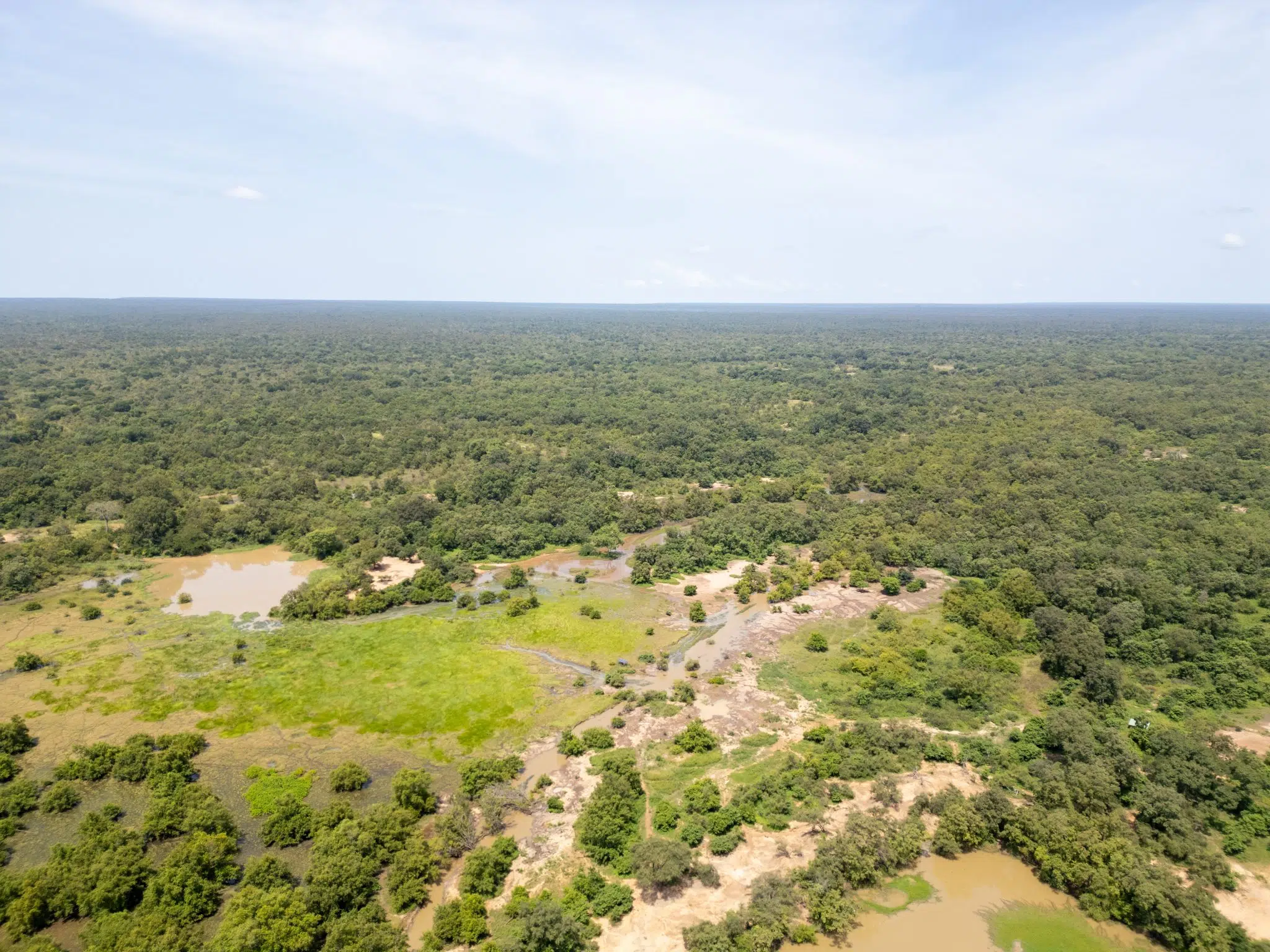
In a concerted effort to fortify one of the world’s most vital avian migration corridors, conservationists in Ghana are spearheading an ambitious project to protect the precious habitats traversed by millions of migratory birds along the African-Eurasian Flyway. This sprawling aerial highway, stretching from the Arctic to the southern tip of Africa, is a lifeline for numerous species, and its health is intrinsically linked to the ecological well-being of diverse landscapes across three continents. The initiative, a collaborative undertaking between the Ghana Wildlife Society (GWS), a BirdLife Partner, the UK’s Royal Society for the Protection of Birds (RSPB), and supported by the Ecological Restoration Fund (ERF), focuses intensively on Ghana’s Mole Ecological Landscape, a critical stopover and overwintering site.
The plight of migratory birds has gained increasing international attention as habitat loss, climate change, and human-wildlife conflict continue to threaten their perilous journeys. Every year, billions of birds embark on epic migrations, connecting ecosystems and acting as vital indicators of environmental health. Their incredible feats, such as crossing vast deserts and oceans, underscore the necessity of safeguarding their entire migratory route. The African-Eurasian Flyway alone supports over 250 species of migratory waterbirds and numerous landbirds, many of which are experiencing significant population declines. Organizations like BirdLife International and its global network of partners, including GWS, are at the forefront of these conservation efforts, advocating for policy changes, implementing on-the-ground projects, and raising public awareness. The Convention on Migratory Species (CMS), an international treaty under the United Nations Environment Programme, provides the legal framework for coordinated conservation actions across migratory species’ ranges.
The Mole Ecological Landscape: A Sanctuary Under Threat

At the heart of Ghana’s conservation efforts lies the Mole Ecological Landscape, a vast expanse in the country’s north-western region. Dominated by savannah woodland and grassland, interspersed with vital riverine and close-canopy forest patches, this landscape is a mosaic of biodiversity. Central to this area is the Mole National Park, Ghana’s largest wildlife protected area, which is currently on UNESCO’s Tentative List for World Heritage status due to its outstanding natural values. The park serves as an indispensable "place of refreshment" for migratory landbirds arriving from their arduous journey across the Sahara Desert. Species such as the European Pied Flycatcher (Ficedula hypoleuca), Willow Warbler (Phylloscopus trochilus), and Tree Pipit (Anthus trivialis) flock to Mole’s rich feeding grounds, replenishing their energy reserves before continuing their northward migration to breed. Beyond landbirds, the landscape also hosts migratory raptors like the Osprey (Pandion haliaetus), European Honey-buzzard (Pernis apivorus), and Montagu’s Harrier (Circus pygargus), alongside several of Ghana’s Critically Endangered vulture species, highlighting its significance for both resident and transient avian populations.
However, this vital ecosystem faces formidable challenges. Kwame Boafo, Programme Manager for the Research & Conservation Unit at Ghana Wildlife Society, vividly describes the annual transformation of the landscape: "The dry season is followed by extensive burning, both accidental and deliberate, which is done both by livestock grazers as well as those trying to mitigate wider fire damage." This cycle of fire, exacerbated by slash-and-burn agricultural practices, degrades habitats, reduces food availability, and fragments critical wildlife corridors. Furthermore, human-wildlife conflict, including crop-raiding by elephants and other wildlife, poses ongoing challenges for local communities, creating tensions that can undermine conservation initiatives. The delicate balance between human livelihoods and biodiversity protection is a constant negotiation in this dynamic environment.
A Holistic Approach: Community-Led Conservation and Restoration
Recognizing that effective conservation must integrate human well-being with ecological health, the ERF-supported project champions a community-centric approach. A key strategy has been the establishment and formal inscription of Community Resource Management Areas (CREMAs). These legally recognized entities empower local communities to participate directly in the sustainable management of their natural resources and the landscape. Boafo explains, "A CREMA gives a community more power over their own resources and supports them to more fully participate in decision-making and benefit-sharing."

One notable success has been the creation of the Kananto-Kabampe CREMA. These communities, strategically located between two protected areas, previously represented a gap in comprehensive resource management. The Ghana Wildlife Society worked tirelessly with them, overcoming initial skepticism and building trust, to establish this CREMA. This process involved extensive dialogues, community meetings, and demonstrating the tangible benefits of sustainable land management. The official inscription of the new CREMA marks a significant milestone, providing a robust framework for community engagement and shared responsibility. This model aligns with global best practices in conservation, recognizing that local communities are often the most effective stewards of their immediate environment when given the tools and autonomy to do so.
Complementing the CREMA initiative, a significant focus is placed on ecological restoration. Degraded areas within the landscape are being revitalized through the planting of native tree species. The project aims to plant at least 10,000 young trees by its conclusion, with 5,000 already established with the help of local communities. These are not merely ecological endeavors; they are intertwined with community livelihoods. Key species like shea (Vitellaria paradoxa) and dawadawa (Parkia biglobosa) are chosen not only for their ecological importance in providing cover for wildlife and restoring ecosystem services but also for their economic value. Shea nuts, for instance, are a major source of income for approximately 90% of women in the Kananto-Kabampe CREMA. The project supports a nursery where seeds of these species are propagated, and continuous monitoring ensures the survival of the planted seedlings, a critical aspect in the harsh dry environment of northern Ghana. "Planting is easy, keeping them alive is harder," Boafo remarks, emphasizing the need for strategic planting and meticulous care.
Empowering Livelihoods and Scientific Insight
Beyond tree planting, the project implements a suite of initiatives designed to diversify and strengthen community livelihoods, thereby reducing pressure on natural resources. Training in agroforestry techniques helps farmers increase yields sustainably, while efforts to connect communities to external markets ensure better returns for their produce. A bee-keeping initiative is another vital component, recognizing the critical role of bees as pollinators for many of the native trees, including shea, that communities rely on. Honey production also provides an additional income stream, further incentivizing conservation. The rationale is clear: "when communities have more money, there will be less pressure to venture into the park or to cut trees," Boafo states, highlighting the direct link between economic empowerment and reduced environmental encroachment.

In parallel with these community-led actions, the project integrates scientific monitoring through citizen science programs. Local communities are trained and engaged in deploying passive acoustic monitoring devices to record bird activity. This innovative approach allows researchers to compare bird populations and activity across degraded, restored, and non-degraded areas, providing invaluable data on the effectiveness of restoration efforts. Such data is crucial for adaptive management, allowing conservation strategies to be refined based on scientific evidence. The engagement of citizens in scientific data collection also fosters a deeper understanding and appreciation for biodiversity among the local population.
Overcoming Obstacles and Fostering Optimism
The path to conservation is rarely smooth, and the project in Mole faces its share of significant hurdles. The pervasive issue of slash-and-burn agriculture remains a challenge, with fires often spreading beyond intended areas into farms and protected reserves. The harsh climatic conditions, characterized by prolonged dry seasons and limited rainfall, necessitate careful planning and ecological understanding for tree restoration to succeed. Furthermore, the initial skepticism from communities, often wary of external interventions and concerned about their livelihoods, required considerable effort to overcome. Balancing the immediate needs of communities with long-term conservation goals, particularly when faced with issues like human-wildlife conflict and limited compensation resources, demands continuous dialogue and innovative solutions.
Despite these challenges, Kwame Boafo exudes optimism, rooted in the growing willingness of communities to collaborate. "We’ve seen how these communities, despite the challenges they face and sometimes varying appreciation for wildlife, are willing to come together and work with us. The trust is building, but it has been a process." He recounts how researchers observing birds eventually helped communities understand the project’s true intent, shifting perceptions from potential land-grabbing to genuine conservation. This evolving relationship underscores a fundamental principle of modern conservation: "Conservation is about both people and nature. We’ve been able to establish the link between the people and nature, and we are hoping to build on this." The humorous anecdote of burned acoustic monitoring devices still recording data serves as a testament to the resilience of both nature and the tools used to study it, symbolizing the project’s enduring spirit.

The work in Ghana’s Mole Ecological Landscape represents a microcosm of the global effort to protect migratory species and their habitats. By integrating scientific research with community empowerment, and by addressing both ecological degradation and socio-economic needs, the project offers a replicable model for flyway conservation worldwide. The long-term implications are profound, contributing not only to the survival of iconic migratory birds but also to the resilience of local communities, the health of critical ecosystems, and the broader goals of sustainable development and biodiversity preservation. The commitment of partners like the Ghana Wildlife Society, RSPB, and the Ecological Restoration Fund serves as a powerful reminder that interconnectedness defines not only the lives of migratory birds but also the success of conservation itself.