
It was a golden afternoon in late August 2024, the sky a tapestry of velvet hues at its edges, softened by the distant haze of dust, smoke, and an expansive horizon. Botanist Molly Boyter, a veteran of the Bureau of Land Management’s (BLM) Wenatchee Field Office since 2010, navigated a small team of helpers through the gentle contours of a draw, her braids swaying with each deliberate step. The scene unfolded across Washington’s vast, blue-gray smudged hills, a precious remnant of the shrub steppe ecosystem – one of the last fragments not yet claimed by agricultural expansion. Here, on a high plateau east of Wenatchee, most of the resilient native flora had already completed its annual cycle, turning vibrant blossoms into papery seed pods. This was precisely why they were there: for the vital, unassuming power held within these seeds.
Their primary targets included mountain coyote mint, identified by its silvery-leaved clumps along the draw’s base, exuding a surprisingly rich chocolate scent. While some plants still boasted long-tongued purple blossoms, the majority had transformed into desiccated orbs, their chambers safeguarding the next generation. Nearby, nettleleaf giant hyssop poked through the surrounding shrubs, its tall stems crowned with dry, columnar flowers that, when crushed, released a fragrance reminiscent of cleaning products, scattering like tiny fireworks between one’s fingers. Below Boyter, two additional BLM seed collectors and an American Conservation Experience intern worked meticulously on their knees, carefully filling bags with the precious coyote mint. This seemingly modest act of harvesting was, in fact, a cornerstone of a profound, quiet revolution aimed at restoring natural resilience to America’s increasingly vulnerable landscapes.
The Urgent Need for Restoration: A Nation Under Ecological Siege
Since the turn of the millennium, a nationwide initiative involving the BLM, other federal land agencies, and a growing consortium of partners has been steadily gaining momentum. Its objective: to dramatically increase the availability and strategic use of native plant seeds in restoration projects. The urgency is undeniable. Washington’s shrub steppe, for instance, a critical habitat for diverse wildlife and a natural buffer against environmental extremes, has been reduced to a mere 20 percent of its historic extent, a stark indicator of widespread ecological degradation.
Across the United States, a confluence of intensive development practices, the relentless spread of invasive species, and the escalating frequency and severity of wildfires and storms has ravaged native plant communities. These communities are not merely aesthetic; they are the bedrock of healthy ecosystems, crucial for supporting wildlife, filtering water, sustaining tourism, and underpinning ranching, fishing, and hunting industries. When these habitats are denuded, they become exponentially more vulnerable to future natural disasters, simultaneously diminishing their capacity to protect human communities from the impacts of these events. The economic toll is staggering; studies by the National Oceanic and Atmospheric Administration (NOAA) estimate that climate-related disasters cost the U.S. hundreds of billions of dollars annually, with healthy ecosystems providing invaluable, often unquantified, mitigation services.
Crucially, not just any native seed will suffice. Unlike agricultural crops, which have been selectively bred over millennia for broad adaptability, wild plant seeds are exquisitely tuned to specific environmental conditions – particular climates, soil compositions, moisture regimes, and elevations. A bluebunch wheatgrass seed collected from the Great Basin, for example, possesses genetic adaptations that make it far more likely to thrive amidst the climatic vagaries of that region than a counterpart sourced from the more northerly Columbia Plateau. The success of any restoration project hinges on using locally adapted native plants, a principle central to ensuring long-term ecological viability.
A Quarter-Century of Federal Initiative: The Genesis of Seeds of Success
The journey toward this nuanced approach to restoration began in earnest after particularly devastating wildfire seasons in 1999 and 2000. These infernos served as a stark wake-up call, prompting Congress to direct the Interior and Agriculture Departments to develop robust programs for reseeding landscapes with native plants following natural disasters and other disturbances. For the BLM, this marked a significant departure from historical practices. The agency had traditionally relied on fast-growing non-native species, such as certain forage grasses, primarily to prevent topsoil erosion and provide immediate fodder for cattle. However, these "go-to" species often led to reduced biodiversity and, paradoxically, sometimes paved the way for more aggressive invasive species like cheatgrass. "We decided, ‘Okay, we’re going to have to go out and really start from the beginning,’" recalled Peggy Olwell, who retired in 2025 as the lead of the BLM’s Plant Conservation and Restoration Program.
This realization led to the launch of the BLM’s Seeds of Success (SOS) program in 2001. SOS was designed to train collectors, meticulously plan seed gathering efforts, and establish a framework for preserving a diverse cross-section of U.S. plant diversity in seed banks. Its ambitious aim was to develop a resilient supply chain for native seeds, ready for use in critical restoration efforts. In the ensuing years, SOS trained thousands of individuals, expanding its collection efforts across a widening sweep of the country. This period saw the blossoming of vital collaborations with state and local governments, universities, tribal organizations, private farms, botanical gardens, nurseries, and non-profit groups. Land managers began integrating more native species into smaller, carefully planned restorations, such as those at Duffy Creek, and for larger-scale reseeding of tens of thousands of acres after Great Basin blazes, or rehabilitating industrial sites like oil drilling pads, mining operations, and areas denuded by highway construction.
Elevating the Strategy: The National Seed Strategy and its Vision
Despite the growth of SOS, federal investment often remained inconsistent, fluctuating with the immediate aftermath of major disasters like hurricanes and fires. Consequently, the quantity and diversity of the native seed supply lagged behind the ambitious vision. Moreover, the nascent native seed market was still largely dominated by easier-to-cultivate varieties developed from wild plants collected in northern regions, like Washington and Oregon, and selectively bred for agricultural convenience rather than local genetic integrity.
Recognizing the need for a more coherent and consistent path, 12 federal agencies, alongside hundreds of collaborators, coalesced in 2015 to launch the National Seed Strategy for Rehabilitation and Restoration. This comprehensive framework championed the principle of using "the right seed at the right time in the right place." Practically, this meant prioritizing source-identified native seeds – those collected from specific geographic locations and then propagated in larger quantities without selective interference – for planting in similar habitats within their species’ natural range. An accompanying business plan outlined a detailed blueprint, proposing a five-year investment of $358 million to dramatically expand seed availability through enhanced collections, improved processing capacity, increased farm grow-outs, critical research, and climate-controlled storage facilities to ensure long-term viability.
Overcoming Hurdles: The Supply Chain Challenge
Even with a robust strategy, the challenges ahead were formidable. Establishing new native seed farms proved particularly difficult. Growers faced a precipitous learning curve, lacking crop insurance options typically available to conventional agriculture. Many well-understood native plants demand highly specialized or unconventional farming methods. Furthermore, the cultivation requirements for untested species often necessitate laborious trial-and-error experiments. Some seeds, for example, might require passage through the digestive system of a bird to germinate, while desert plants may remain dormant until a precise, yet often mysterious, set of environmental conditions aligns. "They have a lot of secrets, and they don’t give up their secrets easily," observed Robby Henes of Southwest Seed, a Colorado-based seed producer.
Perhaps the most persistent issue was a fundamental mismatch between the unpredictable demands of land managers and the long lead times required by growers. Wildfires, by their very nature, do not provide advance warning, making it nearly impossible for managers to forecast future seed needs. Adding to this complexity, the federal government’s fiscal year often concludes in the autumn, coinciding with the winding down of fire season, leaving managers scrambling to expend remaining budgets on seeds and seedlings for immediate replanting. The imperative to act swiftly after a disturbance to prevent invasive weeds from establishing a foothold further compresses this timeline.
The consequence was often a forced compromise: species managers urgently needed were frequently unavailable on short notice, leading to less appropriate substitutions. Growers, conversely, cannot pivot instantaneously; producing commercial quantities of native seed from wild collections typically takes several years. By the time these seeds become available, the initial impetus for purchase might have waned, leaving growers with unsold stock. This volatile demand created an unstable market, hindering the industry’s ability to grow and, in turn, to consistently boost the native seed supply. It was a classic market failure demanding a market-based solution.
A Model of Success: BFI Native Seeds
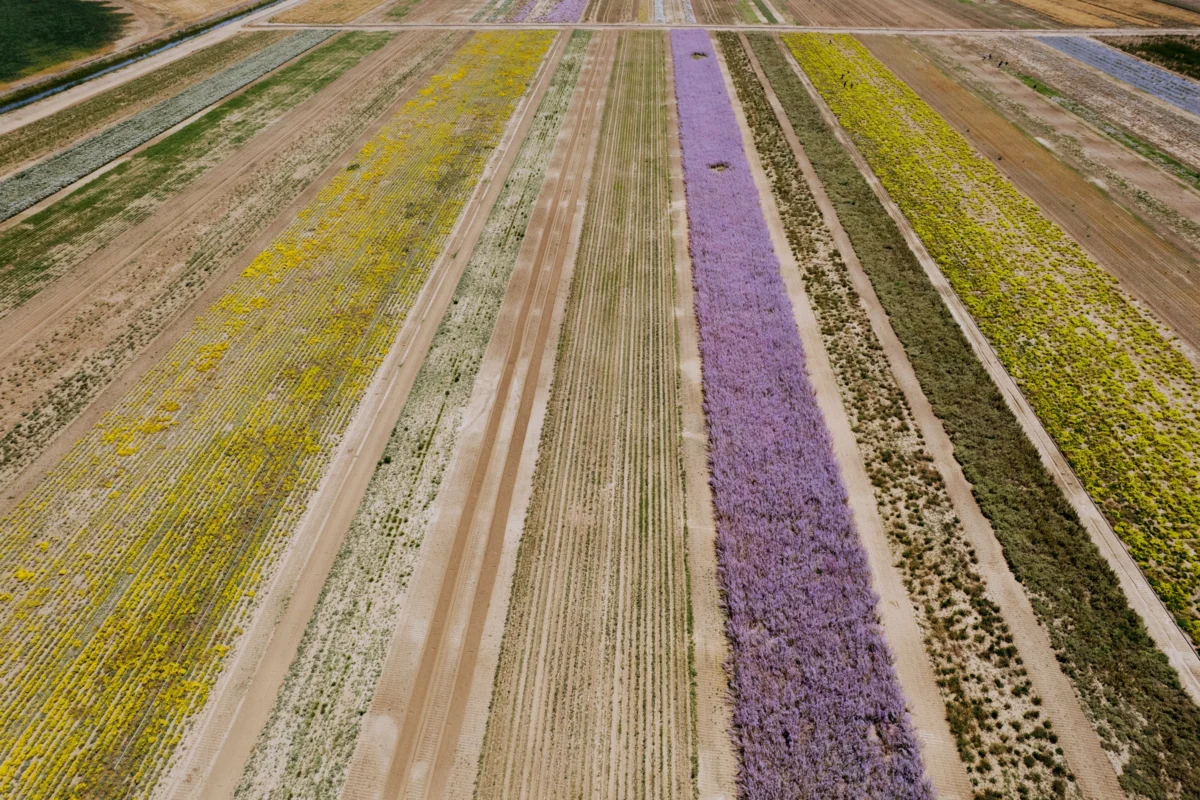
A combine, raising a plume of dust against a pale blue horizon, moved methodically across green fields near Warden, Washington. Irrigation water gurgled, feeding sprinklers that cast rooster tails over acres unlike any other conventional farm in this flat expanse. Here, at BFI Native Seeds, a sprawling 2,500-acre operation, the focus is not on food crops but on producing hundreds of thousands of pounds of native seed for ecological restoration. With a stock of mostly source-identified seed representing 1,000 plant varieties, and approximately 350 currently in cultivation, BFI stands as one of the industry’s largest and most crucial operations.
During a late summer visit, most wildflowers had already succumbed to the heat, but waist-high blazingstar still unfurled palm-sized yellow blossoms, their future seeds destined for the newly exposed soil where four dams were being removed from California’s Klamath River. Nearby, a tangled plot of showy goldeneye sunflowers awaited transport to Colorado’s Uncompahgre Plateau, while rows of diminutive Pacific lupine were being cultivated for Oregon’s Umatilla National Forest. Molly Boyter’s carefully collected mint seeds would eventually find their way to a field here, too, undergoing the transformation from wild harvest to commercial grow-out.
The genesis of BFI Native Seeds dates back to 1995 when father and son Jerry and Matt Benson, co-owners, began cultivating source-identified native plants for seed on land their family had farmed conventionally for decades. Jerry Benson, then a botanist for the state of Washington, had observed firsthand that restoration projects achieved greater success with locally harvested wild seed. Upon retirement, he channeled this insight into BFI, finding an early and willing partner in the BLM for initial restoration projects around Duffy Creek.
Since then, BFI has expanded into a 45-person operation, serving restoration projects across the vast American West. Its warehouses are now filled with enormous red metal boxes of unprocessed seeds and sofa-cushion-sized bags of planting-ready stock. Giant seed cleaners, with their intricate systems of tubes, conveyor belts, and shaker screens, line one wall, while specialized contraptions for more delicate plants like flowers occupy others. Seed mixers resembling giant drip coffee cones prepare batches for distribution. Working with such idiosyncratic plants requires not only specialized equipment but also deep botanical knowledge and creative adaptations of traditional tools. Lupine, for instance, explosively ejects its seeds over time, posing a unique harvesting challenge. "You might lose an eye because it’s like a BB war out there," Matt Benson quipped, as he surveyed a field. To counteract this, BFI employs landscaping fabric to cover the soil around rows of lupine, sometimes even constructing walls and ceilings of the same material to contain the seeds for collection using vacuums or brooms and dustpans.
A Watershed Moment: Legislative Funding and its Impact
When the National Seed Strategy launched in 2015, many parts of the country had few, if any, native seed farmers, and very few operations rivaled BFI’s scale or commitment to source-identified seeds. However, bolstered by the new federal framework, existing regional and state-level partnerships gained crucial momentum, and new ones rapidly formed. These collaborations began to dismantle barriers to grower entry and fostered the development of a larger, more diverse seed supply.
In New Mexico and Arizona, for example, the newly formed Southwest Seed Partnership – administered by the non-profit Institute for Applied Ecology (IAE) in collaboration with the BLM, U.S. Forest Service, National Park Service, and other agencies – began offering contracts that guaranteed farmer income by paying per acre, even in instances of crop failure. As these incentives improved, the region witnessed a remarkable transformation, going from a single farm growing local native seed to 15, alongside 6 nurseries producing seedlings. At the national level, the BLM also introduced multi-year contracts, ensuring farmers a stable income to cover costs irrespective of yield. This "seed money" provided crucial stability: once farmers delivered contracted amounts to BLM storage warehouses in Idaho and Nevada, they were free to sell from the same fields on the open market indefinitely, creating a sustainable business model.
Yet, it wasn’t until the passage of the 2021 Bipartisan Infrastructure Law and the 2022 Inflation Reduction Act that a truly transformative infusion of funds, approaching the ambitious scale of the National Seed Strategy’s original vision, began to flow into these local and regional networks. The Bipartisan Infrastructure Law alone allocated $200 million for National Seed Strategy implementation, directly supporting plant community restoration projects. The Inflation Reduction Act added an additional $325 million specifically for developing native plant materials to rehabilitate burn areas, alongside funding for a new interagency coordinating center and a national seed bank.
This influx of capital has had immediate and tangible effects. In Montana, the Confederated Salish and Kootenai Tribes are leveraging these funds to significantly expand the size and output of their forestry and restoration nursery. This expansion will not only bolster their efforts to replant whitebark pine – a culturally significant tree listed as threatened under the Endangered Species Act, whose nuts provide vital food for Clark’s Nutcrackers and grizzly bears – but also enable them to extend sales to other states and tribal nations, as confirmed by Stephen McDonald, head of the tribes’ Forestry Department.
The Southwest Seed Partnership is utilizing its new funding to develop sophisticated planning tools that assist the Forest Service in forecasting wildfire locations and other restoration needs, complementing existing "seed menus" tailored for specific habitats. Similarly, the Nevada Native Seed Partnership, another regional collaboration established in 2017, received millions. Plant ecologist Beth Leger at the University of Nevada, Reno, used some of these funds to acquire a walk-in refrigerator, dramatically expanding her lab’s seed cleaning and storage capacity. Within 16 months, her operation scaled from processing a handful of collections annually to hundreds, employing 12 people by 2025. The Great Basin Research Center in Utah is now dedicating resources to unlocking the germination requirements, water needs, and effective weed control strategies for crucial regional plants. In Nevada, the Department of Agriculture’s program offering free seed and expertise to new growers, indirectly supported by these funds, saw seven participants plant 70 acres in 2024.
Matt Benson, through his family’s business, has also observed clear progress, attributing it primarily to a significant cultural shift among land managers. Historically, the BLM often prioritized livestock grazing, sometimes at the expense of broader landscape health. Now, Benson noted, "you have a lot more people who have come out of school with a bigger ecological look, saying, ‘You know, I’d like to do something better.’"
Innovating for Resilience: Modern Tools and Future Adaptations
Molly Boyter is at the forefront of this new generation of innovators, and her work exemplifies what becomes possible when substantial funding and long-term strategic vision converge with generational change. Amidst BFI’s vibrant fields of blazingstar and lupine, a plot of woolly plantain stood out – a plant Boyter had contracted for seed. She is actively experimenting with this annual and other "scrappy natives" at restoration sites, testing their efficacy in outcompeting early invaders like cheatgrass, a critical strategy in preventing ecological backslides.
Managers like Boyter are also armed with new tools to better prepare for an increasingly uncertain climate future. An app, which debuted nationwide in 2024, is revolutionizing data collection and dissemination. Back in the draw outside Wenatchee, Boyter provided input as SOS crew lead Alex Krause meticulously entered the day’s mint collections on an iPad. This data feeds into interactive maps of all SOS collections, segmented by region, allowing managers to identify available seeds and guide future collection efforts to fill critical gaps. Boyter intends to use the app to strategically focus some of her collections on hotter, drier seed zones, which may serve as proxies for conditions other areas will experience in a warmer world, thus facilitating more effective and climate-adapted restoration outcomes.
The broader SOS effort itself is experiencing exponential growth. A collaborative agreement signed in 2023 between the BLM, the National Park Service (NPS), and the U.S. Fish and Wildlife Service roughly doubled the number of SOS seed collection teams operating in 2024 compared to the previous decade’s average. Later that fall, as Boyter’s team dispatched the last of the season’s grass, flower, and shrub seed collections – some large enough to support commercial grow-outs – to the program’s usual processor in Oregon, dozens of other teams across the country followed suit. This "tsunami" of new seeds, the largest volume since SOS’s inception, overwhelmed existing facilities into 2025, necessitating expansion into newly fitted operations.
Navigating Political Tides: Challenges and Enduring Optimism
However, even as SOS teams ramped up their efforts in 2025, they did so against a tumultuous backdrop within federal agencies. The incoming Trump administration moved to implement staff reductions and spending cuts. While the long-term ramifications for native seed and restoration programs remained unclear, setbacks quickly mounted throughout the year. Several key leaders opted for the administration’s buyout offer. Hiring freezes and the termination of probationary employees began to chip away at the next generation of talent within these crucial programs. Agency grant programs abruptly withdrew funding. The Institute for Applied Ecology (IAE), a linchpin in many regional partnerships, was particularly hard hit, facing 30 grant cancellations in September. This forced the Southwest Seed Partnership to drastically reduce the number of native plant fields it anticipated contracting for production in 2026, from 27 to a mere 8. (Update: After this article went to press in March, a federal judge ordered the Interior Department to restore the canceled grants to IAE and other groups, signaling a potential reprieve.)
Despite these challenges, indications suggest that efforts to advance the National Seed Strategy will continue, albeit potentially at a reduced scale and pace. "Folks on both sides of the aisle see value to this," Fred Edwards, acting BLM plant conservation and restoration program lead, stated last year. In January, Edwards confirmed that the new interagency seed center remained on track. More broadly, he explained, the seed strategy aligns with stated administration priorities, including "responsible minerals and energy production, livestock and timber harvesting, and restoration of habitat connectivity and big game migration corridors." He emphasized, "Native seed plays a critical role in supporting these efforts by enabling the reclamation of public lands."
Even if federal funding or collaboration contracts face further reductions, the substantial capacity and physical infrastructure built through expanded federal investments over the past few years have created a degree of resilience among the seed initiative’s local, state, tribal, and non-profit partners. While many participants expressed discouragement over recent developments, the prevailing sentiment was a determination to press on however possible.
The Unseen Power of a Seed: Broader Implications
Within all these tireless efforts, an endemic optimism persists. And rightly so, for what is more hopeful than a tiny seed, brimming with the potential for life and renewal? The extreme storms, fires, floods, and droughts predicted by climate models are not distant threats; they are already manifesting, and their severity is only projected to worsen. In the face of such overwhelming challenges, there is no viable alternative but to persist in rebuilding and bolstering the native ecosystems that protect, delight, and enrich us all. These vital ecological systems provide clean water, fresh air, abundant wildlife, and critical buffers against environmental extremes.
As Molly Boyter drove back to Wenatchee that golden afternoon, several large wildfires continued to burn across Washington, contributing to the record-breaking 2024 fire season in the Northwest. She pointed out a significant gap in the sagebrush, a scar from an older blaze, and her phone buzzed with an alert for yet another. The fire had ignited in a place where Boyter’s crew had recently collected grass seed – just in time, a poignant reminder of the race against an accelerating climate and the quiet, enduring power encapsulated within a seed.
This story originally ran in the Spring 2026 issue as “Seeding a Movement.”