
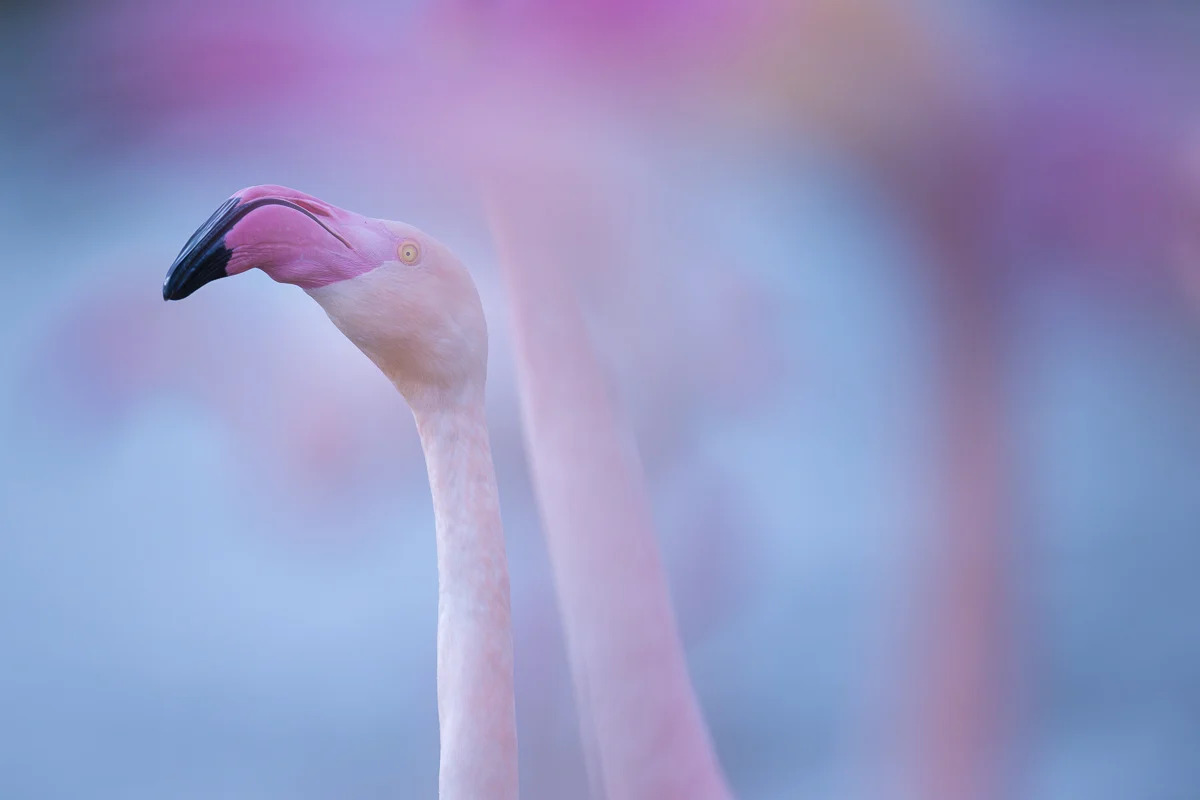
In the intricate realm of visual storytelling, the deliberate use of foreground blur has emerged as a sophisticated technique, transforming conventional wildlife photography into evocative art. Far from being a mere technical byproduct, the strategic softening of elements positioned between the camera and its subject plays a subtle yet profoundly powerful role in shaping the atmosphere of an image. This intentional blurring does not detract from the main subject; rather, it serves as a sophisticated compositional device, guiding the viewer’s eye, elicking a specific mood, and imbuing the photograph with an emotional depth that unyielding sharpness alone cannot always convey. At its core, photography is the pursuit of moments capable of being transformed into meaningful visual narratives. In this pursuit, blurs become indispensable tools, aiding in the metamorphosis of a simple scene into an image that transcends mere depiction, instead expressing and suggesting a richer, more nuanced reality.
Defining Foreground Blurs: Beyond Sharpness
Foreground blurs are a distinct photographic technique involving the purposeful placement of an object or element between the camera lens and the primary subject of the image. This interposed element, when rendered out of focus in the immediate foreground, generates soft, ethereal blurs that partially obscure the subject without diminishing its visual prominence. Instead of acting as a distraction, these blurs are meticulously designed to enhance the overall image by introducing layers of perceived depth, spatial context, mystery, and profound emotional nuance. The technique leverages the photographic principle of selective focus, where a narrow depth of field isolates the subject while rendering surrounding elements indistinct. This approach crafts an experience that draws the viewer inward, inviting a more intimate connection with the subject and its environment.

When applied with mastery, foreground blurs meticulously guide the viewer’s gaze along a carefully composed visual path – a natural journey the eyes undertake when navigating a photograph. The main subject invariably remains central to this journey, yet the presence of these soft blurs introduces subtle cues about the broader environment, the prevailing mood, or even the underlying narrative context of the scene. It transcends being merely a compositional trick; it evolves into a potent storytelling instrument that compels the viewer to look closer, to linger, and to connect more profoundly with the image as a cohesive whole. An additional, often celebrated, attribute of foreground blurs is their capacity to infuse an image with a distinctly painterly quality, evoking a sense of authenticity and artistry – as if the photograph had been meticulously composed and rendered with the nuanced strokes of a canvas painting.
A Historical Lens: Evolution of Impressionistic Wildlife Photography
While the concept of selective focus has been fundamental to photography since its inception, the conscious and artistic application of foreground blur in wildlife imagery has gained particular prominence in recent decades. Early wildlife photography, often constrained by slower lenses and film speeds, prioritized absolute sharpness and clear documentation of species. The advent of faster lenses with wider apertures (e.g., f/2.8, f/4), coupled with advancements in digital sensor technology allowing for higher ISO sensitivities without prohibitive noise, democratized the ability to achieve shallow depth of field. This technological evolution empowered photographers to experiment more freely with focus, pushing beyond purely documentary aesthetics towards more artistic and impressionistic interpretations.
The influence of art movements, particularly Impressionism, which emphasized light, movement, and subjective perception over precise detail, can be seen in the modern embrace of foreground blur. Photographers began to consciously use blur as a means to convey atmosphere, emotion, and the elusive nature of wild subjects, rather than just as a limitation of their equipment. This shift paralleled a broader trend in nature photography, moving from purely scientific illustration to a more interpretive, expressive art form. The timeline of this evolution isn’t marked by specific dates but rather by a gradual, collective refinement of technique and artistic vision within the community, championed by influential figures who demonstrated the profound impact of soft focus on emotional resonance. Today, foreground blur is recognized not as an amateur’s mistake, but as a deliberate and powerful tool in the wildlife photographer’s repertoire, often seen in award-winning images that prioritize mood and narrative over clinical detail.

Crafting Narrative and Emotion: The Psychological Impact
The psychological impact of foreground blur on a viewer is multi-faceted. By partially obscuring the subject or its immediate surroundings, it creates a sense of intrigue and invites the viewer to actively engage with the image, mentally completing the scene. This element of "mystery and revelation," as described, fosters a deeper connection. The softness inherent in blurred elements can evoke feelings of tranquility, intimacy, or even melancholy, depending on the context and color palette. For instance, the opening photograph of vultures, with the soft blur of other birds in the foreground, immediately suggests a dynamic, perhaps chaotic, environment while simultaneously isolating the sharp subject, drawing attention to its solitary intensity amidst the flock. This technique mirrors how our eyes perceive the world, where our primary focus is sharp, but peripheral elements are naturally softer, making the photographic representation feel more organic and authentic.
Moreover, the foreground blur acts as a visual filter, stripping away distracting details and directing the viewer’s attention with greater precision. This deliberate simplification enhances the subject’s prominence, allowing its form, expression, or interaction with its environment to become the undisputed focal point. When combined with carefully considered lighting, such as the low, crepuscular light described in the Capercaillie example, the effect is further amplified, transforming a simple observation into a compelling narrative rich with atmosphere and unspoken emotion. The subtle layering of visual cues allows the viewer to intuit more than what is explicitly shown, creating a more immersive experience of the scene and fostering a profound empathy for the wild subject.
The Natural Palette: Leveraging Environmental Elements

The beauty of foreground blur lies in its adaptability, often requiring photographers to experiment with whatever natural elements are available in a given moment. This creative improvisation is a cornerstone of the technique.
-
Flora as Filters: Plant-based elements such as branches, leaves, flowers, or grasses are among the most commonly utilized natural filters. A delicate veil of out-of-focus foliage can frame a subject, creating a sense of intimacy or suggesting the dense habitat it occupies. For instance, in the photograph of the Pyrenean Capercaillie, local shrubs and underbrush form a natural filter, softening the composition and adding depth. This layer of vegetation subtly frames the bird without overpowering it, enhancing the scene further by the low, crepuscular light of early morning, which casts long shadows and imbues the forest with quiet mystery. Such moments, where light, subject, and environment align, elevate photography beyond mere documentation into profound storytelling.
-
Fluid and Formless Elements: Water droplets, mist, snow, or even sand can be leveraged to create soft, abstract blurs that add texture and mood. A gentle cascade of water in the foreground might evoke movement and fluidity, while falling snow can create a dreamlike, almost painterly, quality. These elements are particularly effective in conveying the environmental conditions of the scene, immersing the viewer in the moment.
-
Geological Features and Other Animals: Rocks, eroded formations, or even the blurred forms of other animals can serve as compelling foreground elements. The photograph of vultures exemplifies this, where the only available element for blur was, in fact, other birds at the feeding site in the Pyrenees. This demonstrates a rare precision of overlap, but the principle holds for other situations where multiple animals allow for such creative layering. The Razorbills image, too, likely benefits from the blurred forms of other seabirds or the texture of the nesting cliffs.

-
Light and Shadow as Sculptors: Beyond physical objects, light and shadow themselves can act as powerful foreground "blurs" or atmospheric modifiers. As demonstrated in the Goshawk image, a carefully adjusted exposure and warm white balance can enrich the atmosphere, making it almost tactile. The interplay between illuminated and shaded areas reinforces a sense of three-dimensionality, subtly sculpting the subject within its environment. This technique guides the viewer’s eye toward the focal point with both clarity and depth. Photographs employing these techniques often lean towards minimalism, yet successfully convey a strong sense of the surrounding environment, hinting at the subject’s relationship with its habitat, or suggesting the specific moment and, by extension, the animal’s behavior and habits. This subtle layering of visual cues allows for an intuitive, immersive experience.
Ethical Imperatives and Field Craft: Respecting the Wild Canvas
A critical aspect of employing foreground blurs in wildlife photography is the setting in which one operates and the degree of control achievable over the environment and the subject. Ethical considerations are paramount. When photographing less skittish species from a hide, there may be opportunities to subtly intervene or even recreate elements of the scene, shaping it according to an artistic vision and carefully planning the shot. This might involve positioning a specific branch or piece of foliage to achieve the desired effect, always ensuring that such interventions do not harm the environment or habituate the animals.
However, in the vast majority of wildlife encounters, photographers lack this level of control. The approach must be cautious and respectful, always prioritizing the well-being of the animal and its natural behaviors. Disturbing wildlife for a photograph is an unacceptable practice within responsible nature photography. In these common scenarios, the best strategy often involves immense patience, waiting for the moment to naturally unfold – an art form in itself. These "photographic hunts," characterized by few preconceived ideas, involve a unique and often serendipitous interaction with the wild. This pursuit of unscripted moments, driven by the environment and the animals’ natural behavior, is what lends much of its appeal to wildlife photography. It demands a high tolerance for failure but frequently yields the most significant and authentic rewards. The image of the Fallow Deer, perhaps peeking through foliage, perfectly encapsulates this blend of patience, opportunistic framing, and ethical distance.

Strategic Application: Best Genres and Dynamic Challenges
The application of foreground blur is not universally suitable across all genres of wildlife photography. The most suitable genre for experimenting with this technique is undoubtedly portrait photography, where the subject is relatively static or its movement is predictable. In such instances, the softness of an ethereal atmosphere aligns harmoniously with the intended meaning of the image, emphasizing character, emotion, or a sense of peace. The Goshawk, the European Bison, or the Arctic Fox portraits are prime examples where the technique enhances the contemplative nature of the images.
Conversely, in highly dynamic scenes—such as birds in flight, mammals in pursuit, or other fast-paced action sequences—the speed at which events unfold often renders this technique nearly impossible to apply effectively. The fleeting nature of these moments leaves little room for deliberate compositional intervention, as the priority shifts to capturing the decisive action with critical sharpness. While some motion blur can be incorporated creatively in dynamic shots, a foreground blur as defined here typically requires more control over the scene and the photographer’s position relative to both the foreground element and the subject. The Red Kite in flight, for instance, showcases sharp detail against a blurred background, but introducing a foreground blur would be extremely challenging without compromising the clarity of the primary subject.
Mastering the Blur: Techniques and Control

Achieving effective foreground blurs involves several technical and creative considerations:
-
Placement of Elements: The objects used to create foreground blurs can be positioned closer to the camera to increase the level of abstraction, resulting in larger, softer, more amorphous shapes. Alternatively, placing them closer to the subject maintains some of their form and highlights the element, especially if it adds valuable contextual content to the photograph. The choice depends on the desired artistic effect and the narrative contribution of the blurred element.
-
Coverage and Framing: Photographers can create soft "veils" that subtly wash over the entire image, imparting a dreamlike quality. More commonly, blur is used to partially cover different parts of the animal, often meticulously preserving the subject’s gaze or key features to maintain connection with the viewer. This selective coverage requires precise positioning and aperture control.
-
"Look-Throughs" and "Look-Overs": Two distinct approaches involve either seeking "look-throughs," where the camera is pointed through a small, natural opening in the foreground elements, effectively framing the subject, or "look-overs," which involve filling the bottom portion of the frame with a blurred foreground. The latter creates a sense of grounding and depth, inviting the viewer into the scene. The Song Thrush image, for example, might employ a look-through or partial look-over to frame the bird.

-
Focusing Challenges and Solutions: Depending on the type of blur and the complexity of the foreground, autofocus systems can sometimes struggle. In such instances, being prepared to switch to manual focus is crucial. While this might lead to a slight loss of pinpoint sharpness on the subject, it often allows for a more artistic and expressive rendering that prioritizes mood and atmosphere over absolute technical perfection. Embracing this slight deviation from conventional sharpness can open up new creative avenues.
Broader Implications and the Future of Wildlife Art
The widespread adoption and refinement of foreground blur techniques have significant implications for the broader field of wildlife photography. It pushes the discipline beyond its traditional role of mere documentation, elevating it to a more profound art form capable of evoking deeper emotional responses and fostering a greater appreciation for the natural world. By adding layers of mystery and beauty, these images can serve as powerful tools for conservation, inspiring empathy and a desire to protect the species and habitats they depict. When an image communicates a feeling, a sense of wonder, or the fragility of life, it resonates more deeply than a purely factual depiction.
This technique is also fully compatible with other creative photographic approaches, such as over- or underexposure for dramatic effect, utilizing movement and slow shutter speeds for artistic blur, employing backlighting to create ethereal halos, experimenting with double exposures, or venturing into outright abstraction. This versatility makes foreground blur a foundational creative tool, allowing photographers to combine it with other methods to forge a truly unique aesthetic.

Conclusion: An Invitation to Creative Exploration
Foreground blurs represent a creative technique with broad applicability, granting them considerable appeal among wildlife photographers seeking to imbue their work with artistic depth. There is nothing preventing its use across a wide range of situations, provided the photographer can exert at least some control over their position, the subject’s behavior, or the surrounding elements. This technique encourages experimentation and improvisation.
Creativity, as often observed, frequently emerges through trial and error, blossoming from the opportunity to work within one’s most familiar surroundings. Foreground blurs, however, allow for improvisation and inspiration to arise in a multitude of diverse contexts, pushing photographers beyond their comfort zones. Simultaneously, this technique offers a fresh and original way to photograph species that might be "recurring" or familiar, breathing new life into oft-captured subjects. This method has been successfully employed by masters, visionaries, and influential photographers who consistently bring their own unique aesthetic to their work. Therefore, any aspiring or established wildlife photographer is strongly encouraged to give this powerful and evocative technique a try, exploring its boundless potential to transform mere observation into profound artistic expression.