
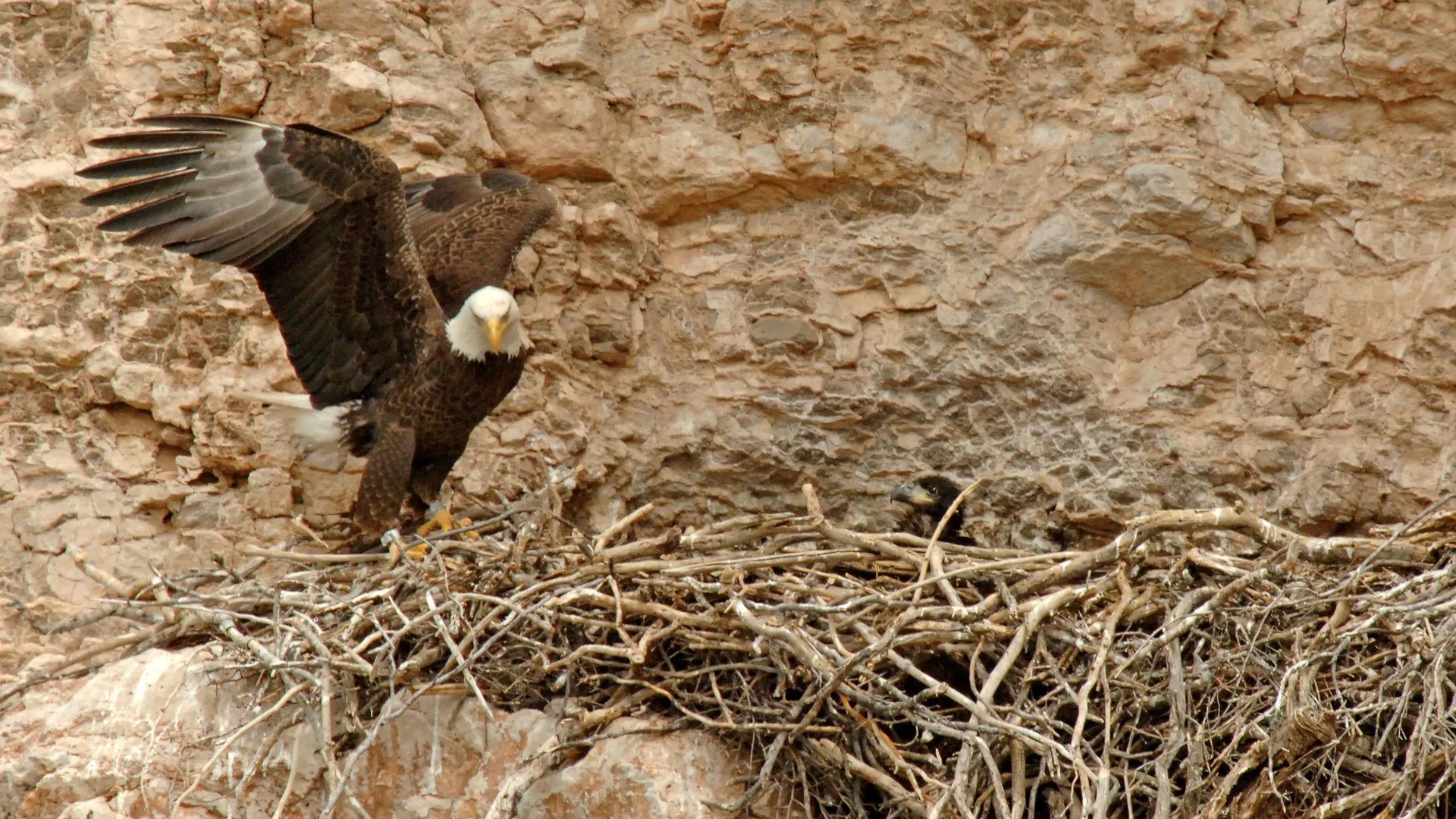
A recent groundbreaking study published in the Journal of Raptor Research has unveiled a surprising shift in the migratory patterns of Bald Eagles (Haliaeetus leucocephalus) originating from Arizona, revealing that these iconic raptors are undertaking unusual northward journeys rather than the traditionally observed southward migrations common among temperate region birds. This unexpected behavior challenges long-held assumptions about avian migration and underscores the remarkable adaptability of wildlife in the face of evolving environmental pressures. The research, titled "Northward Migrations of Nonbreeding Bald Eagles from Arizona, USA," further documents the unprecedented emigration of a single eagle that journeyed from Arizona to California, a finding that significantly re-evaluates previous understandings of dispersal rates within these populations. Researchers involved in the study conclude that southwestern Bald Eagles exhibit a highly exploratory nature, a trait likely honed to efficiently locate ephemeral food sources across vast landscapes. In an era defined by rapid climatic shifts and anthropogenic alterations to natural habitats, studies documenting such adaptive movements are increasingly vital for crafting effective conservation strategies and safeguarding essential travel corridors for vulnerable species.
Unraveling a Migratory Mystery: The Arizona Anomaly
The conventional wisdom dictates that migratory birds in North America, particularly those in temperate zones, typically head south during the colder non-breeding seasons to escape harsh winters and find more abundant food supplies. However, the Arizona Bald Eagles defy this pattern. Unlike their northern counterparts, Bald Eagles in Arizona commence their breeding season in the winter months, meaning their non-breeding period spans the summer and autumn. This unique temporal arrangement sets the stage for their anomalous migratory behavior. Instead of seeking southern refuges, these eagles embark on extensive journeys northward, venturing into states across the U.S. and even into southern Canada.
Dr. Caroline D. Cappello, the lead author of the study, expressed her intrigue regarding this divergent timing of seasonal movement. "Northward migratory behavior raises interesting questions about the recent and historical pressures that shape these movement strategies," Cappello noted, emphasizing the ecological puzzles presented by this finding. This phenomenon suggests that the drivers of migration for this specific population are distinct, likely influenced by local resource availability during their summer non-breeding period rather than the avoidance of winter cold. The Intermountain West, with its network of rivers and lakes, likely offers a mosaic of dynamic feeding opportunities during the warmer months, compelling these eagles to range widely in search of sustenance.
Methodology and Scope of the Groundbreaking Study
Between 2017 and 2023, a dedicated research team based in Arizona meticulously tracked the movements of 24 newly fledged Bald Eagles and two nonbreeding adults. Utilizing state-of-the-art satellite transmitters, the researchers were able to map the intricate pathways these birds navigated both within and beyond the borders of Arizona. While the movements of breeding Bald Eagles in Arizona are relatively well-understood, with most believed to remain in proximity to their nesting territories throughout the year, comprehensive data on the migratory and dispersal patterns of nonbreeding individuals had been conspicuously lacking.
The study’s methodology, involving long-term satellite telemetry, provided an unprecedented window into the life stages of these raptors. Researchers successfully monitored individual eagles for periods extending up to four years, capturing a significant portion of their early lives within the seven-year study timeframe. This sustained tracking allowed for a nuanced understanding of how movement patterns evolve with age and how these behaviors contribute to the overall survival and health of the population. Understanding the survival rates and movement patterns across different life stages – from newly fledged juveniles to nonbreeding adults – is crucial for scientists to gain a holistic perspective on the species’ ecological performance and how population-level processes are fundamentally shaped by individual behaviors.
Historical Habitats Endure: A Legacy of Key Stopover Sites
A significant revelation from the study was the enduring importance of certain aquatic habitats as crucial stopover sites for Bald Eagles. The tracked eagles frequently paused at many of the same lakes and rivers that were identified as vital gathering points in a much earlier study conducted in the 1980s. This remarkable overlap across several decades provides compelling evidence that these specific habitats have maintained their ecological significance, serving as essential waypoints and feeding grounds for multiple generations of Bald Eagles navigating the Intermountain Flyway.
The confirmation of sustained use of these historic sites underscores the critical need for their continued protection and management. These riparian corridors and associated water bodies act as vital arteries in the vast migratory network, providing not only food resources but also safe roosting and resting areas for eagles undertaking long journeys. The study further solidified the understanding that eagles of various ages, from juveniles to sub-adults, utilize these routes as they migrate to the northern U.S. and southern Canada. Dr. Javan M. Bauder, a coauthor of the study, USGS researcher, Assistant Unit Leader at the Arizona Cooperative Fish and Wildlife Research Unit, and Assistant Professor at the University of Arizona, emphasized this point: "Managing and conserving wildlife populations requires that we understand the movement of patterns of individuals of all age classes within those populations." This holistic approach acknowledges that conservation efforts must consider the diverse needs and behaviors of birds at every stage of their life cycle, not just the breeding adults.
The Exploratory Phase: Journeys of Young and Old Raptors
One of the study’s fascinating insights involved the observed refinement of migration pathways as eagles matured. While young, newly fledged eagles exhibited more expansive and seemingly less directed movements, those tracked for at least two years demonstrated increasingly precise and consistent migratory routes. Most birds that were monitored over multiple years returned to Arizona in the fall of their hatch year after spending the summer months roaming farther north. This suggests a learning curve in their migratory behavior, where initial exploratory flights help them establish optimal routes and resource-rich locations over time.
The researchers hypothesize that these young, exploratory eagles could be capitalizing on seasonal "food bonanzas" available in northern regions during the summer and autumn. Such opportunities might include the prolific spawning runs of salmon in Pacific Northwest rivers, abundant nesting waterfowl populations in northern wetlands, or carcasses of large mammals found in cooler climates. These temporary surges in food availability could provide crucial sustenance for young eagles still honing their hunting skills and building the energetic reserves necessary for continued development and future breeding success. Determining the precise nature of these food sources will necessitate additional, targeted research, potentially involving dietary analyses or more granular tracking data. The ability to exploit these fluctuating resources highlights the adaptive flexibility of the species, allowing them to thrive even in environments with dynamic resource distributions.
The California Conundrum: A Glimpse into Emigration Dynamics
Among the numerous journeys documented, one particular eagle’s odyssey provided a rare and poignant insight into the complexities of population dynamics and dispersal. This individual eagle, tracked from its Arizona origins, traversed an astonishing ten U.S. states and four Canadian provinces during its early life. After these extensive travels, it ultimately appeared to settle in northern California, where, at four years old, it showed signs of establishing a breeding territory. This "decision" to emigrate from its natal population and potentially contribute to a different breeding population challenges earlier ideas about the frequency and patterns of dispersal in Bald Eagles.
Emigration, the act of an individual leaving its birth population to join another, is notoriously difficult for scientists to measure accurately. Yet, it plays a critical role in gene flow, population connectivity, and the long-term resilience of a species. The loss of this particular eagle at such a pivotal stage of its life, just as it seemed poised to provide invaluable data on dispersal and breeding success outside its natal range, was particularly distressing for the research team. Dr. Cappello remarked that her death "underscored the ongoing risks these birds face," and highlighted the challenges in quantifying such elusive demographic parameters. Had she successfully bred in California, her progeny would have offered a direct measure of inter-state population exchange, offering rare insight into how often Bald Eagles hatched in Arizona disperse to other regions, a factor critical for understanding broader population health and genetic diversity.
Perilous Pathways: Threats Facing North America’s Raptors
Bald Eagles, despite their iconic status and remarkable recovery from historical declines, continue to navigate a myriad of hazards in an increasingly human-dominated world. The tragic death of the California-bound eagle by electrocution serves as a stark reminder of these persistent dangers. Electrocution from power lines and utility poles is an all-too-common cause of mortality for large birds of prey across North America. These structures, often placed prominently in open landscapes, provide convenient perching and nesting sites but can become lethal traps when wingspan exceeds insulation distances, leading to fatal contact between two energized wires or a wire and a grounded pole. Conservation organizations estimate that electrocution accounts for a significant percentage of raptor mortalities annually, particularly impacting juveniles and sub-adults who are still developing flight skills and spatial awareness.
Beyond electrocution, young raptors face a range of other anthropogenic threats. Poisoning from lead ammunition, consumed by eagles scavenging on hunter-shot carcasses, and secondary poisoning from rodenticides used to control pest populations, remain significant concerns. Collisions with rapidly expanding wind turbine infrastructure, though less frequent than electrocution, are an emerging threat in areas of high raptor traffic. Habitat loss and degradation due to urban expansion, agriculture, and resource extraction further reduce available nesting and foraging grounds. Compounding these issues is the pervasive uncertainty related to a changing climate, which can alter prey availability, water regimes, and the timing of critical ecological events, forcing eagles to adapt or perish. By meticulously studying raptors at every stage of life, including the extensive and often risky exploratory journeys of young birds, scientists can gather evidence-based insights. These data are crucial for formulating precise recommendations on which stopover sites are most important to protect, and identifying which types of infrastructure, particularly electrical systems, could be modified and retrofitted to significantly improve survival rates for Bald Eagles and other large raptors.
A Call to Action: Conservation Strategies for a Changing Landscape
The findings of this study provide a robust foundation for more targeted and effective conservation strategies. The research team strongly recommends future investigations into "route fidelity"—the consistency with which individual eagles utilize the same migratory pathways over successive years. As Dr. Cappello noted, "if consistent patterns exist it could help focus conservation efforts on specific, high-use areas along their migratory route." Identifying these predictable corridors would allow conservationists and land managers to prioritize protection efforts, ensuring the integrity of critical habitats and minimizing human-wildlife conflicts along these vital routes.
Furthermore, the study highlights the importance of comparing the unique northward migration patterns of Arizona Bald Eagles with those of other wildlife populations that migrate north from the southern edges of their ranges. Such comparative analyses would offer invaluable insights into the ecological trade-offs, energetic costs, and adaptive benefits associated with this less common northward migration strategy. Understanding these underlying mechanisms is crucial for predicting how other species might respond to environmental changes and for developing proactive conservation measures. This research can inform policy decisions regarding land use planning, infrastructure development, and the establishment of protected areas that transcend state and national borders, given that these eagles traverse U.S. and Canadian territories.
Climate Change as a Catalyst: Shaping Future Migratory Routes
The study’s implications extend far beyond the immediate conservation of Bald Eagles; they offer a microcosm of broader ecological responses to global climate change. As climate patterns shift, altering temperature regimes, precipitation, and the distribution of food resources, wildlife species are increasingly compelled to adjust their movements and life cycles. The northward migration observed in Arizona Bald Eagles could be an adaptive response to these changes, allowing them to exploit seasonal resource pulses that might be diminishing or shifting in their traditional ranges.
For instance, changes in snowmelt patterns and river flows could impact fish spawning events, while altered rainfall could affect wetland productivity and waterfowl nesting success. The exploratory behavior of young eagles, while risky, provides an evolutionary mechanism for discovering new, viable foraging grounds in a dynamic environment. This study underscores the urgent need for long-term ecological monitoring and adaptive management strategies. Conservation efforts must move beyond static protected areas and embrace dynamic approaches that account for shifting species distributions and migratory routes. Understanding these complex movement strategies is not merely academic; it is foundational for ensuring the long-term survival of Bald Eagles and countless other vulnerable species whose existence is inextricably linked to the health and connectivity of our planet’s diverse ecosystems.
Looking Ahead: Future Research and Adaptive Management
The journey of the Arizona Bald Eagles, marked by unexpected northward flights and challenging dispersal events, has opened new avenues for scientific inquiry and conservation action. Future research endeavors will undoubtedly focus on elucidating the specific environmental cues and physiological mechanisms that drive these northward migrations. Detailed studies into the dietary composition of these eagles at different stopover sites, coupled with fine-scale habitat analyses, could pinpoint the exact "food bonanzas" that draw them north. Genetic studies could also shed light on the degree of genetic exchange between the Arizona population and those in California or further north, providing crucial data on population connectivity.
Ultimately, this research stands as a powerful testament to the necessity of continuous, data-driven science in informing conservation policy. As climate and landscapes continue to change at an unprecedented pace, studies that meticulously document how wildlife adjusts its movements and behaviors are absolutely vital for designing resilient conservation strategies. By understanding the intricate lives of species like the Bald Eagle, scientists and conservationists can work collaboratively to protect key travel corridors, mitigate anthropogenic threats, and ensure that these magnificent raptors continue to soar across North American skies for generations to come.