
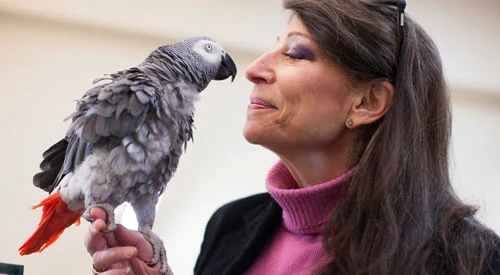
Dr. Irene Pepperberg, a renowned scientist known for her groundbreaking work with avian cognition, found herself in a precarious situation in Dubai as escalating geopolitical tensions threatened to trap international travelers. What began as a professional engagement quickly devolved into a personal odyssey of uncertainty and resilience, underscoring the profound challenges faced by civilians caught in the crossfire of regional instability. Dr. Pepperberg’s account, a stark reminder of the human cost of conflict, details her harrowing experience of flight cancellations, bureaucratic hurdles, and the ultimate reliance on the generosity of donors to secure her safe return to the United States on March 9th.
The Initial Disruption and Bureaucratic Maze
Dr. Pepperberg’s ordeal commenced with a series of flight cancellations that left her stranded in Dubai, a bustling hub suddenly transformed into a temporary holding pen for a growing number of displaced individuals. The initial disruption was attributed to the rapidly evolving security situation in the region, which led to widespread air traffic control restrictions and the grounding of numerous commercial flights. The airline, Qatar Airways, experienced a complete grounding of its flights from Dubai to Doha, a critical transit point for U.S.-bound travelers, exacerbating the already dire circumstances.
The author recounts her repeated attempts to secure passage home, characterized by daily calls to the State Department. While acknowledging the "extremely friendly" demeanor of the officials she encountered, Dr. Pepperberg highlights a disconcerting lack of tangible assistance. A particularly frustrating episode involved a late-night call from the State Department offering a flight to Dulles International Airport near Washington D.C. She was instructed to pack and await an email detailing terminal and departure information. However, after a four-and-a-half-hour wait with no communication, her attempts to follow up proved futile. She discovered a critical disconnect within the State Department’s assistance system, where "input" desks, responsible for gathering information on stranded citizens, operated independently of the "processing" desks, tasked with facilitating departures. This bureaucratic chasm meant that despite receiving an offer, the necessary details for her onward journey never materialized.
The Unforeseen Costs and Limited Support Systems
As days turned into weeks, the financial strain of an extended hotel stay began to mount. Dr. Pepperberg learned that the United Arab Emirates’ offer to cover accommodation and food for stranded travelers was exclusively for those flying with Emirates Airlines. Fortunately, she had been proactively sourcing food from a nearby supermarket, significantly reducing her daily expenses compared to hotel dining. However, the limited availability of Emirates flights, primarily chartered and inaccessible to the general public, offered little immediate relief.
The author’s narrative paints a grim picture of the limited support structures available to private citizens caught in such crises. While U.S. news reports at the time suggested significant evacuation efforts, Dr. Pepperberg’s experience suggests that these efforts were largely directed towards embassy and consulate staff and their families, leaving private citizens to navigate the complex and often unresponsive official channels. The psychological toll of being in a war zone, coupled with the constant barrage of "Shelter in place" alerts that lacked practical application in her immediate surroundings, further amplified the sense of isolation and vulnerability.
The Lifeline of Philanthropy and a Glimmer of Hope
Amidst the deepening uncertainty, a pivotal moment arrived through an unexpected connection. A donor to The Alex Foundation, an organization associated with Dr. Pepperberg’s research, reached out regarding tax documentation. Upon learning of her predicament, the donor offered an extraordinary pledge: "Do whatever you have to do to get out and we’ll cover the expense!" This philanthropic gesture provided a much-needed lifeline, offering not just financial backing but also a renewed sense of hope.
This generous commitment proved instrumental in exploring potential escape routes. While some individuals were being "shepherded" to Oman, a lengthy and costly overland journey, this option was only viable for British citizens who could access U.K.-chartered flights from Oman. For Dr. Pepperberg, as a U.S. citizen, this pathway was not an option. However, the financial support enabled her to remain vigilant for emerging travel opportunities.

The breakthrough came via another airline alert: Emirates was set to resume direct commercial flights to select U.S. cities. Dr. Pepperberg immediately accessed their website and discovered a single available seat on a business-class flight to New York City scheduled for Sunday, March 9th. The exorbitant cost gave her pause, but recalling her donors’ unwavering support, she proceeded to book the flight. This decision, made against a backdrop of grim geopolitical news, represented a significant turning point, offering a tangible prospect of escape from the escalating conflict. The author explicitly credits her donors for making her return possible, emphasizing their crucial role in her safe egress.
The Final Hurdle: Navigating Airport Chaos and Departure
The final days of her stay in Dubai were marked by continued anxiety. On Friday morning, a significant explosion near the airport, audible even through the hotel’s soundproofing, sent a fresh wave of alarm through the city. While the airport experienced a temporary closure, the incident underscored the volatile nature of the environment.
The author’s flight was scheduled for 1:00 AM on Sunday. The process of checking in proved to be a testament to the lingering inefficiencies and stress of the situation. Despite Emirates’ typical 48-hour check-in window, she was only permitted a partial check-in 12 hours prior to departure, a process that offered little reassurance. The uncertainty surrounding her boarding pass and the exact time of arrival at the airport led her to opt for an early arrival.
The scene at the airport was one of controlled chaos, with Dr. Pepperberg spending approximately an hour searching for assistance. Her persistence was eventually rewarded when a remarkably helpful woman inquired about her needs. Recognizing Dr. Pepperberg’s distress, she arranged for personalized assistance and even provided a wheelchair, which the author gratefully accepted given her heightened stress levels. After several hours in an "elegant lounge"—a perk of business class travel—she finally boarded the plane. The presence of in-flight Wi-Fi allowed her to send out crucial emails to concerned contacts, signaling her imminent departure: "I’m in the air."
The Long Road to Recovery and Reflection
The arrival on U.S. soil was met with profound relief. Despite the remaining hurdles of Customs, TSA security screenings (which she notes were surprisingly efficient given the concurrent government shutdown), a lengthy layover in New York, and the final flight to Boston, the author’s primary concern had evaporated: she was no longer in a war zone.
The subsequent month was dedicated to rescheduling numerous appointments and addressing logistical complexities that had arisen due to her prolonged absence. Dr. Pepperberg candidly admits to experiencing lingering symptoms of Post-Traumatic Stress Disorder (PTSD), a testament to the profound psychological impact of her ordeal. Witnessing even a fraction of life in a conflict zone has instilled in her a deep empathy for those who endure such conditions for extended periods.
Her colleagues in Dubai remain in contact, safe but understandably stressed. The group is actively exploring strategies to conclude their ongoing research studies without the necessity of Dr. Pepperberg’s return the following year. This pragmatic approach reflects the lingering uncertainties and the desire to avoid further exposure to volatile conditions.
As Dr. Pepperberg prepares to resume her regular blogging schedule focused on avian cognition and scientific research next month, her personal narrative serves as a powerful reminder of the fragility of civilian life in times of conflict. Her journey underscores the vital importance of philanthropic support and the resilience of the human spirit in overcoming adversity. The experience, while deeply challenging, has provided her with an invaluable, albeit harrowing, perspective on the realities faced by individuals living under the constant threat of war.