
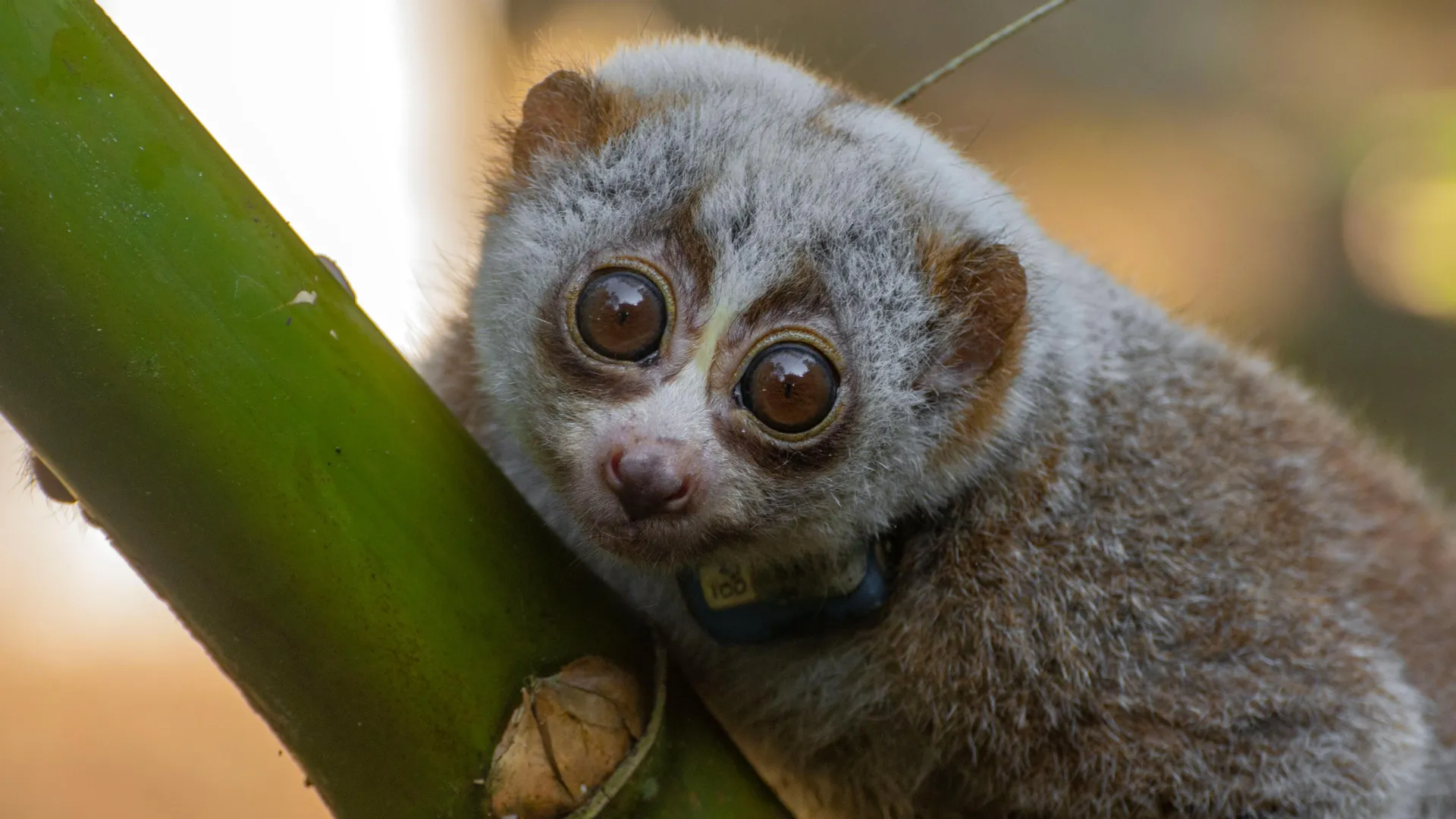
The stark finding, published in the esteemed journal Global Ecology and Conservation, challenges long-held assumptions about wildlife rehabilitation and release programs. Spearheaded by primatologist Professor Anna Nekaris OBE of Anglia Ruskin University, in collaboration with conservation group Plumploris e.V. and the University of Western Australia, the research meticulously tracked the post-release fate of Bengal slow lorises (Nycticebus bengalensis) in Bangladesh, revealing a sobering reality for a critically endangered species.
The Plight of the Slow Loris: A Global Conservation Challenge
Slow lorises, with their distinctively large, luminous eyes and seemingly docile expressions, are tragically popular in the illicit global wildlife trade. These captivating features, which endear them to potential buyers, have inadvertently made them one of the most heavily trafficked primate groups worldwide. The demand fuels a cruel trade where animals are often illegally captured from their forest homes, subjected to brutal conditions, and frequently have their teeth crudely removed without anesthetic to prevent their venomous bite, leading to severe infections and often death.
All eight recognized species of slow lorises – including the Bengal slow loris, Javan slow loris, Sunda slow loris, and Pygmy slow loris – face severe threats. They are listed by the International Union for Conservation of Nature (IUCN) as Critically Endangered, Endangered, or Vulnerable, reflecting alarming population declines across their native ranges in Southeast Asia. This threatened status means that slow lorises are frequently the subjects of rescue operations, confiscated from illegal traders or saved from dire captive conditions. Consequently, release into natural habitats has become a cornerstone of conservation efforts, driven by the noble intention of bolstering dwindling wild populations. However, the recent study casts a critical light on the efficacy and potential pitfalls of such well-meaning interventions.
The illegal wildlife trade is a multi-billion dollar industry, often ranking alongside arms and drug trafficking in terms of global scale and profit. Slow lorises are primarily trafficked for the exotic pet market, but also for traditional medicine, where their body parts are believed to possess various therapeutic properties, and for use in tourist photo opportunities. This pervasive demand, coupled with rapid habitat loss due to deforestation for agriculture, palm oil plantations, and logging, exerts immense pressure on slow loris populations, making effective conservation strategies more urgent than ever.
Unveiling the "Death Trap": The Bangladesh Study
The new research focused on nine Bengal slow lorises that were released into a national park in northeastern Bangladesh, a site previously utilized for wildlife reintroductions. To monitor their movements and survival post-release, scientists fitted each loris with a specialized radio collar. This allowed for precise tracking of their dispersal patterns, activity levels, and, crucially, their ultimate fates.
The results painted a grim picture. Only two of the nine animals managed to survive beyond the initial six-month monitoring period. A devastating three lorises perished within a mere 10 days of their return to the forest, while four more succumbed within six months. Researchers were able to recover four of the seven deceased animals, and post-mortem examinations provided critical clues to their demise: all recovered bodies bore unequivocal evidence of having been killed by other slow lorises.
Territorial Conflicts and the Primate’s Poisonous Bite
The study’s findings underscore a fundamental aspect of slow loris ecology: their extreme territoriality. Slow lorises are solitary, nocturnal animals, fiercely protective of their home ranges. This territorial aggression is further compounded by another unique characteristic: they are the only venomous primates in the world. Their venom is produced by a brachial gland on their upper arm, which they lick to mix with saliva, delivering a toxic bite through specialized comb-like lower incisors. This venom can cause anaphylactic shock in humans and is potent enough to inflict serious harm or death upon other slow lorises, serving as a powerful deterrent in inter-species conflicts.
The recovered slow loris carcasses exhibited clear bite wounds, primarily on the head, face, and digits – tell-tale signs of lethal territorial encounters. These injuries strongly indicated that the released lorises were entering established territories, triggering violent confrontations with resident slow lorises that often proved fatal for the newcomers. The "death trap" phenomenon, therefore, was not due to predation by other species or starvation, but rather an internal conflict within their own species, exacerbated by the dynamics of release into an already populated environment.
Further analysis revealed a correlation between an animal’s time in captivity and its post-release survival. Lorises that had spent longer periods in human care tended to survive for fewer days after release, suggesting a potential erosion of wild instincts or an inability to adapt to the rigors of forest life. Additionally, the released lorises exhibited heightened alertness and more extensive movement patterns compared to their wild counterparts. While increased movement might initially seem beneficial, in this context, it likely signified desperate attempts to locate suitable, unoccupied territories, or to evade hostile encounters.
Intriguingly, the two surviving lorises distinguished themselves by traveling across significantly larger areas than those that perished. This behavioral pattern suggests that their survival hinged on their ability to successfully disperse and establish new home ranges far from existing slow loris populations, thereby avoiding direct territorial confrontations. This observation offers a crucial insight: successful reintroduction might depend less on the animal’s physical condition alone and more on its ability to navigate and avoid conflict within a complex social landscape.
The Broader Context of Wildlife Release Programs
The challenges highlighted by this study are not unique to slow lorises. While large and charismatic species, such as tigers, rhinos, or giant pandas, often benefit from extensive post-release monitoring – sometimes involving satellite tracking, dedicated field teams, and substantial financial investment – many smaller species, particularly those involved in high-volume rescues like slow lorises, frequently receive minimal to no follow-up. This disparity means that the true success rates and underlying causes of failure for numerous reintroduction programs remain largely unknown, hindering the refinement of best practices.
The lack of rigorous monitoring for smaller species is often attributed to logistical difficulties, financial constraints, and the sheer volume of animals requiring intervention. However, as Professor Nekaris and her team demonstrate, this oversight can lead to tragic and counterproductive outcomes, undermining the very conservation goals they aim to achieve. Without data, conservationists operate in the dark, potentially repeating costly mistakes and inadvertently causing harm.
Rethinking Wildlife Rescue and Release: A Call for Refined Strategies
The researchers emphatically stress that successful wildlife releases are not simple endeavors but require meticulous planning, scientific rigor, and long-term commitment. They advocate for a paradigm shift in how reintroduction programs are conceived and executed, emphasizing several critical components:
- Detailed Site Assessment: Evaluating the ecological suitability of a release site is paramount. This includes assessing the existing density of resident populations of the target species, the availability of resources (food, water, shelter), the prevalence of threats (predators, human encroachment), and the overall carrying capacity of the habitat. As Hassan Al-Razi, team leader of Plumploris e.V. Bangladesh, highlights, many release sites are chosen based on "logistical convenience rather than ecological suitability," effectively turning certain forests into "dumping grounds" for rescued animals.
- Individual Animal Assessment and Rehabilitation: Each animal slated for release must undergo a thorough assessment of its health, behavior, and rehabilitation progress. Longer periods in captivity may necessitate more intensive pre-release conditioning to re-awaken natural foraging, anti-predator, and social skills. Rehabilitation guidelines tailored to the specific species are crucial to maximize an individual’s chances of survival in the wild. This might involve gradual re-exposure to natural environments, training in foraging for wild foods, and minimizing human interaction.
- Long-Term Monitoring: The study underscores the indispensable need for robust, long-term monitoring post-release. While radio collars offer valuable insights, advancements in tracking technology, such as smaller, longer-lasting satellite tags or even camera traps, could provide more comprehensive data on survival, dispersal, and interactions with resident populations. This data is vital for adaptive management – adjusting future release strategies based on observed outcomes.
- Behavioral Ecology Integration: A deep understanding of the species’ behavioral ecology, particularly its social structure, territoriality, and intra-species aggression, is essential. For highly territorial species like slow lorises, release strategies might need to include soft-release methods (gradual acclimatization to the release site), translocation of resident animals (though this has its own ethical and ecological considerations), or identifying truly unoccupied territories, which are increasingly rare in fragmented landscapes.
Expert Perspectives and Broader Implications
Professor Anna Nekaris OBE, a leading authority on slow loris conservation and head of the Little Fireface Project, articulated the core challenge: "It’s assumed that returning confiscated or rescued animals to the wild is always a positive conservation story. Our research shows that for highly territorial species like slow lorises, releasing them into areas that are already densely populated can be a death trap."
She further elaborated on the public’s role in this dynamic: "Many rescued endangered species are often released because the public expects it, but for animals such as the Bengal slow loris, this is not always the best course of action. Without fully understanding the animal’s behaviour, its time spent in captivity and the density of resident populations at the release site, reintroductions may do more harm than good." This highlights a tension between public sentiment, which often champions immediate release, and the complex scientific realities of successful reintroduction.
Hassan Al-Razi of Plumploris e.V. Bangladesh reinforced the local context: "Rescue and release have become an increasingly common practice in Bangladesh. Many wild animals, including slow lorises, are rescued and subsequently released back into the wild. However, in many cases, these releases are conducted inappropriately." His warning that certain forests have effectively become "dumping grounds" is a stark reminder of the urgent need for a more strategic and scientifically informed approach to conservation interventions in regions facing intense human-wildlife pressures. He also cautioned that while their research focused on Bengal slow lorises, "similar patterns likely affect many other species," suggesting a systemic issue across broader wildlife rescue efforts.
The implications of this study extend beyond slow lorises. For other territorial species, especially those with complex social dynamics or aggressive defense mechanisms, similar challenges likely exist. This research calls for a global re-evaluation of current reintroduction protocols, urging conservation organizations and governmental agencies to prioritize scientific rigor, detailed ecological assessments, and post-release monitoring over expediency or public pressure.
Ethically, the findings raise difficult questions. Is it more humane to keep an animal in permanent captivity if its chances of survival in the wild are negligible and its release likely leads to a violent death? Or does the inherent value of wildness outweigh the risks? These are not easy questions, and the answers will likely vary by species, individual animal, and specific ecological context.
The study serves as a powerful reminder that conservation is rarely simple. While the act of rescuing an animal from the illegal trade is a commendable first step, the journey back to the wild is fraught with challenges. By bringing these hidden dangers to light, Professor Nekaris and her team hope to catalyze a more thoughtful, evidence-based approach to wildlife reintroduction, ensuring that future efforts truly contribute to the survival of endangered species, rather than inadvertently leading them to a "death trap." The focus must shift from merely "releasing" animals to strategically "reintroducing" them into environments where they have a genuine chance not just to survive, but to thrive and contribute to a healthy wild population.