
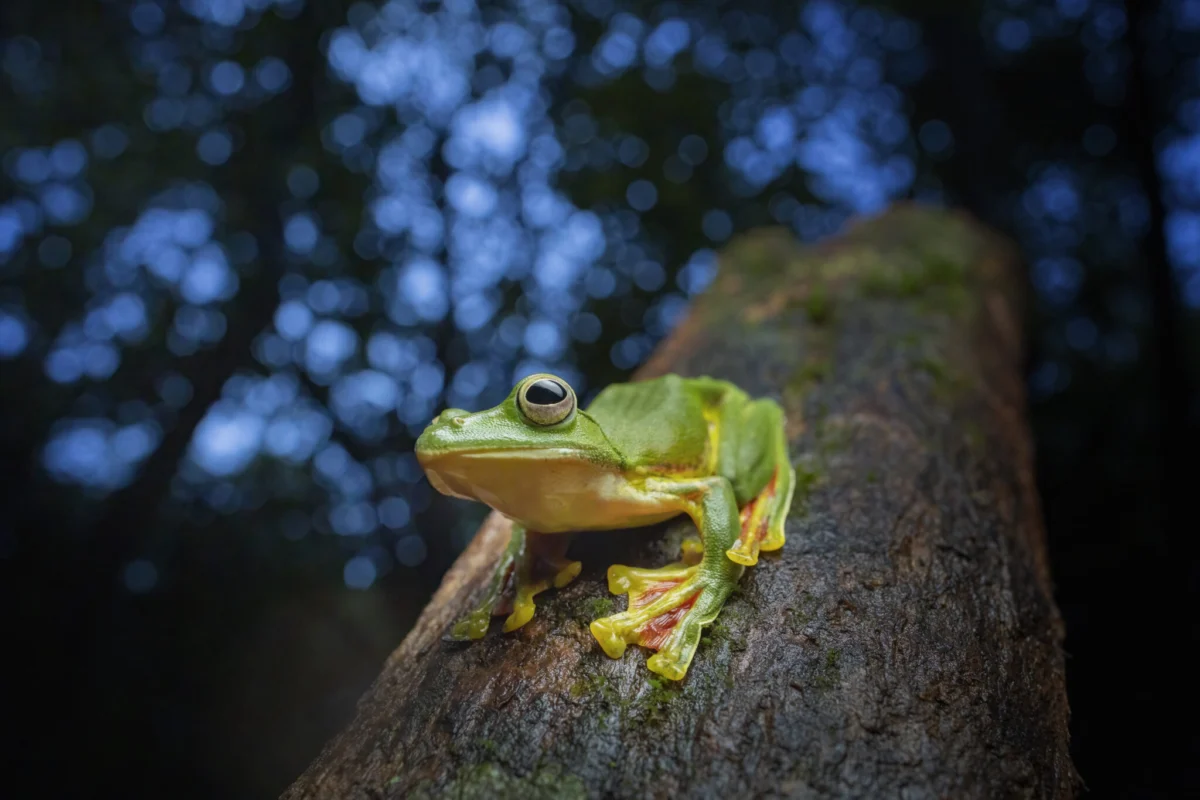
Using a wide-angle lens to capture a small subject within its natural habitat is a powerful way to create immersive, storytelling images, offering a unique perspective that transcends traditional macro photography. This technique transports the viewer directly into the scene, making them feel intrinsically part of the subject’s world by showcasing not only the creature’s intricate details but also its vital placement within the broader ecological context. The resulting images are visually striking, inviting closer inspection and fostering a deeper understanding of the delicate balance between an organism and its environment.
The Genesis and Evolution of Wide-Angle Macro

Traditional macro photography has long focused on magnifying subjects to reveal minute details, often isolating them against a blurred background. While invaluable for scientific documentation and highlighting microscopic beauty, this approach sometimes sacrifices the contextual narrative. The emergence of wide-angle macro photography, often referred to as "bug-eye" or "habitat macro," addresses this by blending the intimacy of macro with the expansive storytelling of wide-angle perspectives. This photographic style has gained considerable traction in recent years among nature photographers and conservationists alike, driven by a desire to communicate a more holistic view of biodiversity. It challenges photographers to think beyond mere magnification, pushing them to consider how a subject interacts with its surroundings—a critical element in understanding ecological relationships and conservation needs.
Technically, wide-angle macro involves utilizing wide-angle lenses at exceptionally close focusing distances to achieve magnified reproductions. Unlike true macro lenses, which are designed for 1:1 (or greater) magnification ratios, many wide-angle lenses typically do not meet this strict definition. However, the term "wide-angle macro photography" has become widely accepted within the photographic community to describe this distinct aesthetic and technique, focusing on the combination of close-up detail and environmental breadth. The popularization of this genre has been bolstered by advancements in lens design, offering wider perspectives with surprisingly short minimum focusing distances (MFD), allowing photographers to get physically close to their subjects while retaining a vast background.
This guide delves into the fascinating technique of wide-angle macro photography, covering everything from essential gear and sophisticated lighting setups to creative composition approaches and practical solutions to common challenges. Whether an experienced photographer seeking to expand their toolkit or a beginner eager to experiment, mastering wide-angle macro offers a profound opportunity to elevate visual storytelling and capture the intricate tapestry of the natural world.

Essential Equipment for Wide-Angle Macro Photography
The success of wide-angle macro photography hinges significantly on the right equipment, carefully selected to balance magnification with environmental capture.
Camera Body:
While the adage "the best camera is the one you already own" holds true, certain camera features significantly enhance the wide-angle macro experience. Both DSLRs and modern mirrorless cameras from any major brand can be utilized. However, contemporary mirrorless systems offer distinct advantages:

- Advanced Autofocus (AF) Systems: Features like animal eye detection and sophisticated focus tracking can be game-changers, especially when working with skittish or fast-moving subjects. These systems help maintain critical focus on the subject’s most important features, even with the shallow depth of field inherent in close-up work.
- Live View and Tilt Screens: These are invaluable for shooting from low or awkward angles common in wide-angle macro, allowing photographers to compose and focus without needing to contort themselves into uncomfortable positions.
- Dynamic Range: A camera with excellent dynamic range helps preserve details in both bright highlights and deep shadows, crucial when balancing a brightly lit subject with a shaded background or vice-versa.
- Weather Sealing: Given that much of this photography occurs outdoors, often in humid or wet environments like rainforests, robust weather sealing protects the camera from the elements.
- High Burst Rate: For capturing fleeting moments or rapid subject movements, a high continuous shooting speed increases the chances of securing a sharp, perfectly timed image.
For beginners without the latest gear, it’s important to remember that creativity and technique often outweigh technological prowess. Strong images can still be created with older equipment, focusing on understanding light and composition.
Lens Selection – The Crucial Element:
The lens is arguably the most critical piece of equipment for wide-angle macro. A standard wide-angle lens, typically used for landscapes, will not suffice due to its inability to focus close enough to a small subject to render it with significant size in the frame. The key requirement is a wide-angle lens with an exceptionally low minimum focusing distance (MFD).
Specialized lenses designed for this purpose are available from leading brands and third-party manufacturers. Some even offer true 1:1 macro capabilities while maintaining a wide field of view. A short MFD allows the photographer to physically approach the subject, filling a significant portion of the frame with it, thereby making it prominent against its environmental backdrop. Without this, the subject may appear too small and become lost within the expansive background, defeating the purpose of wide-angle macro storytelling. Examples include "bug-eye" lenses that offer extreme wide-angle views and close focusing, creating a distorted yet captivating perspective.
External Flash:
While wide-angle macro photography is often pursued during daylight or twilight hours, an external flash is an indispensable tool. When narrowing the aperture to ensure both the subject and its environment are in focus (to maximize depth of field), the ambient light may become insufficient, leading to underexposure. A flash compensates for this light loss and offers creative control. Key features to look for in a flash unit include:
- ETTL (Evaluative Through-The-Lens) and Manual Modes: ETTL provides automatic exposure, simplifying quick shots, while manual mode offers precise control over light output for complex lighting scenarios.
- Fast Recycle Time: Essential for capturing multiple shots quickly, especially with active subjects.
- Guide Number (GN) above 60: Indicates powerful light output, allowing for greater flexibility in distance and aperture.
- High-Speed Sync (HSS) Capability: Allows the flash to synchronize with shutter speeds faster than the camera’s native sync speed, enabling larger apertures in bright conditions or freezing very fast motion.
- Remote Operation Functionality: Crucial for off-camera flash setups, providing directional control over light and enabling creative background illumination.
Diffusers – Sculpting Light:
To mitigate harsh highlights, particularly on wet or glistening subjects, a diffuser is essential. Standard macro diffusers (typically 90–100 mm in size) may not be suitable for wide-angle lenses as their edges can appear in the frame without proper support, or they might not provide adequate coverage.
Photographers often employ custom solutions or smaller diffusers:

- Smaller Diffusers (Dome or Mini Softboxes): Easier to manage with wide-angle lenses as they are less likely to intrude into the frame. However, their smaller surface area might offer less diffusion, leading to harder light.
- Adapting Larger Diffusers: Creative hacks involve elevating the diffuser’s height using triggers mounted on the camera, then positioning the flash and diffuser above. This can provide better diffusion but requires careful management.
- Disc-Style Diffusers: These can be effective for providing top-lighting, especially when positioned carefully to avoid casting shadows.
- Off-Camera Flash with Diffuser: While challenging to manage solo, an off-camera flash setup with a large diffuser provides maximum control over light quality and direction, allowing for softer, more natural illumination of both subject and immediate surroundings. The trade-off between diffuser size (for softer light) and practical manageability (avoiding subject disturbance) is a constant consideration in the field.
Protective Clothing and Field Gear:
Preparation for wide-angle macro expeditions, especially in wild environments, mirrors that of any other nature photography pursuit, with specific emphasis on protection:
- Rain Gear: Essential for protecting both the photographer and sensitive electronic equipment from rain and humidity.
- Proper Footwear: Sturdy, waterproof boots are crucial for navigating uneven terrain, muddy paths, and potentially marshy areas.
- Leech Guards: In tropical and subtropical regions, leech guards are indispensable for protecting against leeches and other ground-dwelling creatures, enabling confident movement through dense vegetation.
- Insect Repellents: Mosquito and insect repellents are vital for comfort and safety, preventing bites that can range from annoying to disease-carrying.
These items ensure the photographer remains comfortable and safe, allowing full concentration on the photographic process.
Optimal Timing: Day vs. Night Photography
The time of day significantly influences the approach and outcomes in wide-angle macro photography, especially when aiming to capture subjects within their natural habitat.

Shooting During the Day:
The primary goal of wide-angle macro is to showcase the subject within its environment, a task best accomplished in daylight when the full context of the habitat is visible. A significant challenge arises with nocturnal creatures like many reptiles and amphibians, which are often most active and photogenic in the rainforest at night. Traditional flash photography during darkness often results in images where the subject is well-lit but the background appears dark and featureless, failing to provide the crucial habitat context.
To overcome this, thorough research into the location, its species, and their diurnal behaviors is essential. Collaborating with local naturalists or guides can prove invaluable, offering insights into animal habits and prime photographic opportunities. It is paramount to adhere to ethical practices, emphasizing in situ photography without disturbing, handling, or captivating animals solely for photographic purposes. Authenticity and respect for wildlife are non-negotiable principles.
Shooting During the Night:
Night photography in wide-angle macro demands sophisticated lighting techniques to avoid the pitfall of a well-lit subject against a black, devoid background. Without careful illumination, the image risks resembling a conventional macro shot, devoid of environmental context.
The "hack" to overcome this involves employing multiple light sources to illuminate both the subject and its surroundings:
- Multiple Flashes: A common and effective strategy involves using a master trigger on the camera to wirelessly fire multiple slave flashes strategically positioned around the scene. One flash, often diffused, illuminates the subject, while others are placed to light the background elements—foliage, branches, or forest floor—creating depth and revealing the nocturnal habitat. This allows for controlled light ratios between the subject and background.
- Constant Lights: Alternatively, constant LED lights can be used to illuminate backgrounds at night. While offering a "what you see is what you get" advantage, they typically have less power than flashes and require careful management of battery life. However, they can be easier for beginners to manage and visualize the lighting setup.
The careful orchestration of these light sources transforms a potentially dark, ambiguous background into a vibrant, contextual stage for the nocturnal subject, fulfilling the immersive promise of wide-angle macro.
Framing and Composition in Wide-Angle Macro

Effective framing and composition are paramount in wide-angle macro photography, where the objective is to tell a story through the subject’s environment. While most standard rules of composition apply, special attention is required to balance the subject, foreground, and background.
- Layering and Depth: Incorporate multiple layers or depth elements (e.g., a foreground leaf, the subject, a mid-ground branch, and a distant tree line) to add visual interest and draw the viewer’s eye into the scene. The wide-angle perspective naturally exaggerates these layers, creating a strong sense of three-dimensionality.
- Experiment with Angles:
- Low Angles: Shooting from a very low vantage point can make small subjects appear monumental and include elements like the forest canopy or sky, adding drama and a sense of scale.
- High Angles: Conversely, shooting from slightly above can incorporate more of the forest floor, revealing the subject’s immediate microhabitat. Experimentation with perspective adds creativity and uniqueness to compositions.
- Leading Lines and Natural Frames: Seek out natural leading lines—a fallen twig, a blade of grass, a stream—that guide the viewer’s eye directly to the subject. Utilize natural elements like leaves, flowers, or rock formations to frame the subject, drawing attention to it while seamlessly integrating it into its surroundings. This technique strengthens the connection between the subject and its habitat.
- Subject Placement: While the rule of thirds is a good starting point, consider placing the subject strategically to interact with its environment. For instance, positioning a frog on a dew-covered leaf with the forest blurring in the background emphasizes its natural perch and the moisture of its habitat.
Overcoming Challenges in Wide-Angle Macro Photography
Wide-angle macro photography, while immensely rewarding, presents several technical and practical challenges that photographers must learn to navigate.

- Distortion: Wide-angle lenses inherently exaggerate perspective, causing foreground subjects to appear disproportionately large compared to the background. While this can be creatively used to emphasize a subject, it can also lead to an unnatural or unsettling look if not composed carefully. Understanding lens characteristics and employing careful subject placement can mitigate unwanted distortion, or post-processing tools can correct some lens-specific distortions.
- Depth of Field (DoF): At macro focusing distances, the depth of field becomes extremely shallow, even with a wide-angle lens. Achieving sharpness across both the subject and a meaningful portion of the background can be very difficult.
- Narrow Aperture: Using the narrowest possible aperture (e.g., f/16, f/22) helps maximize DoF, but too narrow an aperture can introduce diffraction, reducing overall sharpness. Photographers must find a careful balance or "sweet spot" for their lens.
- Focus Stacking: This advanced technique involves taking multiple images at slightly different focus points and merging them in post-processing to create a single image with extended depth of field. It is a powerful tool for wide-angle macro, ensuring both the subject and its habitat are rendered sharply.
- Lens Flare and Corner Softness: Wide-angle optics, particularly when combined with extension tubes or adapters (though often avoided in wide-angle macro for image quality), can suffer from reduced sharpness at the edges and increased susceptibility to lens flare. Careful positioning relative to light sources and using a lens hood can minimize flare. Opting for high-quality lenses designed for close focusing also reduces corner softness.
- Blocking Light: Due to the extremely short working distances, the lens itself or even the photographer’s body can cast shadows on the subject. This makes careful lighting crucial. An external flash, often off-camera and diffused, allows for precise light placement to illuminate the subject without casting unwanted shadows.
- Balancing Lighting: Macro subjects often require intense, close lighting, while the expansive wide background needs natural, even exposure. Balancing these two elements in a single frame is a key challenge. Techniques include:
- Fill Flash: Using flash to supplement ambient light, brightening the subject while allowing the background to be exposed naturally.
- Exposure Blending: Taking separate exposures for the subject (with flash) and the background (ambient light) and blending them in post-processing.
- Controlled Lighting Setups: Employing multiple flashes or constant lights, as discussed for night photography, to illuminate different parts of the scene independently.
- Working Distance: Wide-angle macro setups frequently have extremely short minimum focusing distances, sometimes mere centimeters. This makes it challenging to get into position without disturbing the subject or its environment. Patience, slow movements, and a deep understanding of animal behavior are essential. Specialized lenses designed for ultra-close focusing are critical here.
- Size of the Gear: While larger diffusers generally provide softer, more even light, an oversized setup can be cumbersome and easily disturb sensitive subjects or become snagged in dense vegetation. There is a practical trade-off between the ideal diffusion surface and the need for a compact, maneuverable setup that allows for stealthy approaches. Smaller, custom-designed, or adaptable diffusers often prove more effective in the field.
- Stability: Shooting at such close distances with a wide-angle lens demands incredibly precise focus and steady positioning. Any slight movement from the photographer or the subject is significantly magnified. Using fast shutter speeds (often enabled by flash) helps freeze motion. While tripods can be impractical for moving subjects, bracing oneself, using a monopod, or finding natural supports can improve stability.
The Broader Impact and Future of Wide-Angle Macro
Wide-angle macro photography stands at a compelling intersection of intimacy and grand storytelling. It allows photographers to reveal not just the exquisite details of tiny subjects but also the rich, complex environments they call home. While the technique comes with its share of challenges—from lighting constraints and short working distances to compositional complexity—the right combination of specialized equipment, creative diffuser use, and thoughtful fieldcraft can transform these obstacles into opportunities for unparalleled visual narratives.
The implications of this photographic genre extend beyond artistic expression:

- Conservation Awareness: By presenting small creatures within their habitats, wide-angle macro images powerfully communicate the interconnectedness of species and ecosystems. Such images can raise critical awareness about biodiversity, habitat loss, and the urgent need for conservation efforts, making the viewer feel a stronger connection to the natural world.
- Scientific Documentation: For researchers, these images provide invaluable context, documenting not only the species but also its precise microhabitat, behavior, and ecological interactions, which can be difficult to capture with traditional close-up methods.
- Technological Advancement: The demand for specialized wide-angle macro lenses and advanced lighting solutions continues to push the boundaries of photographic technology. Future developments in computational photography, enhanced autofocus, and more compact, powerful lighting will undoubtedly further refine and expand the possibilities within this genre.
- Ethical Photography: The emphasis on capturing subjects in situ and minimizing disturbance reinforces the importance of ethical wildlife photography practices, promoting respect for nature above all else.
By mastering the delicate balance between subject and surroundings, photographers can create images that are both deeply personal and expansively informative, capturing not only what a creature looks like but also where it belongs in the grand scheme of life. Ultimately, wide-angle macro is more than a technical pursuit; it is a profound way of connecting the smallest wonders of nature with the larger world they inhabit, fostering appreciation, understanding, and a renewed commitment to preserving our planet’s invaluable biodiversity.