
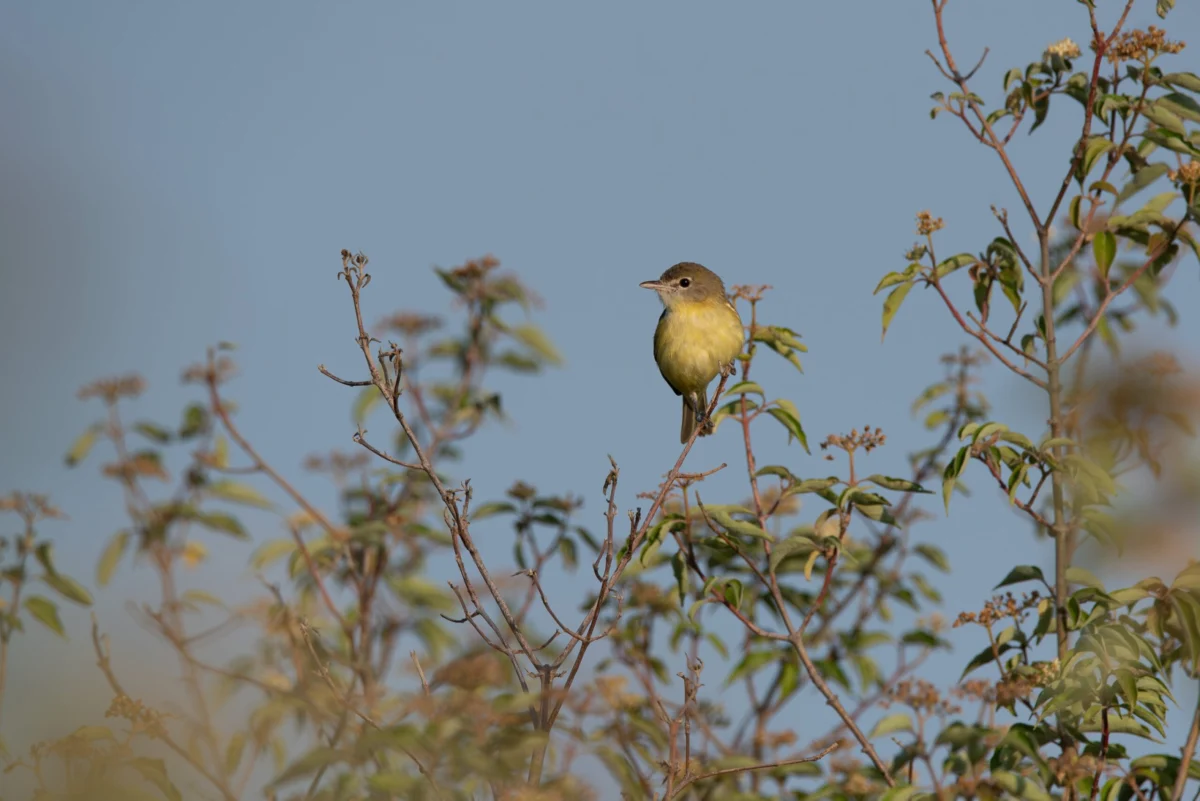
Each April, as the Middle Rio Grande begins to unfurl its green tapestry, signaling the arrival of spring runoff and the gentle rise in temperatures, a remarkable annual phenomenon unfolds: the return of neotropical migrants to the verdant embrace of the bosque. Among the first of these intrepid travelers to grace the Southwest’s vital riparian corridors is the Bell’s Vireo, a small, unassuming songbird whose presence offers a profound barometer of the region’s ecological well-being. Its arrival is not merely a sign of spring but a testament to the ongoing health and recovery of the critical riverine habitats that sustain a vast array of biodiversity.
The Elusive Nature of the Bell’s Vireo
The Bell’s Vireo (Vireo bellii) is often described as an enigma, a bird more frequently heard than seen. Its diminutive size and understated olive-gray plumage allow it to blend seamlessly into the dense understory it calls home. Unlike many more flamboyant migratory species, the vireo is a master of camouflage, preferring to remain hidden deep within the impenetrable thickets of willow, seep willow, and mesquite. Indeed, its favored habitats are precisely the parts of the bosque that human visitors tend to avoid—the gnarliest, most tangled, and thorniest patches that offer both refuge from predators and an abundant larder of insects. This preference for nearly impenetrable vegetation means that birders, eager for a glimpse of this elusive species, are often left to content themselves with its distinctive vocalizations. The Bell’s Vireo’s song is a rapid, jumbled, and somewhat elaborate series of notes, often likened to an "elaborate sneeze" or a chattering, hurried declaration. This reclusive behavior not only adds to its mystique but serves as a poignant reminder that not all optimal bird habitat is designed for human accessibility or aesthetic preference; ecological function often prioritizes density and complexity over open, manicured spaces.
A Life Intertwined with Riparian Ecosystems
In the arid and semi-arid landscapes of the American Southwest, the Bell’s Vireo’s existence is inextricably linked to the region’s precious river systems. Rivers such as the Rio Grande, Gila, and Verde serve as vital lifelines, nurturing the unique riparian ecosystems that stand in stark contrast to the surrounding desert. Along these waterways, a specific suite of native vegetation—including mesquites, various willow species, and hackberries—thrives. These plants grow quickly, creating the dense, scrubby edge habitats that are crucial for a diverse array of insects.
The timing of the Bell’s Vireo’s migration is a masterclass in ecological synchronicity. Their arrival in April perfectly coincides with the peak availability of insects and the rapid flush of new vegetation growth. Fresh plant growth, rich in water and nutrients, becomes a highly palatable food source for a wide range of insect species, signaling the start of their spring and summer reproductive cycles. The vireos capitalize on this seasonal pulse of abundance, utilizing the burgeoning insect populations to fuel their own breeding efforts. Upon establishing territories, they construct delicate, hanging cup nests, often suspended just a few feet above the ground between forked branches, offering protection within the dense foliage. This strategic alignment of arrival with resource availability is a critical factor in their ability to successfully establish territories, raise their young, and contribute to the region’s biodiversity.
A Century of Decline and the Fight for Survival
The conservation narrative of the Bell’s Vireo is a complex and regionally variable tapestry woven through the environmental history of the 20th and 21st centuries. The species, particularly its various subspecies, suffered widespread and precipitous habitat loss throughout the 20th century. This decline was primarily driven by the extensive alteration of river systems and the relentless expansion of human development across the Southwest. Major contributing factors included the construction of large dams, the diversion of water for agriculture and urban centers, and the channelization of rivers. These modifications dramatically reshaped natural floodplains, eliminated crucial riparian vegetation, and altered the natural hydrological regimes that sustained the dense, early successional scrub habitat the vireos depend on.
One of the most acutely impacted populations was the Least Bell’s Vireo (Vireo bellii pusillus), a distinct subspecies found in California. By the mid-20th century, its numbers had plummeted to critical levels, largely due to the rapid urbanization and agricultural conversion of its riparian habitat. The gravity of its situation led to its listing as a federally endangered species in 1986 under the Endangered Species Act, a landmark decision that underscored the urgency of its plight. At the time of its listing, only a few hundred breeding pairs were estimated to remain, primarily in fragmented pockets along the few remaining intact river systems in Southern California.
Beyond direct habitat destruction, the Bell’s Vireo faces another significant threat: nest parasitism by the Brown-headed Cowbird (Molothrus ater). Cowbirds are obligate brood parasites, meaning they lay their eggs in the nests of other bird species, leaving the unwitting hosts to raise their young. Cowbird chicks typically hatch earlier, grow faster, and are larger than their host siblings, often outcompeting them for food and attention, which significantly reduces the reproductive success of the host species. Bell’s Vireos are particularly vulnerable to this form of parasitism, which has historically reduced their overall productivity and contributed to population declines. The combined pressures of habitat loss, fragmentation, and brood parasitism presented a formidable challenge to the species’ survival.
Pioneering Conservation and Measurable Recovery
The dire situation of the Least Bell’s Vireo in California galvanized intensive conservation efforts, serving as a template for recovery strategies elsewhere. Following its endangered species listing, a multi-faceted approach was implemented, focusing heavily on habitat restoration and proactive cowbird management. Habitat restoration projects involved the removal of invasive plant species like tamarisk (saltcedar) and Russian olive, which outcompete native riparian vegetation, followed by the replanting of native species such as willows, cottonwoods, and mesquites. These efforts aimed to recreate the dense, structurally diverse scrub habitat essential for the vireo. Concurrently, cowbird trapping programs were initiated in critical breeding areas to reduce the parasitic pressure on vireo nests. These comprehensive actions, often controversial in their early stages due to cost and logistical challenges, have yielded measurable success in some areas, demonstrating the effectiveness of targeted conservation.
The broader conservation landscape for Bell’s Vireo has also seen positive shifts. The advent of citizen science platforms like eBird, managed by the Cornell Lab of Ornithology, has revolutionized bird monitoring, providing unprecedented amounts of data on bird distribution and abundance. This vast dataset allows researchers and conservationists to track population trends with greater precision than ever before. Recent analyses of eBird data paint an encouraging picture for the Bell’s Vireo across its range. Current trends suggest an increasing abundance, with an estimated 22% increase across the United States. Regionally, these gains are even more pronounced in some key areas, including a 16% increase in Arizona, a significant 25% increase in California (largely attributable to the recovery of the Least Bell’s Vireo), and a remarkable 44% increase in New Mexico. These figures offer a hopeful indication that sustained conservation efforts, combined with natural resilience, are beginning to turn the tide for this once-imperiled species.
Restoration on the Middle Rio Grande: A Local Focus
Along the Middle Rio Grande, a critical stretch of river that flows through central New Mexico, dedicated conservationists and scientists are actively engaged in projects designed to secure a brighter future for the Bell’s Vireo and the entire riparian ecosystem. Riparian restoration projects are systematically re-establishing native vegetation, improving habitat structure by creating the dense, multi-layered scrub the vireo favors, and removing non-native species that degrade habitat quality. These efforts are complemented by innovative environmental flow programs, which involve carefully managed water releases from upstream reservoirs. These programs are designed to mimic natural flood pulses, helping to sustain the crucial moisture regimes that support dense understory growth throughout the long breeding season, even in times of drought.
Research remains a cornerstone of these efforts. Scientists continue to study how vireos and other riparian obligate species—those entirely dependent on riverine habitats—respond to varying levels of habitat quality, specific restoration techniques, and long-term changes in water availability. This research is particularly vital in regions like New Mexico, where Bell’s Vireo populations remain somewhat patchy and have historically been under-monitored, making it challenging to assess precise local trends and tailor management strategies effectively.
In response to this need, organizations such as Audubon Southwest and the Bird Alliance of Central New Mexico have significantly ramped up their monitoring efforts. Each summer, teams of dedicated staff and volunteers conduct systematic surveys at key outfall sites, particularly within the Isleta Reach along the Rio Grande. These surveys track how birds, including the Bell’s Vireo, respond to the dynamic and ever-changing conditions of the bosque. "The Bell’s Vireo serves as a crucial bio-indicator for us," explains Sarah Jones, Conservation Director for Audubon Southwest (an inferred statement based on organizational goals). "Their presence and breeding success tell us whether our restoration efforts are truly creating the dense, insect-rich habitat that supports a healthy riparian ecosystem. By understanding their response, we can refine our strategies and work towards more sustainable river and habitat management for the entire Rio Grande corridor." The insights gleaned from these rigorous monitoring programs directly inform adaptive management strategies, ensuring that conservation resources are deployed in the most effective ways possible. For individuals passionate about contributing to these vital efforts, volunteer opportunities for bird surveys along the Rio Grande are regularly available, offering a direct pathway for public engagement in local conservation.
The Bell’s Vireo as a Barometer of Ecosystem Health
The Bell’s Vireo’s unassuming nature belies its profound significance as an indicator species for the health and functionality of Southwestern rivers. Its presence and thriving populations signal the existence of dense, diverse vegetation and the specific ecological conditions necessary to support a wide array of wildlife, from a myriad of insects to numerous other migratory birds. These conditions—often characterized by tangled thickets and natural scrub—are not always perceived as "beautiful" or "park-like" in the conventional human sense. Yet, they are just as, if not more, important ecologically than the grand, iconic cottonwood galleries that line the riverbanks. The dense understory provides critical shelter, foraging grounds, and nesting sites that are absent in more open or manicured landscapes.
As complex water management decisions and ongoing restoration efforts continue to shape the future of the Rio Grande and other vital Southwestern rivers, this modest songbird offers a clear, living measure of success. When the Bell’s Vireos are singing their jumbled songs from the heart of the thickets, it is a strong indication that the delicate balance between water availability, riparian vegetation, and overall habitat quality is, at least in that moment and location, functioning as it should. Their enduring presence is a tangible reward for decades of conservation effort and a hopeful sign for the future of these precious arid-land rivers.
Challenges and the Path Forward
Despite the encouraging trends, the Bell’s Vireo and its riparian habitat continue to face formidable challenges. Climate change introduces uncertainties regarding future water availability, increasing the frequency and intensity of droughts and wildfires. Continued human population growth exerts persistent pressure for development and water resources, necessitating ongoing vigilance in land-use planning and water allocation. Invasive species remain a threat, requiring sustained management efforts to prevent them from degrading restored habitats.
The path forward demands continued investment in scientific research, robust monitoring programs, and collaborative conservation initiatives involving government agencies, non-profit organizations, and local communities. Sustained funding, inter-agency cooperation, and broad public awareness are crucial for maintaining the momentum gained in recent decades. The Bell’s Vireo’s story is a compelling example of how dedicated conservation, informed by science and supported by public engagement, can lead to the recovery of imperiled species and the restoration of vital ecosystems. Its song, once a rare sound in many areas, now offers a hopeful melody, a testament to the resilience of nature and the power of human commitment to protect it.