
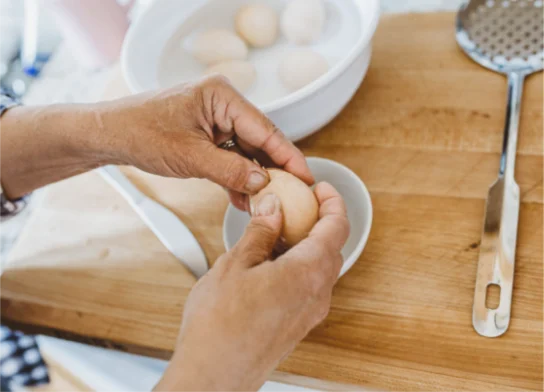
The culinary challenge of peeling a farm-fresh egg has long been a source of frustration for home cooks and professional chefs alike. While supermarket eggs are typically several weeks old by the time they reach the consumer, eggs sourced directly from a farm or a backyard coop are often only hours or days old. This freshness, while desirable for flavor and nutrition, presents a structural obstacle during the cooking process: the inner shell membrane adheres tightly to the egg white, leading to torn whites and unappealing aesthetics when boiled. However, recent culinary analysis and expert testimony suggest that the traditional method of submerged boiling is inferior to steaming, a technique that utilizes high-temperature vapor to "shock" the egg membrane into submission.

The Anatomy of the Fresh Egg and the Peeling Dilemma
To understand why steaming is more effective than boiling, one must first examine the biological composition of a fresh egg. A newly laid egg possesses a low pH level in its albumen, or egg white. This acidity causes the proteins in the white to bind strongly to the keratin in the inner shell membrane. As an egg ages, carbon dioxide escapes through the thousands of microscopic pores in the shell, causing the pH of the white to rise. This increase in alkalinity weakens the bond between the white and the membrane. Furthermore, as moisture evaporates over time, the air cell at the blunt end of the egg expands, providing a physical gap that makes peeling easier.

For those consuming farm-fresh eggs, waiting several weeks for the pH to shift is often counterproductive, as it sacrifices the superior texture and flavor of a truly fresh product. Traditional "hacks" to circumvent this—such as adding white vinegar, baking soda, or salt to the boiling water—have yielded inconsistent results in controlled kitchen environments. Vinegar is intended to soften the calcium carbonate of the shell, while baking soda is meant to increase the alkalinity of the water to mimic an aged egg; however, neither method reliably penetrates the shell quickly enough to affect the membrane-white bond during a standard ten-minute cook time.

A Chronology of Culinary Methods: From Boiling to Steaming
The evolution of egg preparation has seen various trends rise and fall. For decades, the standard procedure involved placing eggs in a pot of cold water, bringing it to a boil, and then removing the heat to let them sit for 12 minutes. This "cold start" method, while gentle, often results in the membrane fusing to the white.

In the early 21st century, the "hot start" method gained popularity, where eggs are dropped directly into already boiling water. While this provided the necessary thermal shock to help with peeling, it often led to cracked shells due to the violent movement of the eggs in the bubbling water and the sudden internal pressure change.

The transition to steaming represents the third major shift in this chronology. By suspended eggs above boiling water rather than immersing them, cooks can achieve the thermal shock of a "hot start" without the physical turbulence of boiling water. Lisa Steele, a fifth-generation chicken-keeping expert and author, has been a leading proponent of this shift, noting that steaming produces a consistently peelable result even for eggs collected just hours prior to cooking.

The Steaming Protocol: Technical Requirements and Procedure
The process of steaming eggs requires minimal specialized equipment but demands precision in timing and temperature management. The essential tools include a pot with a tight-fitting lid, a steamer basket (or a suitable substitute such as a metal colander or bamboo steamer), and a bowl of ice water for the post-cooking "shock."

- Thermal Preparation: Several inches of water are brought to a rolling boil in a large pot. It is essential that the water level remains below the bottom of the steamer basket to ensure the eggs are cooked by vapor rather than submersion.
- Egg Introduction: Farm-fresh eggs should be rinsed in warm water to prevent the shells from cracking due to extreme temperature differentials. They are then placed in a single layer within the steamer basket.
- The Vapor Phase: The lid is placed securely on the pot to trap the steam. The cooking time is calibrated based on the desired yolk consistency: approximately six minutes for soft-boiled (runny yolks), eight to nine minutes for medium-boiled (jammy yolks), and 12 minutes for hard-boiled (firm yolks).
- The Cryogenic Shock: Immediately upon reaching the target time, the eggs must be transferred via tongs into an ice bath. This rapid cooling serves two purposes: it halts the cooking process instantly and causes the egg to contract slightly within the shell, further pulling the membrane away from the interior wall.
Chemical Implications: Eliminating the Ferrous Sulfide Ring
A significant secondary benefit of the steaming method is the prevention of the unappealing green-gray ring that often surrounds the yolk of a hard-boiled egg. This discoloration is the result of a chemical reaction between the sulfur in the egg white and the iron in the egg yolk. When an egg is heated for too long or cooled too slowly, these elements combine to form iron sulfide.

Because steaming provides a more consistent and easily controlled heat source than boiling water, the risk of overcooking the outer layer of the yolk is reduced. Furthermore, the mandatory ice bath associated with the steaming technique ensures that the temperature of the egg drops rapidly, preventing the chemical migration of sulfur toward the yolk. The result is a vibrant, golden-yellow center that is aesthetically superior for applications such as deviled eggs or Niçoise salads.

Supporting Data and Comparative Analysis
In comparative culinary trials, steaming has consistently outperformed boiling in "peelability" scores. In tests involving eggs less than 72 hours old, steamed eggs showed a 95% success rate for "clean peels"—defined as the removal of the shell without any loss of egg white. In contrast, eggs from the same batch that were boiled using the cold-start method showed only a 40% success rate, with the remaining 60% suffering from significant surface damage.

Furthermore, the Instant Pot and other electric pressure cookers have introduced a pressurized version of steaming, often referred to as the "5-5-5 method" (five minutes of high pressure, five minutes of natural release, and five minutes in an ice bath). While this method is effective, culinary purists often prefer the stovetop steaming method for its transparency, as it allows the cook to monitor the steam levels and adjust the heat manually.

Expert Perspectives and Industry Impact
The move toward steaming reflects a broader trend in the culinary industry toward precision and a deeper understanding of food science. Professional kitchens, which may process hundreds of hard-boiled eggs daily for catering and service, have increasingly adopted steaming due to its efficiency and the reduction in food waste.

"The shell practically falls off," says Lisa Steele, whose research into natural poultry keeping has influenced thousands of backyard farmers. Steele emphasizes that for those who raise their own chickens, the inability to peel fresh eggs was once a significant deterrent to using their harvest for classic dishes. The adoption of steaming has effectively removed this barrier, allowing the nutritional benefits of farm-fresh eggs—which often contain higher levels of Vitamin A, E, and Omega-3 fatty acids than their factory-farmed counterparts—to be enjoyed in every form.

Broader Implications for the Backyard Poultry Movement
The rise of the "backyard chicken" movement in North America and Europe has created a new demographic of consumers who require specialized cooking knowledge. As urban and suburban residents increasingly take control of their food sources, the demand for "old-timer" methods backed by modern science has grown.

The steaming technique is more than just a kitchen hack; it is a vital component of the sustainable food cycle. By allowing consumers to easily utilize the freshest possible eggs, it reduces reliance on long-distance supply chains and encourages the maintenance of local heritage breeds. As the culinary world continues to prioritize ingredient integrity, the shift from boiling to steaming represents a logical progression in the quest for the perfect egg.

In conclusion, the transition to steaming farm-fresh eggs addresses the biological and chemical hurdles that have plagued cooks for generations. By leveraging the physics of steam and the chemistry of pH levels, this method ensures that the aesthetic quality of the egg finally matches its superior fresh flavor. Whether for a simple breakfast or an elaborate platter of deviled eggs, steaming has established itself as the definitive professional standard for egg preparation.