
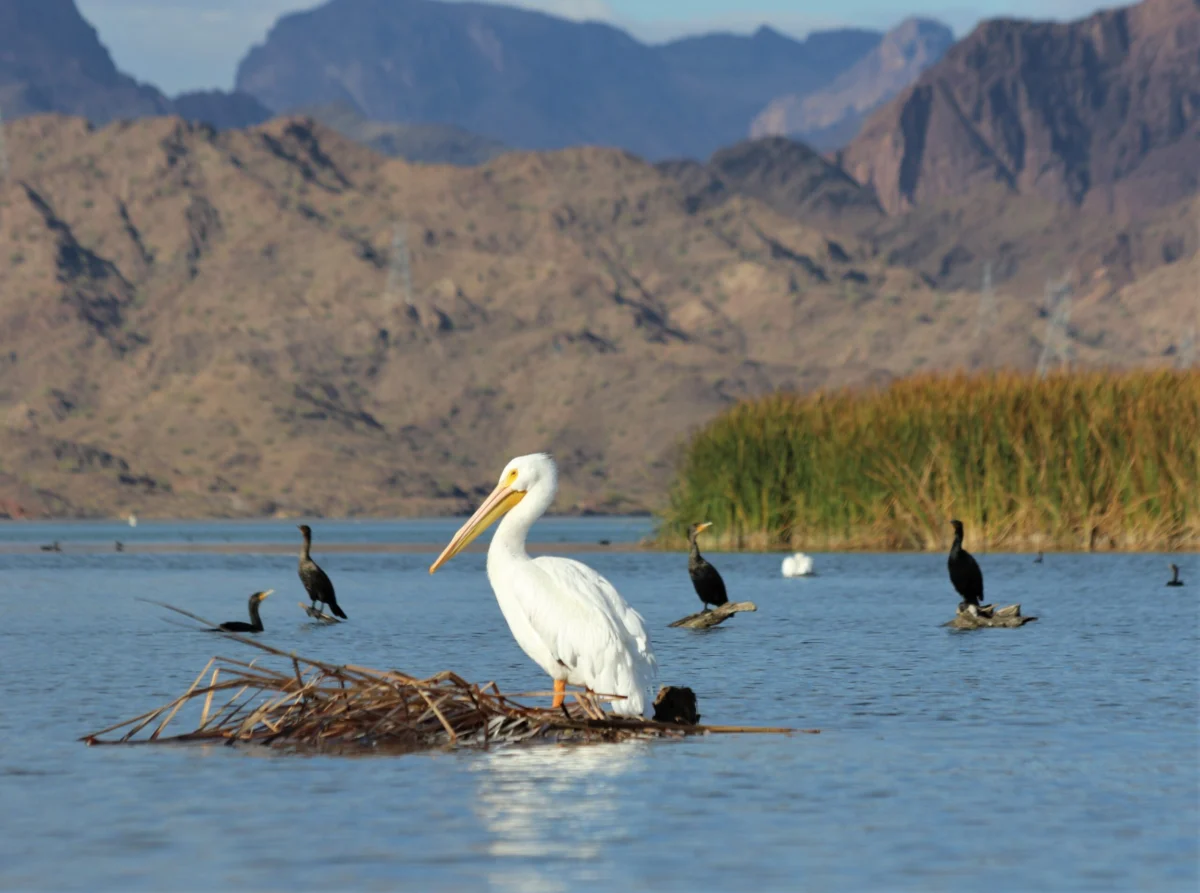
The vital artery of the American Southwest, the Colorado River, is confronting its most severe existential threat in modern history. Following a winter of 2025-2026 characterized by record-warm temperatures across its headwater mountains, snow levels have plummeted to unprecedented lows, signaling a critically scant spring snowmelt. This grim hydrological forecast arrives at a moment when the river’s colossal reservoirs, Lake Powell and Lake Mead, stand at perilously low capacities—25% and 34% respectively—exacerbating a crisis that imperils the water supply for over 40 million people, vast agricultural enterprises, diverse ecosystems, and iconic wildlife across seven U.S. states and Mexico.
The Unfolding Crisis on the Colorado River
The winter of 2025-2026 has delivered a stark and alarming prognosis for the Colorado River Basin. Day after day, a relentless series of record-warm temperatures have gripped the Rocky Mountains, the primary source of the river’s flow. This sustained warmth has translated directly into a dramatically reduced snowpack, the natural reservoir that typically feeds the river during the spring melt. Scientific models, informed by decades of data and advanced climate projections, now indicate that the anticipated snowmelt runoff will be among the lowest on record. This is not merely a localized issue but a systemic failure of the natural replenishment cycle, directly attributable to the accelerating impacts of a warmer and drier climate across the American West.
The consequences are immediate and dire for the basin’s two largest reservoirs, Lake Powell and Lake Mead. These immense bodies of water, which once held vast reserves crucial for regional stability, are now alarmingly depleted. Lake Powell, impounded by Glen Canyon Dam, hovers at a mere 25% of its historical capacity, while Lake Mead, behind Hoover Dam, fares only slightly better at 34%. These figures represent not just abstract measurements but tangible indicators of a system under immense stress. The U.S. Bureau of Reclamation (Reclamation), the federal agency tasked with managing these critical water infrastructures, has issued stark warnings. Projections suggest that Lake Powell’s water levels could drop to elevations low enough to threaten the operational integrity of Glen Canyon Dam itself. Such a scenario would compromise the dam’s ability to generate hydropower, a critical energy source for millions, and severely impede downstream water deliveries, impacting communities and ecosystems alike. The ecological ramifications are equally severe, threatening native wildlife in the Grand Canyon, including the critically endangered California Condor and the Western Yellow-billed Cuckoo, species already struggling for survival in increasingly fragmented habitats. The iconic "bathtub rings" of mineral deposits visible on the canyon walls around these reservoirs serve as a stark visual testament to the severity and longevity of this hydrological deficit, a persistent reminder of the hundreds of feet of water that have vanished over the past two decades.
A Century of Allocation: The "Law of the River" and its Challenges
To fully grasp the current predicament, it is essential to understand the complex legal and historical framework governing the Colorado River—often referred to as the "Law of the River." This intricate web of compacts, federal laws, court decisions, and international treaties began with the seminal Colorado River Compact of 1922. Negotiated by the seven basin states (Arizona, California, Colorado, New Mexico, Nevada, Utah, and Wyoming) and the federal government, the Compact divided the river into an Upper Basin (Colorado, New Mexico, Utah, Wyoming) and a Lower Basin (Arizona, California, Nevada) and allocated 7.5 million acre-feet (MAF) of water annually to each, plus an additional 1.5 MAF for the Lower Basin under certain conditions, totaling 16.5 MAF. Mexico was later allocated 1.5 MAF annually through a 1944 treaty.
At the time of its drafting, the Compact was based on an assumption of an average annual flow of 17 to 20 MAF, a figure derived from a short period of unusually wet years. This fundamental miscalculation, coupled with the long-term impacts of climate change, has proven to be the genesis of many current challenges. Scientific consensus now places the river’s natural flow closer to 12-15 MAF annually, a significant deficit against its allocated burden. Subsequent agreements, including the Boulder Canyon Project Act of 1928, the California Seven Party Agreement of 1931, and the Criteria for Coordinated Long-Range Operation of Colorado River Reservoirs (1970), further refined and complicated the legal landscape. The construction of massive infrastructure projects like Hoover Dam (completed 1936) and Glen Canyon Dam (completed 1966) facilitated the storage and delivery of water, enabling the explosive growth of the American Southwest. These engineering marvels transformed arid landscapes into thriving agricultural centers and bustling metropolitan areas.
However, the "Law of the River" was designed for a different era—a time before sustained drought became the new normal and before the full impacts of anthropogenic climate change were understood. The current rules, particularly the 2007 Interim Guidelines for operations and the 2019 Drought Contingency Plans (DCPs), were temporary measures designed to prevent Lake Mead and Lake Powell from crashing entirely. While these measures provided short-term relief, they were always intended as stopgaps, with a clear expiration date at the end of 2026. The looming deadline, combined with the hydrological realities of a "warmer and drier climate," necessitates a complete re-evaluation of how the river’s limited resources are managed. The once-optimistic allocations now stand in stark contrast to the harsh realities of a shrinking river, making the task of re-tooling system-wide, long-term dam operations an imperative of unprecedented scale and complexity.
The Urgency of Post-2026 Guidelines
The expiration of the existing operational guidelines at the close of this year has thrust Reclamation into the unenviable position of re-tooling the entire framework for the Colorado River’s future. This critical endeavor, colloquially known as the "Post-2026 Guidelines," seeks to establish a sustainable management strategy for the coming decades. As anticipated under this urgent timeline, Reclamation issued a Draft Environmental Impact Statement (Draft EIS) in late January. This comprehensive document laid out several potential alternatives for federal management of the river system, inviting extensive public comment from a wide array of stakeholders. A notable feature of this Draft EIS was its explicit embrace of uncertainty as a central planning condition, acknowledging the unpredictable nature of future climate and hydrological conditions. Various approaches were rigorously tested under a broad spectrum of hydrologic scenarios, reflecting a pragmatic shift from historical assumptions.
Traditionally, there had been a strong expectation that the seven U.S. states sharing the river—Arizona, California, Colorado, New Mexico, Nevada, Utah, and Wyoming—would coalesce around a consensus-based proposal to present to Reclamation. Such a unified front would have streamlined the decision-making process, offering a path forward rooted in regional cooperation. However, despite intense negotiations and multiple deadlines, this consensus has remained elusive. Reports from state water agencies and legislative bodies indicate significant disagreements, primarily revolving around long-standing disputes over water rights, historical allocations, and the equitable distribution of future cutbacks. The failure to achieve a unified state proposal has escalated tensions and significantly increased discussions of potential litigation, a prospect that could tie up critical water management decisions in courts for years, further delaying vital action.
Reclamation now faces the formidable challenge of navigating these complex legal and political waters. While the agency possesses considerable legal authorities to manage the river system, many of these authorities were crafted in an era of relative abundance and do not explicitly outline how to take decisive and meaningful action in a crisis of this historic magnitude. This legal ambiguity further complicates an already fraught situation, leaving Reclamation to chart a course forward amidst competing demands, legal challenges, and the pressing reality of a river in decline. The agency’s role, once primarily focused on development and distribution, has irrevocably shifted towards one of crisis management and resource conservation, demanding innovative interpretations of its mandate to secure a viable future for the Colorado River.
Stakeholder Engagement and Divergent Interests
The release of Reclamation’s Draft EIS opened a crucial public comment period, drawing an overwhelming response from diverse stakeholders across the Colorado River Basin. Dozens of comments poured in from the basin states themselves, individual water users, agricultural consortia, environmental organizations, tribal nations, and various other interested parties. Each submission articulated its unique perspective, often highlighting the protection of specific water uses at the perceived expense of others. This deluge of input underscored the profound economic, social, and cultural significance of the Colorado River, while also illuminating the deep divisions and competing priorities that have historically characterized water management in the region.
Among the submissions, Audubon, a prominent conservation organization, submitted formal comments in conjunction with several conservation partners. Audubon’s central message emphasized the urgent need to stabilize the entire Colorado River system, advocating for a unique, basinwide perspective that spans from its headwaters in the Rocky Mountains to its delta in the Gulf of California. Their comments urged Reclamation to adopt a proactive approach, prioritizing the management of risks for both people and nature, rather than deferring difficult decisions until emergency conditions—like those currently unfolding—force reactive measures. This holistic viewpoint contrasts sharply with the more localized or state-centric arguments often presented by other stakeholders who primarily focused on safeguarding their historical water rights or specific economic interests.
Audubon’s Basinwide Perspective
Audubon’s comment letter was characterized by constructive engagement, acknowledging the analytical strengths of the Draft EIS while also identifying targeted refinements crucial for ensuring the Final EIS fully informs decision-makers about real-world risks and consequences. While specific details were not exhaustively listed in the original summary, their overarching strategy, consistent with their mission, likely included:
- Prioritizing Ecosystem Health: Advocating for explicit consideration of environmental flows necessary to sustain critical riparian habitats and species, beyond mere compliance with endangered species acts. This includes protecting crucial floodplains and ensuring sufficient water reaches the Colorado River Delta in Mexico.
- Adopting Adaptive Management: Urging the integration of flexible management strategies that can quickly respond to changing hydrological conditions, rather than rigid, fixed-term allocations that fail to account for climate variability.
- Enhancing Water Conservation and Efficiency: Promoting policies and incentives for both urban and agricultural sectors to significantly reduce water consumption, recognizing that supply augmentation alone cannot solve the deficit. This includes upgrading aging infrastructure and promoting drought-resistant crops.
- Ensuring Tribal Water Rights: Emphasizing the need for equitable and legally recognized fulfillment of tribal water rights, which have historically been marginalized or unquantified, and are often among