
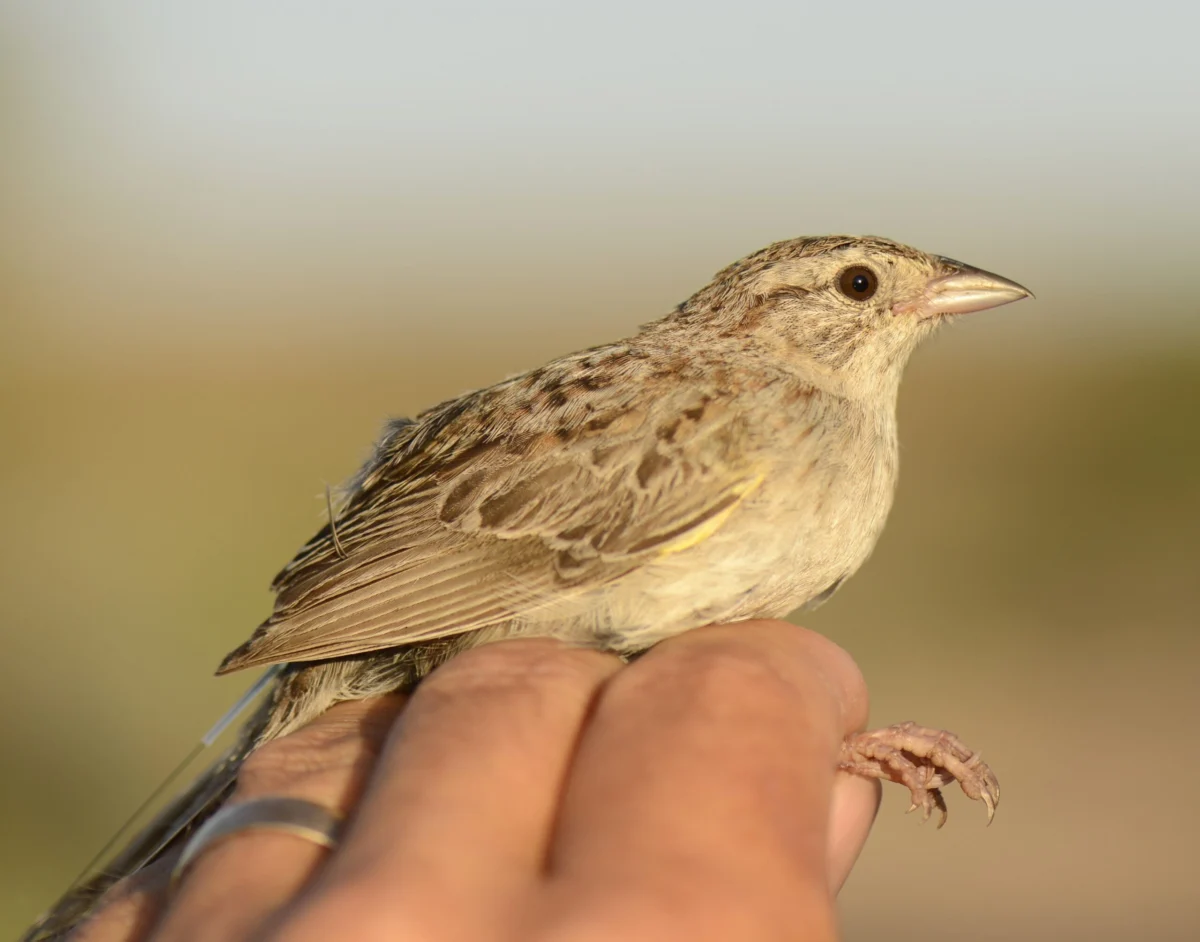
The American Southwest, a region defined by its vast arid and semi-arid landscapes, hosts a myriad of life forms, many of which possess remarkable adaptations to their challenging environment. Among these, the Cassin’s Sparrow (Peucaea cassinii) stands out not for its flamboyant plumage or striking size, but for its understated elegance and profound ecological significance. Often dismissed by the casual observer as merely another "little brown bird," this unassuming avian resident conceals a life history that is anything but ordinary, offering crucial insights into the health of its grassland habitats and the intricate dynamics of climate variability. Its presence, or indeed its absence, serves as a delicate barometer for the broader environmental changes sweeping across one of North America’s most vital ecosystems.
A Master of Disguise and Song
Superficially, the Cassin’s Sparrow presents a modest appearance: a small, drab brown bird adorned with subtle streaking across its back and breast, culminating in a distinctive long tail. This cryptic coloration provides excellent camouflage amidst the dry grasses and scattered shrubs of its preferred habitat, making it remarkably difficult to spot. However, during the peak of the summer breeding season, typically from May through August, the male Cassin’s Sparrow transforms from a shy, ground-dwelling inhabitant into one of the most conspicuous and enchanting songsters of the grasslands. It is during this period that the species exhibits its signature "skylarking" display, a breathtaking aerial performance that belies its otherwise retiring nature. The male bird will ascend vertically from a shrub or a tall grass stalk, fluttering purposefully upward into the expansive blue sky, often reaching heights of 10 to 20 meters. As it climbs, it delivers a sweet, cascading whistle, a melody that drifts down from above, seemingly disembodied. After reaching its apex, it parachutes gracefully back to its original perch or another nearby, with wings and tail meticulously spread, creating a spectacle that is both visually and audibly captivating. This display serves a dual purpose: to attract mates and to delineate its breeding territory, momentarily elevating this unassuming sparrow to the status of a grassland aerialist.
Nomadic Tendencies and Monsoon Dependence
One of the most defining characteristics of the Cassin’s Sparrow is its highly nomadic behavior. Unlike many migratory species that follow predictable routes between defined breeding and wintering grounds, Cassin’s Sparrows exhibit a remarkable responsiveness to environmental cues, particularly rainfall. They are known to appear in significant abundance in a particular area one year, only to seemingly vanish the next, their movements dictated by the availability of resources across vast arid landscapes. This nomadic strategy is intrinsically linked to the pulse-driven nature of arid grasslands. In regions like the American Southwest, summer monsoon rains, part of the North American Monsoon System (NAMS), are a critical lifeline. These seasonal deluges, typically occurring from July through September, can dramatically transform parched, seemingly barren rangelands into vibrant, lush seas of green. This sudden burst of vegetation growth, primarily native grasses and forbs, triggers a corresponding explosion in insect populations, providing an essential food source for nesting birds and their young.
The Cassin’s Sparrow has evolved to track these ephemeral pulses of productivity. They will arrive in numbers when monsoon rains are robust, establishing breeding territories and raising young in areas that offer optimal conditions for foraging and nesting. Conversely, during years of drought or significantly reduced monsoon activity, they will forego breeding in those areas, dispersing widely in search of more favorable conditions elsewhere. This strategy highlights their adaptability but also renders them highly susceptible to shifts in regional climate patterns. The fleeting nature of the summer monsoon in states like Arizona and New Mexico explains why the Cassin’s Sparrow can be so challenging to locate for much of the year. Their presence is a direct testament to the health and responsiveness of these dynamic ecosystems to critical climatic events.
Habitat Specifics and the Importance of Structural Diversity
Cassin’s Sparrows are highly specialized in their habitat requirements, thriving in semi-arid grasslands characterized by a mosaic of bunchgrasses and scattered low woody plants. This specific ecological niche is typical of the vast Chihuahuan Desert grasslands, which span parts of southern Arizona, New Mexico, Texas, and northern Mexico. These grasslands are not uniform expanses but rather intricate tapestries where specific plant communities play vital roles. The sparrows favor landscapes that incorporate a mix of robust native bunchgrasses, such as tobosa grass (Hilaria mutica), various grama grasses (Bouteloua spp.), and sacaton (Sporobolus wrightii), interspersed with low-growing woody plants like honey mesquite (Prosopis glandulosa), yucca (Yucca spp.), various cacti (Opuntia spp., Cylindropuntia spp.), and hackberry (Celtis reticulata).
This structural diversity is paramount for the Cassin’s Sparrow’s survival and reproductive success. The scattered shrubs and taller woody plants provide crucial song perches for the male’s elaborate aerial displays and offer vital cover, protecting nests from predators and harsh weather conditions. Simultaneously, the dense native grasses conceal their cup-shaped nests, which are meticulously placed on the ground, often at the base of a grass clump. This illustrates a fundamental principle of grassland ecology: a healthy grassland is not simply a field of grass, but a complex, heterogeneous environment. Cassin’s Sparrows demonstrate this by avoiding dense, uniform shrublands that lack an adequate grass understory. Conversely, they also struggle in landscapes where the native grass layer has been severely depleted or lost entirely, often due to degradation. Furthermore, their preference for native grasslands is strong; they are rarely found in cultivated agricultural fields, underscoring their reliance on intact, natural ecosystems.
Conservation Status and Research Imperatives
Currently, the Cassin’s Sparrow is listed as a species of "Least Concern" by the International Union for Conservation of Nature (IUCN). However, this designation can be misleading given the species’ inherent variability. Population numbers fluctuate dramatically from year to year and across different regions, making long-term trend assessments exceptionally difficult. While some areas may show stable or even increasing numbers in a given year, others might experience significant declines. This makes the species a uniquely interesting and important candidate for ongoing monitoring, serving as a critical indicator of climate variability and vegetation productivity trends across the arid Southwest. Understanding these fluctuations is key to predicting broader ecosystem health.
Recognizing the species’ ecological significance and the challenges in monitoring its dynamic populations, innovative research initiatives are underway. Recently, at the Appleton-Whittell Research Ranch, a vital conservation and research site managed by Audubon Southwest, a collaborative effort was launched to delve deeper into the life history and movements of the Cassin’s Sparrow and other grassland birds. This project brought together experts from the Sonoran Joint Venture, a binational partnership focused on bird conservation across the Sonoran Desert and surrounding regions, and Arizona State University, providing academic rigor and technological expertise.
A cornerstone of this research involves the deployment of cutting-edge Motus Wildlife Tracking System technology. Leveraging a nearby Motus receiving station, researchers outfitted over a dozen Cassin’s Sparrows with miniature Motus transmitter tags. These tiny, lightweight tags emit radio signals that are automatically detected and recorded by Motus receiver stations whenever a tagged bird comes within range. With a rapidly expanding global network of over 1,700 Motus stations already deployed across North America and beyond, this innovative technology represents a paradigm shift in avian tracking. It allows researchers to efficiently monitor the intricate migration patterns, dispersal routes, and habitat use of birds over vast distances, providing unprecedented data on movements that were previously impossible to track. This information is invaluable for understanding how these nomadic birds respond to environmental changes and for informing targeted conservation and management strategies. The data gathered from this project will provide precise details on their movements between rainfall-driven "pulses" of habitat productivity, offering a clearer picture of their survival strategies in a changing climate.
Threats to Grassland Ecosystems
Despite its adaptability, the Cassin’s Sparrow, like many grassland-dependent species, faces significant threats from the ongoing loss and degradation of native grasslands. These threats are multifaceted and often interconnected. One major concern is shrub encroachment, where woody plants, particularly mesquite and juniper, expand into historically open grasslands. This phenomenon is driven by a complex interplay of factors, including historical fire suppression, which prevents natural wildfires from controlling woody plant growth, and in some instances, past overgrazing practices that can reduce grass cover and allow shrubs to establish. Climate change, with its potential for altered rainfall patterns and increased CO2, may also favor woody plant growth over grasses in certain contexts. The reduction of open grassland habitat directly impacts species like the Cassin’s Sparrow that rely on a specific grass-to-shrub ratio.
Another critical threat comes from invasive grasses. Non-native species such as buffelgrass (Pennisetum ciliare) and Lehmann lovegrass (Eragrostis lehmanniana) have been intentionally introduced in some areas for forage or erosion control. These aggressive invaders outcompete native grasses, forming dense monocultures that offer poor habitat for native wildlife. They also alter natural fire regimes, often burning hotter and more frequently than native grasses, further degrading the ecosystem and preventing the re-establishment of native plant communities. Changes in grazing management practices also pose a significant challenge. While grazing is a natural and often beneficial process in grasslands, poorly managed or continuous grazing can lead to overgrazing, reducing grass cover, compacting soils, and facilitating the spread of invasive species and shrub encroachment. The long-term impact of these threats significantly diminishes the quality and extent of suitable habitat for the Cassin’s Sparrow and countless other grassland species.
Conservation on Working Lands: A Collaborative Approach
Addressing these pervasive threats requires innovative and collaborative conservation strategies, particularly those focused on working landscapes. A substantial portion of the remaining high-quality grassland habitat in the American Southwest exists on private ranches and leased grazing lands. Recognizing this reality, conservation initiatives that engage landowners and integrate economic viability with ecological stewardship are proving crucial.
One such successful model is the Audubon Conservation Ranching (ACR) initiative. Established over a decade ago, ACR works with ranchers across the country to implement bird-friendly land management practices. Ranchers who meet rigorous standards for habitat management receive an "Audubon Certified" seal, allowing consumers to choose beef and other products raised on lands managed for conservation. This market-based approach incentivizes sustainable practices, creating a direct link between consumer choice and habitat protection.
Under the ACR umbrella, Audubon Southwest recently expanded its efforts through the "Wings Over Working Lands" program. This initiative specifically targets the unique ecological challenges and opportunities within the Southwest’s arid grasslands. The program champions practices that not only benefit birds but also enhance the resilience and productivity of ranching operations. Key strategies include:
- Adaptive Grazing Management: This involves carefully planned and flexible grazing rotations that mimic natural patterns of herbivory. By allowing pastures adequate rest and recovery periods, adaptive grazing promotes healthy grass growth, improves soil health, enhances biodiversity, and creates a mosaic of grass heights and densities crucial for different bird species, including the Cassin’s Sparrow.
- Maintaining Native Grasses: Emphasis is placed on preserving and restoring native grass communities, which are inherently more resilient to drought and provide superior forage and habitat compared to invasive species.
- Process-Based Restoration: This approach focuses on restoring natural ecological processes, such as hydrological function and natural disturbance regimes, to encourage the self-sustaining recovery of degraded landscapes. Examples include targeted brush management to open up encroached grasslands or restoring natural water flow patterns to support riparian areas.
The Senior Manager of the Wings Over Working Lands program, whose perspective is deeply embedded in the collaborative efforts, often expresses enthusiasm for sharing the ecological value of these "little brown birds" with the diverse stakeholders involved. "Our work with ranchers demonstrates that economic productivity and ecological health are not mutually exclusive but deeply intertwined," states a representative from Audubon Southwest. "The Cassin’s Sparrow, with its nomadic life and specific habitat needs, serves as a powerful symbol for the health of our grasslands. Its presence encourages us to see these landscapes not just as forage for livestock, but as dynamic, living systems shaped by rainfall, thoughtful grazing, and dedicated stewardship. When we manage for the sparrow, we’re managing for a healthier, more resilient ecosystem that benefits everyone."
Broader Implications and a Future of Stewardship
The story of the Cassin’s Sparrow is more than just a tale of a remarkable bird; it is a microcosm of the larger narrative unfolding across North American grasslands. Its role as an indicator species for climate variability and vegetation productivity makes it an invaluable asset in a rapidly changing world. The innovative research employing Motus technology promises to unlock unprecedented understanding of how species adapt—or struggle to adapt—to environmental shifts, providing crucial data for conservation in an era of climate uncertainty.
Furthermore, the success of programs like Audubon Conservation Ranching and Wings Over Working Lands offers a powerful model for addressing complex conservation challenges. By forging partnerships with landowners and demonstrating the tangible benefits of sustainable land management, these initiatives highlight that effective conservation is not solely about protected areas but also about enlightened stewardship across working landscapes. The future of the Cassin’s Sparrow, and indeed the future of the vast, ecologically rich grasslands it inhabits, hinges on continued scientific inquiry, collaborative conservation efforts, and a widespread appreciation for the intricate beauty and profound ecological wisdom embedded within even the most unassuming of creatures. The "little brown bird" reminds us that healthy grasslands are vital, dynamic systems, constantly evolving and demanding our respectful attention and dedicated care.