
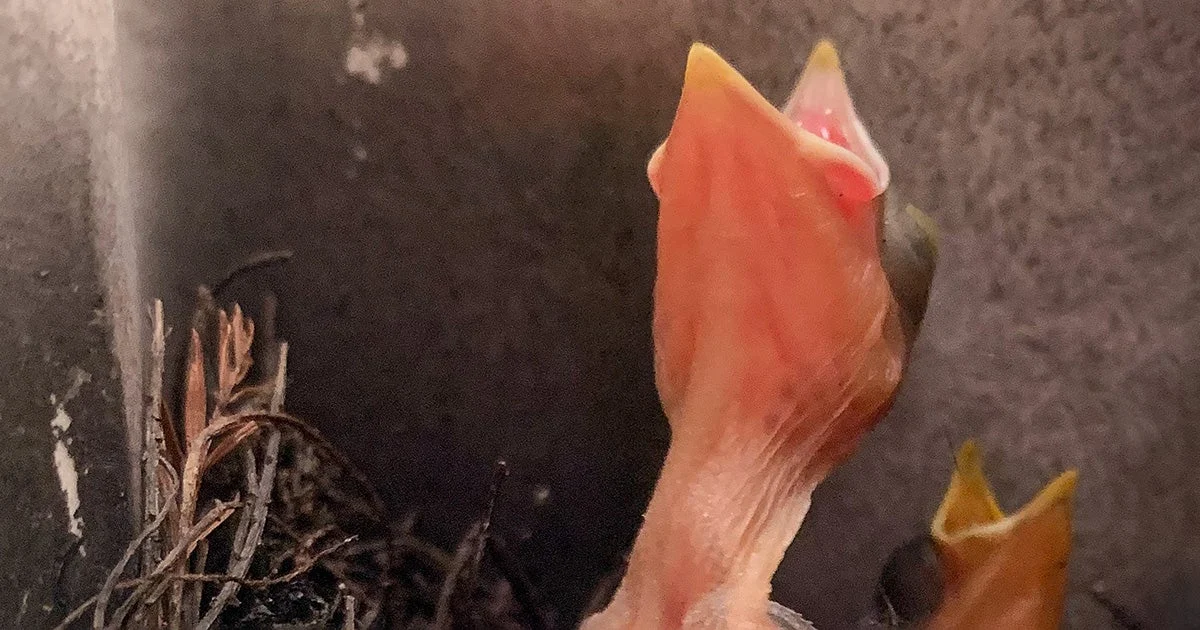
In the relentless theater of nature, where survival often hinges on the most subtle of advantages, a recent groundbreaking study has unveiled a remarkable evolutionary triumph: the Brown-headed Cowbird, a notorious avian brood parasite, hatches with exceptionally robust neck muscles, allowing its chicks to beg for food with an endurance that far outstrips their unwitting host siblings. This physiological superiority, akin to winning a race "by a neck," is a critical factor in the cowbird’s highly successful and widespread parasitic strategy, ensuring its survival at the expense of its foster families. The findings, published last month in the prestigious journal The American Naturalist, illuminate a previously unappreciated dimension of the intricate co-evolutionary arms race between brood parasites and their hosts, focusing on the sheer physical demands of nestling competition.
The Revelation of Avian Physiology
The study, spearheaded by lead author Nick Antonson, an animal physiologist at Brown University, delved into the comparative physiology of Brown-headed Cowbird chicks and their common host species, the Prothonotary Warbler. Antonson’s team hypothesized that the cowbirds’ highly competitive begging behavior, observed for decades, might be underpinned by specialized muscle adaptations. The results not only confirmed this hypothesis but revealed an astonishing disparity in endurance. "I was surprised by just how stark the effect was," Antonson remarked, underscoring the profound nature of this evolutionary divergence.
The research unfolded in two meticulously designed phases, emphasizing non-invasive techniques to ensure the well-being of the young birds. In the initial phase, researchers placed cowbird chicks within Prothonotary Warbler nest boxes, alongside their host nestmates. Late in their first week post-hatching, chicks from both species were temporarily removed for observation. Placed in dark enclosures, the scientists simulated a parent’s return by tapping the boxes three times. Infrared cameras then recorded the chicks’ begging responses. While both species raised their heads approximately one second after the tapping cue, the endurance difference was dramatic: cowbird chicks maintained their begging posture for an average of about five seconds, more than double the Prothonotary Warblers’ average of two seconds. This sustained posture, a visual signal of hunger and vigor, is crucial in attracting the attention and provisioning efforts of busy host parents.
The subsequent day, the team conducted a second experiment to directly quantify neck muscle endurance. Under light anesthesia, the muscle responsible for the begging posture was stimulated into constant contraction until it exhibited fatigue and lost force. The physiological measurements revealed a striking fourfold difference: Prothonotary Warbler chicks’ neck muscles fatigued four times faster than those of their Brown-headed Cowbird counterparts. This objective, physiological data provided irrefutable evidence of the cowbirds’ superior muscular resilience, directly linking their begging prowess to a tangible anatomical advantage. The ethical considerations of the study were paramount; the muscle experiments were completed within 15 minutes, chicks were returned to their nests within an hour, and subsequent monitoring confirmed that all tested birds successfully fledged, demonstrating the researchers’ commitment to animal welfare.
Brood Parasitism: A Masterclass in Deception and Survival
The Brown-headed Cowbird ( Molothrus ater ) is perhaps North America’s most recognizable and successful brood parasite. Brood parasitism, an evolutionary strategy employed by roughly 100 bird species globally, involves laying eggs in the nests of other species, thereby offloading the demanding task of parental care. This parasitic lifestyle is not a minor footnote in avian ecology; it represents a profound evolutionary adaptation that has shaped the reproductive strategies and population dynamics of countless bird species.
The Brown-headed Cowbird is particularly notorious for its broad host range, parasitizing over 200 different species of birds, from tiny warblers to larger thrushes. This adaptability is key to its widespread distribution across North America. The modus operandi of a female cowbird is a carefully executed sequence of stealth and manipulation. When a host female temporarily leaves her nest, the cowbird seizes the opportunity. She quickly sneaks in, often removing or damaging one or more host eggs before laying her own, typically slightly larger and often speckled to vaguely mimic some host eggs, though not always perfectly. The unsuspecting host parents are then left with the arduous task of incubating and raising a chick that is not their own, often at a significant cost to their own reproductive success.
Unlike some obligate brood parasites, such as the Common Cuckoo in Europe, which often employ violent methods like pushing host eggs or chicks out of the nest, Brown-headed Cowbird chicks typically do not directly kill their nestmates. Instead, their strategy revolves around fierce competition for resources. They often hatch earlier than host chicks due to a shorter incubation period (around 10-12 days for cowbirds compared to 11-14 days for many host species), giving them a head start. This early hatching, coupled with a rapid growth rate and the newly discovered superior begging endurance, allows them to effectively "bogart" food resources, diverting a disproportionate share of parental provisions. The larger, more vocal, and persistently begging cowbird chick often appears to the host parents as the most vigorous and thus the most deserving of food, triggering their innate feeding responses.
The Physiological Basis of Endurance
The remarkable endurance of the cowbird chick’s neck muscles points to underlying physiological adaptations. Muscle fatigue is a complex phenomenon, influenced by factors such as energy supply (ATP), waste product accumulation (e.g., lactic acid), and the efficiency of nerve-muscle communication. Muscles capable of sustained activity typically possess a higher proportion of slow-twitch, oxidative muscle fibers. These fibers are rich in mitochondria, the cellular powerhouses that generate ATP efficiently through aerobic respiration, making them highly resistant to fatigue. Conversely, fast-twitch, glycolytic fibers are optimized for rapid, powerful bursts of activity but fatigue quickly.
While the study did not delve into the specific cellular composition of the cowbird’s neck muscles, it is highly probable that their enhanced endurance stems from a greater density of slow-twitch fibers or more efficient metabolic pathways for waste removal and energy regeneration within those muscles. This physiological specialization represents a significant energy investment for the cowbird chick, but one that pays enormous dividends in the competitive nest environment. The metabolic cost of sustained begging is substantial, yet the cowbird’s enhanced musculature allows it to shoulder this burden more effectively, translating directly into more food intake and faster growth.
The Broader Ecological and Evolutionary Implications
James Kennerley, an ornithologist specializing in brood parasitism at the Cornell Lab of Ornithology, who was not involved in the study, lauded the research as "novel" and predicted it could "forge a whole new field of research into the physiology of begging behavior." This sentiment underscores the significance of the findings, shifting the focus from purely behavioral observations to the underlying biological mechanisms driving those behaviors.
The implications of the cowbird’s physiological advantage extend far beyond individual nests. For host species, consistent parasitism by cowbirds can significantly depress reproductive success. Studies have shown that nests parasitized by cowbirds often fledge fewer, if any, host young. The sheer energy expenditure by host parents in raising a robust cowbird chick can compromise their own future breeding efforts or even their survival. While the Brown-headed Cowbird is a native species and a natural component of North American ecosystems, its impact on certain declining migratory songbird populations, which are already facing threats from habitat loss and climate change, can be a conservation concern.
One might naturally wonder why host species, after countless generations of interaction with cowbirds, have not evolved countermeasures, such as stronger neck muscles in their own chicks to compete more effectively. Antonson and Kennerley offer compelling explanations rooted in evolutionary biology. Firstly, kin selection plays a role. While seemingly counterintuitive, it is, to some extent, in a host chick’s genetic interest for its nestmates – even if they are cowbirds – to receive food and fledge. This is because all nestlings, regardless of species, represent a potential distraction or alternative target for predators, indirectly increasing the survival odds for the host’s own offspring. Furthermore, host siblings share a significant portion of their DNA, meaning there is an evolutionary benefit in ensuring the success of their kin, even if it means tolerating a parasite that might indirectly aid in reducing the overall predation risk to the nest.
Secondly, and perhaps more crucially, there is an evolutionary trade-off. Developing exceptionally strong, fatigue-resistant neck muscles is metabolically costly. For a Prothonotary Warbler, a species whose nests are not always parasitized, allocating significant energy and nutrients to fortifying these muscles might be a waste if no cowbird chick is present to compete with. This energy could otherwise be directed towards more essential bodily functions, such as immune system development, overall growth, or even the development of other muscles vital for foraging or flight. Kennerley articulates this as "a trade-off between the best adaptation for a parasitized nest versus the best adaptation for an unparasitized nest." In environments where parasitism rates fluctuate, the selective pressure to evolve such specific defenses might not be strong enough to overcome the costs associated with them. The host species, therefore, exists in a delicate evolutionary balance, optimizing its traits for the most common scenario, which may not always involve parasitism.
A New Frontier in Avian Research
The study opens exciting avenues for future research. Antonson and his team are already planning to investigate how the endurance of Brown-headed Cowbird chicks compares to that of their non-parasitic blackbird relatives. This comparative approach could shed light on the specific evolutionary pressures that drove the development of this specialized trait within the parasitic lineage. Furthermore, they hope to replicate their experiments with other brood parasitic species across different avian families. If the pattern of enhanced begging muscle endurance holds true across diverse parasitic lineages, it would suggest a convergent evolution, where similar environmental pressures (intense nestling competition) lead to similar physiological solutions, irrespective of phylogenetic distance.
Such findings would not only deepen our understanding of avian physiology and behavior but also provide critical insights into the complex dynamics of co-evolution. The ongoing arms race between brood parasites and their hosts is a living laboratory of natural selection, constantly yielding new adaptations and counter-adaptations. The discovery of the cowbird’s "super necks" is a testament to the intricate and often surprising ways in which species evolve to ensure their survival and propagation, even if it means out-begging their way to victory. For scientists like Antonson, this revelation gives them—and the tireless baby birds—every reason to hold their heads high in anticipation of what more nature might reveal.