
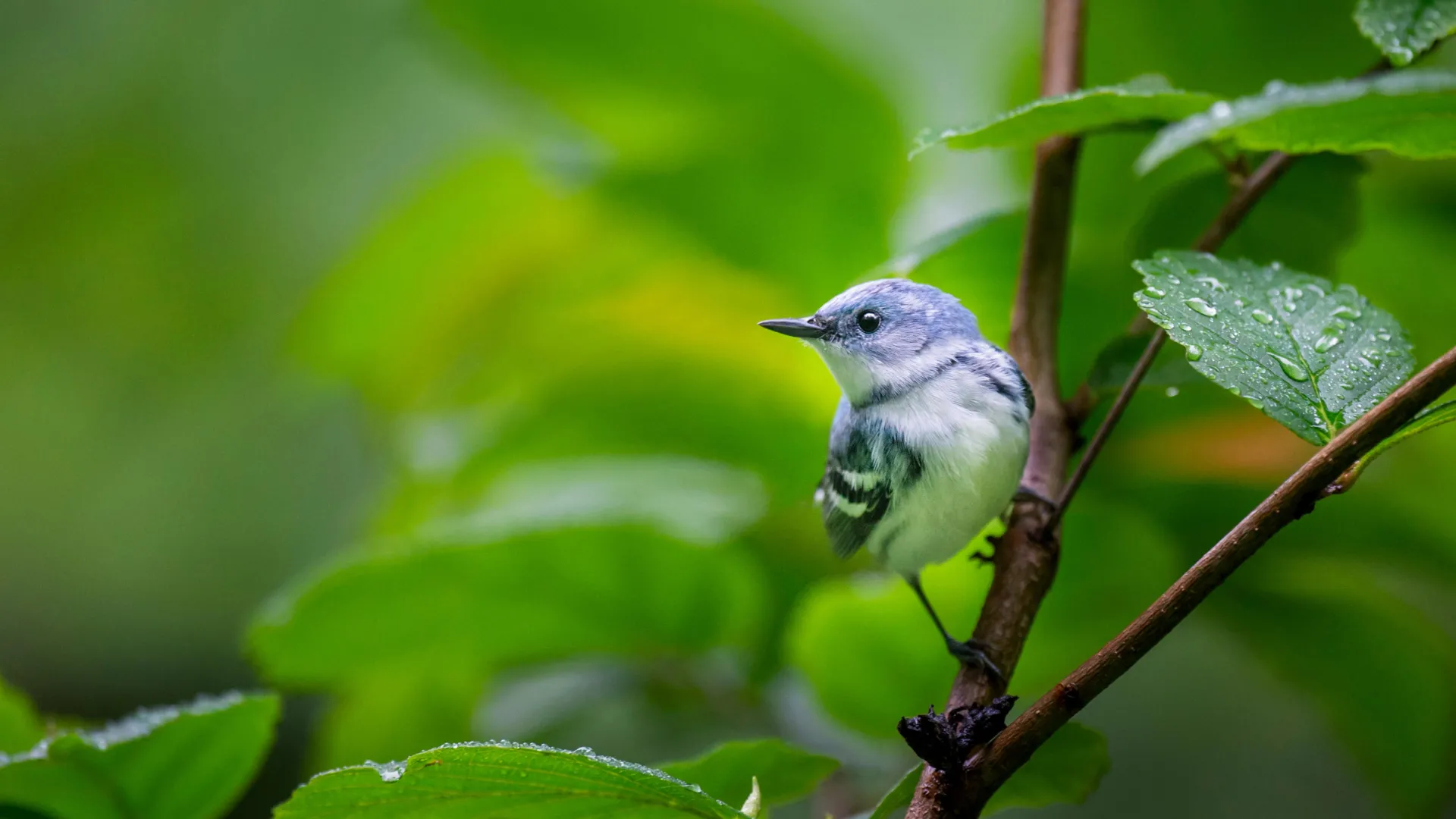
Every spring, the familiar and cherished songs of Wood Thrushes and various warbler species herald their return to parks, forests, and suburban neighborhoods across eastern North America. This annual re-emergence, a vibrant testament to the cyclical rhythm of nature, often belies the profound journey these avian travelers undertake, and the critical, often unseen, habitats that sustain them for the majority of their lives. Far from their northern breeding grounds, these birds rely intrinsically on the lush, biodiverse, and frequently remote forest ecosystems stretching across Central America, a region now scientifically confirmed as an irreplaceable winter sanctuary and migratory superhighway.
A groundbreaking study, spearheaded by the Wildlife Conservation Society (WCS) and the Cornell Lab of Ornithology (Cornell Lab), and recently published in the esteemed journal Biological Conservation, has illuminated the indispensable role of Central America’s "Five Great Forests." These vast, interconnected ecological blocks, extending from the southernmost reaches of Mexico through various Central American nations to northern Colombia, serve as a vital nexus for a remarkable array of migratory bird species, forging an unbroken ecological link between two continents. The research, leveraging an unprecedented volume of data, underscores that the fate of these distant tropical forests is inextricably tied to the health and survival of North America’s beloved migratory avifauna.
Unprecedented Data Reveals Astonishing Bird Concentrations
The study’s methodology harnessed the power of citizen science on an immense scale. Researchers meticulously analyzed detailed information on weekly bird distribution, made possible by millions of bird sightings voluntarily submitted to the Cornell Lab’s global eBird platform. This extraordinary dataset, compiled by birdwatchers and citizen scientists worldwide, provided an intricate mosaic of avian movements and habitat usage across the Americas. What the analysis unveiled was staggering: these five colossal forest complexes collectively provide essential habitat for an astonishing proportion of global populations for at least 40 identified migratory species. For some species, the concentration within these forests represents between one-tenth and nearly one-half of their entire global numbers. Alarmingly, many of these species are already categorized among the fastest declining bird populations in North America, highlighting the immediate and severe implications of habitat loss in their wintering grounds.
Anna Lello-Smith, the lead author of the study and a dedicated conservation scientist at WCS, emphasized the direct and undeniable connection. "What happens in Central America directly affects the birds we cherish in the United States and Canada," she stated, underscoring the hemispheric responsibility inherent in these findings. "These forests are far more than just tropical wilderness; they are at the very heart of the migratory phenomenon, sustaining countless birds for over half the year. They are the essential providers of food, shelter, and safety that empower species like the iconic Wood Thrush, the vibrant Magnolia Warbler, and myriad others to survive, thrive, and ultimately return north to grace our springs with their characteristic songs and brilliant colors."
The "Five Great Forests": An Ecological Corridor of Hemispheric Importance
The "Five Great Forests" are not merely isolated patches of woodland but represent a continuous ecological corridor of immense proportions, roughly equivalent in land area to the entire state of Virginia. This vital chain comprises the Selva Maya (spanning parts of Mexico, Guatemala, and Belize), the Moskitia (predominantly in Honduras and Nicaragua), Indio Maíz-Tortuguero (Nicaragua and Costa Rica), La Amistad (Costa Rica and Panama), and the Darién (Panama and Colombia). Together, they form an intricate tapestry of ecosystems, from lowland rainforests to cloud forests, critical for a vast spectrum of biodiversity.
This immense region acts as a biodiversity stronghold, sheltering not only the multitudes of migratory songbirds central to this study but also an impressive array of charismatic megafauna and endemic species. Jaguars, Baird’s tapirs, and scarlet macaws roam these forests, sharing the canopy and undergrowth with countless other creatures. For birds undertaking arduous journeys of thousands of miles each year, these forests serve as indispensable resting, refueling, and wintering grounds. Their ability to successfully complete their migration and return to breed depends entirely on the availability and quality of these tropical habitats.
Viviana Ruiz-Gutierrez, director of Conservation Science at the Cornell Lab of Ornithology and a co-author of the study, painted a vivid picture of the migratory bottleneck. "Every fall, billions of birds embark on their southward journey, funneling through the relatively narrow land bridge of Central America," she explained. "The sheer density of migratory warblers, flycatchers, and vireos concentrated within these five forests is truly astounding. This means that every single hectare of forest protected in this region safeguards a disproportionately large number of birds, making targeted conservation efforts incredibly efficient and impactful."
Escalating Threats: Deforestation’s Alarming Pace and Devastating Impact
Despite their immense ecological value, these critical forest ecosystems are vanishing at an alarming and accelerating pace. The primary driver of this devastating habitat loss is illegal cattle ranching, which has already claimed millions of acres, converting biodiverse forest into pastureland. The scale of destruction is stark: in the Moskitia region alone, nearly one-third of the forest has been destroyed in just the last two decades. This rapid deforestation is not merely a localized environmental tragedy; it is an existential threat to the delicate balance of migratory bird populations and, by extension, to the ecological integrity of both Central and North America.
Jeremy Radachowsky, Regional Director for WCS’s Mesoamerica Program, issued a grave warning regarding the long-term consequences. "If we lose the last great forests of Central America — and current trends indicate we are — we simultaneously lose the very birds that define our eastern forests in North America," he cautioned. This stark prognosis underscores the interconnectedness of ecosystems across hemispheric boundaries. However, Radachowsky also offered a glimmer of hope, asserting that "by robustly supporting rural communities, empowering governments, and collaborating with dedicated conservation partners on the ground, we still possess the opportunity to reverse this destructive tide."
The implications of continued deforestation extend far beyond the immediate loss of habitat. These forests provide crucial ecosystem services, including carbon sequestration, water regulation, and soil stabilization, all of which are vital for regional and global environmental health. Their destruction exacerbates climate change, increases the risk of natural disasters, and diminishes the resilience of local communities. The economic repercussions are also significant; pristine forests support ecotourism, sustainable agriculture, and other nature-based livelihoods that are undermined by deforestation.
Local and Indigenous Communities: Guardians of the Forests
Amidst the grim statistics, a powerful force for conservation emerges from within Central America itself: the Indigenous and local communities who have historically coexisted with and depended upon these forests. Across the region, these communities are actively engaged in vital conservation efforts. They are working tirelessly to restore degraded lands, implement strategies to prevent devastating forest fires, and revive traditional, bird-friendly livelihoods. Initiatives such as sustainable allspice and cacao production offer economically viable alternatives to destructive practices like cattle ranching, providing income while preserving biodiversity.
These community-led efforts are often undertaken in the face of significant challenges and even serious personal risks, including threats from illegal loggers and ranchers. Yet, their commitment remains unwavering, recognizing that their cultural heritage and future well-being are intrinsically linked to the health of the forests. Their traditional knowledge and practices offer invaluable insights into sustainable forest management and biodiversity conservation.
Viviana Ruiz-Gutierrez expressed an aspiration for broader collaboration. "Imagine the immense possibility of linking with those dedicated efforts," she mused, envisioning a future where "we can work together across the Americas to bring back our shared migratory birds." This sentiment highlights the urgent need for international recognition and support for these grassroots conservation initiatives, which form the bedrock of any successful long-term strategy.
Mapping Hemispheric Connections: The "Sister Landscapes" Initiative
For many years, effective international cooperation on migratory bird conservation was hampered by a fundamental knowledge gap: scientists lacked clear, comprehensive information about precisely how migratory birds connected different habitats and communities throughout their annual cycles. To overcome this limitation and foster more targeted, cross-border conservation strategies, researchers utilized an innovative framework developed by Partners in Flight and the Cornell Lab. This framework allowed them to meticulously map "stewardship connections" – identifying specific regions in North America where species highly dependent on the "Five Great Forests" gather to breed.
These groundbreaking findings conclusively demonstrate that the ecological health of the "Five Great Forests" is intimately tied to specific forest regions across North America. These include the ancient Appalachian Mountains, the fertile Mississippi Delta, the expansive Great Lakes region, the historic woodlands of New England, and the vital green spaces surrounding major metropolitan areas like New York City. Researchers have aptly termed these geographically disparate yet ecologically linked regions "sister landscapes." This concept powerfully illustrates that these paired regions are connected by the very same bird species at different, yet equally critical, points in their annual migratory cycle. A Scarlet Tanager nesting in the Appalachian foothills in summer will spend its winter months in the Darién Gap, making the health of both landscapes crucial for its survival.
Protecting Forests to Protect a Shared Avian Heritage
In essence, the "Five Great Forests" serve as the tropical counterparts to North America’s eastern forests. They provide vital refuge and sustenance for the same diverse suite of forest-loving birds, including the striking Scarlet Tanagers, the elusive Kentucky Warblers, the charismatic Golden-winged Warblers, and the soaring Broad-winged Hawks. These species rely entirely on these Central American habitats during the months when they are far from their northern breeding territories, using them as critical wintering grounds and essential stopover points during their arduous migrations. Safeguarding these precious wintering and migratory stopover habitats is not merely an act of regional conservation; it is an absolutely essential prerequisite for ensuring that these iconic birds continue their annual journeys, returning north each spring to enrich North American ecosystems with their presence and song.
The implications of this study are profound, transforming our understanding of continental ecological interdependence. It shifts the perception of conservation from localized efforts to a truly hemispheric imperative. "Every hectare we protect in Central America has profound ripple effects for birds and for people across the entire hemisphere," reiterated Anna Lello-Smith. She underscored that "the very forests that sustain thrushes and warblers also provide livelihoods and support the well-being of local communities."
The call to action is clear and resonant: if individuals across North America cherish the return of their migratory birds each spring, they are invited to deepen their understanding of the tropical forests these birds call home for the majority of the year. This knowledge, coupled with active support for conservation initiatives in Central America, offers a tangible pathway to protecting a shared avian heritage. The study serves as a powerful reminder that the vibrant tapestry of life we observe in our backyards and national parks is intricately woven with threads that stretch thousands of miles south, binding our continents in a shared ecological destiny. The future of North America’s migratory birds, and indeed the health of both continental ecosystems, hinges on the collective will to protect these irreplaceable Central American lifelines.