
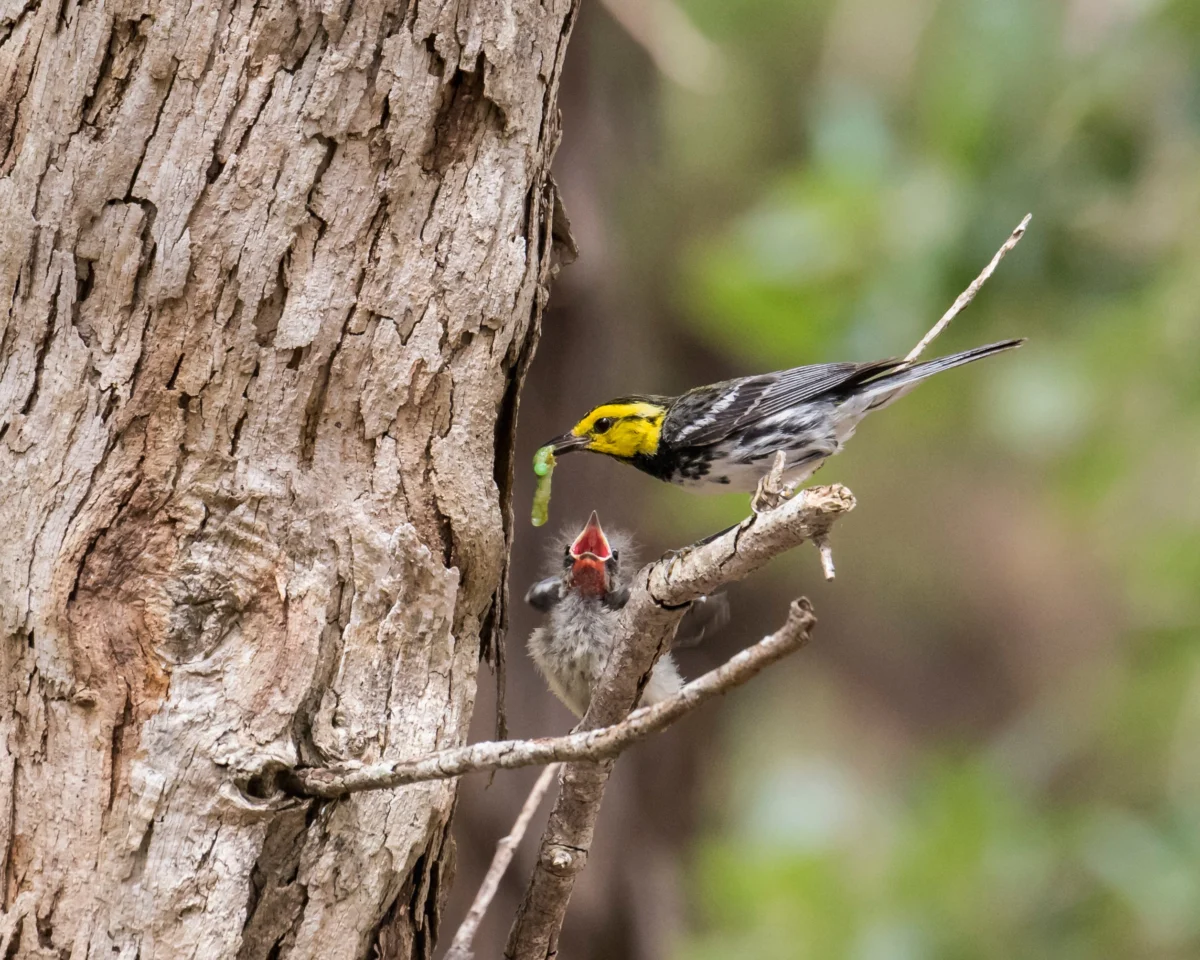
Few species embody the spirit and deep-rooted heritage of Texas quite like the Golden-cheeked Warbler. For many Texans, the phrase "Texas born and raised" signifies generations of familial ties and an intrinsic connection to the Lone Star State. Yet, this sentiment finds its truest ecological parallel in Setophaga chrysoparia, a delicate songbird whose entire breeding lineage is uniquely and exclusively woven into the fabric of the Texas Hill Country. Each spring, following a perilous journey from their wintering grounds in Central America, these vibrant warblers return to the same familiar landscapes, driven by an instinct to nest, raise their young, and perpetuate a cycle that has defined their species for millennia. Their presence not only highlights Texas’ exceptional biodiversity but also underscores the state’s critical role as a vital migratory corridor for millions of birds across North America, necessitating urgent and widespread conservation efforts.
The Heart of Texas: An Endemic Icon
The Golden-cheeked Warbler is a small passerine bird, roughly 4.5 inches in length with a wingspan of about 7.5 inches, characterized by its striking appearance. Adult males are particularly vivid, displaying a bright lemon-yellow face framed by a bold black eyeline, a black throat and breast, and prominent black streaks along a white belly. Females and immature birds exhibit a similar, though often fainter, pattern. Their distinctive "buzzy" song, often described as "zee-zee-zoo-zee," is a telltale sign of their presence, echoing through the canyons and woodlands of their breeding grounds. These vocalizations serve not only to attract mates but also to delineate territories, signaling the commencement of a new breeding season.
Ecologically, the Golden-cheeked Warbler is an obligate species of the mature Ashe juniper-oak woodlands, a unique ecosystem found almost exclusively in the Edwards Plateau region of central Texas. This specific habitat provides the critical resources the warblers require for survival. They are active foragers, meticulously gleaning insects and spiders from leaves and branches, often darting from perches to capture prey in mid-air or hovering among the foliage. However, their reliance on the Ashe juniper extends beyond mere sustenance; the flaky bark of mature Ashe juniper trees is an indispensable nesting material. Warblers meticulously peel strips of this bark, weaving it into cup-shaped nests, often camouflaged with spider silk, typically situated in the forks of oak or juniper trees. This singular dependency on a specific tree species and a particular stage of forest development makes them incredibly vulnerable to habitat alteration.
A Lineage ‘Texas Born and Raised’: The Annual Migration
The annual life cycle of the Golden-cheeked Warbler is a testament to extraordinary endurance and precise biological programming. After spending the winter months in the highlands of southern Mexico, Guatemala, Honduras, and Nicaragua, these tiny birds embark on an arduous northward migration. Their journey, often spanning thousands of miles, brings them back to the same Texas Hill Country landscapes each spring, typically arriving from late February through March, with peak arrivals in early to mid-March. This punctual return marks the initiation of their breeding season, which extends through the spring and early summer.
Upon arrival, the males establish territories, singing persistently to attract females and ward off rivals. Nest building commences in April, followed by egg-laying, incubation, and the intensive period of raising chicks. Females typically lay 3-5 eggs, which hatch after about 10-12 days. Both parents participate in feeding the voracious nestlings, which fledge approximately 10-12 days after hatching. By late June and early July, the young warblers are independent, and both adults and juveniles begin their southward migration back to Central America, completing the annual cycle. The precision of their migratory timing and their fidelity to specific breeding sites highlight the critical importance of maintaining the integrity of these unique Texan woodlands.
The Perilous Path to Endangered Status
Despite their deep historical roots in Texas, the Golden-cheeked Warbler population has faced significant threats, leading to its designation as an endangered species. The primary driver of this decline has been extensive habitat loss and fragmentation across the Edwards Plateau. Historically, the region’s unique juniper-oak woodlands were widespread. However, rapid human population growth, urbanization, agricultural expansion, road construction, and the proliferation of infrastructure have systematically eroded and fractured these essential habitats.
In recognition of its precarious status, the U.S. Fish and Wildlife Service (USFWS) listed the Golden-cheeked Warbler as an endangered species under the Endangered Species Act (ESA) in 1990. This listing provided critical legal protections, making it illegal to harm the birds or destroy their designated critical habitat without federal authorization. At the time of listing, it was estimated that the population had declined by a significant margin from historical levels. Current population estimates vary due to the difficulty of surveying a cryptic species across a vast and often inaccessible landscape, but most analyses suggest a range of 16,000 to 27,000 breeding pairs. While conservation efforts have likely prevented further catastrophic declines, the species remains highly vulnerable.
The "critical habitat" designation under the ESA identifies specific areas essential for the conservation of an endangered species. For the Golden-cheeked Warbler, these areas are primarily within 33 counties of central Texas, including large tracts of public and private lands. The designation mandates federal agencies to ensure that actions they authorize, fund, or carry out do not adversely modify or destroy critical habitat. However, balancing these protections with the pressures of continued development in one of the nation’s fastest-growing regions remains a complex and ongoing challenge for state and federal agencies, as well as private landowners.
Sanctuaries and Stewardship: Observing and Protecting the Warbler
Conservation of the Golden-cheeked Warbler relies on a multifaceted approach, combining legal protections, habitat management, public education, and scientific research. Several key sites across Texas serve as vital refuges and educational hubs for the species. One such significant location is Palo Pinto Mountains State Park, situated near Strawn, Texas, at the northern edge of the warbler’s known breeding range. The park, officially opened to the public in April 2024, encompasses nearly 5,000 acres of rugged terrain, including pristine juniper-oak woodlands that provide suitable habitat for the warblers.
During a recent weekend in late March, an observer hiking the rocky limestone trails ascending from Palo Pinto Creek reported hearing the unmistakable buzzy songs of male Golden-cheeked Warblers echoing through the canyon. These early migrants were a clear indicator of the impending breeding season, signaling the park’s importance as a sanctuary for the species. Park officials, collaborating with the Texas Parks and Wildlife Department (TPWD), are committed to managing the park’s natural resources to support this endangered species, employing strategies such as careful trail planning and habitat restoration to minimize human impact while allowing for public appreciation.
Beyond Palo Pinto, other crucial sites include the Balcones Canyonlands National Wildlife Refuge, a 27,000-acre refuge specifically established for the conservation of the Golden-cheeked Warbler and other endangered species. Fort Hood, one of the largest U.S. military installations, also harbors significant tracts of warbler habitat, managed under strict conservation protocols. Furthermore, organizations like Audubon Texas, The Nature Conservancy, and numerous local land trusts actively work with private landowners through conservation easements and incentive programs to protect and restore warbler habitat, acknowledging that a substantial portion of the remaining habitat lies on private property.
For North Texas residents, the Dogwood Canyon Audubon Center in Cedar Hill offers an invaluable opportunity to connect with this iconic species. The center hosts guided Golden-cheeked Warbler walks every Saturday in April, providing participants with expert-led tours through suitable habitats, enhancing understanding of the warbler’s ecology and the broader conservation imperative. These programs serve as vital educational tools, fostering a deeper appreciation for biodiversity and inspiring local communities to participate in conservation efforts.
Texas: A Crucial Crossroads for North American Migratory Birds
While the Golden-cheeked Warbler stands as a unique symbol of Texan ecological identity, its plight is part of a much larger narrative concerning migratory birds. Texas plays an extraordinarily critical role in the annual migrations of North American birds, often referred to as a "migratory funnel" or "crossroads." The state provides essential habitat for an astonishing one out of every three to four migratory birds in North America, positioning the region as one of the most important migratory corridors in the entire country.
Millions of birds representing hundreds of species traverse Texas annually as part of the Central Flyway, one of the continent’s major migratory routes. This includes a diverse array of raptors, shorebirds, waterfowl, and countless songbirds like the warbler. The state’s diverse ecoregions—from the pineywoods of East Texas to the coastal prairies and the Trans-Pecos mountains—offer crucial stopover sites, providing food, water, and shelter for exhausted travelers. The Gulf Coast, in particular, is a critical staging area for birds making long overwater flights across the Gulf of Mexico, both in spring and fall.
Migration is a perilous journey, and migratory birds face myriad threats throughout their annual cycle. Beyond habitat loss on breeding and wintering grounds, they encounter hazards such as climate change, which alters migration timings and resource availability; pesticide use, which decimates insect populations vital for food; and increasing human infrastructure, which presents physical obstacles. These cumulative pressures have led to significant declines in many migratory bird populations across North America, underscoring the urgency of comprehensive conservation strategies in key regions like Texas.
Navigating the Night: The Silent Threat of Light Pollution
A particularly insidious threat to migratory birds, often overlooked, is artificial light pollution. With migration currently underway from March 1 to June 15, and peak migration quickly approaching between April 22 and May 12, it is more critical than ever for Texans to adopt bird-friendly practices. Songbirds, including the Golden-cheeked Warbler, predominantly undertake their arduous journeys under the cover of night. They navigate using natural cues such as the Earth’s magnetic fields and the constellations, particularly the North Star.
However, the proliferation of artificial lighting in urban and suburban areas profoundly interferes with this delicate navigational system. Bright, misdirected lights can disorient birds, drawing them off course and trapping them in urban landscapes. This disorientation leads to increased exhaustion as birds expend vital energy circling illuminated areas. More critically, it dramatically elevates the risk of fatal collisions with illuminated buildings and windows. Research estimates that hundreds of millions, possibly over a billion, birds die annually from collisions with buildings in North America alone, with light pollution being a significant contributing factor.
Organizations like Audubon Texas have spearheaded "Lights Out Texas" campaigns, encouraging cities and individuals to reduce nighttime lighting during peak migration periods. These initiatives highlight that simple actions can have a monumental impact. As an Audubon Texas spokesperson might infer, "Turning off non-essential lights, especially between midnight and dawn, is one of the easiest yet most effective ways to protect migratory birds. Every light that goes out helps guide a bird safely on its way." The collective impact of such actions across a large and populous state like Texas can significantly reduce migratory bird mortality.
Empowering Texans: Actions for Bird-Friendly Communities
The future of the Golden-cheeked Warbler and the countless other migratory birds that depend on Texas rests heavily on the informed choices and collective actions of its residents. Implementing bird-friendly practices can transform urban and suburban environments into safer passages and more supportive habitats.
One of the most impactful actions is participating in "Lights Out" initiatives. This involves turning off non-essential outdoor and indoor lights from dusk until dawn, particularly during the peak migration windows. For necessary lighting, using downward-facing, shielded fixtures with motion sensors can minimize light spill and disruption.
Another critical step is to address window collisions. Standard glass windows, especially large panes, reflect sky and vegetation, creating a deceptive illusion that birds attempt to fly through. Simple, effective solutions include applying bird-safe window treatments such as decorative films, fritted glass, screens, or decals spaced closely enough to deter collisions. Even placing external insect screens can significantly reduce bird mortality by breaking up reflections.
Furthermore, planting native vegetation in yards and public spaces offers multifaceted benefits. Native plants, adapted to the local climate, require less water and maintenance. Crucially, they provide essential food sources (nectar, berries, seeds, and the insects that feed on them) and shelter for local and migratory birds. Replacing non-native ornamental plants with species like Texas sage, various oaks, yaupon holly, and native grasses can create crucial patches of habitat, offering sustenance and refuge for exhausted migrants and year-round residents alike.
Engaging in citizen science initiatives, such as eBird or the Audubon Christmas Bird Count, also contributes valuable data to researchers tracking bird populations and migration patterns. These efforts allow ordinary citizens to become active participants in conservation, furthering scientific understanding and informing management strategies.
Economically, birding and ecotourism represent a significant industry in Texas, generating millions of dollars annually and supporting numerous local businesses. Protecting migratory bird populations, therefore, is not only an ecological imperative but also a sound economic investment.
The Future of Conservation: Challenges and Hope
The journey of the Golden-cheeked Warbler—from its unique evolutionary path in the Texas Hill Country to its perilous annual migration—serves as a compelling microcosm of the broader challenges facing biodiversity today. Despite significant conservation efforts, continued human population growth, development pressures, and the overarching impacts of climate change pose persistent threats to the warbler and its essential habitat. Climate change, for instance, could alter rainfall patterns, influencing the growth and health of Ashe juniper-oak woodlands, or shift migratory timings, potentially creating mismatches with food availability.
The ongoing success of Golden-cheeked Warbler recovery will depend on sustained, collaborative efforts among government agencies like the USFWS and TPWD, non-governmental organizations such as Audubon Texas and The Nature Conservancy, academic institutions conducting vital research, and crucially, private landowners who steward the majority of the remaining habitat. Adaptive management strategies, informed by the latest scientific data, will be essential to navigate future environmental changes and development pressures.
Ultimately, the phrase "Texas born and raised" must extend beyond human sentiment to encompass the rich natural heritage that defines the state. By taking proactive steps to protect species like the Golden-cheeked Warbler and to make our communities more bird-friendly, Texans can ensure that their legacy is one of stewardship and conservation, preserving the vibrant tapestry of life that makes the Lone Star State truly unique for generations to come.