
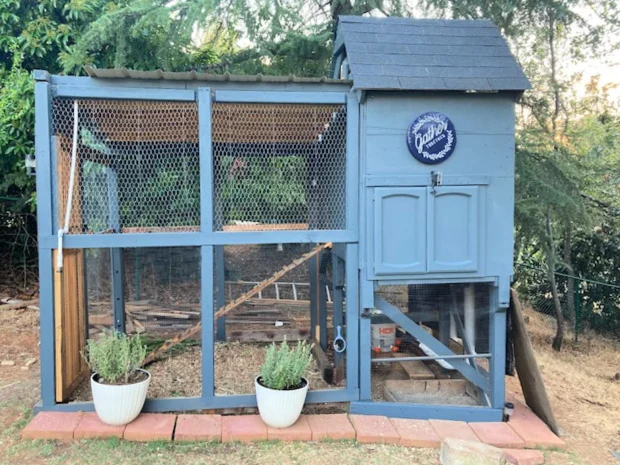
The burgeoning movement toward domestic food independence has seen a significant uptick in backyard poultry farming across the United States. While the appeal of fresh eggs and organic pest control is high, the initial capital investment required for infrastructure—specifically high-quality chicken coops—often serves as a deterrent for many families. However, a recent case study from Redding, California, highlights a growing trend in sustainable agriculture: the conversion of underutilized residential structures, such as children’s playhouses, into fully functional poultry habitats. By repurposing an outgrown playhouse, one California family successfully established a "poultry mansion" for a total expenditure of approximately $300, a fraction of the market cost for a pre-fabricated unit of similar scale.

The Redding Case Study: A Model of Resourceful Infrastructure
In Redding, California, a family of six demonstrated the economic and environmental viability of the "upcycling" approach to animal husbandry. Facing the high costs associated with professional-grade chicken coops, which can range from $800 to over $3,000 depending on size and material quality, the family looked to their own backyard for a solution. An old wooden playhouse, no longer in use by the children, served as the primary structural frame for their new agricultural venture.

The project was not merely a cost-saving measure but a comprehensive family undertaking involving children ranging in age from eight to seventeen. By integrating the labor of Mya (17), Ezra (12), Eden Rose (10), and Joel (8), the project functioned as a practical application of engineering, biology, and fiscal responsibility. The resulting structure successfully houses a flock of Barred Rock chickens, a heritage breed known for its hardiness and consistent egg production.

A Chronology of Conversion: From Playhouse to Poultry Habitat
The transformation of the playhouse followed a logical progression of assessment, acquisition, and construction. The family began by evaluating the structural integrity of the existing playhouse to ensure it could provide adequate protection against the elements and local predators.

- Material Sourcing and Acquisition: To keep costs at the $300 mark, the family engaged in extensive material recovery. This included salvaging scrap wood and cabinet pieces from previous home projects. External support was provided by the local community; friends and neighbors donated surplus tin roofing segments and roof tiles, which were essential for ensuring the structure remained watertight.
- Structural Modification: The family repurposed an old closet door to serve as a primary access point for cleaning and maintenance. Cabinet doors were ingeniously integrated to create nesting box access, allowing for egg collection from the exterior without disturbing the birds.
- Brooder Development: Prior to the completion of the coop, the family’s patriarch repurposed a hinged storage box, formerly used for pool supplies, into a brooder. This controlled environment was critical for the early stages of chick development. The brooder was equipped with a warming plate and a feather duster to simulate the presence of a mother hen, alongside a Dollar Tree mirror for chick enrichment.
- Aesthetic Integration: To ensure the new agricultural structure complemented the residential property, the family and several neighbors collaborated on a painting phase. The coop was finished in a color scheme matching the main residence, a move that often helps in maintaining neighborhood aesthetic standards and adhering to potential Homeowners Association (HOA) guidelines.
- Biological Implementation: The family attempted to hatch eight eggs, resulting in two successful Barred Rock chicks. To bolster the flock size, additional chicks were acquired. The process required a "labor of love" from twelve-year-old Ezra, who manually turned the eggs three times daily during the incubation period.
Financial Analysis: Mitigating the High Cost of Agricultural Infrastructure
The economic implications of this project are significant when viewed through the lens of current market trends. According to data from the Bureau of Labor Statistics and various agricultural retail indices, the cost of lumber and finished poultry products rose sharply between 2021 and 2023. A standard pre-fabricated coop designed for 6–8 birds often utilizes thin, heat-treated fir wood, which may only last 3–5 years in harsh climates.

By contrast, the Redding family’s $300 conversion utilized high-grade residential construction materials (repurposed from the original playhouse and donations). This approach provides a more durable structure with a significantly longer life cycle. The $300 investment covered essential items that could not be easily salvaged, such as hardware cloth (a predator-proof mesh superior to traditional chicken wire), specialized fasteners, and high-quality exterior paint.

When factoring in the current average price of organic, pasture-raised eggs—which can exceed $6.00 per dozen in some California markets—the "break-even" point for a $300 coop is reached much faster than that of a $1,500 commercial unit. This fiscal efficiency is a primary driver for the "DIY" coop movement.

Material Sustainability and the Circular Economy
The Redding project serves as a microcosm of the "circular economy," an economic system aimed at eliminating waste and the continual use of resources. By diverting an old playhouse, tin roofing scraps, and cabinet doors from a landfill, the family reduced the carbon footprint associated with manufacturing and transporting new materials.

Expert analysis suggests that repurposing outbuildings like garden sheds, barn stalls, or playhouses is the most environmentally responsible way to enter backyard farming. These structures already possess the necessary "embodied energy"—the sum of all energy required to produce the material. Extending the life of these structures through a change in utility is a key pillar of sustainable living.

Technical Requirements for Successful Structure Conversion
While the Redding family’s success is inspiring, agricultural experts note that converting a playhouse requires adherence to specific avian health standards. A professional-grade conversion must address several critical factors:

- Ventilation vs. Drafts: Chickens produce significant amounts of moisture and ammonia. A converted playhouse must have ventilation holes near the roofline to allow hot, moist air to escape, while ensuring that "roost-level" drafts are minimized to prevent respiratory illness.
- Predator Proofing: Playhouses are designed for children, not for keeping out determined predators like raccoons, foxes, or hawks. The Redding family’s use of "scraps" likely included the reinforcement of windows and floor gaps with 1/4-inch or 1/2-inch hardware cloth.
- Interior Layout: To be functional, the interior must be stripped of play furniture and fitted with roosting bars (ideally 2x4s with the wide side up to protect feet from frostbite) and nesting boxes (one for every 3–4 hens).
- Ease of Sanitation: The inclusion of an old closet door in the Redding project is a strategic move. Large access doors are essential for the "deep litter method" or frequent mucking, which prevents the buildup of pathogens.
Educational and Psychological Impact on Youth Development
Beyond the tangible output of eggs, the Redding family highlighted the pedagogical benefits of the project. The involvement of four children in the construction and the "devastating" but educational experience of hatching chicks provides a hands-on lesson in the cycle of life.

Ezra’s commitment to turning eggs three times a day represents a level of responsibility and "labor of love" that modern digital entertainment rarely provides. Psychologists suggest that "animal-assisted activities" and the responsibility of caring for livestock can improve empathy, reduce anxiety, and foster a sense of agency in children. The Redding family’s experience confirms that the coop became a center for family bonding and community interaction.

Broader Implications for Food Security and Urban Planning
The Redding case study arrives at a time of heightened concern regarding food security. Volatility in the global supply chain and outbreaks of Highly Pathogenic Avian Influenza (HPAI) in commercial flocks have led to erratic egg prices and occasional shortages.

As more families follow the Redding model, urban and suburban landscapes are being subtly transformed. This shift forces a re-evaluation of municipal zoning laws. Many cities have recently relaxed ordinances to allow for small backyard flocks, recognizing them as a tool for urban resilience. The use of repurposed structures like playhouses helps these agricultural additions blend into residential environments, potentially reducing friction with neighbors who might object to more industrial-looking agricultural equipment.

Conclusion and Future Outlook
The story of the Redding family and their $300 playhouse-to-coop conversion is more than a DIY success story; it is a blueprint for accessible, sustainable, and family-oriented micro-farming. As the family prepares for a new batch of chicks this spring to supplement their aging layers, their experience stands as a testament to the fact that the largest expense of backyard farming—the coop—can be mitigated through creativity and community cooperation.

For those without an existing playhouse, the family and experts suggest monitoring local digital marketplaces. Often, these structures are offered for free to anyone capable of hauling them away, as they are bulky and difficult to dispose of once children outgrow them. By viewing an old playhouse not as yard waste but as the skeleton of a future food source, families can take a significant step toward self-sufficiency while fostering a deeper connection to the food they consume and the environment they inhabit.