
The culinary challenge of peeling hard-boiled eggs, particularly those sourced directly from farms, has long been a point of frustration for home cooks and professional chefs alike. While the nutritional value and superior flavor of farm-fresh eggs are widely recognized, their structural integrity often makes the removal of the shell a destructive process. However, emerging culinary techniques and ancestral wisdom suggest that the traditional method of boiling is fundamentally flawed. By shifting from boiling to steaming, cooks can achieve a clean peel regardless of the egg’s age, preserving the aesthetic and structural quality of the egg for dishes such as deviled eggs and salads.

The Chemistry of the Farm-Fresh Egg
To understand why farm-fresh eggs are difficult to peel, one must look at the internal chemistry of the egg. A newly laid egg has a relatively low pH level in the albumen, or egg white. In this acidic environment, the proteins in the egg white bond strongly to the inner shell membrane during the cooking process. As an egg ages, carbon dioxide escapes through the porous shell, causing the pH of the albumen to rise. This increase in alkalinity weakens the bond between the membrane and the shell, which is why older, supermarket-bought eggs are generally easier to peel after boiling.

Furthermore, fresh eggs lack a significant air cell. As an egg sits over several weeks, moisture evaporates and is replaced by air, creating a pocket at the blunt end of the egg. While this air cell makes for easier peeling, it also results in a "dimple" or flattened end on the cooked egg, which is undesirable for professional presentation. The goal for many enthusiasts is to find a method that allows for the use of eggs laid within hours while maintaining a perfect oval shape and an effortless peel.

Evaluating Traditional Boiling Additives and Techniques
For decades, various "hacks" have circulated through social media and traditional cookbooks, each claiming to solve the peeling dilemma. These methods typically involve altering the water chemistry or the physical state of the egg before cooking.

- Chemical Additives: Many recipes suggest adding white vinegar or baking soda to the boiling water. The theory behind vinegar is that it softens the calcium carbonate of the shell, while baking soda aims to increase the alkalinity of the water to permeate the shell and loosen the albumen. Scientific testing has shown these methods to be inconsistent, often failing to overcome the strong protein bonds in very fresh eggs.
- Physical Alterations: Poking a small hole in the blunt end of the egg with a pin is a technique intended to release pressure and allow water to seep between the membrane and the white. This method is not only labor-intensive but increases the risk of the shell cracking prematurely during the boil.
- Temperature Shocks: Some cooks advocate for starting eggs in cold water and bringing them to a boil, while others suggest dropping cold eggs into already boiling water. While "hot-starting" eggs generally yields better results than "cold-starting," it still subjects the delicate eggs to the turbulent environment of bubbling water, which can lead to cracked shells and leaked whites.
Despite these efforts, the results often remain hit-or-miss, leading to the "torn white" phenomenon where chunks of the egg white are removed along with the shell.

The Steaming Breakthrough: A Methodical Shift
The transition from boiling to steaming represents a significant shift in heat application. Steaming is a gentler yet highly efficient method of heat transfer. Unlike boiling water, which can be turbulent and cause eggs to knock against one another, steam surrounds the egg in a consistent, high-heat environment without physical agitation.

Culinary experts, including Lisa Steele, a fifth-generation chicken-keeping expert and founder of the "Fresh Eggs Daily" brand, have long advocated for steaming as the definitive solution. Steele, who manages a flock of chickens, ducks, and geese, notes that steaming allows her to cook eggs collected on the same morning with perfect results. The method relies on the "thermal shock" of the steam, which causes the egg white to shrink away from the membrane rapidly, effectively breaking the bond before it can set permanently.

Technical Requirements and Procedure
The steaming method requires minimal specialized equipment, making it accessible for any kitchen. The essential components include a pot, a steaming insert (such as a bamboo steamer, vegetable basket, or even a metal colander), and a tight-fitting lid.

The Step-by-Step Chronology of Steaming:

- Initial Heating: Approximately one to two inches of water are brought to a vigorous boil in a large pot.
- Preparation: Eggs are rinsed in warm water to prevent the shells from cracking due to extreme temperature variance when introduced to the steam.
- The Steaming Process: The eggs are placed in a single layer within the steamer basket. The basket is set over the boiling water, and the lid is secured. The eggs are then cooked for 10 to 12 minutes, depending on the desired firmness of the yolk.
- The Ice Bath: Immediately upon completion, the eggs must be transferred using tongs into a bowl filled with ice and cold water. This "shock" stops the cooking process instantly.
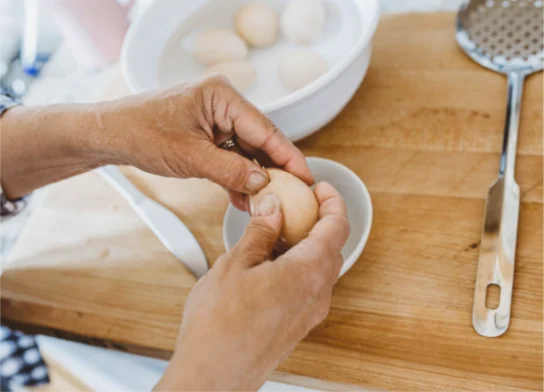
- Peeling: Once the eggs are completely cool to the touch, they are gently rolled on a hard surface to crack the shell into small pieces. Peeling usually begins at the blunt end, where any existing air sac provides a starting point.
Addressing the "Green Ring" Phenomenon
A common defect in hard-cooked eggs is the appearance of a grayish-green ring around the yolk. This discoloration is not a sign of spoilage but rather a result of a specific chemical reaction involving sulfur and iron.

When an egg is overcooked or cooled too slowly, the sulfur found in the egg whites breaks down into hydrogen sulfide gas. This gas reacts with the iron naturally present in the egg yolk to form iron sulfide. The resulting green ring is harmless but unappealing. Steaming, combined with an immediate ice bath, significantly reduces the likelihood of this reaction. The precise control of cooking time and the rapid temperature drop in the ice water prevent the hydrogen sulfide from reacting with the yolk’s iron, ensuring a vibrant, yellow center.

Broader Implications for the Culinary Industry and Home Cooks
The move toward steaming eggs has broader implications for food waste and culinary efficiency. In a commercial kitchen, the time lost to difficult-to-peel eggs translates to higher labor costs and increased food waste. When shells stick to the whites, the eggs often become unusable for high-end presentations, such as deviled egg appetizers or Nicoise salads.

For the home cook, especially those participating in the growing "backyard chicken" movement, the ability to use fresh eggs immediately is a significant advantage. It eliminates the need to "age" eggs in the refrigerator for two to three weeks, thereby freeing up storage space and ensuring the consumer enjoys the highest possible nutrient density. Fresh eggs are known to have higher levels of Vitamin A, Vitamin E, and Omega-3 fatty acids compared to their factory-farmed counterparts.

Expert Analysis and Conclusion
The endorsement of steaming by experts like Lisa Steele highlights a return to "old-timer" methods that prioritize natural processes over chemical additives. Steele’s work with CreateTV’s "Welcome to my Farm" and her various publications have brought these traditional techniques into the modern mainstream, backed by both anecdotal success and scientific reasoning.

In summary, the transition from boiling to steaming farm-fresh eggs solves the primary structural issues associated with low-pH albumens and thin membranes. By utilizing steam, cooks can ensure:

- A clean, effortless peel every time.
- A perfect oval shape without the "age-related" air cell dip.
- The elimination of the unappealing green iron sulfide ring.
- The ability to use the freshest possible ingredients without delay.
As culinary standards continue to evolve toward farm-to-table transparency, the steaming method stands as an essential technique for anyone looking to master the preparation of the humble yet versatile egg. Whether for a simple high-protein snack or an elaborate catering display, the science is clear: steam, don’t boil.