
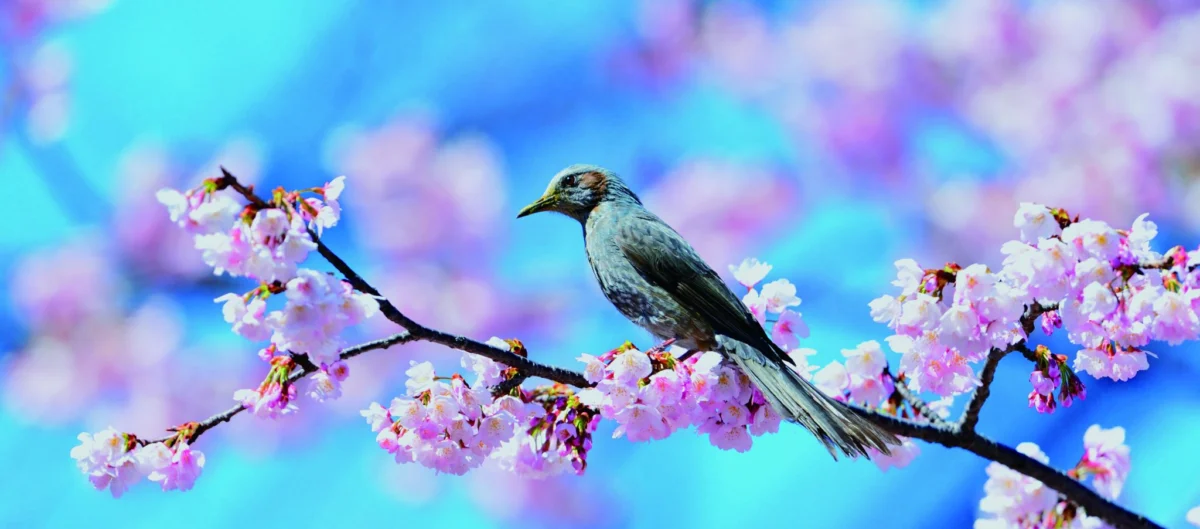
HIH Princess Takamado, a renowned avian enthusiast and photographer, champions a deeper appreciation for the Brown-eared Bulbul, a bird often overlooked in its native Japan despite its pervasive presence. Through her captivating photography and insightful commentary in "Through the Lens" for Fujingahou Magazine’s April 2026 issue, the Princess urges observers not to dismiss common birds, highlighting the unique beauty and ecological significance of the hiyodori. Her article, provided in an English version for reference by BirdLife International, delves into the species’ characteristics, its shifting relationship with human environments, and the critical implications of its subspecies classification amidst a backdrop of changing climates.
The arrival of spring, heralded by a gentle breeze, has become a poignant reminder of the accelerating seasonal shifts, a phenomenon increasingly attributed to global climate change. Princess Takamado notes the regrettable shortening of both spring and autumn, traditionally cherished seasons in Japan, underscoring the broader ecological impacts that even common species face. It is against this backdrop of environmental flux that the Brown-eared Bulbul (scientific name: Hypsipetes amaurotis) emerges as a focal point, serving as a vibrant harbinger of spring and a testament to avian adaptability.
Known in Japanese as hiyodori, a name derived from its distinctive "hee-yo, hee-yo" call, the Brown-eared Bulbul holds a place among Japan’s most familiar birds, second only to sparrows and crows in terms of ubiquity. Yet, despite its commonality, it often receives a dismissive reception. Princess Takamado observes that many Japanese birdwatchers, even at dedicated birding gatherings, tend to utter "Oh… it’s just a Brown-eared Bulbul," reflecting a curious blend of over-familiarity and underappreciation. This perception is further complicated by the bird’s sometimes aggressive territorial behavior, particularly around flowering trees like camellias and cherry blossoms, where it frequently drives away other species. Its loud, piercing cries, which can shatter moments of silence, also contribute to its reputation as an occasionally "annoying" presence, leading to a general lack of affection among some segments of the Japanese public.
Paradoxically, this common Japanese resident enjoys a far more enthusiastic reception among international birders visiting Japan. The primary reason for this disparity lies in its restricted geographical distribution. The Brown-eared Bulbul is largely endemic to East Asia, with Japan being a primary stronghold. For many foreign ornithologists and enthusiasts, a sighting of the Hypsipetes amaurotis is a significant tick on their life list, making it a highly sought-after species during their excursions across the archipelago. This contrast underscores a universal truth in wildlife observation: familiarity often breeds a lack of reverence, while rarity or exoticism fuels fervent interest.

Ecological Adaptability and Urban Expansion
The Brown-eared Bulbul’s presence in urban environments is a relatively recent phenomenon, illustrating a remarkable capacity for ecological adaptation. Princess Takamado recalls her childhood in central Tokyo, noting the absence of their characteristic loud calls and sightings in her family’s garden, despite abundant greenery. This personal anecdote is corroborated by historical ecological data, which indicates that until approximately 50 to 60 years ago, Brown-eared Bulbuls predominantly inhabited satoyama forests—secondary woodlands traditionally managed by local communities—at elevations ranging from 400 to 1,000 meters. During winter months, these populations would descend to lower plains.
The significant expansion of the Brown-eared Bulbul into urban areas is directly linked to the increasing "greening" efforts in Japanese cities. As urban planners and residents have incorporated more parks, street trees, and private gardens, these spaces have inadvertently created new, viable habitats for the species. This urban migration has been further supported by the diverse and abundant food sources available within city limits. Brown-eared Bulbuls are omnivores with a highly flexible diet. They feed on nectar from a wide array of blossoms, including plum, apricot, camellia, and cherry, along with willow buds and young leaves. Their diet also includes various insects, a crucial protein source, and the berries of common street trees such as nandina and pyracantha. In suburban areas, they readily exploit human-provided food sources, consuming fully ripened fruits like persimmons, mandarins, grapes, and apples, as well as leafy vegetables such as cabbage and Chinese cabbage. This dietary versatility ensures a continuous supply of sustenance throughout the year, even allowing them to drink sap from broken branches when other options are scarce.
The adaptability extends to their breeding habits. Brown-eared Bulbuls successfully nest in city parks, residential areas, and even private gardens. Their nest construction showcases their resourcefulness, incorporating not only natural materials like twigs and plant fibers but also discarded human artifacts such as vinyl and plastic. This pragmatic utilization of readily available materials within human living spaces is a clear demonstration of their robust survival strategies in an increasingly anthropogenic landscape.
Behavioral Insights and Inter-species Dynamics

Princess Takamado shares an intimate observation from her own garden, highlighting the bulbul’s role as a sentinel. Upon her entry, a Brown-eared Bulbul invariably emits a loud warning cry, prompting other birds at the birdbath to hastily take flight. This behavior, while potentially disruptive, underscores its territorial nature and its awareness of potential threats, serving as an unintended alarm system for other avian species.
A particularly charming anecdote involves a winter feeding table. If the table happened to be empty, a Brown-eared Bulbul would sometimes engage in a remarkable display, flapping its wings directly against the large glass window of the sunroom, flying straight up from bottom to top. This persistent signal, impossible to ignore, would inevitably lead to the replenishment of food. Once the food was restored, other birds would also benefit. Princess Takamado interprets this as a small act of mutual support among the birds, an intriguing observation that hints at complex, if not entirely altruistic, inter-species dynamics. While the bulbul’s primary motivation might be self-interest, its actions inadvertently provide for others, painting a more nuanced picture of a species often labeled as merely "mean."
Scientific Classification and Conservation Implications
Beyond its behavioral quirks and ecological adaptability, the Brown-eared Bulbul presents an intriguing case study in avian taxonomy and conservation. As a familiar bird across the Japanese archipelago, its populations span from Hokkaido in the north to Kyushu and the Izu Islands in the south. Furthermore, resident populations exist on various island regions, including Ogasawara, Amami, and Okinawa. These geographically isolated groups have led to the classification of the species into eight distinct subspecies, each exhibiting unique morphological features and coloration.
Current ornithological research suggests that these eight subspecies can be grouped into three larger categories. There is a growing possibility that further genetic and morphological studies might lead to their reclassification as three separate species entirely. This potential taxonomic revision carries significant conservation implications. At present, the Brown-eared Bulbul as a whole is not considered globally threatened, enjoying a "Least Concern" status on the IUCN Red List due to its widespread distribution and large population. However, if the species were to be split into three distinct entities, the smaller, more isolated island populations—which are inherently more vulnerable to habitat loss, introduced predators, and climate change impacts—might be designated as "Endangered" or "Critically Endangered." This reclassification would trigger enhanced conservation efforts and protections, underscoring the critical role of taxonomic clarity in effective biodiversity management.

The distribution of the Brown-eared Bulbul is centered in Japan, extending to surrounding regions such as the southern Korean Peninsula and Sakhalin. Populations inhabiting snowy areas like Hokkaido and Tohoku exhibit migratory behavior, forming flocks in autumn and moving to warmer southern regions for the winter. These birds then return north from late April to May, undertaking their journeys during daylight hours, making their migrations observable across various parts of Japan. This migratory pattern further highlights the species’ dynamic interaction with its environment and the varying ecological pressures across its range.
A Call for Renewed Appreciation
Princess Takamado’s powerful message resonates with a broader call for environmental awareness: to appreciate the commonplace. In an era where exotic and endangered species often capture the bulk of conservation attention, the humble Brown-eared Bulbul reminds us that ecological health begins in our backyards. Its resilience in adapting to urban sprawl, its complex social behaviors, and its unique taxonomic story are all compelling reasons to look beyond initial impressions.
Instead of the dismissive "Oh… it’s just a Brown-eared Bulbul," Princess Takamado hopes for a shift in perspective. She advocates for a warmer observation, encouraging people to appreciate its handsome appearance—characterized by a distinctive brown cheek patch and a tousled head that forms a crest when excited—and its acrobatic movements. The pale band visible on the underside of its wings during flight, which can appear strikingly whitish depending on the light, adds to its subtle beauty.
By taking the time to truly observe and understand species like the Brown-eared Bulbul, individuals can foster a deeper connection with nature, even within urban landscapes. This appreciation is not merely aesthetic; it is a fundamental step towards recognizing the intricate web of life that sustains our planet and the critical need to protect all its components, from the rarest to the most ubiquitous. The Princess’s article serves as a timely reminder that every creature, no matter how common, holds intrinsic value and contributes to the rich tapestry of biodiversity, deserving of our respect and attention.