
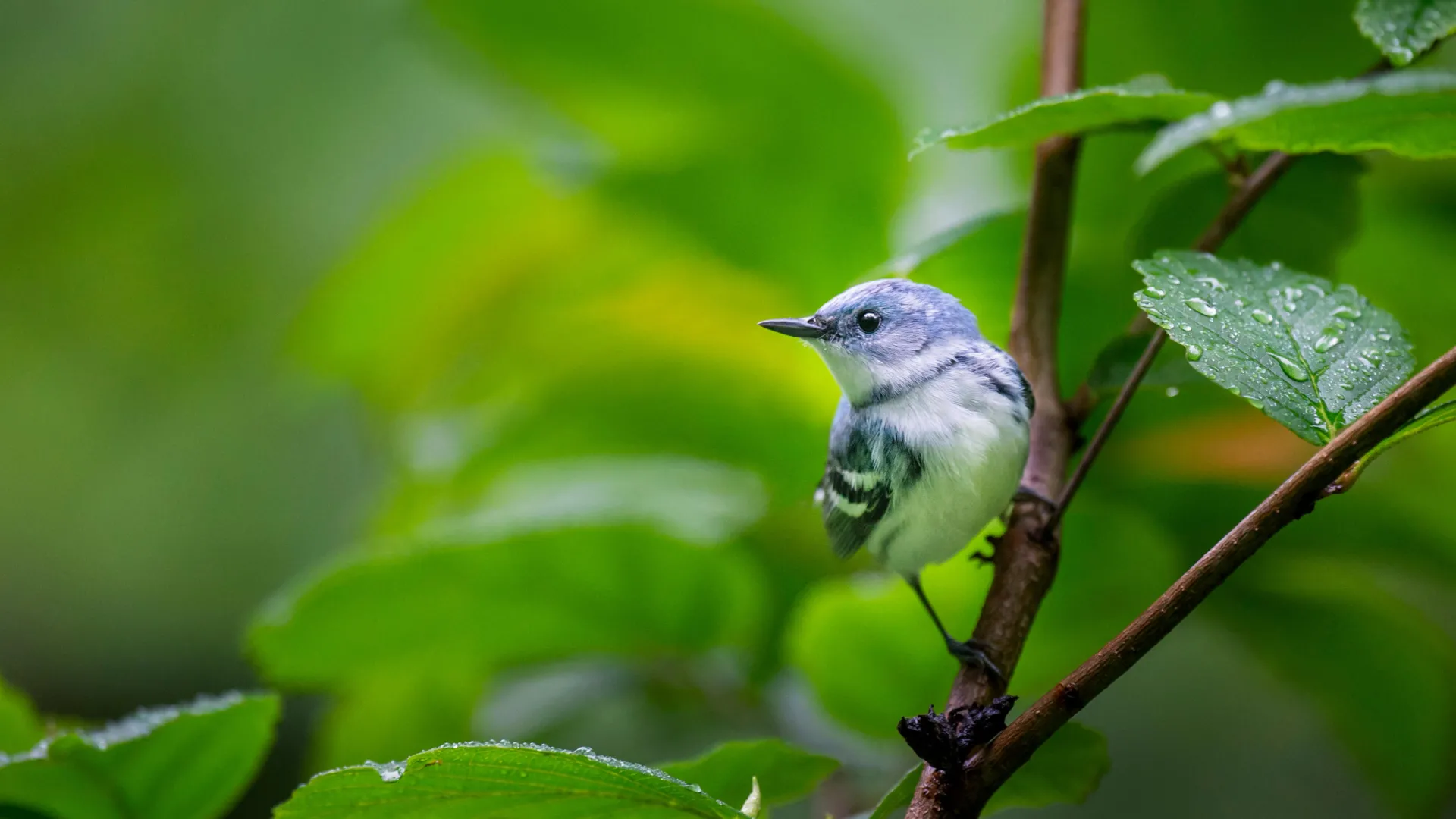
Every spring, the familiar songs of Wood Thrushes and warblers signal their return to parks and neighborhoods across eastern North America, a welcome chorus that often belies the arduous journey and critical reliance these species place on distant, often remote ecosystems. Few people realize that these iconic avian travelers spend the majority of their annual cycle much farther south, meticulously navigating thousands of miles to depend on the lush, biodiverse forests of Central America for their survival during the non-breeding season. A groundbreaking new study illuminates the profound, yet precarious, connection between these two distant worlds, underscoring the urgent need for cross-continental conservation efforts.
The Unseen Journey: A Hemispheric Connection
The annual phenomenon of avian migration represents one of nature’s most extraordinary spectacles, a testament to endurance and instinct. Billions of birds undertake epic journeys between their breeding grounds in North America and their wintering territories in Central and South America. These migrations are not merely seasonal shifts; they are complex ecological strategies refined over millennia, allowing species to exploit seasonal abundances of food and avoid harsh environmental conditions. However, the success of these migrations hinges entirely on the integrity of critical habitats along their flyways and at their destinations. For many species that grace North American skies, the dense, tropical forests of Central America serve as this indispensable sanctuary, providing essential resources for resting, refueling, and recuperating before the return journey north. This intricate web of dependence means that the ecological health of a forest in, say, Honduras, directly influences the bird populations observed in a backyard in New England.
A Landmark Study Unveils Critical Data
A recent collaborative study, jointly conducted by the Wildlife Conservation Society (WCS) and the Cornell Lab of Ornithology, and subsequently published in the esteemed journal Biological Conservation, has meticulously quantified this critical interdependence. The research identifies a network of five expansive forest blocks across Central America—dubbed the "Five Great Forests"—as absolutely essential for the continued viability of numerous migratory bird species that forge a living link between the two continents. These forest systems, which collectively stretch from the southernmost reaches of Mexico down to northern Colombia, represent a vital ecological corridor, funneling and sustaining a significant portion of the Western Hemisphere’s migratory avian biodiversity.
The study’s methodology leveraged the immense power of citizen science, drawing upon detailed information on weekly bird distribution. This data was made accessible through millions of individual bird sightings submitted by a global community of birdwatchers to the Cornell Lab’s eBird platform, a sophisticated online database that has revolutionized ornithological research. By analyzing this vast dataset, researchers were able to precisely map the distribution and concentration of migratory species during their non-breeding periods.
The findings are stark and compelling: these five forest strongholds collectively provide critical habitat for an astonishing proportion of global populations for 40 distinct migratory species. Specifically, the study revealed that these forests support anywhere from one-tenth to nearly one-half of the global populations of these species. This concentration is particularly alarming given that many of these species are among the most rapidly declining avian populations in North America, highlighting the disproportionate impact that habitat loss in Central America could have on their overall conservation status. Species such as the Wood Thrush, Magnolia Warbler, Kentucky Warbler, Scarlet Tanager, Golden-winged Warbler, and Broad-winged Hawk are among those critically reliant on these southern sanctuaries. The Wood Thrush, for instance, is currently listed as "Near Threatened" by the IUCN, making the protection of its wintering grounds paramount.
Anna Lello-Smith, lead author of the study and a dedicated conservation scientist at WCS, emphasized the profound implications of these findings. "What happens in Central America directly affects the birds we love in the United States and Canada," Lello-Smith stated. "These forests aren’t just tropical wilderness – they’re at the heart of migration, sustaining many of our birds for more than half the year. They provide the food and shelter that allow Wood Thrushes, Magnolia Warblers, and so many others to return north to fill our spring with song and color." This statement encapsulates the core message: the future of North American migratory birds is inextricably linked to the fate of these tropical forests.
The Five Great Forests: A Lifeline Under Threat
The five critical forest blocks identified in the study are the Selva Maya (spanning parts of Mexico, Guatemala, and Belize), the Moskitia (Honduras and Nicaragua), Indio Maíz-Tortuguero (Nicaragua and Costa Rica), La Amistad (Costa Rica and Panama), and Darién (Panama and Colombia). Together, these regions form a continuous ecological corridor, a natural superhighway roughly equivalent in size to the state of Virginia. This vast expanse of unbroken forest is not only a haven for billions of migratory songbirds but also a crucial refuge for a spectacular array of other iconic and often endangered wildlife, including jaguars, tapirs, pumas, and vibrant scarlet macaws. For birds migrating thousands of miles each year, these forests serve as indispensable resting grounds, refueling stations, and primary wintering habitats where they can find sustenance and safety.
Viviana Ruiz-Gutierrez, director of Conservation Science at the Cornell Lab of Ornithology and a co-author of the study, further underscored the sheer biological density within these regions. "Every fall, billions of birds pour south through the narrow land bridge of Central America," she noted. "The density of migratory warblers, flycatchers, and vireos crowded into these five forests is astounding, and means that each hectare protected there safeguards a disproportionate number of birds." This high density implies that even localized habitat destruction within these areas can have widespread and devastating consequences for entire species populations.
Deforestation’s Relentless March
Despite their unparalleled ecological significance, these vital Central American forests are disappearing at an alarming and accelerating pace. The primary driver of this rapid deforestation is illegal cattle ranching, an industry that has already laid waste to millions of acres of irreplaceable primary forest. The economic pressures driving this expansion are complex, often involving illicit land grabs, weak governance, and the pursuit of short-term profits from beef production. The sheer scale of destruction is particularly stark in regions like the Moskitia, where nearly one-third of the forest cover has vanished in a mere two decades. This rate of loss far exceeds global averages and represents a critical threat to biodiversity and ecosystem stability.
The consequences extend beyond avian populations. Deforestation contributes significantly to climate change by releasing stored carbon dioxide, disrupts vital hydrological cycles leading to increased droughts and floods, and destroys the livelihoods and cultural heritage of Indigenous and local communities who have stewarded these lands for centuries. The loss of forest cover also exacerbates soil erosion, reduces water quality, and fragments habitats, creating isolated pockets of wildlife that are more vulnerable to extinction. The Food and Agriculture Organization (FAO) consistently reports Latin America as a region with high deforestation rates, and Central America, with its concentrated biodiversity, is particularly susceptible to these pressures.
Jeremy Radachowsky, Regional Director for WCS’s Mesoamerica Program, issued a stark warning: "If we lose the last great forests of Central America – and we are – we lose the birds that define our eastern forests in North America." His statement serves as a powerful call to action, emphasizing that the crisis in Central America is not geographically isolated but a hemispheric challenge. He added, "But by supporting rural communities, governments, and conservation partners on the ground, we can still turn the tide."
Local Stewards: Indigenous and Community-Led Conservation
Amidst the escalating threats, hope emerges from the tireless efforts of Indigenous and local communities across Central America. These communities often serve as the first and last line of defense for these critical forest ecosystems. Armed with invaluable traditional ecological knowledge passed down through generations, they are actively engaged in restoring damaged lands, implementing fire prevention strategies, and reviving traditional, bird-friendly livelihoods. Such sustainable practices include the cultivation of allspice and cacao, which can be grown in agroforestry systems that maintain tree cover and provide habitat for birds, offering an economic alternative to destructive cattle ranching.
However, these vital conservation efforts are frequently undertaken at significant personal risk. Environmental defenders in Central America, many of whom are Indigenous leaders, face alarming rates of violence, intimidation, and even assassination for their work in protecting their ancestral lands from illegal activities. Despite these profound dangers, their commitment remains unwavering, and their efforts are unequivocally essential for safeguarding the remaining forest habitat. Their deep understanding of the local ecology and their vested interest in the long-term health of their lands make them indispensable partners in any successful conservation strategy.
"Imagine the possibility of linking with those efforts," remarked Ruiz-Gutierrez, highlighting the potential for a unified, cross-continental approach. "So that we can work together across the Americas to bring back our shared migratory birds." This vision underscores the importance of empowering and supporting these local initiatives, integrating them into broader regional and international conservation frameworks.
Bridging Continents: The "Sister Landscapes" Framework
For many years, effective international conservation cooperation has been hampered by a lack of clear, scientifically robust information detailing the precise connections between migratory birds and their different habitats across seasons. To overcome this critical data gap and foster more targeted cross-border conservation, the researchers utilized a pioneering framework developed by Partners in Flight and the Cornell Lab. This framework allowed them to meticulously map "stewardship connections" – identifying specific regions in North America where species dependent on the Five Great Forests gather to breed.
These groundbreaking findings reveal a direct and quantifiable link between the health of Central America’s tropical forests and the ecological integrity of specific forest regions in North America. The study demonstrates that the Five Great Forests are closely tied to iconic North American landscapes such as the Appalachian Mountains, the vast Mississippi Delta, the critical habitats around the Great Lakes, the dense forests of New England, and even the green spaces surrounding densely populated areas like New York City. Researchers have aptly termed these paired regions "sister landscapes" because they are intrinsically linked by the same migratory bird species at different, yet equally vital, points in their annual life cycle. This concept provides a powerful tool for conservationists, enabling them to communicate the tangible impact of protecting distant habitats on local, familiar bird populations. It facilitates a more holistic approach to conservation, where funding and policy decisions can be coordinated across international borders to maximize their effectiveness.
Protecting Forests to Protect Migratory Birds
In a profound ecological sense, the Five Great Forests serve as the tropical counterparts to North America’s eastern forests. They provide shelter, food, and safety for the identical suite of forest-loving birds – including Scarlet Tanagers, Kentucky Warblers, Golden-winged Warblers, and Broad-winged Hawks – during the crucial months when these species are far removed from their northern breeding territories. For these birds, the Central American forests are not just a temporary stop; they are their home for over half the year, a period critical for their survival and reproductive success upon their return north. Safeguarding these vital wintering and stopover habitats is, therefore, not merely a regional concern but an essential component of ensuring that these birds continue to return north each spring, enriching North American ecosystems with their presence and their songs.
The implications of this interconnectedness are far-reaching. Conservation efforts in Central America have a direct, measurable impact on biodiversity in North America. Conversely, consumer choices and policy decisions made in North America can influence the pressures on Central American forests. For instance, demanding sustainably sourced products that do not contribute to deforestation can be a powerful lever for change. International funding mechanisms, bilateral agreements, and collaborative scientific research are all critical components of an integrated conservation strategy that recognizes the transboundary nature of migratory bird protection.
Anna Lello-Smith reiterated the hemispheric impact of these conservation efforts: "Every hectare we protect in Central America has ripple effects for birds and people across the hemisphere. The forests that sustain thrushes and warblers also support communities. If you love watching your birds come back each spring, we invite you to discover the tropical forests they call home for most of the year – and help protect them." This final appeal highlights the shared responsibility and the profound interconnectedness of all life across the Americas, urging individuals and governments alike to recognize their role in preserving these magnificent migratory journeys for future generations. The future of North America’s iconic migratory birds hangs in the balance, a delicate balance poised on the health and resilience of Central America’s last great forests.