
A groundbreaking interdisciplinary study has revealed that Steinernema carpocapsae, a minuscule parasitic nematode, possesses the remarkable ability to leverage static electricity to propel itself through the air and latch onto flying insects. This astonishing feat allows the worm to spring up to 25 times its own body length, an evolutionary adaptation that significantly enhances its predatory success. The pivotal findings, which shed new light on the intricate electrostatic interactions within ecosystems, were recently published in the prestigious journal PNAS and represent a collaborative effort between scientists at Emory University and the University of California, Berkeley.
The core discovery centers on an electrostatic mechanism that enables these submillimeter worms, barely visible to the naked eye, to bridge the gap between ground and airborne prey. "We’ve identified the electrostatic mechanism this worm uses to hit its target, and we’ve shown the importance of this mechanism for the worm’s survival," explained Justin Burton, an Emory professor of physics and co-author of the paper, whose laboratory spearheaded the complex mathematical analyses of the experimental data. He further elaborated, "Higher voltage, combined with a tiny breath of wind, greatly boosts the odds of a jumping worm connecting to a flying insect." This revelation underscores how seemingly subtle environmental forces can dictate the survival strategies of even the smallest organisms.
Victor Ortega-Jiménez, a co-lead author and assistant professor of biomechanics at the University of California, Berkeley, who directed the experimental phase of the research, emphasized the broader implications of studying such minute creatures. "You might expect to find big discoveries in big animals, but the tiny ones also hold a lot of interesting secrets," he noted. His team employed sophisticated high-speed microscopy to meticulously record the incredible aerial acrobatics of these needle-tip-sized worms as they launched themselves towards electrically charged fruit flies, providing unprecedented visual evidence of this biological phenomenon.
Unveiling the Electrostatic Grip
The research meticulously detailed the physical principles underpinning this parasitic strategy. As an insect’s wings beat through the air, they generate an electric field, often reaching several hundred volts, through friction with atmospheric ions. This charge, when sensed by the waiting nematode, induces an opposite charge within the worm itself. This phenomenon, known as electrostatic induction, creates a powerful attractive force, effectively pulling the worm towards its airborne target. The researchers conclusively confirmed that this entire process is powered by these induced electrostatic forces, turning a seemingly passive physical principle into an active hunting tool.
Ranjiangshang Ran, another co-lead author and a postdoctoral fellow in Burton’s lab, highlighted the interdisciplinary nature of the work. "Using physics we learned something new and interesting about an adaptive strategy in an organism," Ran stated, adding that their work is actively "helping to pioneer the emerging field of electrostatic ecology." This nascent field explores the pervasive yet often overlooked role of static electricity in biological interactions across various scales of life.
The collaborative spirit of the research extended beyond Emory and UC Berkeley. Additional crucial contributions came from Saad Bhamla and Sunny Kumar of the Georgia Institute of Technology, experts in biomechanics across species, who conducted vital preliminary trials. Adler Dillman, a distinguished nematode biologist at the University of California, Riverside, also played a significant role in providing essential biological insights into the Steinernema carpocapsae.
The Hidden Electrical World of Small Organisms
The concept of static electricity is familiar to most, often experienced as a minor annoyance – the sudden spark from a doorknob or the crackle of pulling off a sweater. These instances occur when electrons accumulate and then discharge abruptly upon contact with a conductor. While humans typically perceive it as a fleeting jolt, scientists are increasingly recognizing that static electricity is a fundamental force shaping the survival and behavior of countless small organisms across diverse environments.
This latest discovery concerning S. carpocapsae is not an isolated incident but rather a significant addition to a growing body of evidence for what has been termed "electrostatic ecology." Ortega-Jiménez himself has been at the forefront of this emerging field. As early as 2013, he published groundbreaking research demonstrating that spider webs are not merely passive traps but can actively exploit the electrical charge of nearby insects, drawing them in more effectively. Subsequent studies have further illuminated this hidden electrical world: bees, for instance, utilize static forces to efficiently gather pollen from flowers, while microscopic flower mites employ electrostatic attraction to cling to the bodies of hummingbirds for dispersal. Perhaps one of the most widely recognized examples is that of "ballooning spiders," which generate charged silk threads to harness atmospheric electric fields, allowing them to drift across vast distances, sometimes thousands of miles, to colonize new territories.
Further illustrating the ubiquity of these forces, Burton and Ortega-Jiménez recently co-authored a commentary in Trends in Parasitology exploring how static electricity impacts ticks. Burton explained a fascinating aspect of this interaction: "Ticks can get sucked up from the ground by fluffy animals, purely through the static electricity in the animal’s fur." This observation underscores the profound influence of electrostatic interactions in facilitating host-seeking behaviors in parasites. Indeed, Ortega-Jiménez’s innovative work in this area, specifically developing a technique to precisely control the electric charge of a tethered tick during experiments, proved instrumental. This methodological breakthrough provided the crucial missing piece, enabling the rigorous investigation into the electrostatic capabilities of the nematode Steinernema carpocapsae.
The Acrobatic Life of Steinernema carpocapsae
The current research focused intensely on understanding the interplay between electrostatic forces and aerodynamics, and how these factors collectively influence the success rate of S. carpocapsae in connecting with a flying insect. S. carpocapsae is an unsegmented roundworm, classified as a nematode, renowned for its highly effective predatory strategy. It doesn’t kill insects directly but rather through a symbiotic relationship with specific bacteria. These worms are remarkably resilient and globally distributed, thriving in soils across nearly every continent except the Earth’s polar regions. Their natural efficacy in pest control has led to their increasing use in agriculture as a biological pesticide, with researchers worldwide continuously seeking ways to further enhance their effectiveness as a natural and environmentally friendly alternative to chemical insecticides.
The hunting sequence of S. carpocapsae is a marvel of biomechanics. When the worm detects the presence of an insect overhead, it assumes a distinctive coiled posture, forming a tight loop. From this position, it rapidly launches itself into the air, achieving incredible heights – up to 25 times its own body length. To put this into perspective, Ortega-Jiménez vividly compares it to a human being capable of leaping higher than a 10-story building. "I believe these nematodes are some of the smallest, best jumpers in the world," he asserted. Adding to their aerial prowess, he noted that during these dizzying, acrobatic leaps, the worms rotate at an astonishing rate of 1,000 times per second, a rapid spin that likely contributes to their stability and targeting accuracy.
Upon a successful mid-air interception, the worm infiltrates the insect’s body, typically through a natural opening such as a spiracle or mouthpart. Once inside, it releases its symbiotic bacteria, which then rapidly proliferate, overwhelming and killing the insect within approximately 48 hours. After the host’s demise, the worm feeds voraciously on the multiplying bacteria and the insect’s decaying tissues, providing sustenance for reproduction. Multiple generations of worms may develop within the insect’s cadaver, ensuring a continuous cycle. Eventually, juvenile worms emerge from the depleted host into the surrounding environment, ready to seek out and infect other insects, thereby perpetuating their life cycle and their role as natural pest controllers.
Painstaking Experiments and Data Digitization
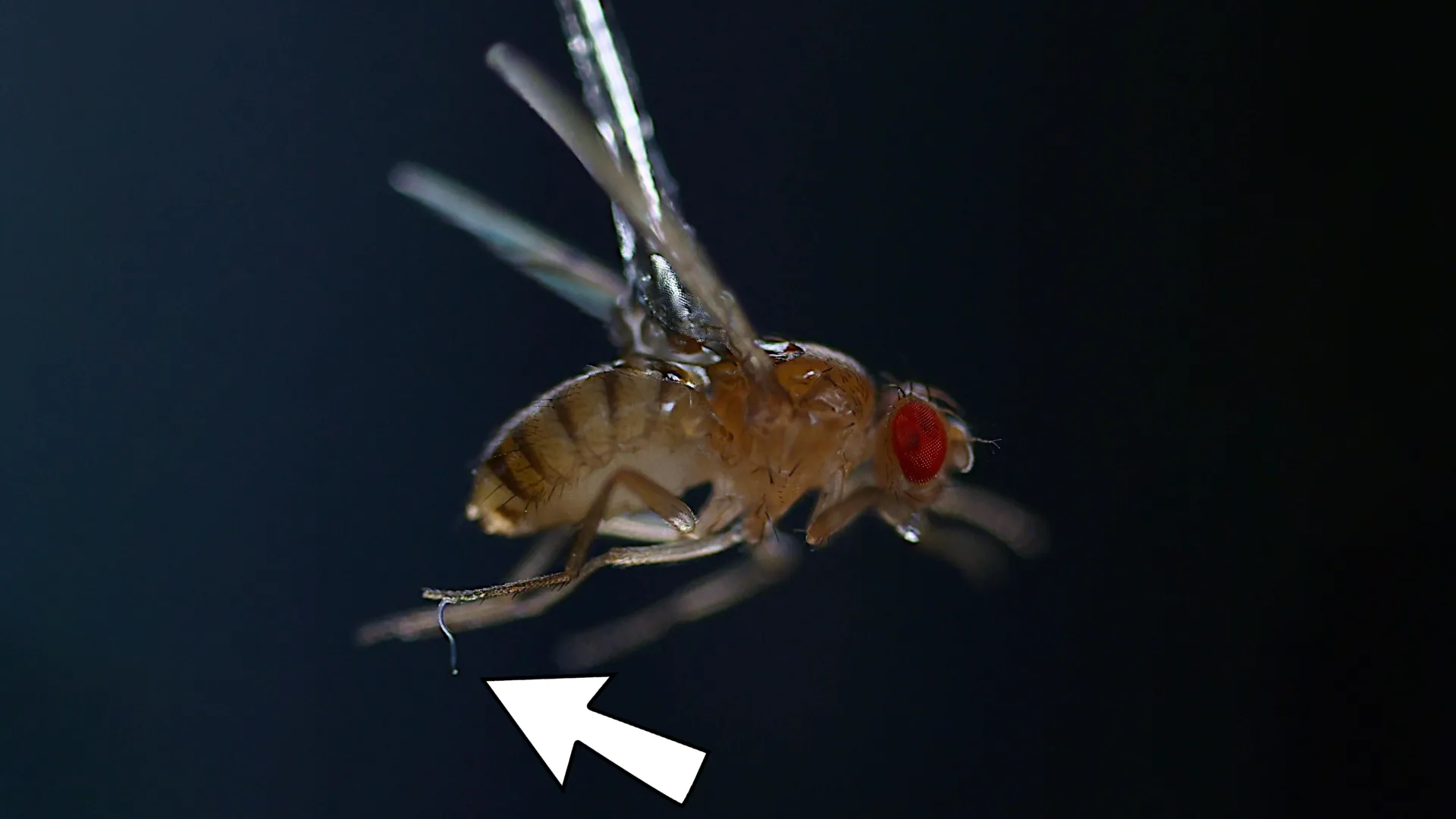
The design and execution of the experiments were critical to unraveling the physics behind the worm’s remarkable ability to connect with a flying insect. A significant challenge was replicating the natural electrical environment. In nature, the friction generated by an insect’s wings rubbing against ions in the air can produce hundreds of volts of static electricity. To accurately model this, the physicists needed precise control over the electrical charge of the fruit flies used in the experimental setup. This necessitated Ortega-Jiménez’s meticulous work of attaching a minute wire, connected to a high-voltage power supply, to the back of each fruit fly. This allowed for exact manipulation of the fly’s voltage. Ortega-Jiménez recounted the difficulty of this delicate procedure, stating, "It’s very difficult to glue a wire to a fruit fly. Usually, it took me half an hour, or sometimes an hour," highlighting the dedication required for such precise micro-manipulation.
Another hurdle involved identifying the precise environmental conditions that would reliably induce the worms to jump in the laboratory setting. Ortega-Jiménez discovered that a substrate of moistened paper was optimal, but the moisture level had to be perfectly calibrated – "just wet enough, but not too wet." Finally, a gentle external stimulus, such as a subtle puff of air or a slight mechanical disturbance, was often necessary to prompt the worms to make their decisive leap toward a suspended fruit fly.
Ortega-Jiménez conducted dozens of these intricate experiments, meticulously recording each attempt with a specialized high-speed camera. This advanced equipment was capable of capturing the mid-air trajectories of the submillimeter worms, which are essentially invisible to the human eye, at an astonishing rate of 10,000 frames per second. To further enhance the experimental control and analysis, he also engineered a miniature wind tunnel for a subset of the experiments. This innovative setup allowed the physicists to precisely analyze the often-underestimated role of ambient breeze in the worm’s target success rate.
Following the extensive experimental phase, the massive amount of visual data required rigorous analysis. Ranjiangshang Ran undertook the arduous task of digitizing the trajectories of the worms from approximately 60 experimental videos. This process was particularly time-consuming when a worm momentarily left the focal plane of the camera, blurring the image, necessitating manual clicking to pinpoint and record its exact position frame by frame.
To make sense of the digitized data, Ran employed a sophisticated computer algorithm known as Markov chain Monte Carlo (MCMC). The name "Markov" honors the mathematician who developed the algorithm, while "Monte Carlo" refers to the famous gambling hub in Monaco, a nod to the algorithm’s reliance on random sampling. Ran elucidated its utility: "MCMC allows you to do random explorations, using different sets of parameters, to determine a mathematical probability for an outcome." Through this powerful analytical tool, Ran identified a comprehensive set of 50,000 plausible values for various fitting parameters for a single worm’s trajectory. These parameters included critical factors such as the insect’s voltage, the physical dimensions of the worm, and its launching velocity, all utilized to precisely test the probability of a specific charge in a worm enabling it to successfully hit its target.
The computational model yielded striking results. It demonstrated that in scenarios without any electrostatic forces, only one out of 19 worm trajectories successfully reached the target – a remarkably low success rate that would render such a predatory strategy energetically unviable. However, the model unequivocally showed that an electrical charge of a few hundred volts, a magnitude commonly observed in flying insects, generated an opposing charge in the jumping worm, dramatically increasing its odds of connecting to a mid-air insect. Specifically, a charge of just 100 volts resulted in a target hit probability of less than 10%, whereas an increased charge of 800 volts boosted the probability of success to an impressive 80%. These findings provided compelling evidence that electrostatics are not merely a contributing factor but are fundamental to the evolutionary viability of this predatory behavior. The worms expend a vast amount of energy to jump and face significant risks of predation or desiccation while suspended in the air. Therefore, as Ran concluded, "Our findings suggest that, without electrostatics, it would make no sense for this jumping predatory behavior to have evolved in these worms."
Connecting Past Science to Future Discoveries
The researchers initially theorized that electrostatic induction was the underlying mechanism governing the interaction between the worm and its target. Their diligent review of scientific literature eventually led them to a law of induction posited by the eminent Scottish physicist James Clerk Maxwell. Ran, reflecting on this historical connection, remarked, "Maxwell, one of the most prolific physicists of all time, had a wild imagination, similar to Einstein. It turns out that our model for the worm-charging mechanism agreed with a prediction for electrostatic induction that Maxwell made in 1870. There are many buried treasures in scientific history. Sometimes being a scientist is like being an archeologist." This nod to scientific heritage underscores the timeless relevance of foundational physics principles in understanding contemporary biological phenomena.
Drag force was another crucial element in the complex equation governing the worm’s aerial trajectory, particularly given its minute size. The researchers effectively illustrated this concept by comparing a bowling ball flying through the air, which is largely unaffected by drag, to a floating feather, whose movement is highly dependent on it. The tiny worm, akin to the feather, experiences significant drag, making its ability to navigate through the air even more remarkable.
Ran further utilized the experimental data to simulate the combined effects of electrostatic charge and varying wind speeds. The results revealed an additional layer of complexity and adaptation: even the faintest breeze, as subtle as 0.2 meters per second, when combined with higher voltage, further increased the likelihood of a worm successfully hitting its target. This suggests a finely tuned adaptation where even slight air currents, often perceived as a hindrance, can be leveraged to the worm’s advantage.
This pioneering work establishes a robust new framework for future investigations into the pervasive, yet largely unexplored, role of electrostatics in ecology. Ortega-Jiménez eloquently summarized the vast potential of this burgeoning field: "We live in an electrical world, electricity is all around us, but the electrostatics of small organisms remains mostly an enigma. We are developing the tools to investigate many more valuable questions surrounding this mystery." The implications of this research extend beyond fundamental biology, potentially informing new strategies for biological pest control, enhancing our understanding of ecosystem dynamics, and even inspiring novel biomimetic designs based on these natural electrostatic interactions. The project was supported by significant grants from the W.M. Keck Foundation and the Tarbutton Postdoctoral Fellowship of Emory College of Arts and Sciences, affirming the importance and potential impact of this innovative scientific endeavor.