
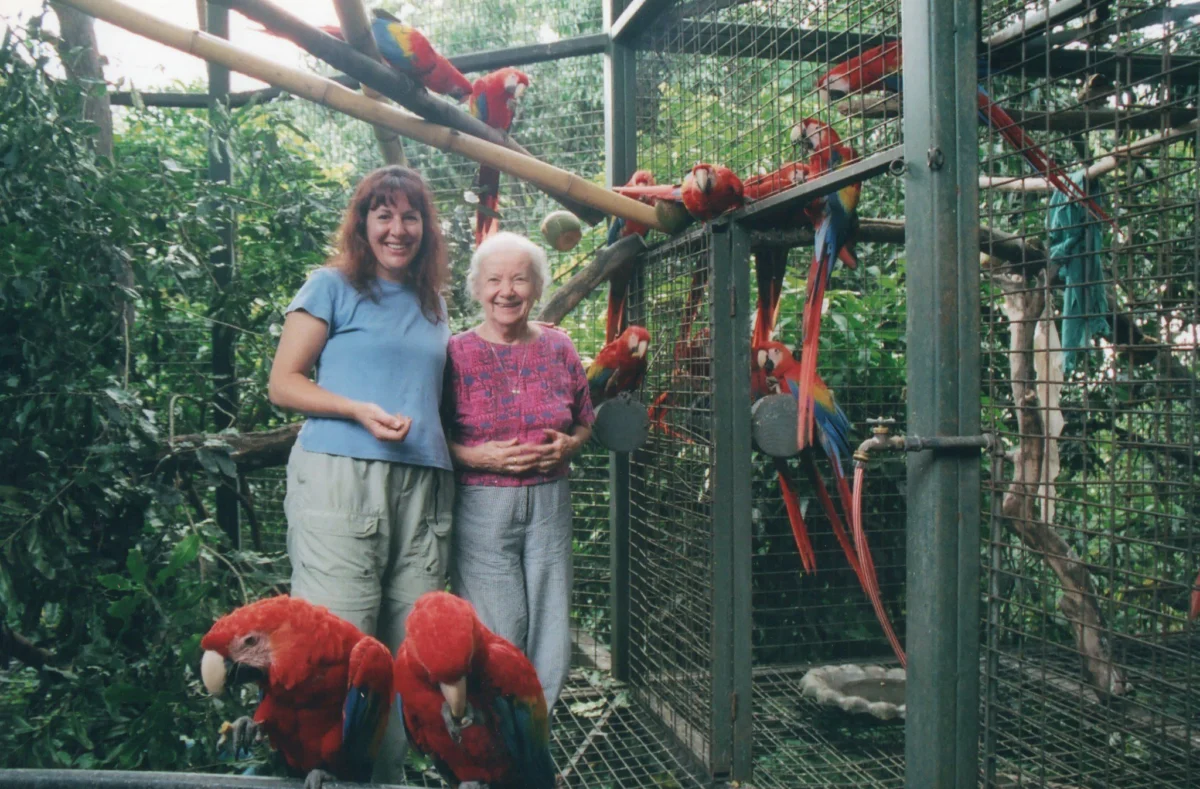
The Toucan Rescue Ranch has officially marked twenty years of operation, transitioning from a localized avian rescue project into one of Central America’s most sophisticated wildlife rehabilitation and conservation facilities. Established in 2004, the organization has spent two decades addressing the complex challenges facing Costa Rica’s biodiversity, ranging from habitat loss and illegal pet trafficking to the modern dangers of electrical grid electrocutions and vehicle strikes. As the Ranch enters its third decade, its trajectory serves as a case study in how grassroots conservation efforts can scale into international scientific and educational powerhouses.
The Foundation of a Conservation Legacy
The Toucan Rescue Ranch (TRR) was born from the shared vision of Leslie Howle and Jorge Murillo in 2004. Initially, the project focused on the rescue and recovery of toucans, a flagship species of the Costa Rican rainforest that often falls victim to the illegal pet trade or injury. The founders recognized that while Costa Rica was gaining a global reputation for its "green" policies, the infrastructure for rehabilitating injured or orphaned wildlife was struggling to keep pace with the increasing human-wildlife conflict.
In its earliest years, TRR operated as a modest sanctuary, but its commitment to high-standard care quickly led to scientific breakthroughs. By 2007, the facility achieved a major milestone by becoming the first in Costa Rica—and only the second in the world—to successfully captive-breed Emerald Toucanets. This success was not merely a feat of aviculture; it provided critical data on the reproductive biology of the species, which has since informed broader conservation strategies across the region.
Diversification and the "Millie" Milestone
While birds were the initial focus, the year 2007 marked a definitive shift in the organization’s scope. The arrival of a baby two-fingered sloth named Millie necessitated an expansion of the Ranch’s expertise. Sloths, despite being iconic symbols of Costa Rican wildlife, require highly specialized care, particularly regarding their complex digestive systems and thermoregulation needs.
Millie’s successful rehabilitation opened the doors for TRR to become a multi-species facility. This transition was vital, as sloths were increasingly being displaced by rapid coastal development and the fragmentation of biological corridors. The expertise gained through Millie’s case laid the groundwork for what would eventually become one of the most successful sloth rescue programs in the world.
Strategic Infrastructure and Land Acquisition
Recognizing that rescue and rehabilitation are only effective if animals can be returned to a safe, natural environment, the Toucan Rescue Ranch began a series of strategic expansions. In 2008, the organization invested in a 25-acre property in Sarapiquí. This region, known for its dense rainforest and proximity to biological stations, provided the ideal backdrop for a release site.
The acquisition of land in Sarapiquí allowed TRR to implement a "soft-release" model. Unlike a "hard release," where an animal is simply let go into the wild, a soft release involves a period of acclimation in large, naturalistic enclosures located within the target habitat. This ensures that the animals can adjust to local food sources and weather conditions while still being monitored by conservationists.
By 2013, the organization reached another critical juncture with the establishment of a professional veterinary hospital at its headquarters in San Isidro, Heredia. This facility was designed to provide advanced medical care, including surgeries and diagnostic imaging, which were previously difficult to access for rescued wildlife. That same year, the organization secured 501(c)3 non-profit status in the United States, a move that facilitated international fundraising and partnerships with global conservation entities.
Collaborative Conservation: Saving Sloths Together
In 2017, the Toucan Rescue Ranch formalized a partnership with The Sloth Institute (TSI) to launch the "Saving Sloths Together" (SST) program. This initiative was born from the realization that sloth conservation required a unified approach combining veterinary medicine and field research.
The SST program focuses on the rescue of orphaned and injured sloths, followed by a rigorous rehabilitation process that can last up to two years. Because young sloths learn essential survival skills from their mothers, human caregivers must replicate these lessons, teaching the orphans how to climb, identify safe foliage, and avoid predators.
To support these efforts, TRR expanded its technological capabilities in 2018 by acquiring advanced tracking equipment. Radio collars and VHF transmitters allowed researchers to monitor released sloths in the Sarapiquí canopy, providing invaluable data on survival rates and movement patterns. This data-driven approach has debunked several myths about sloth behavior and has significantly improved the success rates of rewilding efforts.
Reforestation and Environmental Stewardship
The Ranch’s leadership has long maintained that wildlife cannot thrive without a healthy habitat. In 2018, TRR partnered with Café Britt to initiate a large-scale reforestation project. To date, more than 2,000 native trees have been planted to restore fragmented rainforest canopies. These efforts are specifically designed to create "biological bridges," allowing arboreal species like sloths and monkeys to move between forest patches without descending to the ground, where they are vulnerable to dogs and vehicles.
The integration of reforestation with wildlife release has created a holistic conservation loop. By planting the specific tree species that the rescued animals rely on for food and shelter, TRR ensures that the ecosystem is prepared to receive its rehabilitated inhabitants.
Technological Modernization and Pandemic Resilience
The year 2019 saw the implementation of specialized animal care software, which streamlined clinic operations and allowed for better tracking of medical histories across hundreds of patients. This modernization proved timely, as the global COVID-19 pandemic in 2020 presented an unprecedented challenge to the organization’s funding and operations.
With international travel halted and tourism revenue disappearing, TRR pivoted to a digital-first model. The organization’s education program was expanded to include virtual tours and university-level courses. These initiatives were so successful that TRR was recognized as the number one virtual tour experience globally on Amazon’s Virtual Experiences platform. This digital shift not only sustained the Ranch during the crisis but also democratized access to conservation education, reaching audiences in dozens of countries.
Recent Milestones: Howler Monkeys and International Partnerships
In 2023, the Toucan Rescue Ranch launched the "Saving Howler Monkeys Together" program. Similar to the sloth initiative, this program addresses the specific needs of mantled howler monkeys, which are frequently victims of electrocution on uninsulated power lines. The program emphasizes "rewilding," focusing on the social rehabilitation of these highly communal primates before their release.
The year 2024 served as a celebration of two decades of impact. During this 20th anniversary year, the Ranch hosted its first major U.S. fundraiser, "Wildlife Wonders," at the Nashville Zoo. This event was a landmark moment, securing the Ranch’s first Association of Zoos and Aquariums (AZA) conservation partner and a substantial $25,000 donation.
Furthermore, the "Sloth Ironman Games," an annual fundraising event that uses the popularity of sloths to educate the public, broke all previous records in 2024, raising over $30,000. These funds have been directly reinvested into the wildlife hospital, which recently received upgrades including a new blood analysis machine and an advanced X-ray unit. These tools are critical for diagnosing internal injuries in small mammals and birds, significantly increasing the survival rate of emergency admissions.
Broader Impact and Future Implications
The evolution of the Toucan Rescue Ranch reflects a broader shift in global conservation strategy. The move from simple "sanctuaries" to "rehabilitation and release centers" signifies a more ambitious goal: not just to save individual animals, but to bolster wild populations and restore ecological balance.
The Ranch’s success has significant implications for Costa Rica’s national conservation goals. By working closely with MINAE (Ministry of Environment and Energy), TRR serves as a vital partner in the government’s efforts to protect the nation’s natural heritage. The organization’s focus on education—now bolstered by a newly completed Education Center at the Sarapiquí release site—ensures that the next generation of Costa Ricans and international visitors understands the intrinsic value of wildlife.
As of 2025, the Toucan Rescue Ranch continues to expand its research footprint. Future projects are expected to focus on the long-term genetic health of released populations and the impact of climate change on the phenology of rainforest trees.
Conclusion: A Vision for the Next Two Decades
From its humble beginnings as a small toucan rescue in 2004 to its current status as a world-class rehabilitation center, the Toucan Rescue Ranch has demonstrated that dedicated local action can have a global impact. The organization’s history is a testament to the power of combining veterinary excellence, field research, and community engagement.
As habitat fragmentation continues to threaten Central American wildlife, the role of institutions like TRR becomes increasingly vital. By providing a second chance to thousands of animals and working to restore the forests they call home, the Toucan Rescue Ranch is not just preserving the past; it is actively building a sustainable future for Costa Rican biodiversity. The next chapter of the Ranch’s history will likely be defined by even greater integration of technology and science, ensuring that the "Rescue, Rehabilitate, Release" mission remains at the forefront of global conservation efforts.