
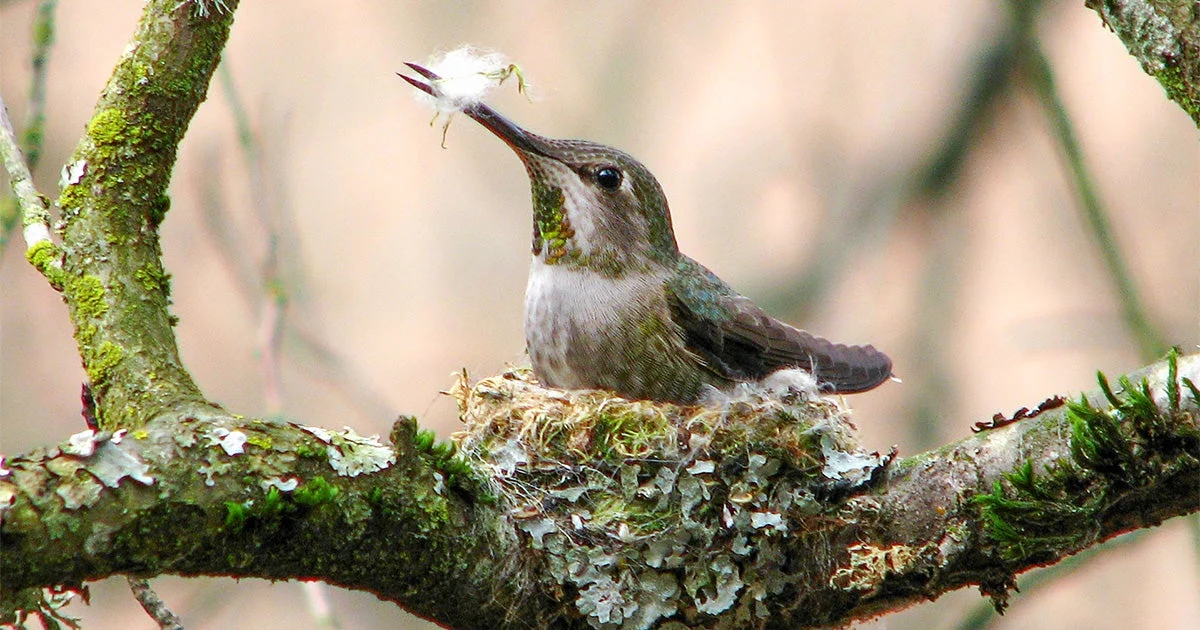
In the bustling urban heart of Portland, Oregon, an extraordinary decade-long scientific endeavor has been unfolding, driven not by academic institutions or seasoned ornithologists, but by an everyday Oregonian with an unyielding passion for nature. Beverly LaBelle, a retired printing industry professional with no formal scientific background, has meticulously documented over 350 active Anna’s Hummingbird nests in Oaks Bottom Wildlife Refuge since 2012, establishing what is likely the most extensive individual dataset on the species’ nesting habits anywhere. Her work, a testament to the power of dedicated citizen science, offers invaluable insights into the lives of these iridescent aviators amidst a rapidly changing climate, capturing data on preferred tree species, nest location, timing, success rates, and re-nesting efforts, all with a mirror clipped to a long stick and an acutely tuned ear.
A Decade of Discovery: Unearthing Hummingbird Secrets
LaBelle’s methodology is as simple as it is effective, rooted in consistency and meticulous observation. Each year, she affectionately names the hummingbird mothers alphabetically based on the order of discovery, looping back to ‘A’ if she surpasses 26 nests. This system, while charming, underpins a rigorous tracking process. Armed with binoculars, a notepad, and her ingenious mirror-on-a-stick, she traverses the 163-acre refuge, carefully noting every detail of nest construction, egg laying, incubation, and fledging. Her data points are granular, recording the specific tree species chosen, the height and orientation of the nest, the success or failure of each attempt, and even the subsequent re-nesting efforts of individual females.
The sheer volume of her findings—over 350 nests documented—is remarkable, eclipsing the contributions of many professional researchers in this specific niche. This DIY, long-term study has become a critical resource, providing a continuous ecological narrative for a species whose future, like many, is increasingly uncertain due to environmental shifts. LaBelle herself underscores the universal importance of such data: "All data collecting is important. Especially in a world where the climate is changing too fast for species to recover." Her dedication exemplifies how individual commitment can bridge gaps in scientific understanding, particularly in areas requiring sustained, localized attention that larger, grant-funded projects might overlook.
Oaks Bottom: A Refuge Forged by Community
LaBelle’s story is inextricably linked to the history of Oaks Bottom Wildlife Refuge itself, a testament to grassroots conservation efforts. When she first arrived in Portland in the 1980s, the area was far from the protected sanctuary it is today. Once a neglected industrial dumping ground, Oaks Bottom was scarred by decades of misuse, including an estimated 400,000 cubic feet of construction waste. The site, though wild, lacked official recognition or management, presenting a challenging landscape for both wildlife and human visitors.
It was the unwavering spirit of local residents, rather than initial city initiatives, that began the arduous process of reclamation. Neighbors took it upon themselves to clear mountains of rubbish, carve out rudimentary trails, and advocate for the natural space. In a bold act of defiance and hope, local naturalists in 1984 unilaterally posted 40 "Wildlife Refuge" signs around the Bottom, essentially declaring it a protected area through sheer will. This grassroots movement captured the attention of local media, which began referring to the area as such, building public momentum. The City of Portland eventually heeded these calls, officially sanctioning the work and designating Oaks Bottom as the city’s first wildlife refuge in 1988. This transformation from a forgotten wasteland to a vibrant urban ecosystem provides a powerful backdrop to LaBelle’s work, highlighting the enduring value of community stewardship.
From Beginner Birder to Pioneering Ornithologist
LaBelle’s personal journey into the world of hummingbirds began casually, a byproduct of her daily dog walks in Oaks Bottom. Initially a beginner birder, she soon recognized the rich biodiversity thriving within the park’s meadows, wetlands, and forests along the Willamette River. Her fascination with hummingbirds, particularly the Anna’s, deepened over time. These jewel-toned birds, once considered a special and rare sighting in the Pacific Northwest, became more prevalent year-round residents in Portland, a phenomenon linked to the proliferation of ornamental plants and backyard nectar feeders that provide consistent food sources even in winter.
It was in 2003 that LaBelle found her first hummingbird nest independently in Oaks Bottom, a moment she describes as profoundly special. For years, she observed and photographed these tiny architectural marvels, captivated by the intricate process of nesting. However, her systematic documentation, which would later form the backbone of her dataset, began in earnest in 2012. This shift was catalyzed by a practical challenge: a park worker reprimanded her for going off-trail without a permit. Recognizing the need for formal authorization to continue her observations, LaBelle secured a research permit from the city. This pivotal moment transformed her hobby into a formalized scientific endeavor. Since then, she has diligently submitted annual reports to Portland Parks and Recreation and to the Northwest Ecological Research Institute (NERI), a volunteer-run nonprofit dedicated to regional flora and fauna studies.
Char Corkran, Vice President of NERI, attests to LaBelle’s exceptional observational skills and unwavering focus. "Bev is just a super observant human being, and she’s capable of really focusing her attention," Corkran explains. "That has become this astonishing set of data she’s collected, just out of pure love of doing it." Corkran, who has known LaBelle for decades through various volunteer projects, emphasizes LaBelle’s consistent dedication. Her work with Anna’s Hummingbirds, as far as published literature indicates, stands as the longest-running study of the species’ nesting habits, a remarkable achievement for a citizen scientist.
The Anna’s Hummingbird: An Urban Success Story Under Scrutiny
Anna’s Hummingbirds ( Calypte anna ) are medium-sized hummingbirds, about 3.9 to 4.3 inches long, known for their iridescent green plumage and the male’s dazzling rose-pink gorget and crown. Their native range originally extended from British Columbia to Baja California, but in recent decades, their year-round presence has expanded northward, particularly in urban and suburban areas, largely due to human-provided food sources. In Portland, they are among the earliest nesters, with some females initiating nests as early as January, a period typically associated with winter’s chill.
Their nests are miniature masterpieces, cup-shaped structures barely an inch tall, meticulously constructed from moss, lichen, and spiderwebs, often cemented with saliva and lined with soft plant down. These delicate cradles are typically placed on horizontal tree branches. The eggs, no larger than a pinky fingernail, undergo an incubation period of approximately 16 days. The early onset of nesting, while allowing for multiple broods in a longer season, also exposes these vulnerable birds to Portland’s often unpredictable winter and early spring weather.
LaBelle’s data paints a vivid picture of the challenges these tiny birds face. Her 2024 report, for instance, documented a severe deep freeze early in the year that proved devastating, leading to significant mortality among adult birds and widespread nest failures. The preceding year, 2023, also saw a concerning trend: only 5 out of 25 nests successfully fledged young, a stark contrast to 16 out of 41 in 2022. Across the entire 13 years of LaBelle’s study, the identified nests had an overall success rate of 46.7 percent. This long-term perspective is crucial for understanding population dynamics and the specific environmental stressors impacting the species.
The Rhythms of Reproduction: Successes, Failures, and Emerging Theories
From her extensive observations, LaBelle has identified various factors contributing to nest failures. Predation accounts for the majority, with squirrels, jays, and other opportunistic feeders posing constant threats. Beyond predation, she has documented nests abandoned due to inclement weather—torrential rains, cold snaps, or sudden temperature drops—or the presumed death of the adult female. Occasional accidents, such as fallen branches, also contribute to losses. One particularly disheartening incident involved a parks worker unknowingly limbing a tree with an active nest during efforts to curb illegal camping, resulting in the nest’s destruction. "It’s been hard, and this last year has been one of the hardest," LaBelle admitted, reflecting on the emotional toll of her work. "I’ve kind of been on the fence about continuing. But I don’t know if I can stay away."
However, the magic of discovery often outweighs the heartbreak. During a rainy morning walk in early February with a reporter, LaBelle, wearing an embroidered hummingbird baseball cap, moved through the landscape with an ease born of intimate familiarity. She recounted tales of past mudslides, long-gone willows lost to beavers, and unlikely successful fledglings from nests precariously wedged or hidden within invasive Clematis vines. In a serendipitous moment, as she described a female potentially collecting nesting material, a hummingbird zipped by, tugging at spiderwebs, then landed in a perfectly formed, moss-laden cup—a brand new nest for the year’s list. The shared delight of this discovery underscored the addictive nature of her quest. LaBelle immediately pulled out her notepad, logging the location, approximate height (about 15 feet up), and branch orientation, noting it would require binoculars for ongoing observation, as her mirror-on-a-stick couldn’t reach.
Beyond the anecdotal, LaBelle’s rigorous data has opened doors to new scientific inquiry. Recently, she and Char Corkran have developed a compelling theory regarding a subset of mysterious nest failures. For years, LaBelle observed instances where eggs or newly hatched chicks would vanish overnight, leaving the nest otherwise undisturbed. The precision of these disappearances made squirrel predation seem unlikely. Corkran then unearthed a 1996 study from Arizona suggesting that female Anna’s Hummingbirds can exhibit aggressive behavior towards each other when nests are built too closely. Comparing this with LaBelle’s data, they found that some of the failed nests in Oaks Bottom were indeed much closer than those in the Arizona study. They are now considering installing trail cameras to confirm if intra-species aggression is a contributing factor. "If we could prove it, this would be a huge discovery," Corkran stated, highlighting the unique depth of LaBelle’s long-term, week-by-week, season-after-season tracking.
The Power of Persistence: Citizen Science in Action
Beverly LaBelle’s work transcends mere observation; it embodies the profound impact of citizen science. Her collaboration with the Northwest Ecological Research Institute validates the scientific rigor of her findings and provides a platform for broader dissemination. The value of such long-term, localized ecological monitoring, particularly in urban environments and in the context of global climate change, cannot be overstated. Urban green spaces like Oaks Bottom serve as vital refuges and ecological laboratories, and dedicated individuals like LaBelle are essential for understanding their complex dynamics.
The ripple effect of citizen science extends beyond the immediate study. Corkran recounted another powerful example from a wildlife survey in Mt. Hood National Forest, where LaBelle had volunteered years prior. While the project aimed to document various species, another volunteer made an unexpected discovery: a group of Oregon spotted frogs, which turned out to be the last known population of a declining subspecies once widespread throughout the Willamette Valley. "How cool is it that we just happened to stumble upon that?" Corkran mused. "There’s so many discoveries to be made." This anecdote underscores the serendipitous nature of scientific discovery, often facilitated by a multitude of persistent, watchful eyes.
Charting a Future for Tiny Aviators: Implications and Succession
The richness and longevity of LaBelle’s Anna’s Hummingbird study are poised to provide significant new insights for both species understanding and conservation strategies. Already, her data suggests a subtle but discernible trend towards earlier nesting, a phenomenon that could be directly linked to the higher January temperatures Portland has experienced in recent years. Conversely, she has also recorded a slight upward trend in nest success rates over time. In a report on LaBelle’s study for the journal of the Oregon Birding Association, Corkran hypothesized that these changes might be attributable to fewer January deep freezes impacting early-nesting birds, or perhaps to females adapting by spreading out their nesting territories to reduce competition, a behavior that could mitigate the intra-species aggression they are now investigating.
As LaBelle, now 72, finds her hearing changing, a crucial aspect of locating nests by sound, she faces the challenge of ensuring the continuity of this invaluable dataset. She is actively seeking individuals who share her passion and commitment to continue the nest surveys. "I don’t know how to find someone who would want to make that commitment, or anyone that interested in observing nesting hummingbirds," she admits, highlighting the unique blend of patience, dedication, and acute observation required for such work. The search for a successor underscores the often-unrecognized challenge of sustaining long-term citizen science projects, which rely heavily on individual passion.
A Legacy of Observation: Inspiring Future Discoveries
What ultimately sustains Beverly LaBelle, despite the hardships and the demands, is the sheer joy of finding the next nest. For her, each discovery is like unearthing a secret about these "amazing little birds," a gift from the universe. She maintains a respectful distance from active nests, recognizing their extreme vulnerability and the disruptive potential of human interference, particularly from photographers using obtrusive lighting. This protective instinct is born from a deep reverence for the natural world and the delicate balance of life within it.
LaBelle’s journey serves as a powerful inspiration for anyone who finds joy in the natural world. Her advice is simple yet profound: "I highly recommend that they follow their hearts and interests and just observe. That could turn into possibly finding out something that no one else has ever found." In an era dominated by complex scientific instruments and vast research grants, LaBelle reminds us that some of the most profound discoveries can still emerge from dedicated, long-term observation by a single, passionate individual. Her legacy is not just a dataset of hundreds of hummingbird nests; it is a living testament to the enduring power of curiosity, persistence, and the quiet dedication of a citizen scientist.