
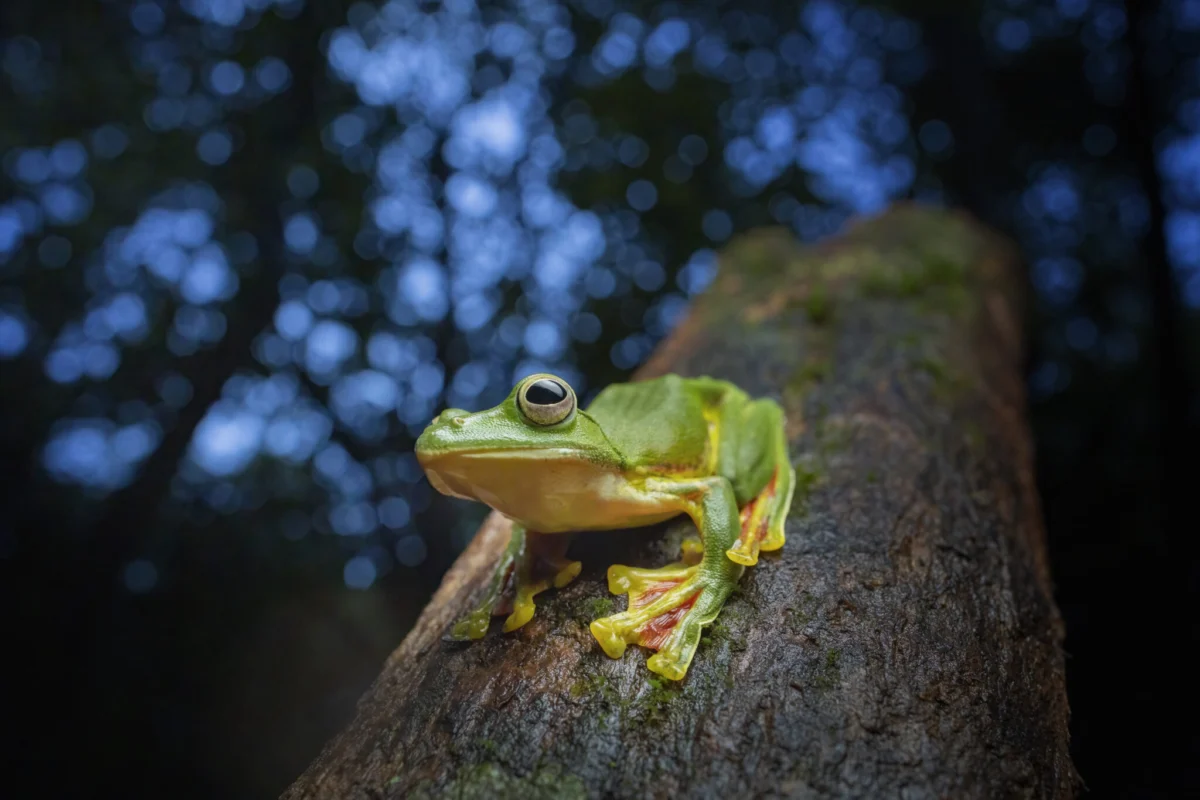
A significant evolution is unfolding within the realm of nature photography, as practitioners increasingly adopt wide-angle macro techniques to create visually arresting and ecologically rich images. This innovative approach moves beyond the traditional isolation of small subjects, instead embedding them within their natural habitats to craft immersive narratives. By capturing both the intricate details of a diminutive organism and the expansive context of its surroundings, wide-angle macro photography transports viewers directly into the scene, fostering a deeper connection to the subject’s world and highlighting the delicate balance inherent in its ecosystem. The resulting photographs are not merely striking visual records but powerful invitations for audiences to experience nature from a novel, intimate perspective, revealing the profound interplay between life forms and their environments. This method is gaining considerable traction among professional and amateur nature photographers alike, marking a pivotal shift in how the natural world’s smallest wonders are perceived and documented.
The Evolution of Macro Photography: A Quest for Context
For decades, traditional macro photography has excelled at revealing the minute intricacies of subjects, from the delicate hairs on an insect’s leg to the complex structure of a snowflake. However, its inherent focus on extreme magnification often necessitates a shallow depth of field, rendering backgrounds as abstract blurs. While aesthetically pleasing in many contexts, this technique frequently strips the subject of its environmental narrative, leaving viewers with an exquisite portrait but little understanding of where or how the creature exists within its broader ecosystem. This limitation has spurred a demand within the nature photography community for methods that can bridge the gap between microscopic detail and panoramic context.

The emergence and growing acceptance of wide-angle macro photography represent a direct response to this need. This technique deliberately utilizes wide-angle lenses, traditionally associated with expansive landscapes, at very close focusing distances to achieve magnified reproductions while retaining significant environmental information. It marks a paradigm shift from purely isolating the subject to consciously integrating it into its habitat, thereby enriching the storytelling potential of each image. The journey towards this specialized niche has been facilitated by advancements in lens technology, particularly the development of wide-angle lenses with exceptionally low minimum focusing distances (MFD), alongside more sophisticated camera features that enhance control and precision. This technological progression, coupled with a collective desire among photographers to communicate more holistic ecological messages, has propelled wide-angle macro from a niche experiment to a recognized and celebrated genre within wildlife imaging.
Technical Foundations: Bridging Wide-Angle and Macro
From a purely technical standpoint, wide-angle macro photography involves operating a wide-angle lens at extremely close focusing distances to generate magnified reproductions of subjects. It is important to note that, unlike conventional macro lenses designed for 1:1 (or greater) magnification ratios, many wide-angle lenses do not inherently meet the stringent definition of "true macro." However, the term "wide-angle macro photography" has been widely embraced by the photographic community to accurately describe this distinctive style of imagery. For practical purposes and clarity within discussions, this widely accepted terminology is consistently applied. This approach often presents unique optical characteristics, such as exaggerated perspective and deeper perceived depth of field compared to traditional macro at similar magnifications, which are leveraged creatively to enhance the immersive quality of the photographs. The challenge lies in harmonizing the wide field of view with sufficient magnification to render the subject impactful, a balance that requires specific gear and honed technique.

Mastering the Craft: Essential Equipment for Immersive Images
Achieving the distinctive aesthetic of wide-angle macro photography necessitates a specialized toolkit, each component playing a crucial role in overcoming the inherent challenges of the technique.
Cameras: While the adage "the best camera is the one you already own" holds true, and any DSLR or mirrorless camera can serve as a starting point, modern mirrorless systems offer significant advantages. Features such as advanced autofocus systems, particularly animal eye detection and focus tracking, drastically simplify the process of achieving critical sharpness on fast-moving or elusive subjects. Furthermore, live view capabilities and tilt screens greatly enhance field ergonomics, allowing photographers to compose and focus from challenging angles without contorting themselves. A camera body offering a robust dynamic range is beneficial for capturing details in both brightly lit backgrounds and flash-illuminated subjects. Excellent weather sealing is paramount for field work in diverse natural environments, protecting gear from moisture and dust, while a high burst rate can be crucial for capturing fleeting moments. While these advanced features simplify the process, beginners without the latest gear are encouraged to start with what they have, as strong images are fundamentally born from vision and technique.

Lenses: This component is undeniably critical. A wide-angle lens specifically designed with a very low minimum focusing distance (MFD) is indispensable for producing impactful wide-angle macro images. Standard wide-angle lenses, typically employed for expansive landscape photography, are generally insufficient as their MFDs prevent photographers from getting close enough to adequately magnify small subjects. Fortunately, a growing number of reputable brands, including both first-party and third-party manufacturers, now offer wide-angle lenses that boast true macro capabilities (1:1 reproduction ratio) or exceptionally low MFDs. A lens with a short MFD is essential for filling a significant portion of the frame with the subject while simultaneously including the background, thus preventing the subject from appearing insignificantly small and lost within its environment.
Flash: Despite much wide-angle macro photography being conducted during daylight or twilight hours, an external flash unit is an invaluable addition to the equipment arsenal. The technique often requires narrowing the aperture considerably to ensure both the subject and its immediate environment are acceptably in focus. This narrower aperture, however, significantly reduces ambient light, frequently leading to underexposure. An external flash effectively compensates for this light loss, providing the necessary illumination. When selecting a flash, key features to prioritize include both ETTL (Through-The-Lens) and manual modes for maximum control, a rapid recycle time to capture sequential shots, a guide number exceeding 60 for ample power, high-speed sync (HSS) capability for daylight fill flash, and remote operation functionality for off-camera lighting setups. These features collectively offer unparalleled flexibility and control over lighting.
Diffusers: To mitigate harsh highlights and create soft, flattering illumination on subjects, especially those with reflective or wet surfaces, a high-quality diffuser is essential. Standard diffusers, typically designed for traditional macro lenses (with diameters around 90-100 mm), often prove impractical or ineffective with wide-angle lenses due to their broader field of view and closer working distances. Without adequate structural support, the front section of a larger diffuser can sag, and its edges may intrude into the frame, ruining the composition. To circumvent these issues, photographers typically employ either smaller diffusers designed to stay out of the frame or custom-built solutions tailored to their wide-angle lens setups.

Smaller diffusers, such as dome diffusers or mini softboxes, offer greater ease of use with wide-angle lenses, though the extent of light diffusion they provide may not always be optimal. The general principle dictates that a larger diffusion surface yields softer, more even light. To adapt a larger, regular diffuser for wide-angle macro, creative hacks are often employed. This can involve elevating the diffuser’s height using a trigger mounted on the camera, then positioning the flash and diffuser atop this extension. Alternatively, disc-style diffusers can be utilized to provide directional top-lighting. A more advanced, albeit challenging, approach involves an off-camera flash setup combined with a diffuser, which typically requires a second pair of hands in the field for effective management.
Protective Clothing and Field Gear: Essential for any serious nature photographer, appropriate protective clothing and field gear are particularly important given the immersive and often challenging environments of wide-angle macro. This includes reliable rain gear to safeguard both the photographer and sensitive equipment from precipitation. Robust footwear and leech guards are crucial for navigating dense forest floors, marshy terrains, and protecting against reptile encounters. Lastly, effective mosquito and insect repellents are indispensable for comfort and safety during extended periods in the field.
Optimizing Shooting Conditions: Day vs. Night

The choice of shooting time significantly influences the outcome of wide-angle macro photography, particularly when aiming to emphasize the subject’s habitat.
Shooting During the Day: The core objective of wide-angle macro photography—showcasing the subject within its habitat—is most effectively achieved during daylight hours when the environment is naturally illuminated and visible. One of the most significant challenges in this genre arises when photographing nocturnal creatures, such as many reptiles and amphibians, which become active and photogenic in rainforests and other environments primarily at night. Traditional flash photography, when used in darkness, often results in images where the subject is well-lit but appears against a dark, featureless background, thereby losing the crucial contextual and environmental details that define wide-angle macro.
Recognizing the immutable laws of nature, successful wide-angle macro photography of nocturnal species often necessitates meticulous pre-trip research. This involves understanding the specific location, the species present, and any diurnal behaviors they might exhibit. Consulting local naturalists or guides can prove invaluable, providing insights into species habits and optimal observation times. Critically, ethical considerations are paramount: the practice of capturing or manipulating an animal for photography, even with subsequent release, is widely condemned within the community. The principle of photographing subjects in situ, undisturbed and in their natural state, remains a non-negotiable standard for responsible wildlife photographers.

Shooting During the Night: Without strategic lighting, night photography in wide-angle macro is prone to producing images that closely resemble traditional macro photographs—a subject clearly illuminated against a dark or black background, with minimal to no visual information about its surroundings. This outcome directly undermines the fundamental premise of wide-angle macro, which is to integrate the subject within its habitat.
To overcome this inherent challenge, photographers employ advanced lighting techniques. A common "hack" involves using multiple flashes to simultaneously illuminate both the primary subject and the background. One effective strategy is to utilize a master trigger on the camera to wirelessly fire multiple slave flashes, which are strategically positioned around the scene to provide comprehensive illumination. Alternatively, constant lights (LED panels, for example) can be deployed to illuminate background elements, offering more sustained light for careful composition and exposure adjustments. These methods ensure that the rich textures and forms of the nocturnal habitat are revealed, maintaining the integrity of the wide-angle macro approach.
Compositional Artistry: Guiding the Viewer’s Eye

The primary objective of employing a wide-angle lens in macro photography is to unveil the subject’s environment, thereby providing crucial context and amplifying storytelling opportunities. While virtually all standard rules of photographic composition apply, specific emphasis must be placed on harmoniously balancing the subject, foreground, and background elements.
Photographers are encouraged to incorporate multiple layers or depth elements within the frame to add visual interest and create a sense of immersion. Experimentation with diverse shooting angles is key; capturing subjects from a low vantage point can integrate the overhead canopy into the composition, while a higher perspective might reveal intricate details of the forest floor, both adding dramatic and creative dimensions. Furthermore, actively seeking out and utilizing leading lines—such as a blade of grass, a winding root, or a branch—can effectively guide the viewer’s eye towards the main subject. Incorporating natural elements like leaves, twigs, or flowers to frame the subject naturally also enhances the overall aesthetic and narrative coherence of the image.
Navigating the Challenges: Overcoming Technical Hurdles

Wide-angle macro photography, while offering immense creative potential, presents a distinct set of technical and practical challenges that photographers must master.
Perspective Distortion: Wide-angle lenses inherently exaggerate perspective, which can cause foreground subjects to appear disproportionately large relative to distant background elements. While this characteristic can be creatively harnessed to produce dynamic and engaging images, it demands careful composition to prevent an unnatural or distracting effect.
Depth of Field: At macro focusing distances, depth of field becomes incredibly shallow, even when using a wide-angle lens. This makes it particularly challenging to achieve sharpness across both the subject and a significant portion of its background. Photographers must employ the narrowest possible aperture to maximize depth of field, though this must be balanced against the potential for diffraction, which can degrade image sharpness at excessively small apertures. A careful judgment is often required in the field to find the optimal balance.

Lens Flare and Corner Softness: Wide-angle optics, especially when combined with accessories like extension tubes or adapters, are often susceptible to reduced sharpness at the edges of the frame and an increased propensity for lens flare. While flare can sometimes be used creatively, it is generally best to avoid extension tubes or adapters if maintaining optical integrity across the frame is paramount. Careful lens hood use and positioning relative to light sources are crucial.
Blocking Light: Due to the extremely close working distances inherent in wide-angle macro photography, the camera lens itself, and sometimes even the photographer’s body, can inadvertently cast shadows onto the subject. This necessitates thoughtful positioning and the strategic deployment of carefully chosen diffusers to ensure even and flattering illumination.
Balancing Lighting: Macro subjects often require intense, close-range lighting (typically from a flash) to achieve proper exposure and highlight fine details. Conversely, the wide background demands natural, often ambient, and evenly distributed light. Harmonizing these disparate lighting requirements within a single frame frequently necessitates a combination of techniques, including diffusers to soften flash, fill lights to illuminate shadows, or advanced exposure blending in post-processing.

Working Distance: Wide-angle macro setups are characterized by exceptionally short minimum focusing distances, sometimes requiring the lens front element to be mere centimeters from the subject. This proximity makes it inherently difficult to position the camera without disturbing the subject, demanding immense patience, stealth, and a deep respect for wildlife.
Size of the Gear: While larger diffusers generally produce softer, more appealing light, their physical size can become a significant impediment in wide-angle macro photography. An oversized lighting setup can easily disturb skittish subjects as the photographer attempts to approach. In such scenarios, a smaller, more discreet diffuser, despite offering less extensive diffusion, may prove more effective by allowing closer, less intrusive interaction. The choice ultimately involves a pragmatic trade-off between ideal light quality and the practicalities of field conditions and subject behavior.
Stability: Operating at such close distances with a wide-angle lens demands exceptionally precise focus and rock-steady camera positioning. Even the slightest movement by the photographer or the subject is significantly magnified in the resulting image, often leading to motion blur or missed focus. Techniques such as bracing the camera, utilizing tripods where feasible, or employing high shutter speeds are crucial for maintaining sharpness.

Wide-angle macro photography stands at a compelling intersection of intimate detail and expansive storytelling, offering an unparalleled avenue to reveal not only the exquisite minutiae of tiny subjects but also the rich, vibrant environments they inhabit. While this specialized technique is accompanied by its unique suite of challenges—ranging from demanding lighting constraints and abbreviated working distances to complex compositional considerations—the judicious application of appropriate equipment, creative diffuser methodologies, and meticulous fieldcraft can transform these obstacles into profound opportunities. By mastering the delicate balance between foreground subject prominence and background ecological context, photographers are empowered to craft images that resonate with both personal intimacy and grand scale. These photographs transcend mere visual documentation, capturing not only the aesthetic attributes of a creature but also its intrinsic belonging within a larger, interconnected world. Ultimately, wide-angle macro is more than a technical pursuit; it represents a powerful means of forging a deeper connection between human observers and the smallest wonders of nature, integrating them seamlessly into the broader tapestry of life. This genre continues to push the boundaries of natural history imaging, offering fresh perspectives that inform, inspire, and foster a greater appreciation for biodiversity and ecological integrity.