
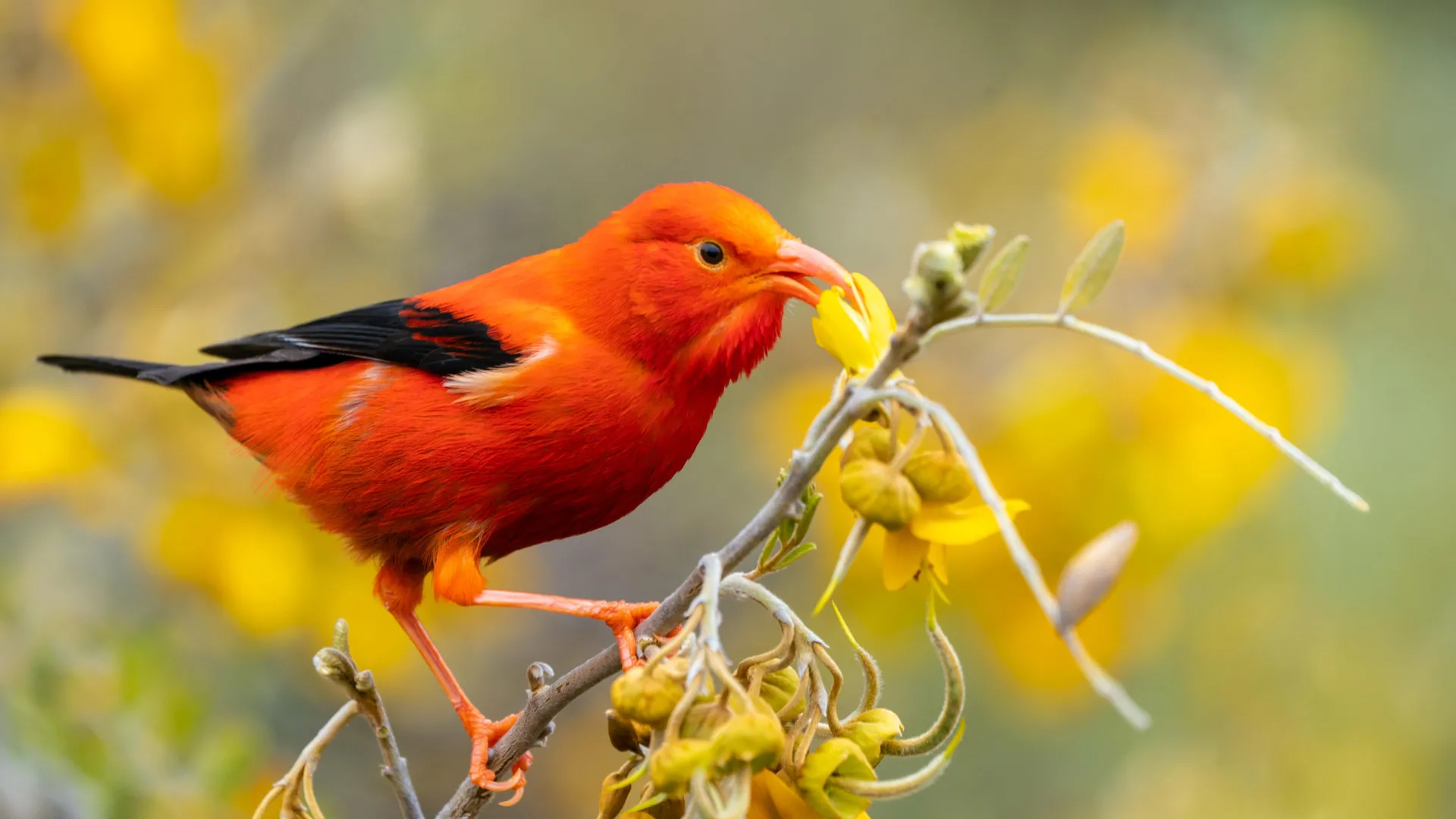
A groundbreaking new study, spearheaded by a researcher from the University of Hawaiʻi at Mānoa and published on February 10 in the esteemed journal Nature Communications, delivers a stark message regarding the pervasive threat of avian malaria across the Hawaiian Islands. The comprehensive research indicates that virtually every forest bird species in Hawaiʻi possesses the capacity to transmit avian malaria, a widespread ability to spread infection that critically explains the disease’s near-ubiquitous presence wherever mosquitoes are found across the archipelago. The findings underscore the monumental challenge facing conservation efforts and highlight the urgent need for landscape-scale intervention to protect Hawaiʻi’s unique and highly vulnerable avifauna.
The Pervasive Reach of Plasmodium relictum
The study’s revelations are particularly alarming, detecting the presence of avian malaria at an astonishing 63 out of 64 locations tested statewide. These sites encompassed a diverse array of forest ecosystems, each hosting distinct mixes of bird species, yet the parasitic threat persisted. The illness, caused by the generalist parasite Plasmodium relictum, has been unequivocally identified as a central driver in the catastrophic declines and extinctions of Hawaiʻi’s iconic native honeycreepers. These birds, a spectacular example of adaptive radiation, evolved over millions of years in isolation, rendering them exquisitely vulnerable to introduced pathogens against which they have no natural immunity.
Christa M. Seidl, the lead researcher who conducted this pivotal work as part of her PhD at the University of California, Santa Cruz, and now serves as the mosquito research and control coordinator for the Maui Forest Bird Recovery Project, emphasized the gravity of the situation. "Avian malaria has taken a devastating toll on Hawaiʻi’s native forest birds, and this study shows why the disease has been so difficult to contain," Seidl stated. "When so many bird species can quietly sustain transmission, it narrows the options for protecting native birds and makes mosquito control not just helpful, but absolutely essential for their survival." This statement resonates with conservationists who have long battled the insidious spread of the disease, often feeling as if they were fighting an invisible enemy.
A Century of Devastation: A Brief Chronology of Avian Malaria in Hawaiʻi
The story of avian malaria in Hawaiʻi is a tragic chapter in the broader narrative of invasive species impacts on isolated ecosystems. The primary vector for the disease, the southern house mosquito (Culex quinquefasciatus), is not native to Hawaiʻi. It arrived in the islands in 1826 aboard a whaling ship, quickly establishing itself in the warm, wet lowlands. While the exact arrival date of Plasmodium relictum is less precise, it is believed to have been introduced with non-native birds imported to the islands in the late 19th and early 20th centuries. These introduced birds, many of which had co-evolved with the parasite, often carry the infection asymptomatically, acting as chronic reservoirs without suffering the severe consequences seen in native Hawaiian species.
By the mid-20th century, ornithologists began to observe alarming declines in native bird populations, particularly at lower elevations where mosquito populations thrived. Scientific studies in the latter half of the century conclusively linked these declines to avian malaria. As human development expanded and agricultural practices altered landscapes, the range of Culex quinquefasciatus expanded, further encroaching on native bird habitats. For decades, the higher-elevation forests served as a natural refuge, where cooler temperatures inhibited mosquito breeding and parasite development. However, this sanctuary is now rapidly diminishing due to climate change.
The Biology of a Catastrophe: How Avian Malaria Undermines Survival
Avian malaria operates by attacking the red blood cells of infected birds, a physiological assault that can lead to severe anemia, organ failure, significantly reduced survival rates, and in many species, outright death. The consequences for Hawaiʻi’s endemic birds have been nothing short of catastrophic. Studies have meticulously documented the devastating impact: the ʻIʻiwi (Drepanis coccinea), also known as the scarlet honeycreeper, faces a staggering mortality rate of approximately 90 percent if infected. This vibrant, nectar-feeding bird, once common across the islands, now exists in fragmented populations, primarily in higher-elevation refugia. The ʻAkikiki (Oreomystis bairdi), a critically endangered honeycreeper native solely to Kauaʻi, has been declared extinct in the wild largely due to the relentless pressure of avian malaria. Its close relative, the Kiwikiu or Maui Parrotbill (Pseudonestor xanthophrys), faces a similar precarious future on Maui.
What makes avian malaria particularly difficult to combat in Hawaiʻi, as this new research reveals, is its unique epidemiological profile. Unlike many infectious diseases that rely on a select few "super-spreaders" or specific reservoir species to maintain transmission, avian malaria in Hawaiʻi operates differently. The study demonstrates that a vast majority of forest birds, encompassing both native and introduced species, are at least moderately capable of infecting southern house mosquitoes, the disease’s primary vector. Crucially, even birds carrying very small, almost undetectable amounts of the parasite were found to be capable of infecting mosquitoes. This finding upends previous assumptions and signifies that a wide spectrum of bird communities can maintain ongoing transmission, making any localized control efforts exceptionally challenging.
Seidl further elaborated on this critical insight: "We often understandably think first of the birds when we think of avian malaria, but the parasite needs mosquitoes to reproduce and our work highlights just how good it has gotten at infecting them through many different birds." This emphasizes the intricate dance between parasite, vector, and host, where the parasite’s evolutionary success lies in its broad host range within the Hawaiian ecosystem.
Chronic Infections: A Silent Engine of Transmission
The comprehensive research involved examining blood samples from over 4,000 birds collected across the four main islands of Kauaʻi, Oʻahu, Maui, and Hawaiʻi Island. These extensive field data were meticulously paired with controlled laboratory experiments designed to quantify how readily mosquitoes became infected after feeding on different bird species. The results consistently showed that native and introduced birds frequently exhibited similar levels of infectiousness, unequivocally indicating that both groups contribute significantly to the parasite’s relentless spread.
One of the study’s most critical revelations is the discovery that birds can harbor chronic infections for extended periods, spanning months or even years. During this prolonged phase, birds may appear only mildly infected, displaying few overt symptoms of illness. Yet, critically, they remain fully capable of transmitting the parasite to feeding mosquitoes. The researchers’ modeling estimates suggest that this long-lasting, low-to-moderate infectious stage accounts for the overwhelming majority of avian malaria transmission across the state. This "silent spreading" mechanism makes the disease incredibly difficult to track and control, as seemingly healthy birds can perpetuate the infection cycle without drawing attention.
This finding carries profound implications for conservation. It means that simply removing severely ill birds or focusing solely on areas with high disease prevalence may not be sufficient. The widespread presence of chronically infected birds acts as a continuous reservoir, ensuring that the parasite remains viable and ready to infect new mosquito populations whenever conditions allow.
Climate Change: Erasing the Last Sanctuaries
The parasite’s remarkable ability to infect a multitude of bird species inherently explains why avian malaria has become so pervasive across Hawaiʻi. The study’s conclusions paint a grim picture: very few mosquito-infested habitats remain truly free of transmission risk. Adding another layer of urgency to this crisis is the undeniable impact of climate change. Warming global temperatures are directly translating into warmer conditions at higher elevations in Hawaiʻi. This environmental shift is progressively allowing Culex quinquefasciatus mosquitoes and, consequently, avian malaria, to expand their range into previously cooler, higher-elevation areas. These once-pristine montane forests historically served as vital refuges for vulnerable native birds, where the cold temperatures naturally limited mosquito breeding and the development of the Plasmodium relictum parasite within the mosquito vector.
As these thermal barriers recede, the last strongholds for species like the ʻIʻiwi, ʻAkepa (Loxops coccineus), and Kiwikiu are shrinking, forcing them into increasingly smaller and more isolated pockets of habitat that are now becoming accessible to infected mosquitoes. For many of Hawaiʻi’s most endangered honeycreepers, these high-elevation forests represent their last chance for survival. The encroachment of malaria into these areas could spell the final chapter for several species.
The "Birds, Not Mosquitoes" Initiative: A Beacon of Hope
In response to this existential threat, a broad coalition of academic institutions, state and federal agencies, non-profit organizations, and industry partners has coalesced under the banner of "Birds, Not Mosquitoes." This collaborative initiative is dedicated to advancing innovative mosquito control strategies aimed at conserving Hawaiian bird populations. The Maui Forest Bird Recovery Project, where Christa Seidl plays a crucial role, is a key member of this initiative, operating under the Pacific Cooperative Studies Unit in the College of Natural Sciences at the University of Hawaiʻi at Mānoa.
The primary strategy being explored and deployed by "Birds, Not Mosquitoes" is the Incompatible Insect Technique (IIT). This cutting-edge method involves releasing male mosquitoes carrying a naturally occurring bacterium called Wolbachia that is incompatible with the Wolbachia strains found in wild female mosquitoes. When these incompatible mosquitoes mate, the eggs do not hatch, effectively reducing the mosquito population over time without the use of chemical pesticides. This species-specific approach offers a promising, environmentally sound solution to a problem that has defied conventional methods. The logistical challenges of deploying such a technique across vast, rugged forest landscapes are immense, but the stakes for Hawaiʻi’s biodiversity are too high to ignore.
Dr. David Smith, an expert in avian ecology and conservation with the Hawaiʻi Department of Land and Natural Resources (DLNR), echoed the urgency of the findings. "This study confirms what we’ve long suspected – that avian malaria is a systemic problem requiring a systemic solution," he remarked. "The widespread infectiousness across bird species means we cannot simply protect isolated populations; we must tackle the vector itself on a landscape scale. The ‘Birds, Not Mosquitoes’ initiative, particularly the IIT approach, represents our best, and perhaps only, viable path forward to safeguard these irreplaceable birds from extinction."
Broader Implications and the Global Significance of Hawaiʻi
The dire situation facing Hawaiian forest birds extends beyond the archipelago, serving as a powerful microcosm of global biodiversity loss driven by invasive species and climate change. Hawaiʻi, often referred to as the "extinction capital of the world," has already lost an estimated 71 of its 113 endemic bird species since human arrival. The remaining species, particularly the honeycreepers, represent a fragile and irreplaceable evolutionary heritage. Their continued existence is not merely a local concern but a global conservation imperative.
The findings from Seidl’s study underscore the complex interplay of ecological factors that can drive species to the brink. It highlights the often-underestimated role of disease ecology in conservation and emphasizes that effective conservation in the Anthropocene requires innovative, interdisciplinary solutions. The successful implementation of landscape-scale mosquito control in Hawaiʻi could provide a critical model for other islands and ecosystems grappling with similar challenges from invasive vectors and pathogens.
Ultimately, the future of Hawaiʻi’s forest birds hinges on the ability of scientists, conservationists, and policymakers to act decisively and implement comprehensive strategies. The knowledge that virtually every forest bird can transmit avian malaria, coupled with the relentless advance of mosquitoes into shrinking high-elevation refugia due to climate change, means that time is rapidly running out. The battle against avian malaria is not just about saving birds; it is about preserving the ecological integrity and unique natural heritage of one of the world’s most extraordinary and vulnerable island ecosystems. All birds in the study were captured and handled by trained ornithologists under strict state and federal permits, adhering to the highest ethical and scientific standards.