
The late-winter landscape of Manitoba serves as a premier destination for ornithologists and wildlife enthusiasts, offering a unique window into the lives of hardy avian species that thrive in sub-zero temperatures. From February 27 to March 3, 2026, a specialized birding expedition traversed the diverse ecosystems of Southern Manitoba, ranging from the urban corridors of Winnipeg to the dense boreal forests of the Interlake region. The expedition, which focused primarily on the region’s iconic owl species, successfully documented a wide array of raptors, songbirds, and mammals, providing valuable citizen-science data and highlighting the ecological importance of Manitoba’s winter habitats.

Foundations of the Expedition: Educational Outreach and Expert Insights
The excursion commenced on the evening of February 27, as participants gathered in Winnipeg to coordinate logistics and establish the scientific objectives for the coming days. A central component of the opening session was a keynote presentation by Jim Duncan, a renowned biologist celebrated for his extensive research on the Great Gray Owl (Strix nebulosa). Duncan’s work, which spans decades, has been instrumental in understanding the nesting habits and population dynamics of North America’s tallest owl.
A highlight of the evening was the presence of Oska, an educational Great Gray Owl. Such ambassador birds play a critical role in conservation efforts, allowing researchers to demonstrate the physiological adaptations of the species—such as their asymmetrical ear openings and specialized feathers for silent flight—to the public. This educational foundation set the stage for the field observations, emphasizing the need for ethical birding practices and the preservation of the sensitive boreal habitats where these apex predators reside.

Urban and Industrial Raptors: Observations in Southern Winnipeg
On February 28, the expedition moved south of Winnipeg, facing the characteristic "cold start" of a Manitoban winter. Despite the frigid temperatures, the group quickly located a covey of Gray Partridges (Perdix perdix). These birds, though non-native to North America, have become a staple of the prairie landscape since their introduction from Europe and Asia in the early 20th century.
The first major raptor sighting occurred shortly thereafter: a juvenile Snowy Owl (Bubo scandiacus) perched atop a hydro pole. Snowy Owls are irruptive migrants that travel south from the Arctic tundra during the winter. The use of man-made structures like utility poles is common for these owls, as they provide high vantage points that mimic the rocky outcrops of their northern breeding grounds.

The expedition further explored the intersection of industry and nature in south Winnipeg, where a pair of Bald Eagles (Haliaeetus leucocephalus) had established a massive nest within an industrial park. The proximity of the nest to high-traffic areas suggests a high degree of habituation among the local eagle population. Such urban nesting sites are increasingly common as Bald Eagle populations continue their robust recovery across North America, following the ban on DDT and the implementation of stricter environmental protections.
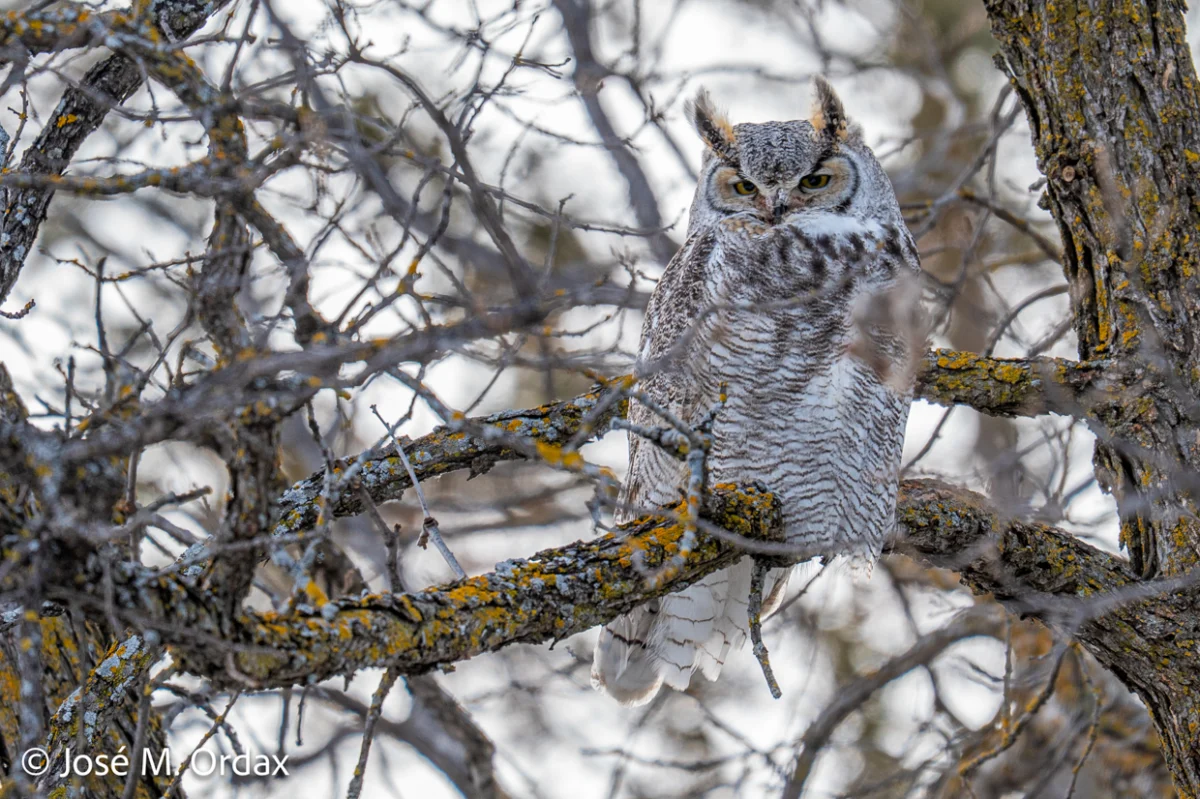
The day’s urban birding also included visits to Harris Park and Bunn’s Creek. While some target species, such as the Eastern Screech-Owl and Barred Owl, remained elusive, the group recorded significant sightings of a Red-bellied Woodpecker and a vibrant flock of Bohemian Waxwings (Bombycilla garrulus). At Bunn’s Creek, the group observed a nesting pair of Great Horned Owls (Bubo virginianus). The male was observed maintaining a vigilant watch over the territory, while the female remained on the nest, likely brooding young owlets—a testament to the early nesting cycle of this resilient species.

Transitioning to the Boreal: The Northern Hawk Owl Stronghold
On March 1, the expedition transitioned from the prairie-urban interface to the boreal forest, a biome characterized by coniferous trees and peatlands. This region is a critical wintering ground for the Northern Hawk Owl (Surnia ulula), a species that, unlike most owls, is diurnal (active during the day).
Near Silver Falls, the group encountered their first Northern Hawk Owl hunting in a cleared section of forest. The presence of smoldering brush piles in the area likely attracted small rodents, the owl’s primary prey. As the group progressed toward Lac du Bonnet via Wendigo Road, the density of this species became apparent, with a total of five separate Northern Hawk Owls recorded.

One particularly notable behavioral observation involved a Black-backed Woodpecker (Picoides arcticus) attempting to "mob" a Northern Hawk Owl. Mobbing is a defensive behavior used by smaller birds to harass and drive away potential predators. In this instance, the woodpecker circled the owl aggressively; however, the owl remained stoic, demonstrating the characteristic lack of fear that Hawk Owls often show toward other species.
The boreal segment of the trip also yielded sightings of several "winter finches" and other specialist species. Feeders in Silver Falls and Lac du Bonnet were teeming with Evening Grosbeaks, Pine Grosbeaks, Common Redpolls, and Pine Siskins. These species are known for their nomadic winter movements, often traveling long distances in search of abundant seed crops. Additionally, the group observed a North American River Otter (Lontra canadensis) hunting in the turbulent waters of a local dam outflow, showcasing the biodiversity of Manitoba’s waterways even in mid-winter.

The Interlake Region and Hecla Island: Final Observations
The penultimate day of the expedition, March 2, focused on the Oak Hammock Marsh and the Interlake region leading toward Gimli and Hecla Island. Recent snowfall had created significant drifts, rendering some secondary roads impassable. Nevertheless, the group successfully located a dozen Sharp-tailed Grouse (Tympanuchus phasianellus), a species known for its elaborate lekking displays in the spring.
As the team moved toward Hecla/Grindstone Provincial Park, the landscape shifted toward a mix of marshland and dense coniferous stands. Hecla Island provided a scenic backdrop for observing Common Ravens and numerous Bald Eagles. The most significant find of the day was a Boreal Chickadee (Poecile hudsonicus), found foraging among a larger group of Black-capped Chickadees. The Boreal Chickadee is a quintessential specialist of the northern woods, easily distinguished from its more common cousin by its brown cap and harsher call.

The sighting of an Emu on a small hobby farm provided a moment of levity for the group, though as a captive exotic species, it was not included in the official scientific tally. The day concluded with a survey of the Gimli area, where the group noted the impact of weather patterns on bird distribution, specifically noting the absence of Rough-legged Hawks and Northern Shrikes, which may have moved further south in response to the heavy snow cover.
Analysis of Regional Avian Trends and Tourism Impact
The data collected during this five-day expedition, subsequently uploaded to the eBird global database, contributes to a larger understanding of winter bird distributions in Manitoba. The high number of Northern Hawk Owl sightings suggests a healthy local population or a significant winter movement into the Lac du Bonnet area. Conversely, the difficulty in locating certain marsh-dwelling raptors highlights how fluctuating snow depths can dictate the movement of species that rely on ground-dwelling prey.

From an economic perspective, winter birding expeditions represent a growing sector of Manitoba’s ecotourism industry. While traditional tourism often peaks in the summer months, the presence of rare northern owls draws international visitors during the winter, providing a seasonal boost to local economies in towns like Gimli and Lac du Bonnet.
The success of the trip also underscores the importance of public-private partnerships in conservation. The involvement of experts like Jim Duncan and the use of educational ambassadors like Oska bridge the gap between academic research and public awareness. By fostering an appreciation for these "ghosts of the north," such expeditions build a constituency for the protection of the boreal forest—a habitat that is increasingly threatened by climate change and industrial expansion.

Conclusion: A Legacy of Conservation and Community
The expedition concluded on March 3, 2026, with participants departing Winnipeg with a comprehensive list of species and a deeper understanding of Manitoba’s winter ecology. Beyond the checklists and photographs, the trip facilitated meaningful interactions between seasoned birders and local families, as seen at Bunn’s Creek, where local children were introduced to the wonders of owl-watching for the first time.
As the climate continues to shift, the timing and distribution of Manitoba’s winter birds will likely undergo further changes. Ongoing monitoring through expeditions such as this remains vital for tracking the health of the boreal ecosystem. For the participants of the 2026 Manitoba Owls trip, the journey was a reminder of the resilience of nature and the enduring allure of the wilderness in its harshest, most beautiful season.