
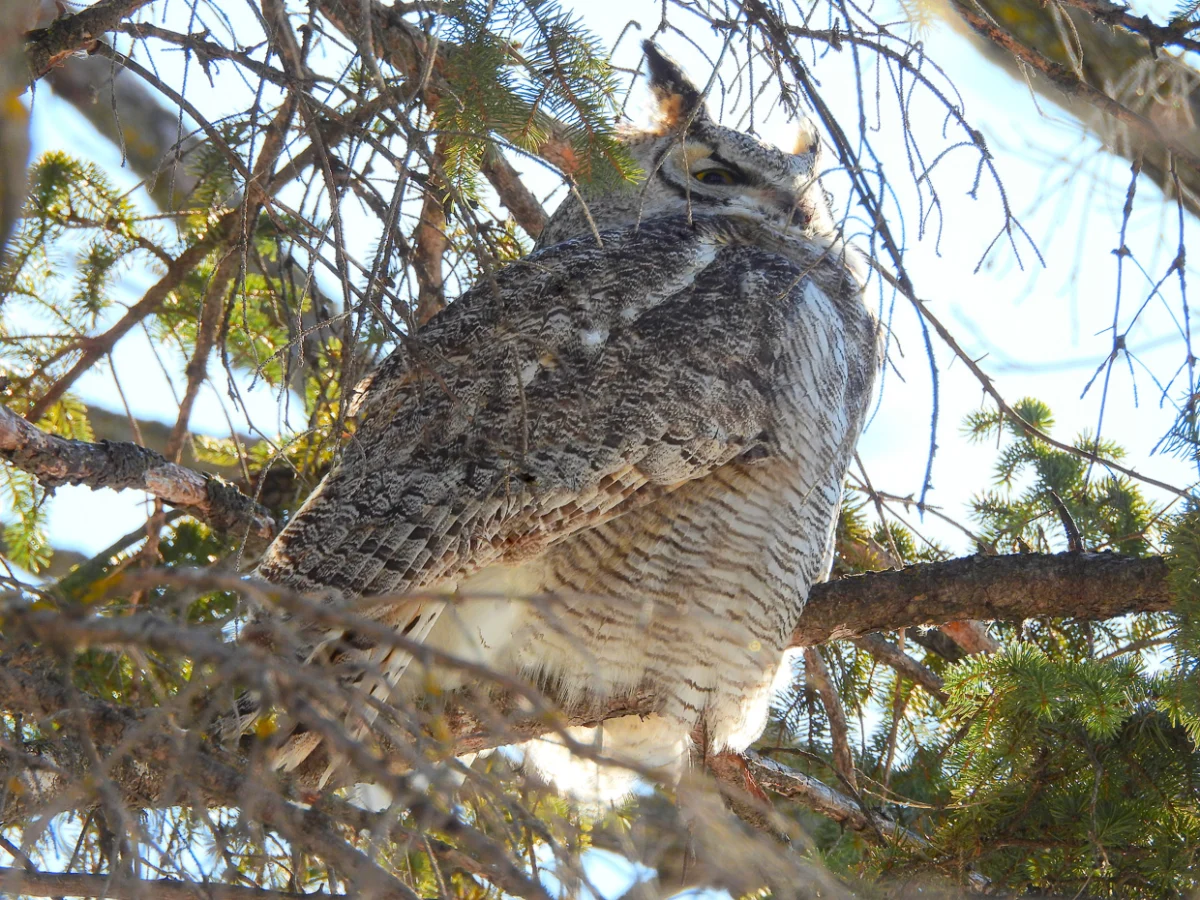
The 2026 Manitoba Owls birding expedition, which took place from March 14 to March 18, has concluded as a benchmark event for winter avian observation in North America, highlighting the unique ecological significance of the Canadian prairies and the boreal transition zones. Led by a team of expert naturalists, the five-day tour navigated the challenging late-winter climate of southern and eastern Manitoba, documenting an impressive variety of raptors and winter specialists. This annual pilgrimage to the "Owl Capital of Canada" serves not only as a premiere event for birding enthusiasts but also as a vital opportunity for citizen science, contributing to the broader understanding of wintering patterns among Arctic and boreal species.

The Intersection of Conservation and Education: An Evening with Oska
The expedition commenced on the evening of March 14, 2026, in Winnipeg, where participants gathered for an initial briefing and itinerary review. The highlight of the opening session was a keynote presentation by Dr. James Duncan, a renowned biologist whose work has been instrumental in the study of Manitoba’s provincial bird, the Great Grey Owl (Strix nebulosa). Dr. Duncan was accompanied by Oska, a captive Great Grey Owl that serves as an ambassador for the species.
During the presentation, Dr. Duncan detailed decades of research into the population dynamics and conservation needs of these elusive raptors. He emphasized the importance of maintaining old-growth forest structures and monitoring the impact of climate variability on the small mammal populations that these owls depend upon. This session provided participants with a rigorous scientific framework, transforming the upcoming field observations from mere sightings into an informed study of ecological resilience.

Chronology of Field Observations: From the Red River Valley to the Boreal Edge
The field component of the tour began in earnest on March 15, targeting the open agricultural landscapes southwest of Winnipeg. This region, characterized by its flat topography and vast grain fields, serves as a primary wintering ground for Snowy Owls (Bubo scandiacus) migrating south from the Arctic tundra.
Day 2: The Tundra Ghosts of Oak Bluff and Fannystelle
The group departed for Oak Bluff and Fannystelle, navigating gravel roads where the visibility of the horizon is often punctuated only by the silhouettes of raptors. The first significant sighting occurred near Fannystelle: a Snowy Owl perched on a low rise. As the day progressed, the group documented a total of three Snowy Owls, including a striking, nearly pure-white male near the towns of Sanford and Domain. These sightings were complemented by large numbers of Horned Larks and a single Snow Bunting, species that thrive in the wind-swept stubble of the winter prairies.

In the afternoon, the expedition shifted focus to urban and suburban refuges within Winnipeg. A stop at St. Vital Park yielded a sighting of a Pileated Woodpecker, the largest woodpecker in North America, though a known Western Screech-Owl roost remained unoccupied. The day concluded with a visit to Bunn’s Creek, where a resident pair of Great Horned Owls was observed nesting—a testament to the species’ early breeding cycle—and a final stop at Assiniboine Park, where a Northern Saw-whet Owl was discovered roosting in a dense conifer.
Day 3: The Diurnal Hunters of the Interlake and Lac du Bonnet
On March 16, the tour moved northeast toward the Lac du Bonnet region, a transition zone where the prairie gives way to the Canadian Shield and the boreal forest. The primary target was the Northern Hawk Owl (Surnia ulula), a diurnal hunter known for its hawk-like profile and preference for high, exposed perches.

The group successfully located a Northern Hawk Owl along Highway 317. This sighting provided an opportunity to observe the bird’s unique hunting posture and its indifference to human presence, a common trait among northern species that have limited interaction with people. Further exploration near Henry Bellin Road introduced the group to a variety of winter passerines and grouse. At local feeding stations, participants observed Evening Grosbeaks, Common Redpolls, and Blue Jays, while a nearby field hosted a lek of Sharp-tailed Grouse. Despite the plummeting temperatures, the high density of sightings confirmed the region’s status as a critical wintering corridor.
Day 4: Expanding the Count in the Southern Lowlands
Based on the success of previous days, the itinerary for March 17 was adjusted to maximize time in the high-yield Snowy Owl habitats south of the city. The decision proved fruitful as the group traversed the region between La Salle, Domain, and Rosenort.

In a remarkable display of winter density, the group recorded five additional Snowy Owls, many of which were found perched on railway ties and fence posts. These observations are significant for population monitoring, as they suggest a healthy irruption year for the species. In Rosenort, the group encountered a covey of Grey Partridge, an introduced species that has become a staple of the Manitoban agricultural landscape.
The final afternoon was spent at Oak Hammock Marsh, a globally recognized Ramsar Site. While the marsh was largely frozen, the interpretive center and its surrounding feeders provided a sheltered environment to observe Common Redpolls and Downy Woodpeckers. The presence of two female Red-winged Blackbirds—typically early migrants—offered a subtle hint of the approaching spring, despite the prevailing winter conditions.

Supporting Data and Ecological Context
The 2026 tour documented a total of six owl species: Snowy Owl, Great Horned Owl, Northern Saw-whet Owl, Northern Hawk Owl, Great Grey Owl (educational ambassador), and evidence of Barred Owl habitat. This diversity highlights Manitoba’s unique position at the confluence of several major biomes.
Table 1: Key Avian Sightings and Locations
| Species | Count | Primary Location | Habitat Type |
|---|---|---|---|
| Snowy Owl | 8 | Oak Bluff / Rosenort | Open Agricultural / Tundra-like |
| Northern Hawk Owl | 1 | Highway 317 | Boreal Edge / Burn-over |
| Great Horned Owl | 2 | Bunn’s Creek | Riparian / Suburban Forest |
| Northern Saw-whet Owl | 1 | Assiniboine Park | Coniferous Stand |
| Sharp-tailed Grouse | 12+ | Lac du Bonnet | Scrub / Field Edge |
| Grey Partridge | 8 | Rosenort | Roadside / Field Edge |
The abundance of Snowy Owls in the 2026 season is particularly noteworthy. Researchers suggest that such irruptions are often tied to "boom" years in lemming populations in the Arctic, leading to high fledgling success. When these young birds migrate south, they congregate in areas like the Red River Valley, which mimics the flat, treeless landscape of their natal grounds.

Broader Implications and Avian Tourism
The success of the Manitoba Owls tour underscores the growing importance of avian tourism to the provincial economy. Birding is one of the fastest-growing outdoor recreational activities in North America, and Manitoba’s winter offerings provide a niche market that attracts international visitors during the traditional "off-season."
However, this tourism relies heavily on the preservation of sensitive habitats. The sightings at Oak Hammock Marsh and FortWhyte Alive emphasize the value of protected wetlands and urban green spaces in supporting biodiversity. Furthermore, the presence of Dr. Jim Duncan’s research highlights the symbiotic relationship between the birding community and scientific conservation. Data collected by tour groups through platforms like eBird provides real-time information to biologists monitoring the health of northern raptor populations.

Conclusion and Future Outlook
As the expedition concluded on March 18, participants departed with a comprehensive understanding of the winter ecology of the Canadian prairies. The 2026 tour was characterized by exceptional sightings of Snowy Owls and the rare opportunity to observe the Northern Hawk Owl in its natural habitat.
Looking forward, the continued monitoring of these species is essential as climate change alters the timing of migrations and the availability of prey. The Manitoba Owls tour remains a critical fixture in the avian calendar, offering a window into the lives of some of the world’s most resilient bird species. For the participants, the trip was a reminder of the stark beauty of the Manitoban winter and the vital need to protect the fragile ecosystems that these "ghosts of the north" call home.