
The early March landscape of Manitoba served as the backdrop for a significant ornithological expedition from March 3 to March 7, 2026, as a group of dedicated birders and naturalists documented the winter movements and nesting behaviors of several key avian species. This five-day survey, focused on the "Owl Capital of Canada," provided crucial data on the health and distribution of both resident and migratory birds during the late winter transition. Led by expert guides and supported by local researchers, the expedition combined field observations with educational outreach, highlighting the ecological importance of the Red River Valley and the boreal transition zones of central Manitoba.

The Significance of Manitoba’s Winter Avian Ecology
Manitoba occupies a unique geographical position where the northern reaches of the Great Plains meet the southern edge of the Boreal Forest. This intersection creates a "tension zone" that supports a high diversity of raptors and hardy passerines capable of surviving sub-zero temperatures. The 2026 expedition was particularly noteworthy for its documentation of rare species and the early onset of nesting behaviors in large raptors, such as Bald Eagles and Great Horned Owls.
The expedition commenced with a formal orientation and a keynote presentation by Dr. Jim Duncan, a renowned authority on the Great Grey Owl (Strix nebulosa). Dr. Duncan’s work emphasizes the conservation of Manitoba’s provincial bird, focusing on habitat preservation and the impacts of climate variability on small mammal populations, which serve as the owls’ primary food source. The presence of Oska, an educational Great Grey Owl, allowed participants to observe the species’ specialized facial disks and feathered talons—adaptations essential for hunting by sound in deep snow.

Chronology of the Expedition: March 3–7, 2026
The operational phase of the expedition began on March 4, moving south of Winnipeg toward the town of Oak Bluff. This region, characterized by vast agricultural fields and highway corridors, is a critical wintering ground for the Snowy Owl (Bubo scandiacus). The group successfully located three individuals, including a young male identifiable by his transitioning plumage. Unlike mature males, which are nearly pure white, younger birds and females exhibit heavy dark barring. The observation of these birds perched on both man-made signs and natural roosts provided insight into their adaptability within human-altered landscapes.
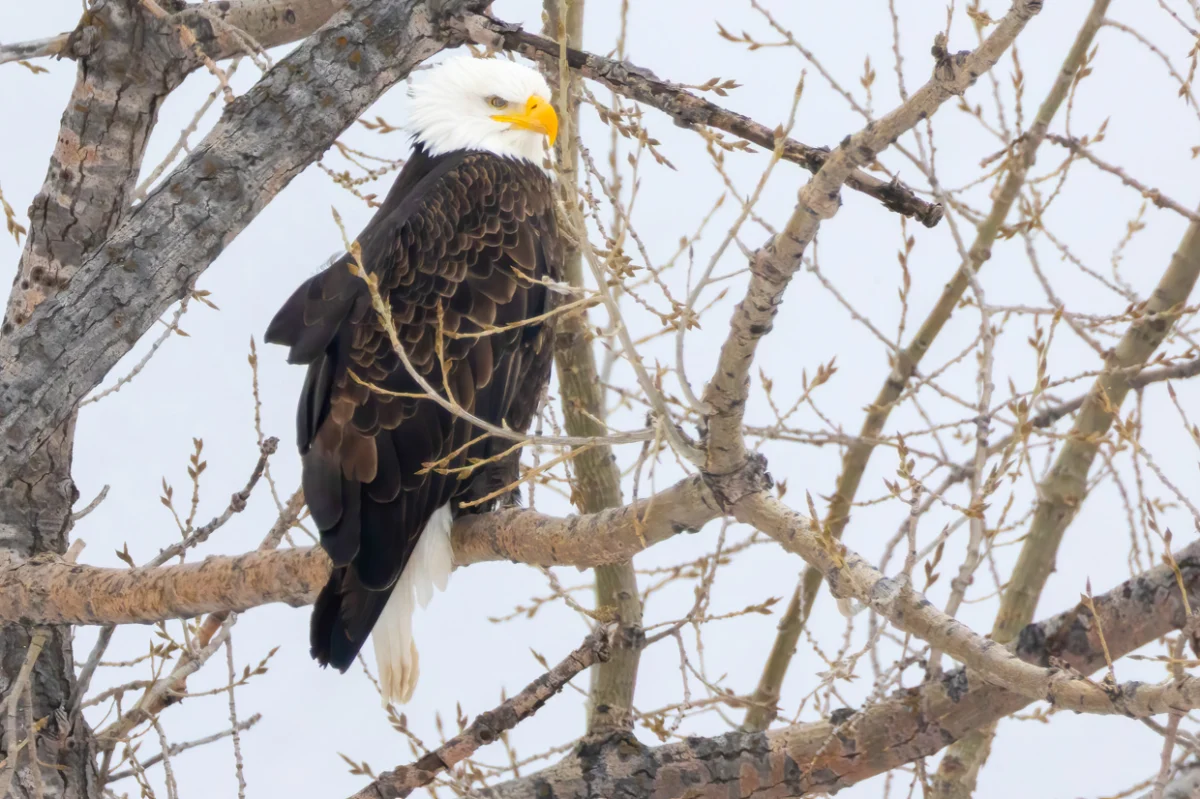
Following the Snowy Owl observations, the team moved to Fort Whyte Alive, a 640-acre protected urban green space. Here, the focus shifted to the early stages of the raptor breeding season. A pair of Bald Eagles (Haliaeetus leucocephalus) was observed at a well-established nest site. The female’s presence on the nest suggested the beginning of the incubation period, a phase that typically starts in early March in southern Manitoba. The day concluded with a survey of urban parks, including St. Vital and Harris Park, where researchers documented the presence of the Red-bellied Woodpecker (Melanerpes carolinus), a species that has been gradually expanding its range northward into Manitoba over the last two decades.

The Rarities of the Boreal Transition
March 5 marked a significant highlight of the expedition when word reached the group of a rare Townsend’s Solitaire (Myadestes townsendi) in a residential area of Winnipeg. Primarily a bird of the western mountain forests, the Solitaire’s presence in Manitoba is an infrequent occurrence, often linked to winter food shortages in its typical range. The bird was observed feeding on ornamental berries, demonstrating the importance of urban biodiversity in supporting vagrant species.
The expedition then moved toward the boreal transition zone along Road 317 and Silver Falls. This area yielded sightings of the Northern Hawk Owl (Surnia ulula). Unlike most owls, the Hawk Owl is diurnal (active during the day) and possesses a hawk-like profile and flight pattern. The team observed an individual hunting in a clear-cut area, a habitat preference that allows the bird a clear line of sight for spotting voles. Additional sightings in this region included Sharp-tailed Grouse (Tympanuchus phasianellus) and Evening Grosbeaks (Coccothraustes vespertinus), the latter of which are often used as indicators of forest health.

Deep Boreal Exploration and Wetland Conservation
On March 6, the survey moved into the more rugged terrain of Grindstone Provincial Park and Hecla Island. These locations are essential for monitoring boreal specialists such as the Black-backed Woodpecker and the Boreal Chickadee (Poecile hudsonicus). The team documented "scaling"—a feeding behavior where woodpeckers flake away the outer bark of conifers to reach beetle larvae—as a widespread sign of avian activity in the park.
On Hecla Island, the group encountered Boreal Chickadees, which are significantly more elusive than the common Black-capped Chickadee. These birds inhabit the dense interior of coniferous stands, making them difficult to track. The day concluded at Oak Hammock Marsh, a world-renowned wetland restoration project. The marsh’s interpretive center and renovated museum serve as a hub for conservation education. Observations at the marsh’s feeders included a large flock of Common Redpolls (Acanthis flammea) and two overwintering Red-winged Blackbirds, whose presence in early March suggests a successful survival strategy through the winter months.

Supporting Data and Population Trends
The data collected during the five-day period was uploaded to eBird, a global citizen-science database managed by the Cornell Lab of Ornithology. This contribution is vital for long-term population monitoring. Key data points from the 2026 expedition include:
- Raptor Nesting Timelines: The active incubation of Bald Eagles and Great Horned Owls in early March aligns with a ten-year trend of stable or slightly advancing nesting dates in the Red River Valley.
- Range Expansion: The sighting of the Red-bellied Woodpecker confirms the species’ established presence in the Winnipeg metropolitan area, likely aided by the proliferation of backyard bird feeders and slightly milder winter minimums.
- Irruptive Species Stability: The consistent sightings of Northern Hawk Owls in the same clear-cut areas over multiple years suggest high site fidelity when food sources remain stable.
Conservation Implications and Analysis
The 2026 expedition highlights the growing importance of ecotourism as a tool for conservation. By documenting these species, birding groups provide "eyes on the ground" that government agencies often lack the resources to maintain. The presence of the Townsend’s Solitaire and the Northern Hawk Owl underscores the need for diverse habitat management, ranging from the preservation of old-growth boreal stands to the maintenance of "wild" corners in urban environments.

The economic impact of birding in Manitoba is also a factor in conservation policy. Rare sightings, such as the Solitaire, draw visitors from across North America, generating revenue for local hospitality and guiding services. This economic incentive encourages the protection of the very habitats these birds require for survival.
Furthermore, the expedition’s focus on owls serves an important ecological role. As apex predators of the avian world, owls are "sentinel species." Fluctuations in their population or breeding success often mirror changes in the health of the entire ecosystem, specifically in regard to small mammal populations and the impacts of heavy snow crusting, which can prevent owls from accessing their prey.

Conclusion
The March 2026 Manitoba Owls expedition concluded on March 7, having successfully documented a wide array of species across multiple distinct habitats. From the snowy agricultural fields of Oak Bluff to the dense coniferous forests of Hecla Island, the expedition provided a comprehensive snapshot of the province’s winter avian life.
The findings suggest that while resident species like the Great Horned Owl and Bald Eagle are proceeding with their standard breeding cycles, the presence of rare vagrants and the expansion of southern species continue to shift the ornithological landscape of the province. As climate patterns continue to evolve, these annual surveys will remain a critical component in the effort to understand and protect the delicate balance of the northern wilderness. The successful documentation of these birds ensures that Manitoba remains a premier destination for scientific study and nature enthusiasts alike, fostering a deeper public appreciation for the resilience of life in the cold.