

Woodpeckers, renowned for their distinctive drumming and arboreal acrobatics, are far more than just charming backyard visitors. These birds exhibit a remarkable suite of physiological and anatomical adaptations that allow them to thrive in a niche that would be punishing, if not fatal, to most other avian species. Their ability to withstand repeated, high-impact head strikes is a testament to evolutionary ingenuity, making them a subject of ongoing scientific fascination and a constant source of wonder for bird enthusiasts.
The Punishing Reality of Woodpecker Life
The daily existence of a woodpecker involves an astonishing level of physical exertion and resilience. When excavating a nesting cavity or foraging for insects, a woodpecker’s head can impact a tree’s surface at speeds reaching up to 13 miles per hour. The resulting force, estimated to be around 10 G-forces, is immense. For perspective, the human brain is three times more susceptible to concussion than a woodpecker’s brain at similar speeds. Imagine the impact of running headfirst into a solid wall at full sprint – this is the daily reality for these extraordinary birds.
This constant, high-velocity pounding raises a critical question: how do woodpeckers avoid severe brain trauma? Scientific inquiry has identified several key adaptations that contribute to their remarkable durability.
Anatomical Marvels: The Woodpecker’s Engineered Skull
A primary defense mechanism lies within the woodpecker’s unique skull structure. Unlike the solid, rigid skulls of many other birds, a woodpecker’s skull is characterized by lightweight, spongy, air-filled bone. This structure is not only surprisingly robust but also reinforced by an intricate meshwork of bony support struts, effectively distributing the shock of impact.
Furthermore, the woodpecker’s skull is proportionally small in relation to the size of its brain. This anatomical arrangement creates a snug fit, significantly minimizing the space within the cranial cavity. Consequently, the brain has limited room to move and rattle during severe impacts, thereby reducing the risk of contusions and damage. This cranial design is a finely tuned evolutionary solution to the inherent dangers of their foraging and nesting behaviors.
Bill Durability: A Self-Sharpening, Regenerating Tool
The woodpecker’s iconic chisel-shaped bill, essential for their survival, also faces considerable wear and tear. Each percussive strike against wood would, in most animals, lead to rapid erosion of the bill’s tip. However, woodpeckers possess specialized cells at the end of their bills that are continuously regenerating lost material. This constant renewal process ensures that their bills remain strong, resilient, and, remarkably, self-sharpening. With every forceful blow, the bill’s cutting edge is honed, maintaining its effectiveness for excavation and foraging throughout its life.
Protective Gear: Nature’s Own Safety Equipment
Beyond their cranial and bill adaptations, woodpeckers have evolved an ingenious set of protective measures to shield themselves from the hazards of their work. To prevent inhalation of wood dust and debris, they have developed a form of natural "dust mask." Tufts of stiff feathers grow over their nostrils, acting as filters to block small particles from entering their respiratory system.

Similarly, woodpeckers employ a specialized "safety glass" system. They possess a translucent nictitating membrane, or third eyelid, which sweeps across the eye from the corner. This protective membrane shields their eyes from flying wood chips and debris while they are actively hammering, ensuring unimpeded vision and preventing ocular injury.
A History of Adaptation and Resilience
The evolutionary journey of woodpeckers, leading to these specialized adaptations, is a lengthy one. While precise timelines are challenging to establish due to the fossil record’s limitations, evidence suggests that the adaptations enabling their unique lifestyle likely developed over millions of years. Early avian ancestors may have begun exploiting arboreal food sources, gradually developing stronger beaks and more robust skulls to access insects and create roosting sites within trees.
The diversification of woodpecker species, which now number over 200 globally, indicates a successful evolutionary strategy. Different species have specialized in various ecological niches, from excavating deep into deadwood for larvae to drumming on hard surfaces to communicate. This diversity underscores the effectiveness of their core adaptations.
Attracting Woodpeckers to Your Backyard
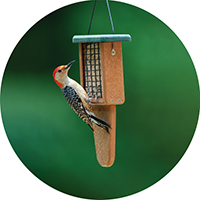
For those captivated by these resilient birds, attracting them to backyards can be a rewarding experience. Bird feeders stocked with specific food types can significantly increase the likelihood of woodpecker visits. High-energy options are particularly appealing to these active birds.

- Suet and No-Melt Dough: These fatty food sources are highly attractive to many woodpecker species, providing essential calories, especially during colder months. Formulations that resist melting in warm weather are ideal for consistent availability.
- Bark Butter Products: Specially formulated blends designed to mimic natural tree exudates and insect prey can be irresistible to woodpeckers. These products often adhere well to tree trunks, mimicking their natural foraging environment.
- Shelled Peanuts: Peanuts are a rich source of protein and fat, making them a favorite for many woodpeckers. Offering them shelled ensures easier access and consumption.
- Seed Blends: Specific seed mixes formulated with ingredients like sunflower seeds and nuts can also draw woodpeckers. The "TreeNutty® Plus Blend" is an example of a mix designed to appeal to these arboreal foragers.
- Woodpecker Cylinders: These specialized feeders are designed to hold suet or seed in a way that allows woodpeckers to cling and feed comfortably, mimicking their natural feeding posture.
By providing these appropriate food sources, backyard bird feeders can become vibrant hubs of woodpecker activity, offering close-up views of their remarkable adaptations in action.
Broader Implications and Ongoing Research
The study of woodpeckers offers valuable insights into biomechanics, material science, and evolutionary biology. Their ability to absorb and dissipate high-impact forces has even inspired engineers working on protective gear and impact-resistant materials. Understanding the precise composition and structure of their cranial bones and beak regeneration mechanisms could lead to advancements in human medicine and engineering.
Furthermore, woodpeckers play a vital role in their ecosystems. As they excavate cavities, they create homes for themselves and, after abandonment, provide nesting and roosting sites for numerous other bird species, bats, and insects. Their drumming also serves as a form of communication, territorial marking, and a signal for the presence of insect infestations.
The ongoing research into woodpecker physiology continues to reveal the intricate details of their survival strategies. From their unique respiratory systems that manage dust to their specialized vision that protects against debris, every aspect of their being is finely tuned to their demanding lifestyle.

A Call for Appreciation
In conclusion, woodpeckers are more than just a delightful addition to the natural world; they are marvels of biological engineering. Their capacity to endure the constant assault of percussive force, their self-regenerating tools, and their natural protective gear are testaments to the power of evolution. Observing these "wondrous and tough" birds in their natural habitat or at a backyard feeder provides a unique opportunity to appreciate the extraordinary resilience and ingenuity found within the avian kingdom. Their continued presence enriches our natural landscapes and offers endless opportunities for learning and admiration.
For those interested in delving deeper into the fascinating world of woodpeckers, the "Nature Centered Podcast" has dedicated an episode to these remarkable birds, offering further insights and expert commentary. This resource, along with the wealth of information available from organizations like Wild Birds Unlimited, can enhance appreciation for these vital members of our ecosystems.