

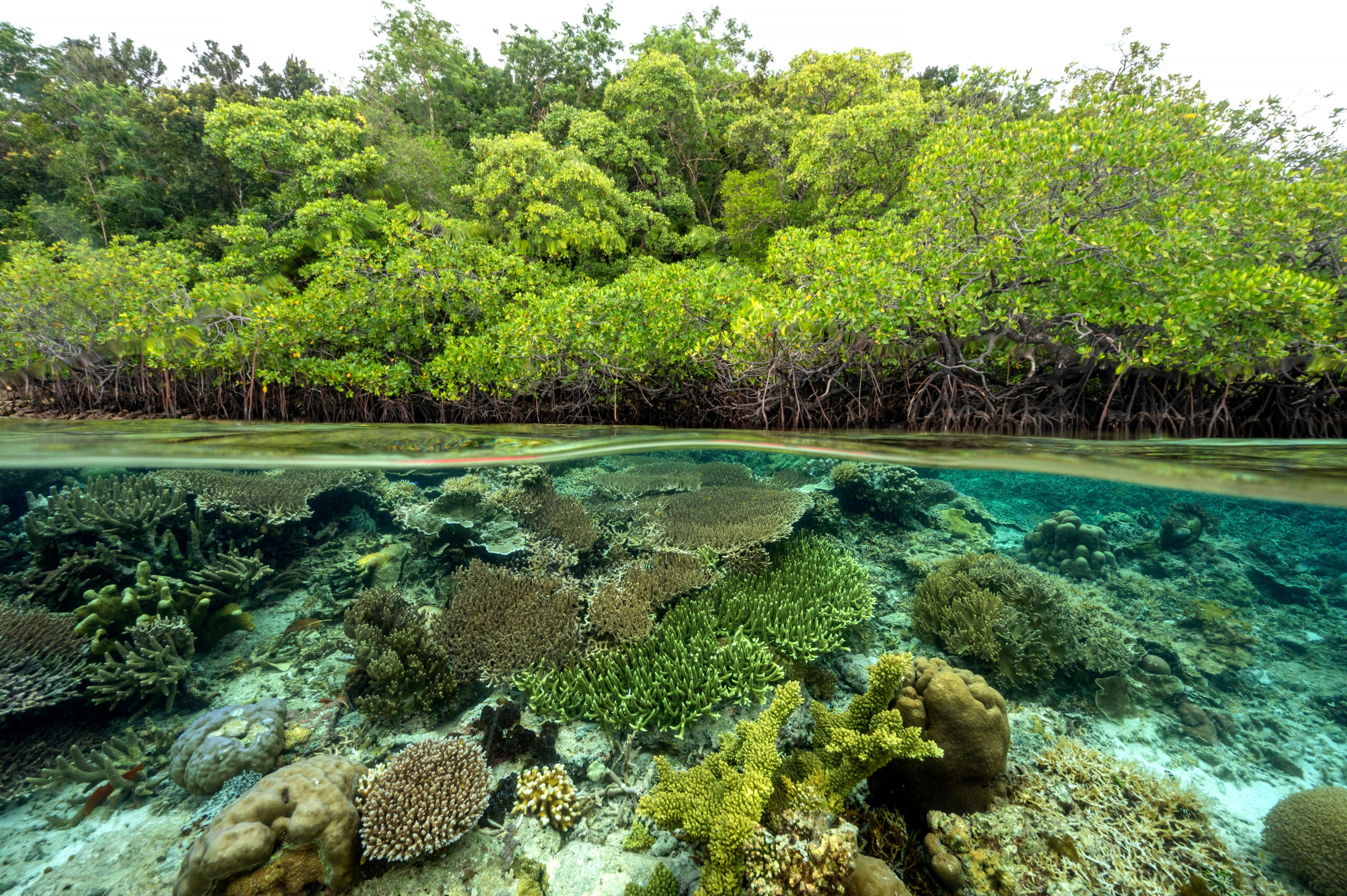
Ecuador boasts some of the most biodiverse ecosystems on the planet, ranging from the dense Amazon jungle and the towering Andean highlands to the wildlife-rich Galápagos Islands. Yet, tucked away along its tropical coastline lies another ecological treasure that is equally vital to the nation’s environmental health: expansive mangrove forests. Spanning approximately 1,550 square kilometers—an area roughly equivalent to the size of Rome—these coastal forests serve as frontline defenders against climate change, critical nurseries for marine life, and the bedrock of local coastal economies. However, decades of rapid industrial transformation have taken a severe toll on these unique habitats.
Since 1970, Ecuador has lost nearly 30 percent of its total mangrove cover. Historically, this devastating decline was driven primarily by the rapid, often unregulated expansion of commercial shrimp farming and the conversion of coastal wetlands to other uses during periods when environmental oversight was lax. Compounded by chronic pollution and the accelerating impacts of climate change, these pressures brought Ecuador’s coastal zones to a critical tipping point. Today, however, a convergence of cutting-edge satellite technology, robust legal frameworks, and community-based stewardship is igniting a conservation renaissance. By bridging the gap between high-tech earth observation and ancestral knowledge, local guardians and international allies are pioneering a new model for coastal resilience.
A Legacy of Loss and the Evolution of Aquaculture
To understand the current conservation push in Ecuador, one must examine the historical trajectory of its coastal development. During the latter half of the 20th century, the global appetite for shrimp exploded, turning aquaculture into a major economic engine for Ecuador. Unfortunately, this boom came at the direct expense of the nation’s mangrove ecosystems. Vast stretches of pristine forest were cleared, diked, and converted into commercial shrimp ponds.
In eras of less developed environmental planning, the long-term ecological consequences of these land-use changes were largely overlooked. Mangroves, which act as natural carbon sinks—absorbing what is known as "blue carbon" at rates up to ten times higher than tropical rainforests—were treated as expendable wasteland rather than vital infrastructure.
Over time, however, the paradigm began to shift. Technological advancements, stricter environmental regulations, and modernized management practices drastically improved productivity within the existing footprint of the shrimp sector. This evolution proved that continuous expansion into pristine forests was no longer necessary to maintain economic output. Consequently, a unique window of opportunity emerged: an environment where sustainable commercial production can coexist with large-scale mangrove conservation and restoration. The primary challenge has shifted from halting outright destruction to scaling effective solutions that protect these fragile ecosystems while safeguarding the livelihoods of the coastal communities that depend on them.
A Robust Legal Foundation and Community-Based Stewardship
Ecuador is uniquely positioned to implement successful mangrove restoration projects due to one of the most progressive legal frameworks for coastal protection in the Americas. Mangroves enjoy explicit constitutional protections, reinforced by the Organic Environmental Code and a series of targeted ministerial decrees that strictly restrict clearing, mandate restoration, and empower local populations with legal stewardship rights. These domestic provisions align seamlessly with international agreements, reinforcing Ecuador’s Nationally Determined Contributions (NDCs) under the Paris Agreement and its commitment to the global 30×30 initiative, which aims to protect 30 percent of the planet’s land and oceans by 2030.
At the heart of this legal framework are the Custody and Sustainable Use of Mangrove Agreements (known by their Spanish acronym, AUSCEMs) and "Socio Manglar," a mature, nationally embedded incentive program. Socio Manglar channels public funds and international donor financing directly to traditional and ancestral users who commit to protecting and sustainably managing designated mangrove areas. For generations, traditional communities have harvested crabs, black-shelled cockles (conchas negras), and timber from these forests, forging a deep cultural and economic interdependence with the landscape. By legally recognizing these communities as official custodians, Ecuador has transformed local populations from passive observers into active defenders of their natural heritage.
The Global Mangrove Alliance and the Birth of an Early Warning System
Recognizing the strength of Ecuador’s community-based model, the Ecuador chapter of the Global Mangrove Alliance (GMA)—supported by a landmark $1.5 million grant secured last year—embarked on an ambitious initiative to fortify coastal monitoring. Spearheaded by organizations such as The Nature Conservancy (TNC) Ecuador, the initiative sought to address a persistent vulnerability: the time lag between illegal mangrove disturbances occurring on the ground and the government’s ability to detect and respond to them.
To solve this, TNC Ecuador partnered with the International Research Centre on the El Niño Phenomenon (CIIFEN), an institution renowned for its expertise in designing sophisticated early warning systems. CIIFEN is currently developing a cutting-edge, community-focused early warning system centered on four pilot AUSCEMs located in the strategically vital Gulf of Guayaquil.
Slated for release by the end of the year, the new system bridges the gap between high-altitude satellite data and on-the-ground realities. At its core is a mobile and web application designed for mangrove custodians, allowing them to conduct field-based monitoring, report environmental infractions, and coordinate seamlessly with regulatory authorities. Crucially, the platform integrates Global Mangrove Watch (GMW), a state-of-the-art satellite monitoring platform, to provide automated Mangrove Disturbance Alerts (MDA).
Sebastián Rivera Ruano, a full-stack developer working on the project, explains the philosophy behind the software: "Our goal is to create a two-way street: not only opening doors for more people to access Global Mangrove Watch but also allowing GMW to benefit from communities’ insights."

Bridging Space and Soil: The Mechanics of the Early Warning App
The integration of GMW Mangrove Disturbance Alerts into CIIFEN’s application represents a major technological leap for coastal management in South America. Historically, satellite data was often siloed within academic institutions or centralized government agencies, far removed from the individuals patrolling the muddy waters of the estuaries.
Under the new protocol, when satellite sensors detect anomalies or potential clearing activities in the Gulf of Guayaquil, automated MDAs are flagged within the application. Mangrove custodians receive these alerts on their mobile devices and can travel to the specific coordinates to ground-truth and validate the disturbance. This crowdsourced feedback loop not only expedites local enforcement actions but also provides GMW scientists with invaluable on-the-ground validation to refine and calibrate their satellite algorithms.
However, developers emphasize that technology alone is insufficient to halt environmental degradation. Pier Luiggi Maquilón Lipari, a climate services developer at CIIFEN, underscores the human element required for success: "One of the most important things about early warning systems is that we need them to be more than just technological platforms. Protocols and coordination between stakeholders are of critical importance such that timely and coordinated action can be taken."
The system has already captured the keen interest of national authorities, particularly the Undersecretariat for Marine, Coastal, and Oceanic Affairs (Subsecretaría Marino Costera y Oceánica). Government agencies view the platform as a vital tool to cross-reference and validate official data concerning national mangrove extents and carbon stocks.
Elba Alissie Fiallo Cobos, coordinator of the Coastal Marine Strategy at TNC Ecuador, highlights the utility of the integrated data streams. "Some of the most useful information available on Global Mangrove Watch for me is data on mangrove blue carbon as well as national and regional climate policies," she notes.
Echoing this sentiment, Diana Carolina Espinoza Ramirez, a GIS specialist at CIIFEN, adds: "Using Global Mangrove Watch we’ve identified areas requiring monitoring attention. Our hope is that this information can be used by the government to prioritise its mangrove protection and restoration policies."
A Collaborative Blueprint for the Future
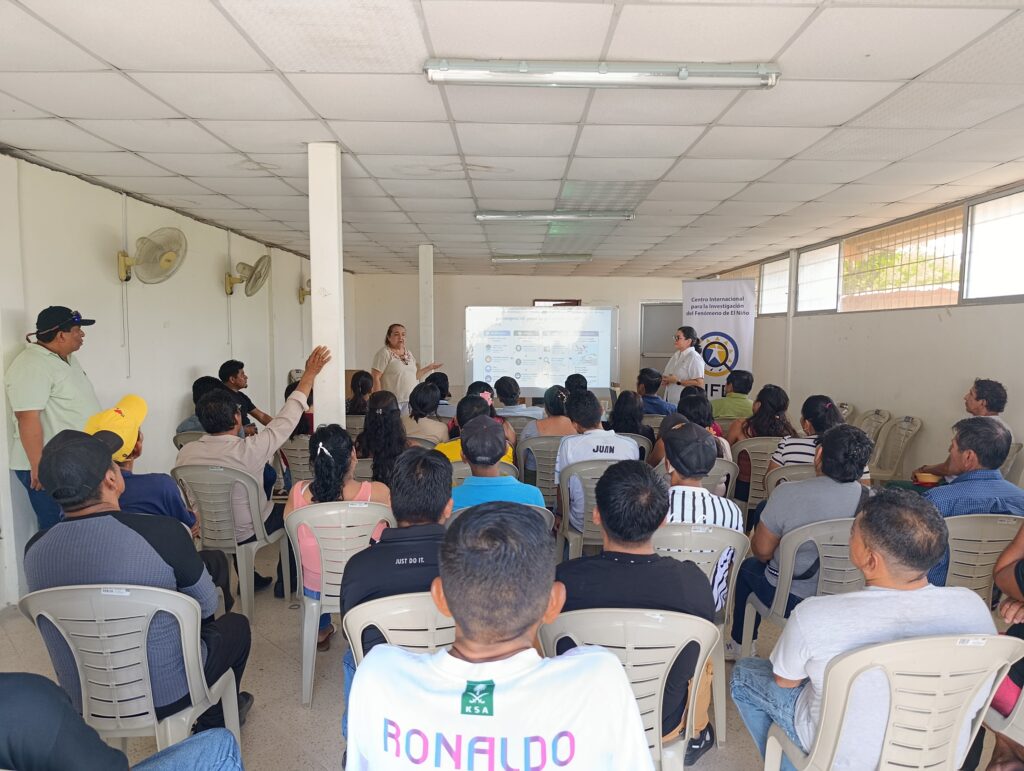
As the rollout date approaches, project organizers are focusing heavily on capacity building. To ensure that the technology is effectively utilized, CIIFEN and its partners are deploying a comprehensive series of in-person training sessions alongside detailed video tutorials tailored for local custodians. This ensures that community members are fully empowered to operate the digital tools independently.
The broader implications of Ecuador’s mangrove initiative extend far beyond national borders. By demonstrating that grassroots conservation can be successfully integrated with advanced satellite monitoring, rigorous legal frameworks, and private-sector collaboration, Ecuador is setting a global benchmark for coastal zone management.
Elba Fiallo Cobos encapsulates the spirit of the ongoing efforts: "At TNC Ecuador, we promote collaborative work among local communities, government authorities, academia, and the private sector to advance more sustainable development models that contribute to both mangrove conservation and human well-being, recognising that confrontation between conservation and production is not useful."
Global Mangrove Watch is managed globally by Wetlands International in close cooperation with The Nature Conservancy, SoloEO, and Aberystwyth University, with core financial support provided by the Postcode Loterij, the Oak Foundation, the COmON Foundation, Greenchoice, and Dob Ecology. As these diverse strands of international funding, scientific innovation, and ancestral stewardship converge in the estuaries of Ecuador, the nation’s mangrove forests are finding a renewed lease on life—proving that the best defense for nature is a partnership between those who study it from space and those who protect it with their lives.
