
For much of evolutionary history, the dominant reproductive strategy across the animal kingdom was straightforward: organisms would produce offspring and immediately leave them to fend for themselves, relying purely on the laws of probability and natural selection for species survival. Over millions of years, however, complex behaviors emerged where parents actively invested time, energy, and physiological resources into nurturing their young. A landmark study recently published in the prestigious journal Nature offers a profound explanation for this evolutionary leap, suggesting that caregiving did not emerge from newly invented biological hardware. Instead, evolution appears to have cleverly repurposed ancient neural pathways originally designed to regulate hunger and feeding, coopting them to foster social care and offspring protection.
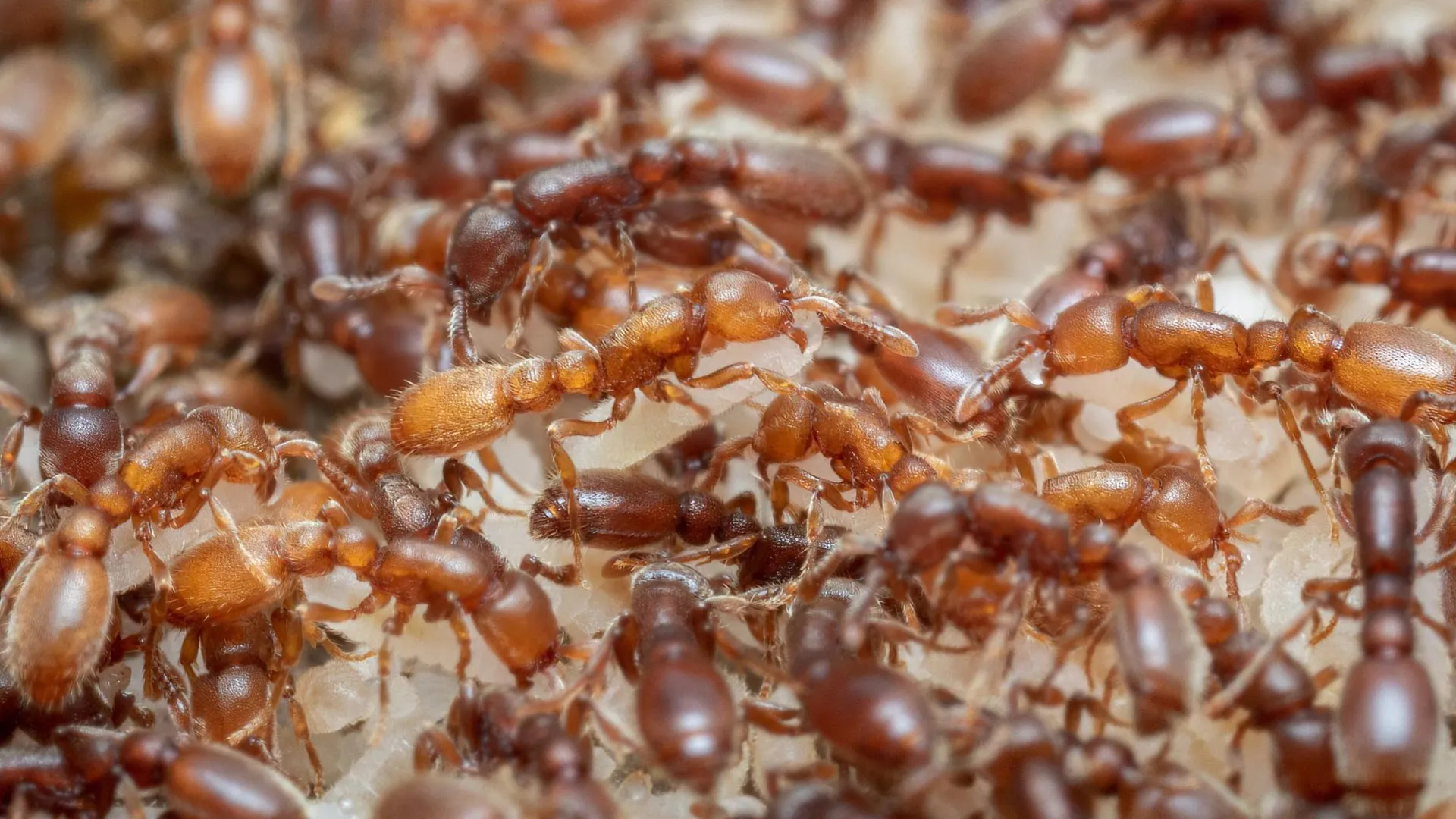
This breakthrough discovery was achieved by an interdisciplinary team of researchers focusing on clonal raider ants (Cerapachys biroi). By mapping the complex neurochemical landscape of these insects, scientists have opened a new window into the deep evolutionary origins of parental behavior, offering potential clues that may eventually illuminate similar neurological processes in mammals, including humans.
The Evolutionary Puzzle of Parental Care
Across the natural world, parental care manifests in remarkably diverse ways. Mammals nourish their developing young with specialized milk, avian species construct elaborate nests and fiercely protect their eggs from predators, and eusocial insects like ants tend meticulously to developing larvae. For decades, evolutionary biologists and neuroscientists have grappled with a fundamental question: How did such intricate, high-cost caregiving behaviors evolve from ancestral lineages that offered little to no parental investment?
The prevailing scientific hypothesis has long centered on the principle of evolutionary recycling. Rather than engineering entirely novel biological systems from scratch—a metabolically expensive and genetically complex endeavor—nature frequently adapts pre-existing machinery to serve new functions. Earlier physiological research in mammals provided tantalizing clues, suggesting that specific neuropeptides—small protein-like molecules used by neurons to communicate—might play a dual role in regulating both feeding behaviors and maternal responses.
Despite these theoretical frameworks, definitively proving a direct causal connection has proven exceptionally difficult. Traditional laboratory models in neuroscience, such as the fruit fly (Drosophila melanogaster) and the nematode roundworm (Caenorhabditis elegans), exhibit virtually no parental care behaviors. Conversely, while laboratory mice display extensive and sophisticated maternal care, their brains are extraordinarily complex, comprising approximately 100 million neurons and making precise circuit-level mapping a monumental challenge.
Enter the clonal raider ant. Boasting a brain composed of a mere 60,000 cells, the ant offers an ideal middle ground. These insects possess social signaling and caregiving networks closely related to those found in mammals, yet their compact neural architecture allows scientists to investigate underlying behavioral circuits with unprecedented detail and speed. Furthermore, clonal raider ants undergo predictable, age-dependent shifts in their social responsibilities, making them an unparalleled model for studying how behavior transforms as an organism ages.
Methodological Innovation: Tracking Caregiving One Ant at a Time
To unravel the chemical underpinnings of ant behavior, the research team, spearheaded by Daniel Kronauer and his colleagues at The Rockefeller University’s Laboratory of Social Evolution and Behavior, developed an automated behavioral monitoring system. This advanced setup isolated individual ants with individual larvae, allowing the research apparatus to continuously track hundreds of nuanced caregiving interactions simultaneously.
Building upon this automated platform, the scientists identified and synthesized virtually every chemical messenger present within the ant brain. Through rigorous experimental testing, they systematically evaluated whether individual molecules could alter or drive caregiving actions.
Ant colonies operate under a strict, age-regulated division of labor. Young ants typically remain sheltered deep within the safety of the nest, where their primary duty is nursing and tending to the vulnerable larvae. As these worker ants age, however, their physiological priorities shift dramatically; they transition away from internal nest duties, venturing out into the perilous external environment to forage for food.
To understand how internal neurochemistry governs this lifelong behavioral transition, the research team mapped the anatomical sites where the most promising neuropeptides were produced. They tracked fluctuations in these chemical levels across the lifespan of individual ants and observed how behavioral output changed when the activity of these molecules was experimentally increased or suppressed.
Additionally, the researchers conducted comparative trials by contrasting fully fed ants with nutrient-deprived counterparts. This crucial control allowed the team to directly test whether the neural signals governing caregiving remained fundamentally tethered to the ancient feeding circuits from which they were hypothesized to have evolved.
"We annotated the neuropeptidome of this ant, the complete set of neuropeptides," notes Dr. Kay, a key contributor to the research effort. "There were 70 that we could identify. It took a lot of hard work, but now we have a set of molecules that we can investigate in numerous ways."
Two Brain Molecules Shape Ant Behavior
The empirical results revealed that caregiving behavior in ants remains intimately and functionally linked to the brain systems responsible for managing hunger and metabolic demand. Specifically, the researchers isolated two critical signaling molecules that act as neurochemical switches, driving behavior in opposite directions depending on the ant’s age and internal physiological state: Neuropeptide F (NPF) and Allatostatin A (AstA).
Neuropeptide F was found to actively encourage nurturing behavior, compelling ants to tend to and care for the larvae. In direct opposition, Allatostatin A promoted foraging, motivating the insects to abandon the brood and depart the nest in search of sustenance.
This chemical distribution mirrored the natural lifecycle of the ants. Young workers naturally exhibited significantly higher concentrations of NPF and lower levels of AstA within key neuroanatomical regions associated with motivation. Older foragers displayed the exact inverse chemical profile. When the researchers artificially manipulated the activity levels of either NPF or AstA, the ants’ behaviors shifted correspondingly. This confirmed that these neuropeptides were not merely correlated with caregiving, but actively governed whether an individual ant chose to nurture a larva or forage for food.
The Hunger-Caregiving Connection
Perhaps the most compelling finding of the study emerged when researchers examined how these molecules reacted to metabolic stress. Starved ants experienced a sharp upregulation of NPF and a concurrent decrease in AstA, driving them to exhibit heightened caregiving behaviors even when outside their standard age demographic. Conversely, once the ants were adequately fed, their neurochemical balance inverted, reducing their motivation to tend to larvae and increasing their drive to forage.
"We learned that parental behaviors build on the neural circuitry for feeding, and that makes some sense," explains Daniel Kronauer. "Parental behavior is a lot about feeding—not just yourself, but your offspring."
This physiological overlap strongly supports the theory that parental care evolved by co-opting ancient homeostatic mechanisms originally dedicated to energy acquisition. Rather than inventing complex caregiving instincts out of nothing, evolution appear to have expanded the functional scope of feeding behavior. This adaptation motivated animals to direct nutritional resources and protective care toward their offspring, effectively blurring the evolutionary boundary between self-preservation and kin-preservation.
A Shared Blueprint for Parenting Across Species
Building upon these findings, the research team is currently working to map the precise neural circuits modulated by NPF and AstA. Pinpointing these downstream pathways will reveal how abstract chemical signals are translated into complex, coordinated social behaviors.
The implications of this research extend far beyond the biology of social insects. Because mammals utilize homologous neuropeptide systems to regulate maternal care and bonding, comparative studies between ants and mammals suggest the existence of a deeply conserved biological blueprint for parenting that spans disparate branches of the tree of life.
"It amazes me that similar parenting behaviors have evolved so many times in so many distinct animal lineages," reflects Dr. Kay. "Our paper suggests that the evolutionary routes to these sorts of behaviors are far more constrained than we may have naively imagined. That’s very exciting, because it may eventually lead to a blueprint of how these complex social behaviors evolve."
Broader Implications: Aging and the Healthy Brain
Beyond shedding light on the origins of family dynamics, the clonal raider ant model provides an exceptional framework for investigating how healthy aging alters brain function and behavior. Contemporary neuroscientific research is heavily weighted toward studying catastrophic neurodegenerative conditions that manifest late in life, such as Alzheimer’s disease. Consequently, science maintains a significant knowledge gap regarding the subtle, progressive neurological changes that occur within a healthy brain across a normal lifespan.
Because the age-dependent transition from nurse to forager is vital to the functional organization of an ant colony, these insects offer a natural laboratory for observing how neurochemistry reshapes behavioral proclivities over time. The researchers hypothesize that analogous chemical mechanisms drive age-related behavioral shifts in other complex organisms, potentially including humans.
"There’s a lot of research and funding invested in studying late-stage neurodegenerative diseases, but we actually know very little about how the brain changes throughout the normal healthspan of an individual," notes Kronauer. "In ant colonies, these dynamics are central to the organization of the society. Our discovery provides a striking demonstration that neuromodulators can produce age-dependent changes in behavioral proclivities in ants, and I suspect that that’s the case in other animals as well, including in humans."
As researchers continue to chart the precise neural circuitry linking hunger, caregiving, and aging, this study stands as a testament to the economy of evolution—demonstrating how nature achieves its most sophisticated social innovations by endlessly reshaping the ancient tools it already possesses.
