
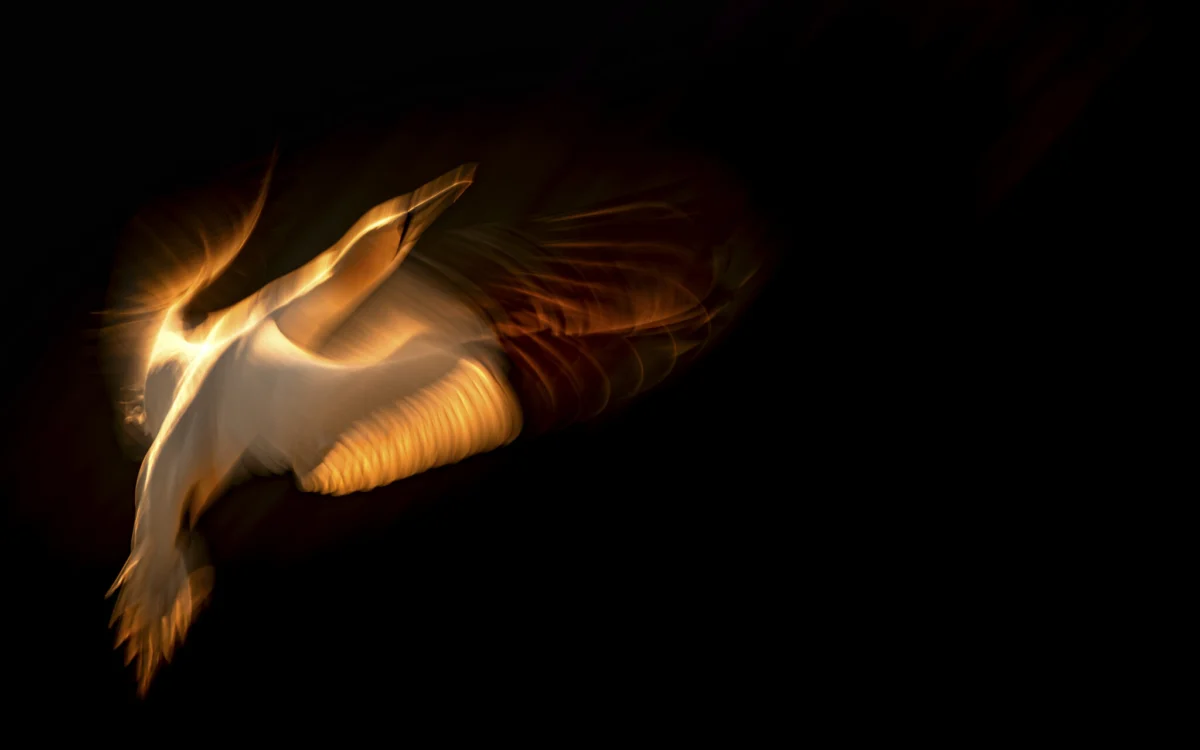
In a field often characterized by the relentless pursuit of technical perfection, wildlife photographer Rachel Bigsby is forging a distinctive path, championing a philosophy she terms "natural artistry." Her approach transcends mere image capture, aiming instead to convey the profound essence and emotional reality of her subjects, particularly seabirds, by embracing the wild’s inherent imperfections and complexities. This methodology positions her work not just as documentation, but as a powerful narrative tool for fostering deeper connection and understanding of the natural world.
The Philosophy of Witnessing: Beyond the Shutter

Bigsby’s core principle revolves around a moment of heightened awareness that precedes the shutter click – a complete sharpening of attention where the world momentarily seems to hold its breath. This isn’t merely about freezing a fleeting instant but about "witnessing" nature, learning its "grammar through patience and presence," and translating that understanding into an image that evokes feeling in the viewer. Her "natural artistry" is not an imposed style, but an inherent quality of the wild waiting to be revealed. It resides in the fluid grace of a seabird, the interplay of light and feather, the stillness before a dive, or the chaotic harmony of a storm-tossed colony. For Bigsby, photography is about capturing "what it feels like to be near them," rather than treating seabirds as static objects.
This perspective stands in contrast to conventional wildlife photography, which often prioritizes sharp focus, clean backgrounds, and textbook compositions. While these elements contribute to technically proficient images, Bigsby argues they can sometimes lead to competent yet forgettable photographs that depict what a bird looks like, but not what it is. She recalls a pivotal experience with an Atlantic Puffin photograph – an image that defied technical perfection with soft focus and slow shutter speed, yet conveyed the bird’s movement and atmospheric presence with compelling emotion. This realization solidified her belief that storytelling, emotion, and artistry are paramount, challenging the notion that perfection is a prerequisite for powerful imagery.
A Life Entwined with the Wild: Formative Influences and Dedication

Bigsby’s deep connection to the natural world predates her photographic career. Her late grandfather, a naturalist and fisherman, instilled in her a profound sense of reverence and the ability to "truly see" rather than merely observe. This early foundation was reinforced by her involvement with the Scout Association from the age of six, where prolonged exposure to wild landscapes transformed "scenery" into a living companion.
Photography entered her life later, initially through small experiments with an iPod camera, capturing details like dewdrops and dandelion silhouettes. The pivotal moment arrived when she witnessed a Northern Fulmar gliding effortlessly along cliffs near her home. This encounter sparked an intense fascination, leading her to research the species and its connection to the legendary albatross, effectively claiming seabirds as her central muse.
Her commitment extended beyond photography, evolving into hands-on conservation work. Bigsby saved for her first DSLR camera and subsequently volunteered extensively on remote islands, scrubbing compost toilets, scything bracken, and repairing weather-battered structures in exchange for access to seabird colonies. This immersive experience, spending countless hours observing and learning seabird behaviors, biology, and ecology, is what Bigsby credits as the true source of credibility for her work. This dedication highlights a critical aspect of her artistry: understanding precedes image-making.

Embracing Imperfection: The Raw Reality of Nature
Bigsby’s artistic evolution was also shaped by challenging environmental conditions. Initially, she sought ideal weather – calm air, soft light, clear sight-lines. However, a week of volunteering on a fog and mist-shrouded island forced a paradigm shift. Realizing that these conditions were "life" for the birds, not "bad weather," she stopped resisting and began collaborating with the environment. The fog became a blank canvas, leading her inadvertently into high-key imagery, which later became a signature style. This experience underscored a crucial lesson: meaningful images often emerge when photographers stop demanding specific conditions and instead respond honestly to what is present.
This acceptance of nature’s rawness extends to her definition of artistry. For Bigsby, "imperfection is artistry." A seabird buffeted by wind, its feathers ruffled, tells a more profound story of resilience than a perfectly still specimen. A blur of motion can convey the truth of flight more authentically than a frozen wing. Mist and rain are not obstacles but essential atmospheric elements that contribute to the emotional reality of a seabird’s world. This perspective encourages viewers to look beyond conventional beauty and appreciate the deeper narratives embedded in the wild’s untamed nature.

Elements of Natural Artistry: Light, Shape, Texture, and Environment
Bigsby meticulously employs fundamental photographic elements to achieve her "natural artistry":
- Light: Far from a technical checklist item, light is the "emotional spine" of her images, defining how a subject is seen, felt, and remembered. She recounts a moment on Shetland cliffs where a single Gannet lifted from shadow into illumination, its white wings glowing against a dark cliff, demonstrating light’s power to create drama and mood.
- Colour: Rather than pursuing bold colors for their own sake, Bigsby considers whether colour supports the emotional tone. She notes how the subtle, stormy tones of Northern Fulmars are best cradled by chalk-white cliffs or dark grey rocks, allowing their inherent mood to speak, while bright blue backgrounds can overwhelm. When colour distracts, she intentionally chooses monochrome to direct attention to shape, light, and texture – the "bones of the image."
- Texture: Texture makes a photograph tangible, allowing the viewer to almost "feel salt in the air." It contributes to turning wildlife into a design of curves, arcs, symmetry, and contrast.
- Environment: Crucially, Bigsby views environment not as mere background but as "character." A bird without context is "just" an animal; honestly placed in its world, it becomes a story of scale, struggle, intimacy, resilience, or fragility. This includes acknowledging difficult truths, such as the beauty braided with grief, life alongside loss, reflecting the natural world’s complex reality without exploitation.
Seabirds in Peril: The Broader Conservation Context

Bigsby’s dedication to seabirds is particularly pertinent given the significant challenges these species face globally. Seabirds, including the King Penguin (Aptenodytes patagonicus), Northern Gannet (Morus bassanus), Northern Fulmar (Fulmarus glacialis), Atlantic Puffin (Fratercula arctica), Australasian Gannet (Morus serrator), Razorbill (Alca torda), and European Shag (Phalacrocorax aristotelis), are among the most threatened avian groups. According to the IUCN Red List, many seabird populations are in decline, with approximately one-third of all seabird species globally considered vulnerable, endangered, or critically endangered.
Key threats include:
- Climate Change: Warming oceans affect food availability and distribution, impacting breeding success. Rising sea levels and extreme weather events also destroy nesting habitats on coastal cliffs and islands.
- Fisheries Bycatch: Seabirds are frequently caught accidentally in fishing gear, particularly longlines and gillnets, leading to drowning.
- Plastic Pollution: Ingestion of plastic debris, often mistaken for food, causes internal injuries, blockages, and starvation. Microplastics further contaminate marine ecosystems.
- Invasive Species: Non-native predators introduced to remote breeding islands (e.g., rats, cats) decimate vulnerable seabird colonies.
- Habitat Loss and Degradation: Coastal development, oil spills, and human disturbance at breeding sites reduce suitable nesting and foraging areas.
- Avian Flu: Recent outbreaks of highly pathogenic avian influenza (HPAI) have caused devastating mortality events in large seabird colonies across the globe, further jeopardizing already fragile populations.
Bigsby’s focus on places like Macquarie Island, a UNESCO World Heritage site known for its vast penguin and seal populations, and Shetland, a stronghold for numerous North Atlantic seabird species, highlights their ecological importance. Similarly, RSPB Bempton Cliffs is one of the UK’s most significant seabird colonies, while Skomer Island is famous for its puffins. By portraying the emotional and artistic depth of these creatures within their environments, her work implicitly underscores the urgency of their conservation.

Implications for Wildlife Photography and Conservation
Bigsby’s "natural artistry" offers significant implications for both the practice of wildlife photography and broader conservation efforts.
- Shifting Paradigms in Photography: Her philosophy challenges the rigid adherence to technical norms, encouraging photographers to cultivate a personal vision and emotional connection with their subjects. This could inspire a new generation of photographers to prioritize artistic expression and storytelling over purely documentary capture, fostering greater diversity and depth in the genre.
- Enhanced Conservation Messaging: By making images that "feel like gifts" – capturing moments of devotion, endurance, and survival – Bigsby’s work can transcend factual reporting to evoke empathy and a sense of shared experience with wildlife. This emotional resonance is crucial for public engagement, translating scientific data into a relatable narrative that motivates conservation action. Dr. Anya Sharma, a lead conservation biologist at the Global Seabird Trust, commented, "Rachel Bigsby’s images move beyond simple identification; they invite viewers into the intimate world of seabirds. This emotional connection is vital for our conservation efforts, reminding people what we stand to lose and inspiring them to act."
- Education Through Art: Her emphasis on patience and understanding behavior as "learning a new language" serves as an educational model. It highlights that genuine wildlife photography is an outcome of deep observation and respect, not just equipment mastery. This approach can educate audiences about ecological intricacies and behavioral patterns, fostering a more informed appreciation of wildlife. Renowned photography critic Mark Jensen observed, "Bigsby’s work is a powerful testament to the idea that authenticity and feeling can be more impactful than flawless execution. She’s not just taking pictures; she’s revealing souls."
- Valuing the Wild’s Truth: By embracing the chaos, fluidity, and inherent imperfection of the wild, Bigsby’s images offer a more truthful representation of nature. This can help counter idealized or anthropomorphized portrayals, preparing audiences for the realities of conservation challenges and the inherent struggle for survival that characterizes many species.
Ultimately, Rachel Bigsby’s work is an invitation rather than a rulebook. It is a powerful argument for photographs made by heart, images that educate through beauty, and honour the wild by telling its unvarnished truth. In a world increasingly disconnected from nature, her dedication to capturing the profound emotional reality of seabirds stands as a compelling reminder of their resilience, their vulnerability, and the irreplaceable value of their wild existence.
